


PLP 894 Spring 2026 Seminar Series featuring Fidel E. Jiménez-Beitia1
March 9, 2026 1:30PM - 2:30PM
See flyer for all Spring 2026 PLP Seminars here
“From the Tropics to the Corn Belt: Exploring Tar Spot Dynamics Across Regions”
Fidel E. Jiménez-Beitia1, Carolina Avellaneda2, Andrea Dolezal3, Mercedes Diaz Arias3, Tim Dietz3, and Martin I. Chilvers1
1Department of Plant, Soil and Microbial Sciences, Michigan State University, East Lansing, MI 48824, U.S.A. 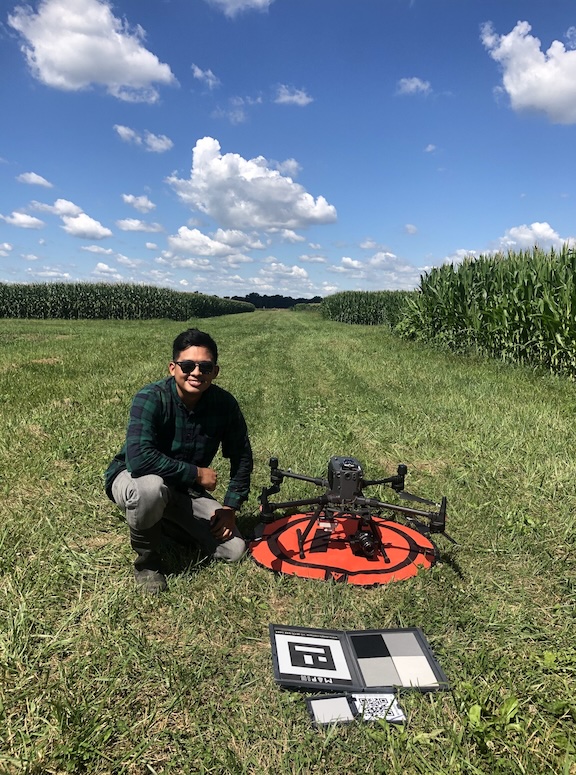
2Zamorano University, San Antonio de Oriente, Fco. Morazán, Honduras
3Bayer Crop Science Corporate, St. Louis, MO 63167, U.S.A.
Abstract
Tar spot of maize, caused by the obligate biotrophic fungus Phyllachora maydis, has become an important foliar disease threatening maize production across the Americas by reducing photosynthetically active leaf area, accelerating senescence, and causing significant yield losses under favorable environmental conditions. Although fungicides are commonly used for management, the identification of resistant germplasm with high performance remain essential for sustainable disease management. Three countries illustrate distinct scenarios of tar spot dynamics and research approaches across maize production systems. In Honduras, maize accession screening trials conducted during the rainy and dry seasons revealed significant differences in tar spot severity and grain yield among hybrids. The hybrid M25 exhibited consistent resistance and maintained high yield across environments, whereas M23, M30, and M24 performed well in the dry season but experienced yield reductions during the rainy season under higher disease pressure. To address challenges associated with the obligate nature of the pathogen, greenhouse research in Ecuador and the U.S. focused on developing an inoculation protocol for P. maydis, enabling controlled studies of host–pathogen interactions and supporting future research on disease biology and resistance evaluation. In the U.S., field experiments conducted at three locations in Michigan during the 2024 and 2025 growing seasons revealed significant differences in tar spot severity and yield among hybrids (P < 0.001). Vegetation indices derived from multispectral imagery, particularly NDVI (r = −0.83), were strongly correlated with disease severity. Collectively, these regional case studies illustrate how environmental conditions, inoculum pressure, and host resistance interact to shape tar spot epidemics across the Americas, providing insights for improving disease monitoring and management.

 Print
Print Email
Email