


The Dirty Work Field Day: Managing Invasives and Solving Site Challenges
October 6, 2026 8:30AM - 5:00PM
Registration Deadline: September 26, 2026 - 12:00AM
Lyon Oaks Event Center and Park, 52221 Pontiac Trail, Wixom, MI 48393
Contact: Caitlin Splawski, MSU Extension Greenhouse & Floriculture Educator, splawski@msu.edu
This workshop is intended for landscape professionals, nursery owners and operators, and private and commercial licensed pesticide applicators in need of continuing education credits (MDARD Pesticide CEU). The focus of content will be aimed towards invasive species treatments in natural areas, management of invasive pests, such as box tree moth, relevant to landscape and nursery pests, plus information about newly listed invasive woody plants in Michigan. The full day in-person is worth 6 credits. The half day virtual or in-person is worth 3 credits. Participants must stay for the full sessions to receive credits from MDARD.
This is a free event. Plus, participants who attend the full day in-person will receive two landscape alternative shrub options to trial at home!
RUP Credits: 2, 3B, 6, 7A or Private or Comm CORE
Morning session (in-person or virtual): Topics will include a review of pesticide types, best treatments for invasive species, signs of pests and diseases in plants/ecosystem, and monitoring and evaluation of invasive species treatments. (No recording will be made available for the virtual option.)
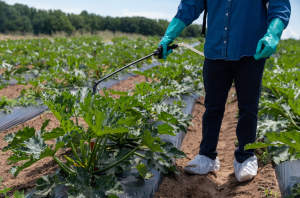
Afternoon session (in-person only): Topics include demonstrations and hands-on practice of best management practices for chemical safety and handling, spill kits, herbicide backpack sprayers and dauber applicators, tree lance, stem injections, and a guided invasive species identification hike.
Agenda:
8:30am – check in, welcome
9:00am – Everything’s a nail when you’re a hammer- sizing the right tools for the job
Selecting the most appropriate management tools for the time of year – Oakland County CISMA Coordinator, Patrick Canniff, will go over what you need to know about herbicide applications throughout the season and how to have the most effective control of woody invasive species, plus resources and data bases, cover woodies and herbaceous.
10:00am – Box tree moth update plus newly-listed restricted species for Michigan
Plant Health Inspector, Amy Kennedy, will go over Michigan’s internal quarantine and what that means for movement and disposal of boxwood. She’ll also cover newly listed invasive species for Michigan and other invasive pests relevant to the nursery and landscape industry.
11:00am – IPM tools for maintaining boxwood in the quarantine zone
MSU Extension Educator, Caitlin Splawski, will go over best practices for managing box tree moth, including what can be done to slow its spread.
Noon – Lunch
1:00pm – Invasive Plant Identification Hike
Let’s apply what we’ve learned and find invasive plants present in the park. Patrick Canniff will show us how to spot woody invasives in the landscape and offer alternative options for landscape planting. We’ll focus on the fundamentals of proper plant identification, step 1 of any IPM program!
2:00pm – Safety First! Using application equipment appropriately
Lindsey Sculphom, Natural Resources Specialist from Oakland County Parks will show us A-Z when it comes to application equipment. She’ll go over best practices in using sprayers, dauber applicators, plus correct use of personal protective equipment and spill kits.
3:00pm – Effective treatment techniques: Proper application and disposal
Hands-on Invasive plant removal led by Patrick and Lindsey, let the pulling and cutting begin! Besides brute force, we’ll also demonstrate spray and cut-stump, tree lance, and stem injection application techniques and go over proper disposal of invasive plant material.
4:00pm – Landscape alternatives to aggressive and challenging species
Plants like boxwood and barberry are widely used in the landscape for a reason. They have wide tolerances to various soil and environmental conditions. They also have desirable characteristics like evergreen or colorful foliage that make them aesthetically pleasing, but with new pest pressure and other restrictions, use of these species has become more challenging. In this session, Caitlin and Patrick will discuss other options for replacement of these plants and the ‘Go Beyond Beauty’ program organized by Michigan’s CISMAs.
Registration for this event has closed.
Get Directions

 Print
Print Email
Email