


Determining Money Values
Your values play a big role in determining the way you spend money. If you don’t understand how your values and emotions influence your money decisions, you’ll never be able to gain control and make better money decisions. Take the money personality assessment to understand your money values.
Steps for Decision Making
Making financial decisions is a huge process. Decisions to buy big tickets items such as homes or cars should not be taken lightly. Here are a few questions to ask yourself or discuss with your family:
- What is the money issue or decision you need to make?
- What are the possible options or choices for making the decision?
- What are the possible results (pros and cons) for each option or choice?
- What is your decision? When will you look at the decision again?
- Additionally, using a decision satellite map may be helpful.
Can You Afford a Home?
When buying a house, it’s important to stick to a price range that meets your needs and will be affordable with your current income. Keeping this price range in mind, you can have confidence during the application process. Consider the following:
- Overall Cost: If you have good credit, a steady income and a reasonable amount of preexisting debt, it may be safe to estimate that you can afford—and will qualify for a mortgage on—a home that costs 2.5 -3 times your gross annual income (the amount of your paycheck before deductions). You’ll also want to factor in steady income from other sources, such as retirement, disability, child support, social security or alimony. For all income, you must be able to show a history of at least two years, and a likelihood that the income source will continue.
- Mortgage Payments: Before approving your mortgage loan, a lender will examine two different ratios:
- Housing ratio = the maximum percentage of a borrower’s gross monthly income that can be used to make the monthly mortgage payment, including principal, interest, taxes and insurance (or PITI). This percentage will be pre-set based on the type of loan that you are applying for, and is typically between 28 and 33 percent.
- Debt-to-income ratio = the maximum percentage of a borrower’s gross monthly income that can be used for the house payment, plus all other debts. These debts can be from credit cards, vehicles, student loans, etc. The debt-to-income ratio is predetermined based on loan type and ranges from 36 to 41 percent. It’s important to know how much outstanding debt you have before applying for a mortgage. If you find you have a lot of debt, you might need to pay some of it off before applying for a mortgage.
Communicating About Money
Are you a good listener? The I-Message is a helpful tool for couples and families because it helps you express your feelings in a calm way. For example, if you were discussing paying bills with your spouse, you may say, “I feel nervous when I notice that the phone bill is not paid because I worry about bad information on our credit report.” Additionally, these steps may help you communicate better about money:
- Find the real problem
- Talk only about the problem itself
- Face the problem
- Brainstorm and talk about options
- Agree on a plan
- Support the plan
- And keep talking!
Setting S.M.A.R.T. Goals
Do you have financial goals that you wish to reach, but it seem like you never do? Maybe you’re not being detailed enough or writing your financial goals down. It’s time to get SMART about your financial goals! SMART is an acronym that stands for Specific, Measurable, Attainable, Realistic and Timely.
Michigan State University Extension Educator Wanda Roberts explains SMART goals in the video above. Use our SMART goals worksheet and work toward your SMART goals today!
Events
-
Oct 14
Homeownership Education Webinar (MSHDA) - October 14, 2026
October 14, 2026 4:00PM – 8:00PM Zoom Webinar
This homeownership seminar from MSU Extension will provide you with valuable information about the home buying process.
-
Oct 19
Top Ten Credit Tips - October 19, 2026
October 19, 2026 12:00PM – 1:00PM Zoom Webinar
Learn the Top Ten Credit Tips to become credit savvy!
-
Oct 27
Who Gets Grandma's Yellow Pie Plate - Passing on Personal Possessions - October 27, 2026
October 27, 2026 3:00PM – 4:00PM zoom webinar
Learn communication strategies for distributing non-titled possessions.
-
Oct 28
Tips to Build and Protect Your Credit - October 28, 2026
October 28, 2026 11:00AM – 12:00PM Zoom
This webinar will address credit myths, explain the importance of credit reports, demystify credit scores and provide strategies to build and protect your credit.
-
Oct 29
The Informed Renter (Webinar)- October 29, 2026
October 29, 2026 12:00PM – 1:00PM Online via Zoom
This rental workshop from MSU Extension will equip you with valuable information about the rental process that will help you navigate the technicalities and avoid costly mistakes. Learn your rights and responsibilities as a tenant.
-
Nov 3
Make a Spending Plan Work for You! - (Webinar) - 11-3-2026
November 3, 2026 12:00PM – 1:00PM Virtual - Zoom
Trying to stretch your money? Learn how to create and manage a spending plan.
-
Nov 5
Homeownership Education Webinar (MSHDA) - November 5, 2026
November 5, 2026 9:00AM – 1:00PM Zoom
This homeownership seminar from MSU Extension will provide you with valuable information about the home buying process.
News
-
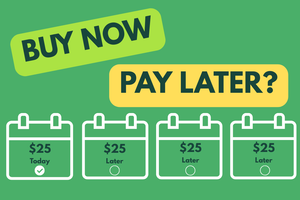
Buy now, pay later: Convenient or costly?
Published on October 7, 2026
Small payments can make a purchase feel affordable—but what will it cost your future budget? -
Opening doors to homeownership across Michigan
Published on September 4, 2026
MSU Extension has helped Michiganders navigate the homebuying process through education, counseling, and personalized support for more than 20 years. -
When flooding hits, MSU Extension is here to help
Published on April 17, 2026
Whether you’re a homeowner, farmer, parent or concerned community leader, MSU Extension offers trusted support during severe weather. -
National Consumer Protection Week: Empowering consumers through awareness and action
Published on February 27, 2026
Free tools, local programs and practical tips to help you spot scams and safeguard your finances.


 Print
Print Email
Email