4-H campers dive into the invasive species challenge facing the Great Lakes
 Print
Print Email
EmailManaging invasive species is as much a human challenge as an ecological one, campers discover.
At what summer camp can you get an up-close look at one of the most infamous invaders in Great Lakes history? At Michigan State University Extension's 4-H Great Lakes and Natural Resources Camp at Camp Chickagami in Presque Isle County, of course! This summer nearly 70 youth attended this annual camp, which focuses on science and natural resources, and explored the environmental challenges of aquatic invasive species, specifically sea lamprey and zebra mussels.
These hands-on encounters provided an overview of the aquatic invasive species and the science-based efforts underway to protect the Great Lakes fisheries and ecosystems they affect. Led by Michigan Sea Grant, the Great Lakes Fishery Commission, and the University of Michigan School for Environment and Sustainability, campers investigated how invasive species alter ecosystems, impact fisheries, and create challenges for communities that depend on healthy Great Lakes waters.
A slippery lesson from sea lamprey
Campers learned that invasive species are organisms introduced outside their native range that can cause ecological, economic, or social harm. Although invasive species arrive through a variety of pathways, their introduction is often linked to human activities, and people are frequently left seeking science-based solutions to the challenges they create. Recognizing the central role people play in both the introduction of invasive species and the science-based efforts to manage existing invasions and prevent future ones became a central theme of the experience.
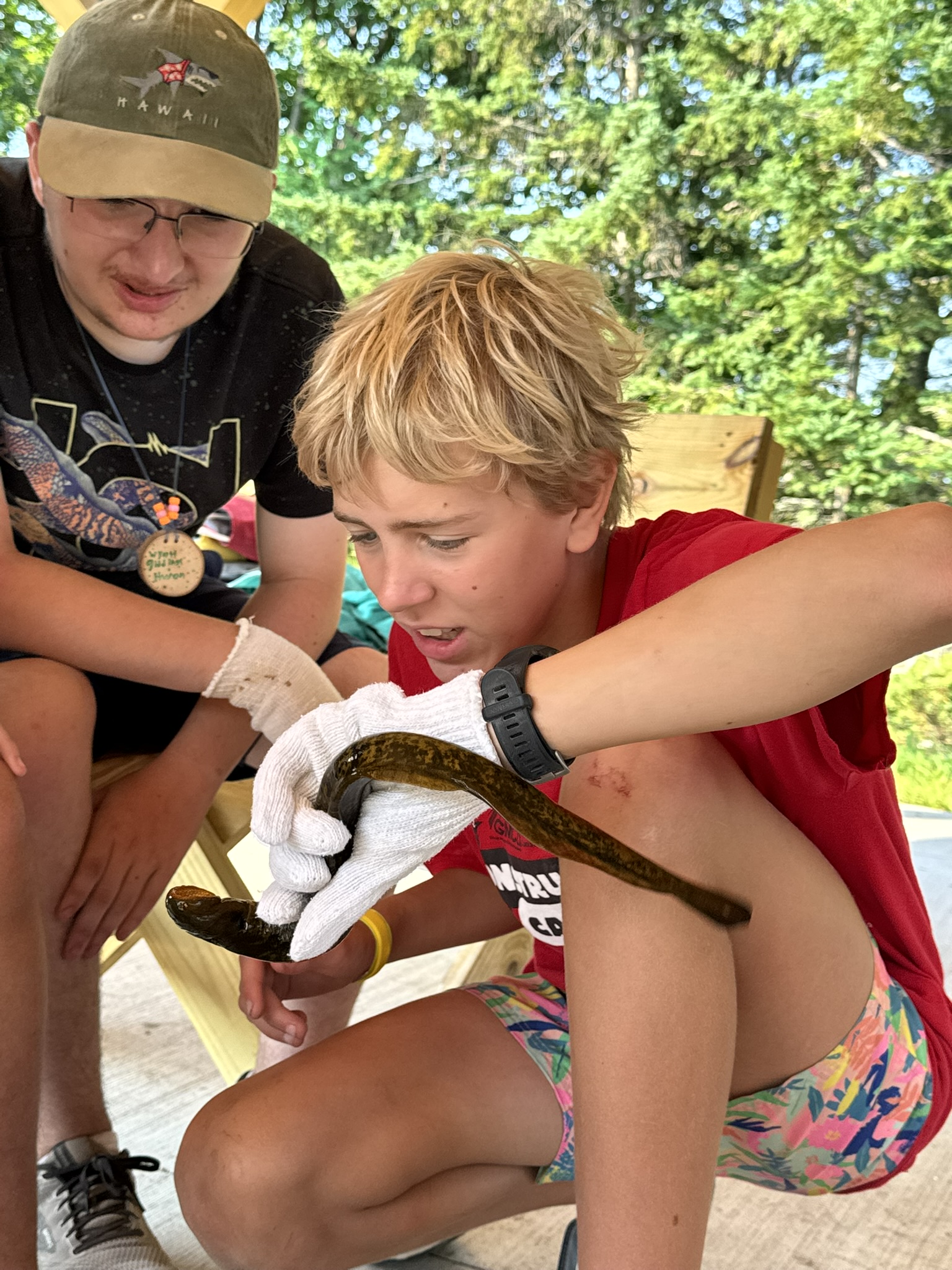
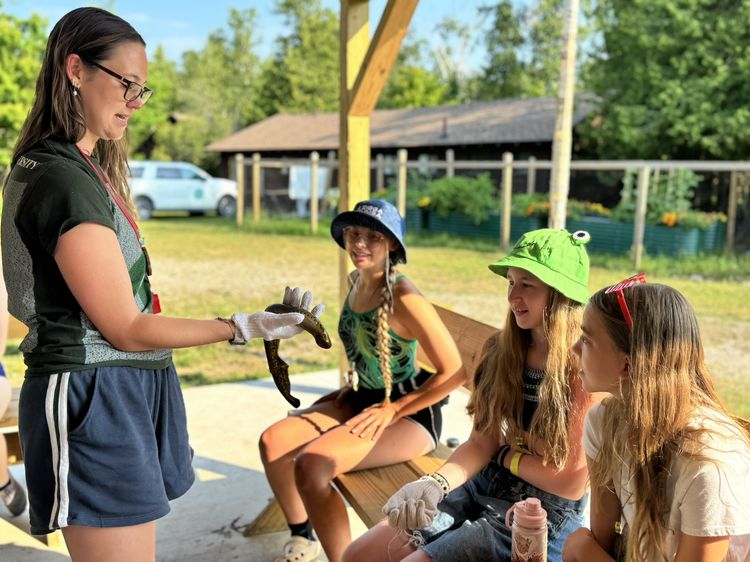
With live specimens provided by the Great Lakes Fishery Commission's Hammond Bay Biological Station, campers were able to hold and examine sea lamprey, and discover their physical characteristics.
Using their circular suction-disc mouths lined with teeth, sea lamprey attach to fish and feed as parasites for 12-18 months of their lives, after transforming from a larval, filter feeder stage. Campers explored how modifications to shipping canals allowed sea lamprey to bypass natural barriers and enter the upper Great Lakes during the early twentieth century, contributing to dramatic declines in native fish populations and threatening valuable fisheries.
Finding science solutions
The lesson focused not only on the problem, but also on the role of science in finding solutions. Campers learned how scientists, such as Vern Applegate, stationed at the local Hammond Bay Biological Station work in the 1950s to help develop management strategies that dramatically reduced sea lamprey populations. The discovery and use of the selective lampricide TFM remains one of the world's most successful examples of invasive species management. Still today, scientists at the USGS Hammond Bay Biological Station continue to research and develop a variety of techniques and programs for managing sea lamprey populations, including barriers that prevent spawning migrations, specialized traps that remove adults from rivers, pheromone-based approaches that influence lamprey behavior, sterile-male release techniques, and improvements to existing control technologies.
The experience highlighted an important takeaway: people can unintentionally create environmental challenges, but science, technology, and innovation can help address them.
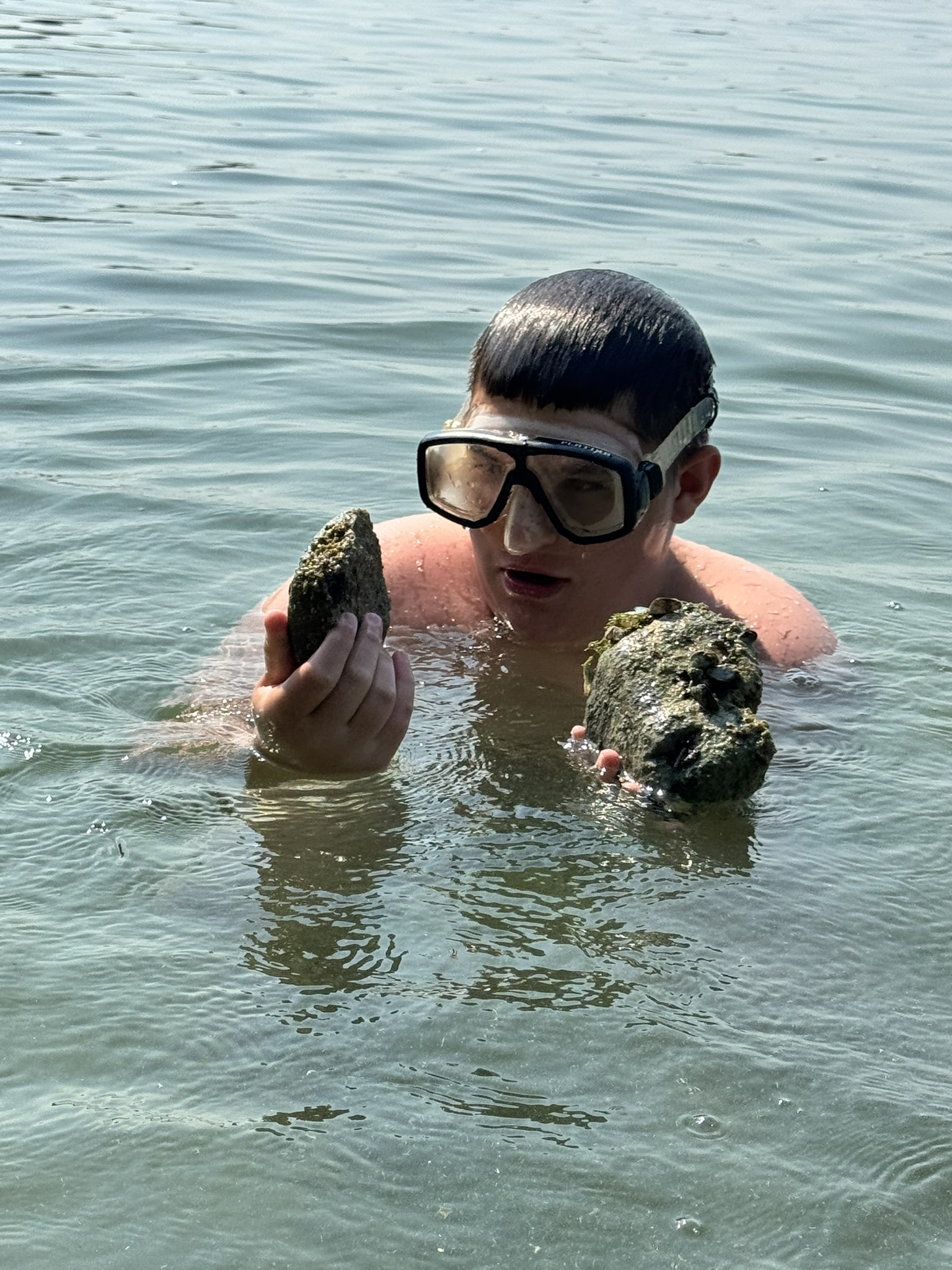
Into the water to count mussels
After exploring the history of invasive sea lamprey, and also learning about native Great Lakes lamprey, campers turned their attention to a more recent invasive species challenge.
Wearing masks and snorkels, youth entered Lake Esau and used quadrats (a tool like a frame used in sampling) to count zebra mussels attached to rocks and submerged surfaces. Working alongside researchers, campers collected scientific observations and estimated mussel densities in different parts of the lake.
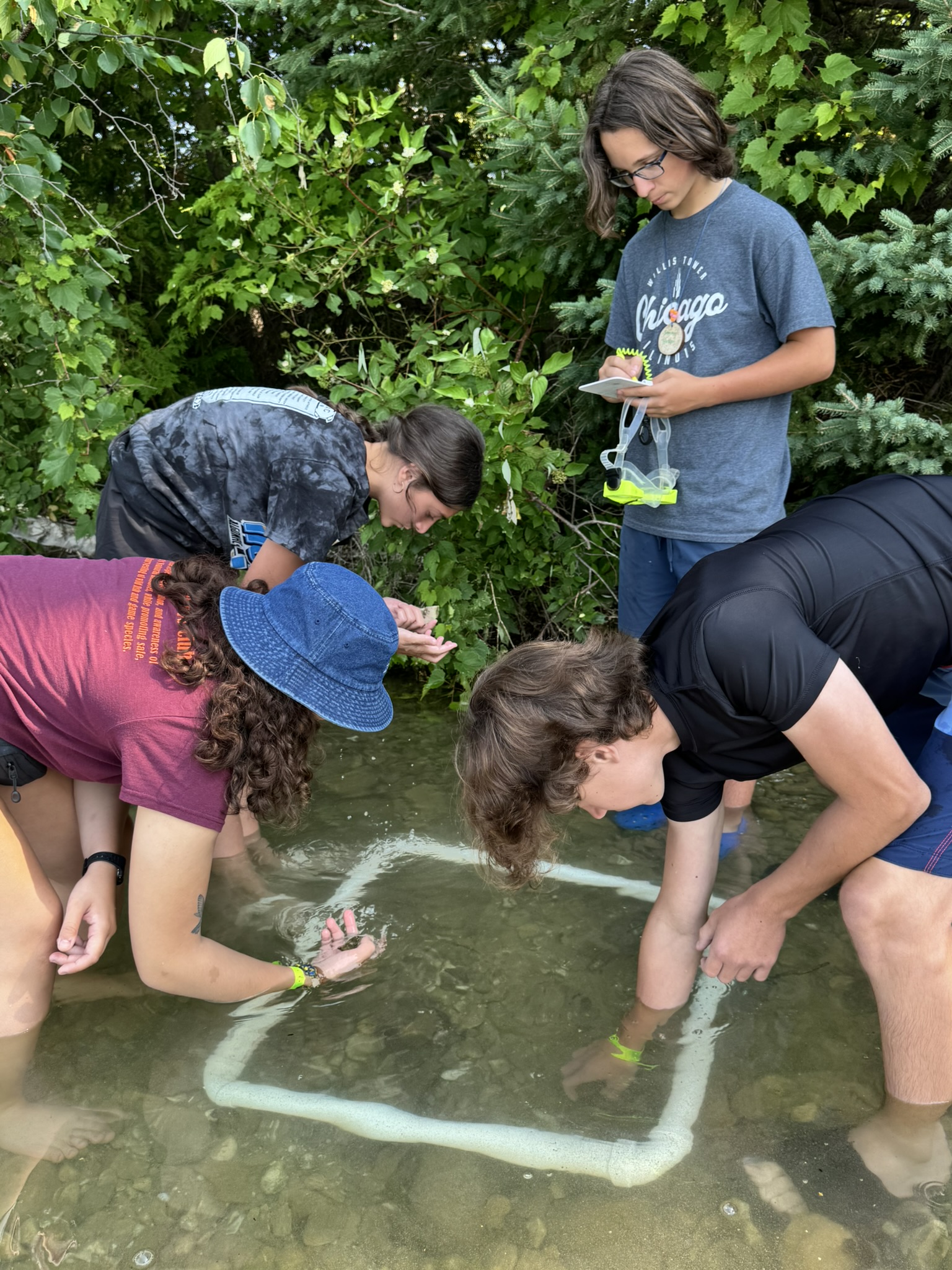
Back on shore, the data became a math conversation in analyzing and interpreting their science investigation. Using bathymetry maps and measurements of the lake, campers estimated how many zebra mussels might be living in Lake Esau. While not possible to get an exact population count of mussels in the lake, their scientific calculations each day consistently estimated populations in the millions. Those numbers helped illustrate the scale and ecological challenges of this issue.
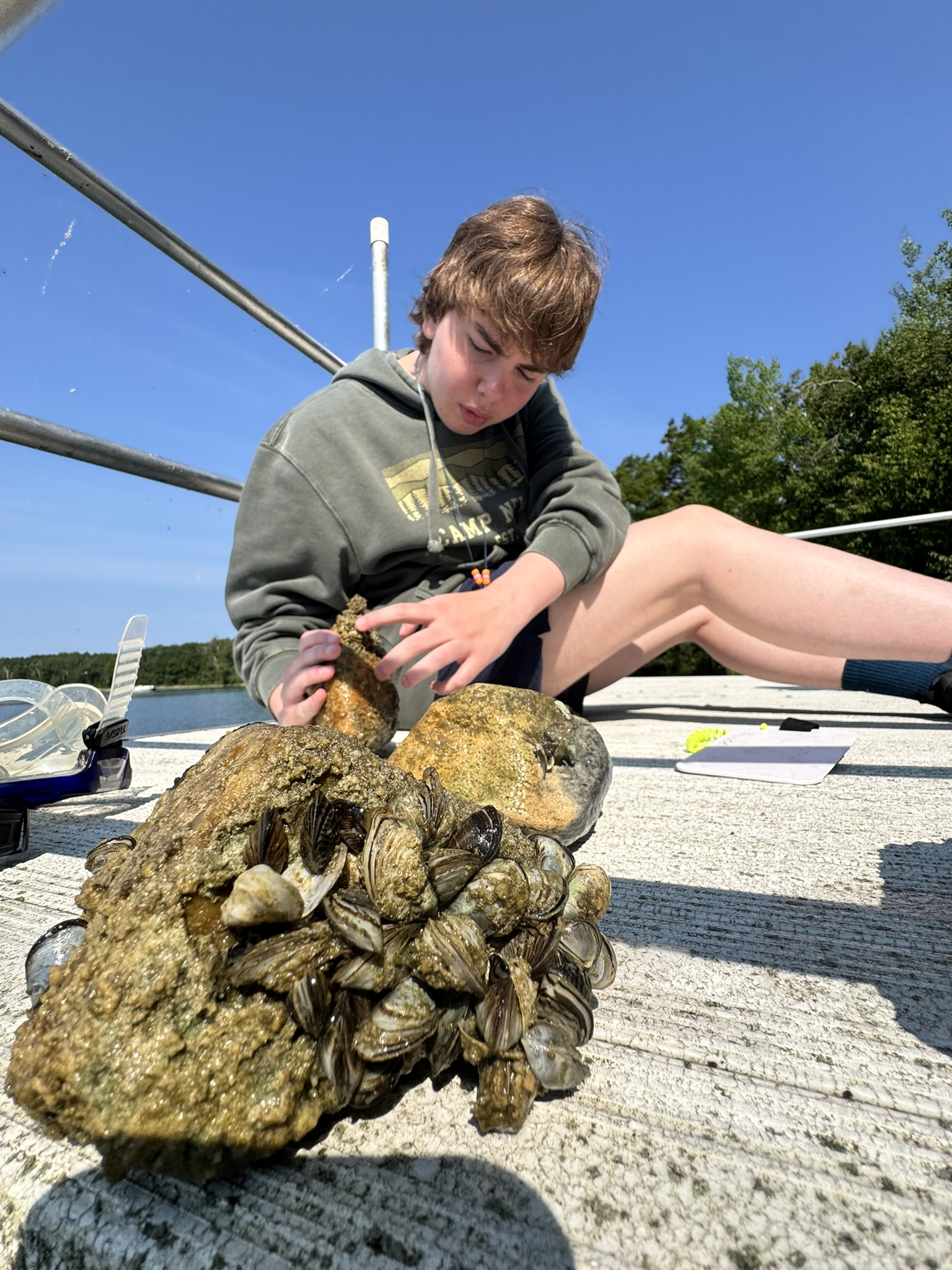
A single zebra mussel can filter approximately one liter of water each day. While clearer water may appear beneficial, invasive mussels can remove large amounts of phytoplankton from the food web, reducing food available for zooplankton, aquatic insects, and ultimately fish populations. Campers also learned that invasive mussels can contribute to conditions that favor harmful algal blooms, creating impacts that extend beyond fisheries to recreation, drinking water quality, and human health.
For researchers, those human connections are an important part of understanding environmental change. Through the activity, campers experienced firsthand how scientists collect data to better understand ecosystem impacts and inform management decisions.
Future scientists and stewards
Throughout the session, campers were encouraged to think critically about the connections between people and the environment.
Sea lamprey and zebra mussels are often viewed as environmental problems, but campers learned that both arrived and spread largely because of human actions. As a result, managing invasive species is as much a human challenge as an ecological one.
Some invasive species, such as the sea lamprey, can be managed through ongoing scientific efforts. While this is not without cost – the United States and Canada spend approximately $25 million USD annually to control invasive sea lampreys in the Great Lakes through the Great Lakes Fishery Commission's integrated control program – it serves to protect a $5.1 billion dollar fishery. Others, including zebra mussels, continue to present questions that researchers are still working to answer. The experience also introduced campers to careers in science, technology, engineering, and mathematics (STEM), showcasing how scientists continue to investigate ways to protect Great Lakes resources for future generations.
The week-long 4-H Great Lakes and Natural Resources Camp provides youth ages 13-15 with hands-on experiences exploring science, leadership, natural resources, and environmental careers. More than learning about invasive species, campers left with a deeper understanding that healthy Great Lakes require informed decisions, responsible actions, and future leaders prepared to tackle complex environmental challenges. Perhaps among these campers are the scientists who will help solve the next Great Lakes conservation challenge.
Michigan Sea Grant is committed to research, education, and outreach through partnerships with people and organizations to foster healthy Great Lakes coastal ecosystems, communities, and economies. A collaborative effort of the University of Michigan and Michigan State University and its MSU Extension, Michigan Sea Grant is part of the NOAA-National Sea Grant network of 34 university-based programs.
This article was prepared by Michigan Sea Grant under award NA24OARX417C0157-T1-01 from the National Oceanic and Atmospheric Administration, U.S. Department of Commerce through the Regents of the University of Michigan. The statement, findings, conclusions, and recommendations are those of the author(s) and do not necessarily reflect the views of the National Oceanic and Atmospheric Administration, the Department of Commerce, or the Regents of the University of Michigan.