Bringing in a community context for regenerative agriculture: Connecting farms and lakes
 Print
Print Email
EmailWhile regenerative practices aim to improve soil, water, nutrient cycling and biodiversity—and strengthen farmer and community well-being—they also come with challenges. Learn key insights on how to navigate and implement these different principles.
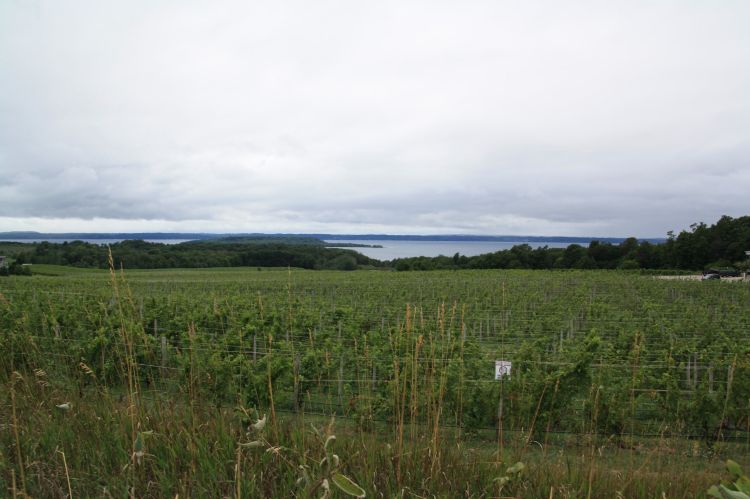
In February 2026, Michigan State University Extension partnered with the MSU Center for Regenerative Agriculture to offer a special webinar series on regenerative agriculture. These sessions brought together farmers, educators and landowners who are interested in healthier soils, stronger farms and more resilient rural communities.
The series introduced six key principles that help guide regenerative agriculture. These principles focus on things like keeping living roots in the soil, minimizing soil disturbance, increasing plant diversity, integrating livestock, and understanding your unique farm context. One important message from the series was clear: regenerative agriculture is not “one size fits all.” Every farm is different. Climate, soil type, crops, livestock and personal goals all matter. The goal of the webinar series was not to tell farmers exactly what to do, but to share ideas, examples and research that can help guide decisions.
Understanding the land–water connection
In this webinar, participants learned how regenerative practices on farmland can also benefit lakes, streams and wetlands. The key takeaway was simple but important: what happens on land affects what happens in the water.
Erick Elgin, an aquatic ecologist with MSU Extension, shared how lakes are shaped not just by what happens in the water, but by what happens around them. Rainfall moves across fields, yards, roads and forests, carrying soil, nutrients and pollutants into lakes. This area of land that drains into a lake is called a watershed—or more specifically, a lakeshed.
As land changes from natural vegetation to farmland, roads or neighborhoods, water moves faster across the surface. This can increase erosion, carry nutrients like phosphorus into lakes, and reduce water quality. In lakes, excess nutrients often lead to algae growth, cloudy water, and loss of habitat for fish.
Shared solutions across communities
One of the most exciting ideas shared in the webinar was that many best practices for farms and lakefront homes are very similar. Both aim to slow down water, reduce runoff, protect soil and rely more on healthy vegetation.
For example:
- Cover crops on farms help hold soil in place, improve soil health, and keep nutrients out of groundwater.
- Vegetated shorelines and rain gardens around lakes help reduce erosion and filter runoff.
- Soil testing and nutrient management help ensure that fertilizer is used wisely and only when needed.
- Grass waterways and filter strips can reduce erosion on farms while protecting nearby streams and lakes.
These practices benefit everyone, but they can also cost time and money. That is where collaboration comes in.
A win-win partnership model
The webinar introduced a pilot idea where lake communities and farmers support each other. In Michigan, many lakes are managed by lake associations or lake boards. These groups often raise funds to protect their lakes. The idea is that some of these funds could help support conservation practices on nearby farms within the watershed.
For example, a lake community might help pay for cover crop seed, fencing or erosion control practices on a nearby farm. The farmer benefits from improved soil health and reduced costs. The lake benefits from cleaner water and less sediment and nutrients flowing into the lake. This type of benefit is called an ecosystem service—a helpful service provided by healthy natural systems.
A real Michigan example
The webinar highlighted a real partnership at Kimball Lake in Newaygo County. Over time, the lake experienced declining water quality. The lake community worked with a nearby farmer, the local conservation district, and other partners to address erosion and runoff problems.
Together, they installed a permanent cattle crossing, fenced cattle out of sensitive wetland areas, stabilized eroding gullies and restored vegetation. The farmer was able to protect pastureland and improve land management, while the lake benefited from reduced sediment, nutrients and bacteria entering the water.
Looking ahead
This approach is still being tested, but it shows real promise. It relies on trust, communication and local relationships rather than strict rules. MSU Extension encourages farmers, lake residents and community leaders to explore these ideas together.
Regenerative agriculture is about long-term thinking—about leaving the land and water better for the next generation. By working together, farms and lake communities can build healthier ecosystems and stronger connections across the landscape. If you would like to learn more, watch the following full webinar session.