A report on Sumisansui rollup irrigation systems
 Print
Print Email
EmailA Japanese company is rolling out a new way to irrigate.
Reference to commercial products or trade names does not imply endorsement by Michigan State University Extension or bias against those not mentioned.
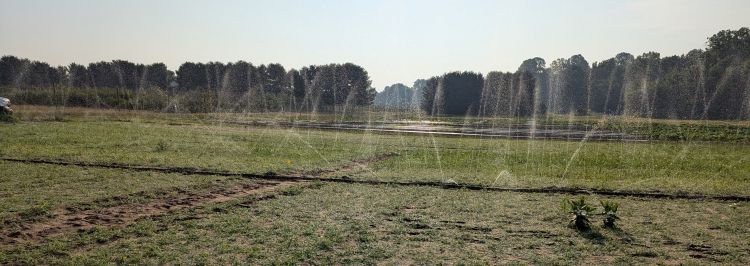
A new type of irrigation is working its way onto vegetable farms called a Sumisansui system. It comes in a roll, just like drip tape, and has perforations similar to drip tape. But it sprays a gentle mist into the air (Figure 1), creating a wetted rectangle along its length. The Japanese company, Sumika Agro-Tech, uses precision lasers to burn a pattern of holes into durable plastic strips that are then mated together with two seams that inflates to form a tube when pressurized with water. This allows the tubes to lay flat when empty, and when paired with one of their portable winders, they can be neatly rolled back up for use on another day or area. With funding from a Project GREEEN mini-grant, researchers at Michigan State University Extension’s Southwest Michigan Research and Extension Center tested three of the company’s systems, distributed by Wetterfrosch Farm Tools, during summer 2025: the SumiRain, R-Wide and Mark-II.
Some of the use cases that are particularly appealing to vegetable growers are germinating direct-seeded crops, flushing weeds, incorporating fertilizer or herbicides, and keeping leafy greens crisp, turgid and cool on hot harvest days. On small farms, this is typically achieved with many lines of drip tape to fully wet a bed top, or solid-set poly pipe sprinklers on risers. On mid-sized farms, overhead irrigation is most commonly achieved with aluminum solid-set or with self-retracting traveling guns.
Where does something like the roll-up Sumisansui tubes fit in the vegetable irrigation world?
Using drip tape to germinate seed crops in a multi-row bed top requires up to four lines per bed, and in a short rotation crop like lettuce there is a lot of tape management for cultivation and turning over beds. That’s why overhead irrigation systems setup between-rows are often preferred.
Many of the overhead irrigation products on the market make a wetted circle or half-circle, and your job is to figure out how far apart to put the sprinkler heads with your pump’s output in gallons per minute (gpm) and pressure in pounds per square inch (psi). Some sprinkler systems, such as Wobblers, can run at the same pressure as drip, but require higher gpm than drip tape. Achieving proper overlap of the circles requires careful design, and if the width or length of your plantings change, then the system design often needs to change as well. Working around the risers and lines with weed machines or sprayers is also an obstacle, though poly pipe can be driven over.
In contrast, the Sumisansui tubes make a wetted rectangle, and lay flat when not in use, providing clearance for boom sprayers. They are also easily rolled up before cultivating. They have a fixed distance between their emitters that eliminates the need to think about the distance between risers in solid-set systems, but you still need to figure out the overlap from side to side if placing more than one line. There is more water delivered closer to the tube than at the edges of the pattern, even if it looks fully wet from the crisscrossing streams. With the smaller Mark-II or R-Wide Sumi systems, you would need more of them to cover more than three to five beds of a standard width in the range of 3 to 5 feet. With the SumiRain, one tube covers about 50 feet to either side. But only about 35-40 feet of that gets a uniform sprinkle, the outside 10-15 feet on either edge of the rectangle gets less water.
In the case of larger traveling guns, cost is a big factor. On a vegetable farm that requires drip tape and overhead irrigation, you have to balance your system output in gallons per minute and pressure for drip against the requirements of a high-volume sprinkler. One way to do that is to throttle back the pump to accommodate drip and use a booster pump on the sprinkler. Another way is to maintain high capacity for the sprinkler and a series of pressure reduction zones for the drip. Either way you cut it, there is an expensive overhead sprinkler system and a bunch of modifications to harmonize it with drip. The smallest traveling gun systems run about $5,500, and that is about $0.29 per square feet of coverage.
Sumisansui tubes alone work out to about $0.05 per square feet of coverage, not including the cost of the winder and fittings. But, the company suggests replacing the tubes in about five years as the emitter holes get stretched out from use, and emitters plug with particulates. They don’t retract on their own, but can be more easily connected to solenoids and timers than traveling guns or aluminum solid-set if you have a constant pressure system.
Do they work?
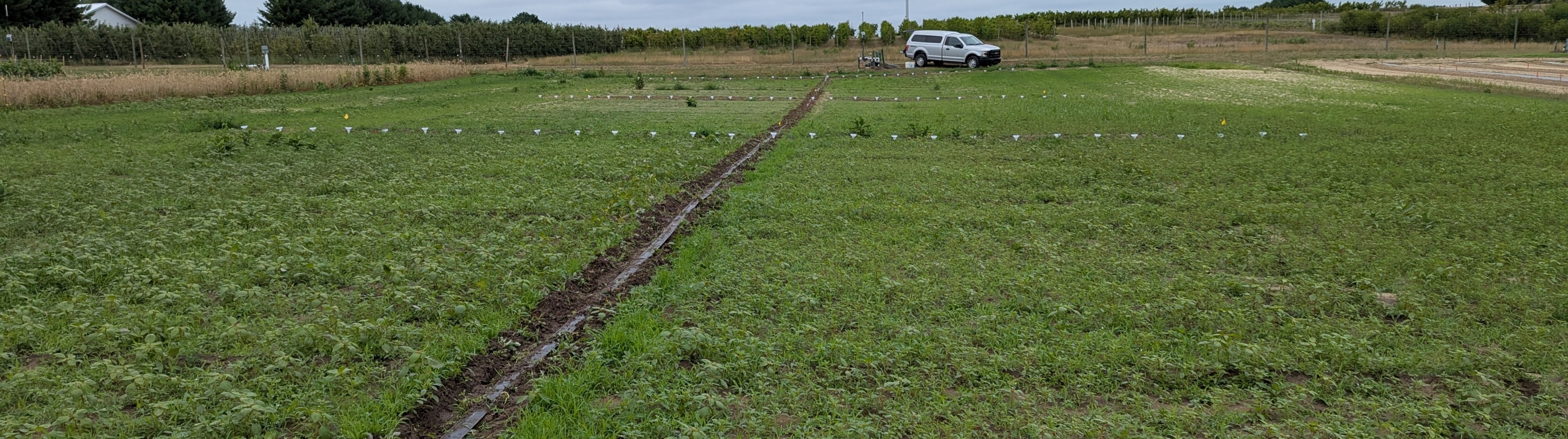
I spent several days this summer using and evaluating three of the Sumisansui systems so growers could evaluate if they are a fit for their farms (Figure 2). We measured deposition uniformity with wind ranging from 1.1 to 6.2 miles per hour by placing rain gauges in transects that crossed the main line every 65.5 feet (20 meters). We then ran the systems at three different pressures for 15 minutes each, repeated three to six times.
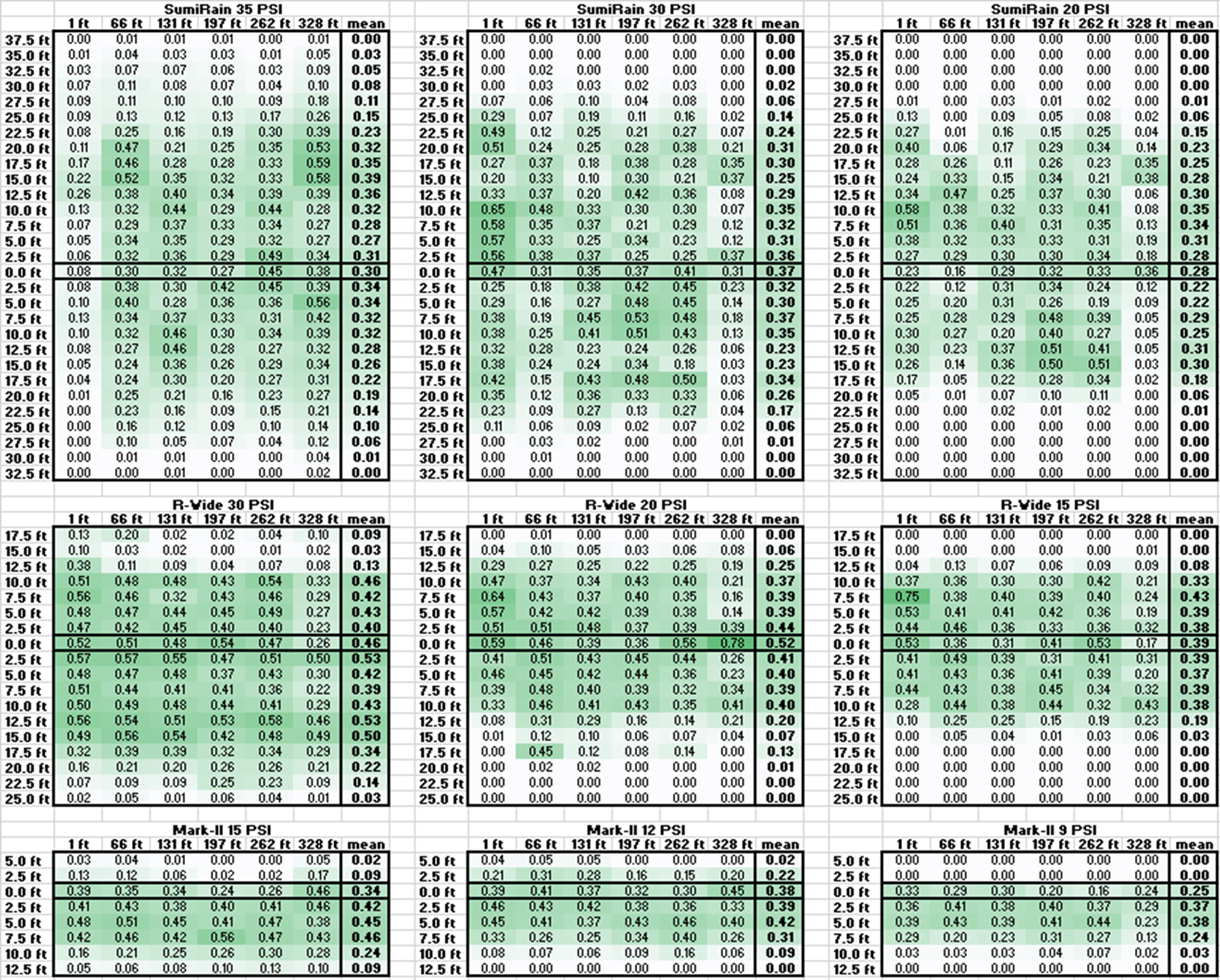
For the most part, the effective coverage widths that we measured were less than the widths provided by the company (Table 1 and 2). The Mark-II, R-Wide and SumiRain averaged outputs of 0.27, 0.32 and 0.24 inches of water per hour, respectively. The flow rate increased with pressure for each system, as expected, but the patterns did not always.
There was a question about whether the Mark-II could run at 15 psi, which is above the 12-psi rating by the manufacturer, because that pressure regulator is very common here. The system ran fine at that pressure, but the pattern was not observed to grow. Similarly, the SumiRain systems made a similar pattern when run at 30 and 35 psi. It is possible that at 43 psi the pattern might increase, but I did not test it outside the manufacturer’s rating for this system.
The most serious drawbacks to these systems are their susceptibility to wind and their tendency to fluctuate camber or tilt. Some other potential drawbacks are their emitter height relative to nearby vegetation and flushability. The company sells support stakes for the R-Wide that can raise the tube up off of the ground a few inches. It’s also possible to insert the stakes into 0.75 inches pipe driven into the ground to get extra height. These accessories address some of these issues, but were not evaluated.
Wind
The smaller, almost mist-like, droplets are easily taken off target, and the tubes themselves can catch the wind when deflated, pull themselves off their winder, and get twisted and tangled together. If you can pull them tight and staple them in place, they stay better and twist less in the wind. Laying them in a wheel track helps to prevent wind from getting under them. When operating, a 4-7 mph wind will blow the pattern by about 5 feet and 8-12 mph wind will blow the pattern 10-15 feet (Figure 3).
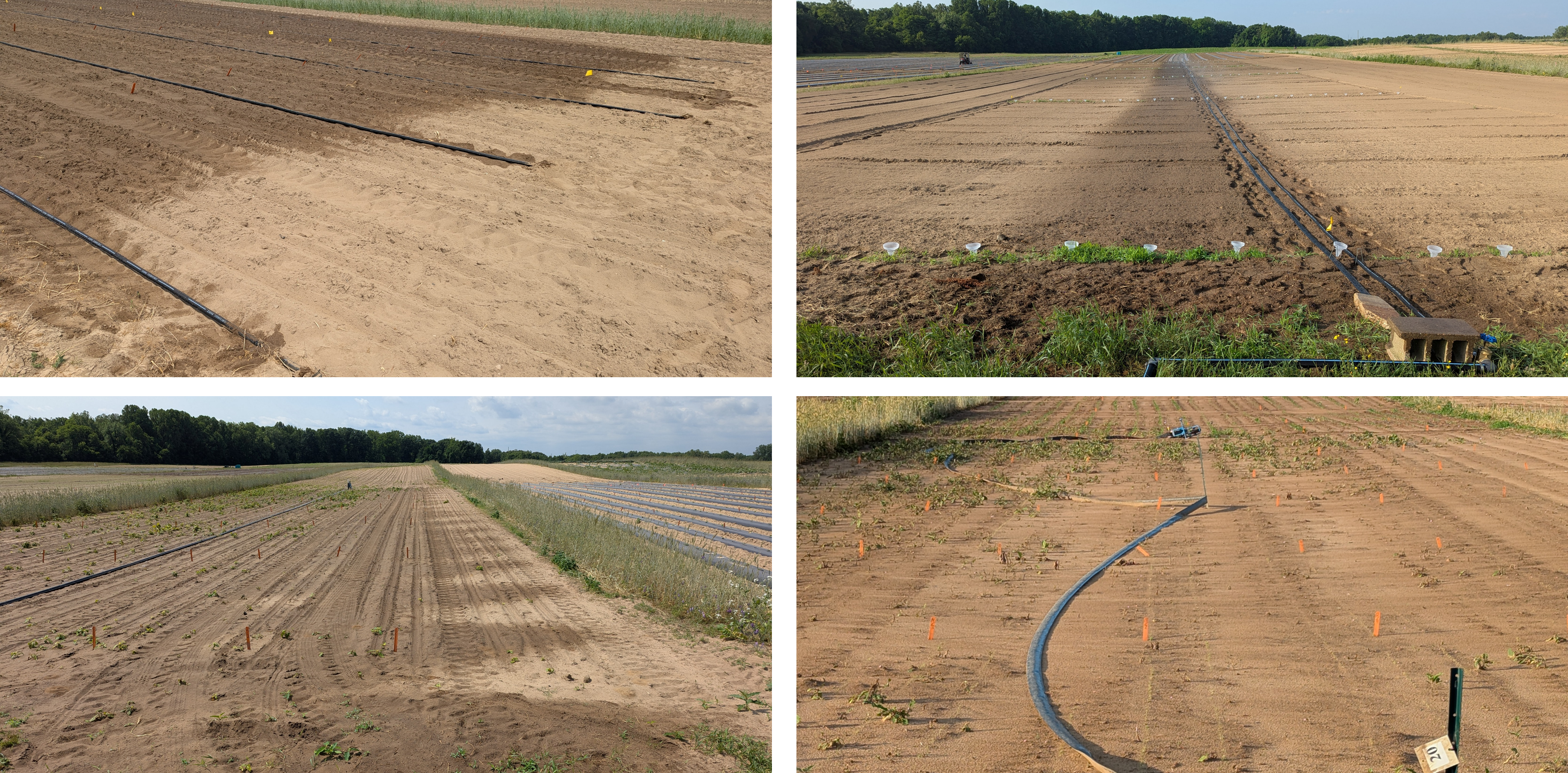
The largest system, SumiRain, is less bothered by wind, and some light wind is actually desired to fade the streams into each other more. Otherwise, they make a stripey pattern especially on the edges (Figure 3). The SumiRain tubes are made of a thicker rubberized material that is weighty even when empty, but 18 mph gusts can still displace it and even knock the winder over (Figure 3).
Camber
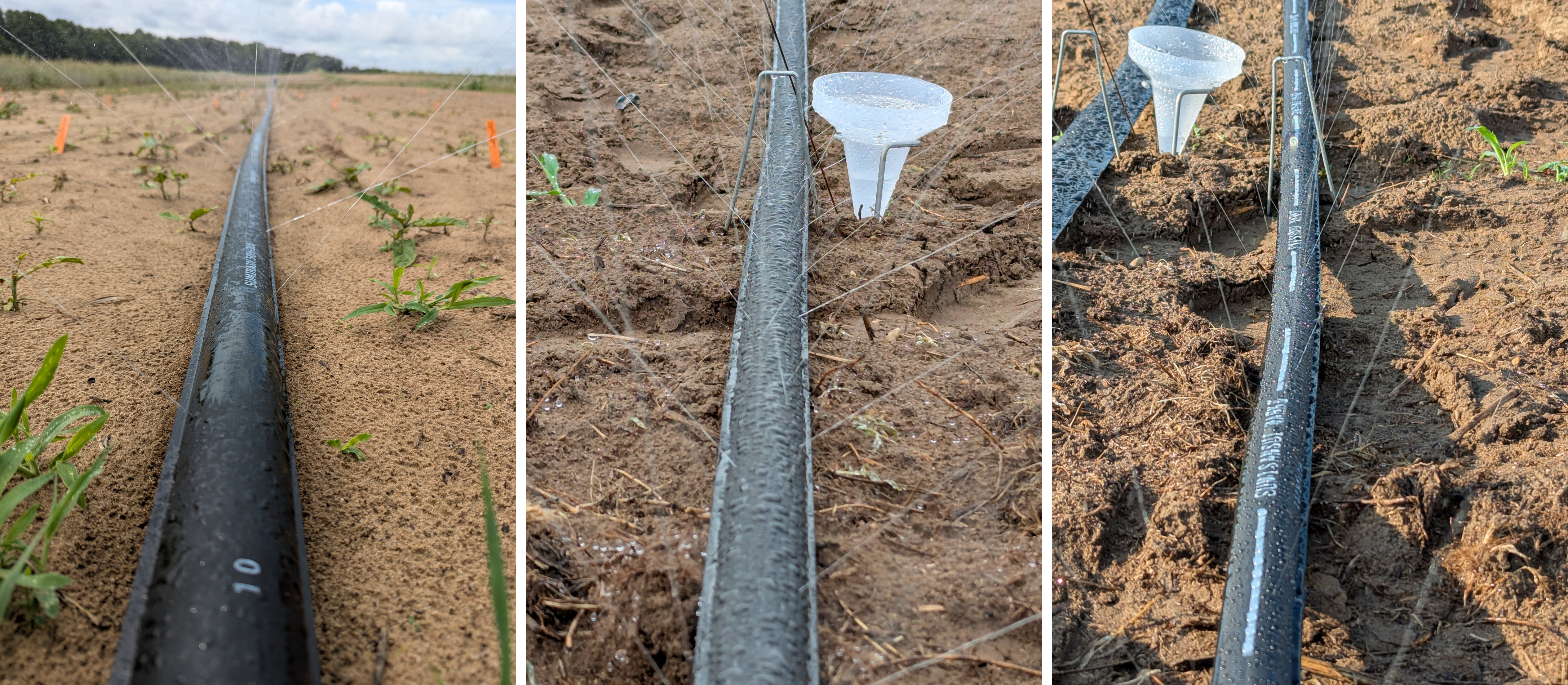
They lay flat as tape when empty and then inflate into tube shapes when pressurized. Sometimes the tube shape cambers or tilts to one side or the other and throws water more in that direction. With its 60-to-70-degree trajectory, when the Mark-II tips it throws water unevenly (Figures 4 and 5). But with some streams at 25 degrees, the SumiRain will make pronounced puddles or blast holes in the soil. The SumiRain has enough power to displace seeds that are sown close to the surface on fluffy tilled soil (Figures 4 and 5). Pulling the tubes tight and laying them on a level surface helps prevent this.

Height
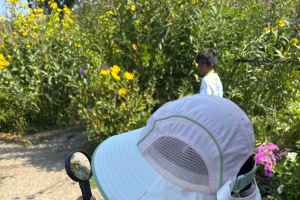
As a roll-up tape, they sit upon the ground, and weeds or crops that grow up alongside the tube will eventually block the streams of water (Figure 6). The SumiRain and R-Wide have emitter angles, which hit vegetation about 6 inches away when it gets about 4 inches tall. That should be considered when using it between crop rows or tall beds, or if using row covers. Riser stakes affixed to 0.75 inches riser pipe can be deployed to address this with the R-Wide system, but on farms using more machinery this becomes another thing to move, requiring thoughtful placement.
Flushability
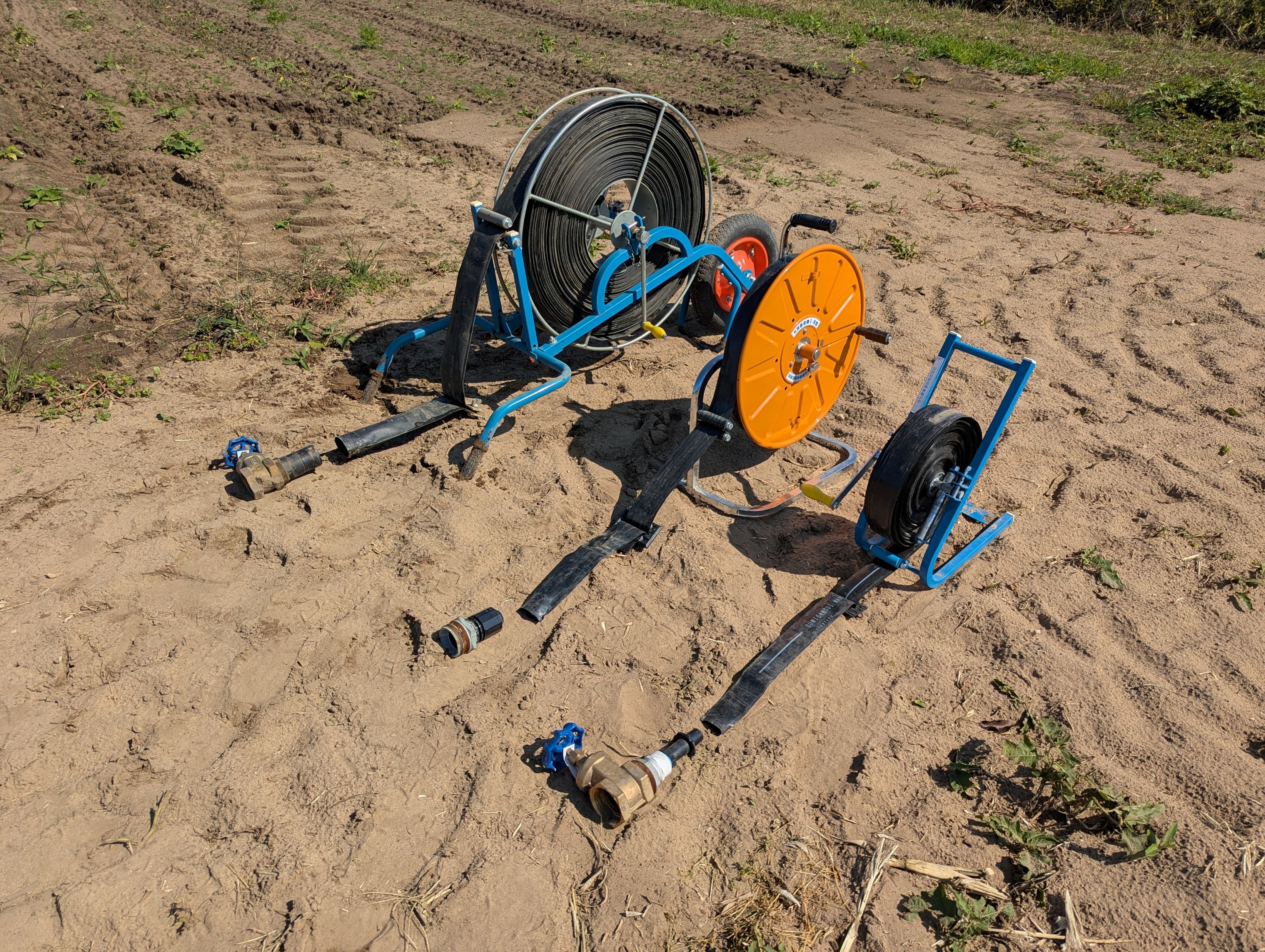
As with drip tape and other types of irrigation systems, sediment can get in the pipe when hooking it up to the header, and debris can accumulate in the line over time from the water source, additives or in routine disconnecting for cultivating. With most systems, the lines are plumbed to the size of the run and can be opened at their ends to flush the lines. With the Sumi system, you can cut them at the lengths you desire and do this, but then that removes some of the windup portability for using it in plots of different lengths. When kept on the winder, one end is hooked up to the header and the other is pinched off with the excess tape rolled up in the winder. In order to flush the line with this configuration, unwind the entire 330 feet root roll. When cut to fit a plot length, they are easily flushed as needed and can still be rolled up on their winders for storage, but it takes a little practice to slip each piece into the roll. The company ships filters that slip inside the lines where they connect at each header. Even if you filter before the header, it could be a good idea to use these slip-in filter bags to extend the life of the lines and reduce your need to flush the lines.
In summary, Sumisansui irrigation systems offer a novel middle ground between drip and overhead irrigation. They provide flexible coverage, ease of redeployment and compatibility with low-pressure systems, but are sensitive to wind and require attentive setup and maintenance. These systems may be best suited for small to mid-size vegetable farms looking for temporary, easily movable overhead irrigation, particularly for germinating and maintaining short-season, short-statured crops. Growers should weigh the trade-offs between portability, coverage uniformity and wind sensitivity before investing.
| System | Strengths | Limitations | Best Fit |
|---|---|---|---|
| Sumisansui | Portable, easy to store and redeploy, low cost per area | Wind sensitive, uneven edge coverage, moderate lifespan | Small/mid-size farms; germination, cooling, or short-term use |
| Drip tape | Precise, efficient, low pressure | Labor-intensive for short crops, limited surface wetting | Multi-row beds, fertigation |
| Overhead sprinklers (Solid set / Pipe) | Even coverage, durable | Fixed layout, equipment obstacles | Established fields, uniform crops |
| Traveling guns | Covers large area quickly | High cost and pressure | Large-acreage farms with high pump capacity |
Table 1. Performance and physical characteristics of three Sumisansui irrigation systems measured in 2025 in southwest Michigan averaging across three to six runs for 15 minutes each. Wind conditions ranged from 1.1 to 6.2 miles per hour.
| Characteristics | Mark-II | R-Wide | SumiRain 50 | ||||||
|---|---|---|---|---|---|---|---|---|---|
| Operation Pressure (PSI) | 9 | 12 | 15 | 15 | 20 | 30 | 20 | 30 | 35 |
| Effective Coverage Width (ft) | 7.5 | 10 | 10 | 15 | 20 | 25 | 35 | 42.5 | 42.5 |
| Average Precipitation Rate (in/hr) | 0.26 | 0.28 | 0.27 | 0.31 | 0.31 | 0.33 | 0.24 | 0.26 | 0.23 |
| Average Flow Rate (gal/ft/min) | 0.03 | 0.04 | 0.05 | 0.07 | 0.12 | 0.15 | 0.12 | 0.15 | 0.16 |
| Flow Rate at 66 ft (gal/min) | 2.06 | 2.78 | 3 | 4.6 | 7.6 | 9.6 | 7.8 | 9.6 | 10.8 |
| Flow Rate at 131 ft (gal/min) | 4.12 | 5.56 | 6 | 9.2 | 15.2 | 19.2 | 15.6 | 19.2 | 21.6 |
| Flow Rate at 197 ft (gal/min) | 6.18 | 8.34 | 9 | 13.8 | 22.8 | 28.8 | 23.4 | 28.8 | 32.4 |
| Flow Rate at 262 ft (gal/min) | 8.24 | 11.12 | 12 | 18.4 | 30.4 | 38.4 | 31.2 | 38.4 | 43.2 |
| Flow Rate at 328 ft (gal/min) | 10.3 | 13.9 | 15 | 23 | 38 | 48 | 39 | 48 | 54 |
| Width, flat (in) | 1.97 | 2.44 | 2.39 | ||||||
| Diameter, full (in) | 1.1 | 1.34 | 2.05 | ||||||
| Wall Thickness (in) | 0.016 | 0.023 | 0.031 | ||||||
| Orifice size (in) | 0.015 | 0.015 - 0.047 | 0.031 - 0.078 | ||||||
| Emitter spacing (in) | 8 | 2 | 6 | ||||||
| Spray angle from horizontal (°) | 60 - 70 | 30 - 80 | 25 - 80 | ||||||
| Spray height (ft) | 4.75 - 6 | 6 - 8 | 8 - 12 | ||||||
| Coil Length (ft) | 330 | 330 | 330 | ||||||
| Weight per Roll (lb) | 5.29 | 16.54 | 31.97 | ||||||
| Price per 100 m Roll ($) | 140 | 325 | 700 | ||||||
| Price for Fittings ($) | 30 | 30 | 30 | ||||||
| Price for Winder ($) | 275 | 325 | 600 | ||||||
| Price Total ($) | 445 | 680 | 1330 | ||||||
Table 2. Spread patterns of three Sumisansui systems at three different pressures, and averaged over three to six runs with varying wind conditions from 1.1 to 6.2 miles per hour. the bolded lines at 0.0 ft are the tube, up and down are distance away from it, and left to right is distance down the tube. Darker color indicates more water deposited, measured in inches per hour.