New pesticide decision website for apple, peach and cherry growers
 Print
Print Email
EmailThe free “MI Fruit Decision” website now contains decision making tools for apple, peach, tart cherry and sweet cherry growers to improve pest management programs using data from many years of MSU pesticide efficacy trials.
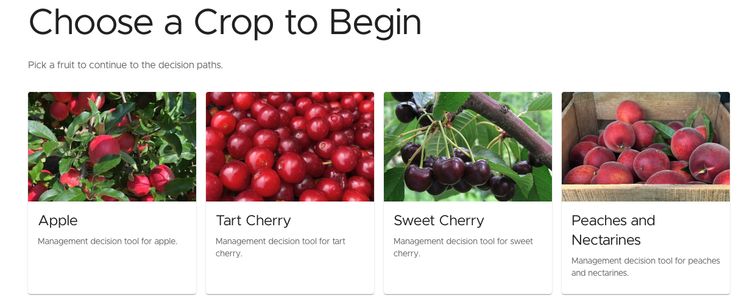
The new MI Fruit Decision website allows apple, tart cherry, sweet cherry and peach or nectarine growers and crop consultants to search pest control methods by crop growth stage, specific pests or control measures. Most of the information on the website is compiled from the E154 Michigan Fruit Management Guide and other Michigan State University Extension resources. This website is available for free and compatible with desktop and mobile devices.
This video demonstration provides instructions and examples of how to use the website:
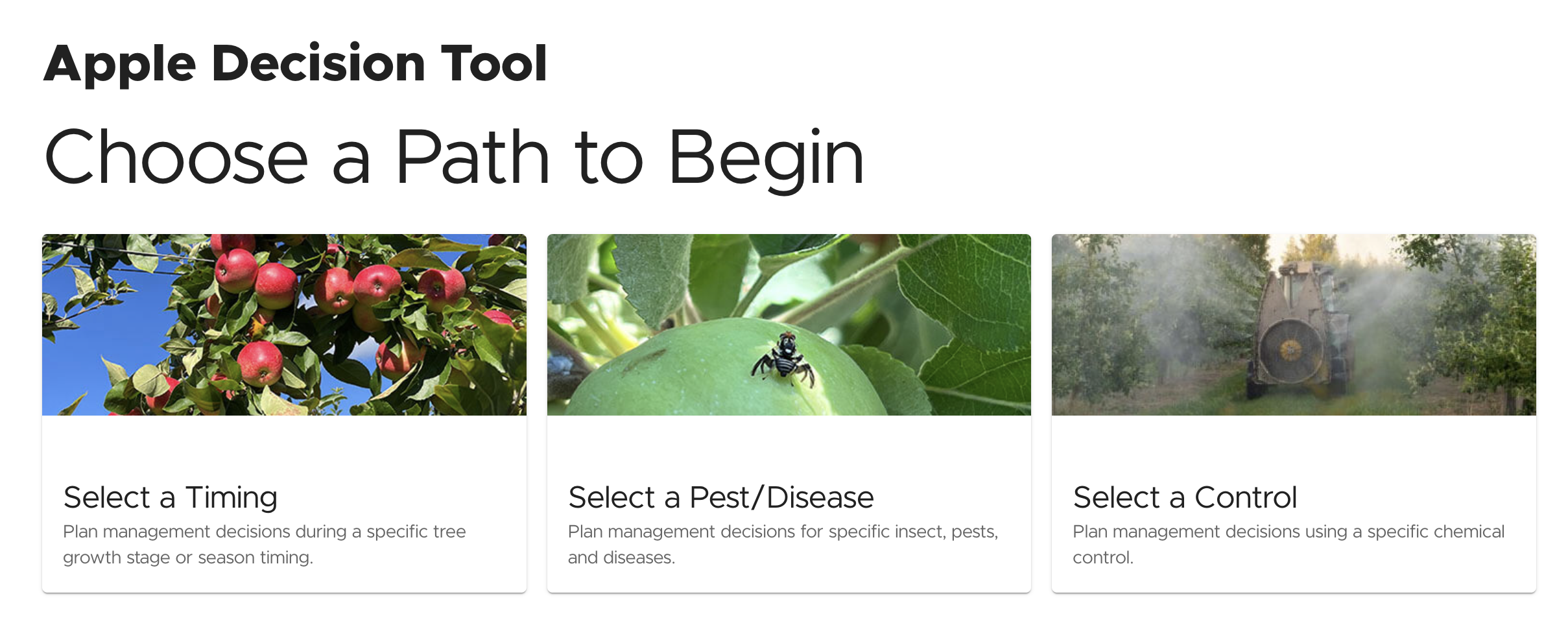
Users can start a decision process using three different approaches:
- Select a timing – plan management decisions during a specific tree growth stage or season timing.
- Only the insects and diseases relevant to the selected timing will appear to help prioritize key pests.
- Select a pest – plan management decisions for specific insect pests and diseases.
- Users can select multiple pests simultaneously to compare control options.
- Select a control – plan management decisions using a specific chemical control.
- Helps users understand all the ways a particular chemical can be used.
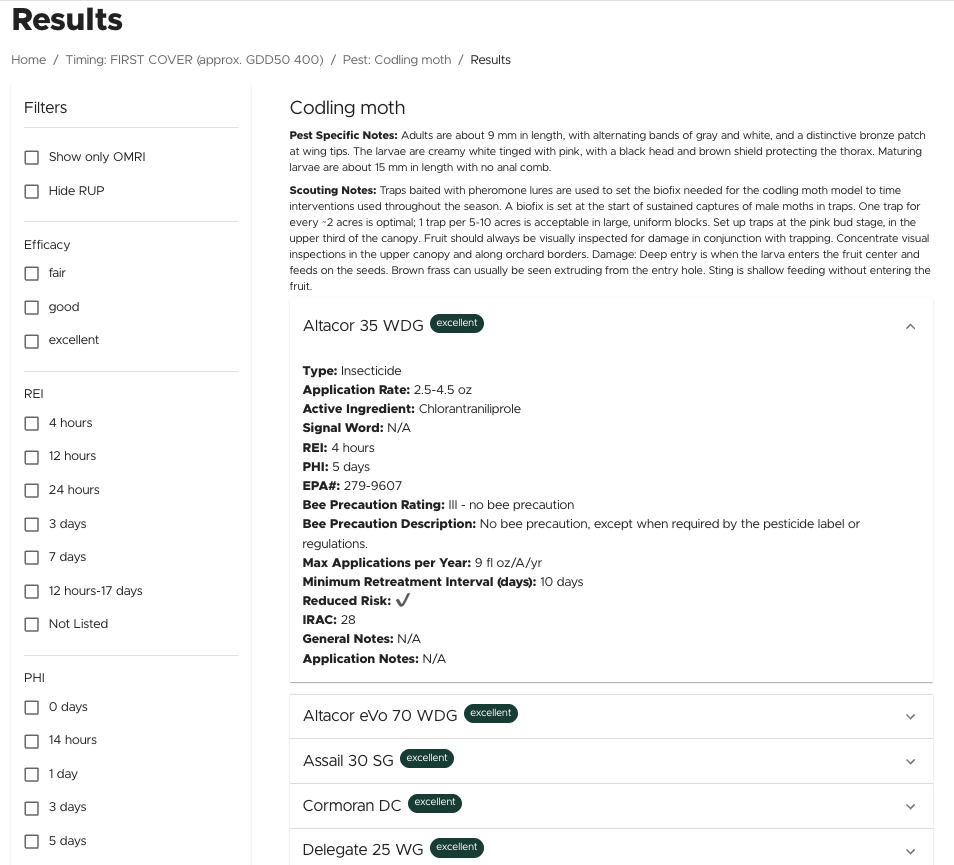
The results page will show controls in alphabetical order along with their efficacy for the respective pest/disease. There will also be notes about the selected pests, such as identification and scouting information. Clicking on each pesticide product will display the application rate, active ingredients, restricted entry intervals (REI), preharvest intervals (PHI), signal word, EPA #, bee precaution ratings, max applications and minimum retreatment intervals, as well as FRAC/IRAC code. Users can further customize the results output by using the filter options. Filters include showing only organic certified products, hiding restricted use products, efficacy, REI and PHI.
For now, the website only includes apples, tart cherry, sweet cherry and peaches/nectarines. Future work will focus on adding small fruits, such as blueberries, grapes and strawberries.
The project team is actively collecting feedback from industry partners so the website can be continually improved. There is a “Share Feedback” link in the top right corner of the website to share anonymous feedback. Additional comments or questions can be sent directly to Jackie Perkins at albertj9@msu.edu.
This website provides a summary of the relative performance of certain pesticides for specific pests of Michigan fruit crops. These recommendations are based primarily on research data gathered by Michigan State University scientists over several years. The efficacy ratings may not be accurate in all orchards. The information on this website does not supersede the label directions as changes in pesticide regulations occur constantly. If you have questions, contact your county Extension office. To protect yourself, others, and the environment always read the label before applying any pesticides.
Special thanks to Griffin Goss, Ashlyn Clement and Angeline Tran for their work in developing this decision tool.
This work is supported by Project GREEEN, project award number GR24-036, from AgBioResearch and MSU Extension at Michigan State University, in partnership with the Michigan Department of Agriculture and Rural Development.