


Beyond cold hardiness: Managing fruit quality and harvest maturity of hybrid wine grapes in Michigan
 Print
Print Email
EmailProducing high-quality wine from cold-hardy interspecific hybrid grapes requires understanding their fruit chemistry and ripening patterns, which can differ substantially from those of traditional Vitis vinifera cultivars.
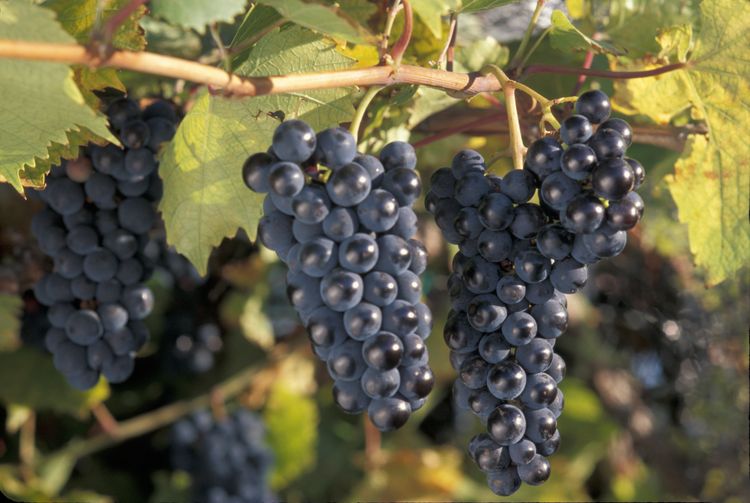
For many Michigan grape growers, particularly those operating in the colder portions of the state, hybrid wine grapes provide something Vitis vinifera cannot always provide: greater winter survival, earlier maturity and, in many cases, increased tolerance to important diseases. Cultivars such as Marquette, Frontenac, Frontenac gris, La Crescent, Brianna and Itasca have consequently expanded the possibilities for commercial wine production in areas such as the Tip of the Mitt American Viticultural Area and other sites where winter injury can make vinifera production riskier.
Michigan State University documented the agronomic performance and adaptation of Marquette, La Crescent, Frontenac gris, and several other grape cultivars through multi-year variety trials project conducted in northwestern and southwestern Michigan from 2008 to 2018.
Cold hardiness should not be confused with ease of producing high-quality fruit or wine
Cold-hardy cultivars are interspecific hybrids carrying genetic contributions from Vitis vinifera together with North American Vitis species, particularly Vitis riparia in several of the cultivars widely planted in the Upper Midwest. This ancestry provides valuable characteristics such as cold tolerance, disease resistance and early ripening, but it can also alter berry composition, acid metabolism, aroma development and phenolic chemistry.
For this reason, hybrids should not simply be regarded as vinifera vines with greater cold hardiness. They represent a different biological and enological system, and harvest decisions must reflect those differences.
The first challenge is defining what “ripe” means for a hybrid grape
The traditional harvest measurements, e.g. degrees Brix, pH and titratable acidity, remain useful for hybrid grapes, but their relationships can be quite different from those normally encountered in vinifera cultivars. This is particularly evident in cold-hardy cultivars with substantial V. riparia ancestry. These grapes can accumulate relatively high concentrations of sugar while retaining substantial quantities of organic acids. Consequently, a vineyard may reach 22, 23 or even 24 Brix while titratable acidity remains considerably higher than would normally be expected in a vinifera grape harvested at the same sugar concentration.
Michigan State University research illustrated the magnitude of this problem. At commercial harvest, Frontenac fruit contained about 24 Brix while retaining 16 g/L titratable acidity, and Marquette reached 23 Brix with 13 g/L TA. A summary of 8 years data from the Northwest and Southwest Michigan research plots reported a large cultivar and seasonal differences. For example in 2014, Frontenac and La Crescent samples from 20 to 23 Brix, retained TA values of approximately 14 to 17 g/L, demonstrating that high sugar accumulation does not necessarily indicate a balanced sugar-acid relationship in these cultivars.
The practical implication is important: waiting for higher degrees Brix does not guarantee that acidity will decline sufficiently to produce a more balanced wine.
High acidity is often fundamentally a malic acid problem
To understand hybrid fruit quality, growers and winemakers should look beyond total acidity and consider the composition of the organic-acid pool. Tartaric and malic acids dominate grape acidity, but they behave differently during ripening. Tartaric acid is relatively stable metabolically, whereas malic acid is actively consumed after veraison through respiratory metabolism. The rate of malate degradation is highly temperature dependent, with warmer berry temperatures generally accelerating its loss.
Many V. riparia-derived hybrids have a particular tendency to retain relatively high malic acid concentrations. La Crescent, for example, has been associated with substantial malate retention, consistent with its V. riparia ancestry. This means that the high TA frequently observed at harvest in some cold-hardy cultivars is not simply a consequence of delayed ripening; it can also reflect genetically determined differences in acid metabolism.
This distinction has major implications for wine production. A must dominated by malic acid may change substantially during malolactic fermentation because malic acid is converted to the weaker lactic acid. Therefore, two hybrid lots with the same TA at harvest may not have the same potential acid balance after fermentation. For hybrid grapes, measuring malic acid in addition to degrees Brix, pH and TA can therefore provide a much clearer understanding of both fruit maturity and the likely enological consequences of harvest timing.
Not every hybrid has the same acidity problem
One of the risks in discussing hybrids as a group is assuming that they share the same fruit chemistry. They do not. Regional harvest data from Michigan collected during the last 10 years, demonstrate substantial differences among cultivars. Frontenac has commonly been harvested between approximately 18 and 25 Brix with TA between 11 and 16 g/L, while La Crescent has typically ranged from approximately 17 to 24 Brix with TA of 13 to 16 g/L. Marquette tends to have somewhat more manageable acidity, while Brianna can have considerably lower TA. Itasca represents an especially important example because it was specifically selected and released partly for its relatively low acidity compared with earlier cold-hardy cultivars.
Crop load can be particularly important in highly fruitful hybrid vines
Cold-hardy cultivars frequently combine strong vigor with high fruitfulness. These characteristics are beneficial for reliable production, but they can also create excessive crop loads if pruning and early-season crop adjustment are not appropriate. This issue can become particularly relevant in Michigan because growers may retain additional buds during pruning as insurance against winter or spring frost injury. When damage does not occur, the resulting crop can be larger than the canopy can optimally mature.
Michigan State University has demonstrated that excessive crop levels in Michigan hybrids can contribute to persistent acidity and retention of less desirable or “rustic” flavor characteristics. Importantly, reducing crop very late in the season does not necessarily correct the problem. Crop adjustment is most effective when conducted early enough for the remaining fruit and canopy to respond physiologically.
Michigan State University research with Marquette also demonstrates an interesting difference between cold-hardy hybrids and many vinifera cultivars. Marquette possesses relatively fruitful secondary buds, an attribute associated with its V. riparia background. Following severe spring freeze damage in Michigan, shoots developing from secondary buds produced significant yields. Although their development was initially delayed, fruit from those shoots ultimately achieved quality similar to fruit produced on primary shoots by harvest. This is an important production advantage, but it also means that crop estimation after frost becomes particularly important.
A vineyard that appears severely damaged immediately after a freeze may subsequently regenerate a substantial crop from secondary shoots. If growers automatically compensate by retaining excessive shoots or clusters, vines can move from apparent crop loss to excessive crop load. The objective should therefore be to evaluate the real crop after the vine has responded to injury and to adjust crop load early enough to maintain the appropriate relationship between leaf area and fruit.
Canopy exposure influences acidity and flavor, but hybrids respond differently
Manipulating cluster exposure can influence berry temperature, organic acid metabolism, disease pressure and aroma composition. However, hybrid cultivars do not necessarily respond identically to practices developed for vinifera. Experiments with Marquette and Frontenac gris at Michigan State University have shown that pruning level and fruit-zone leaf removal can alter yield and some components of fruit composition, but effects are often cultivar- and season-dependent. A fruit-zone leaf removal reduced TA in Marquette, probably in part because increased berry temperature favored malic acid degradation. The same response was not consistently observed in Frontenac gris.
This should not be interpreted as a recommendation for defoliation. Rather, it demonstrates an important physiological principle: berry temperature and cluster microclimate can influence acid metabolism, but the magnitude of the response depends strongly on genotype and environment.
In Michigan’s humid growing conditions, fruit-zone management also influences drying after rainfall and susceptibility to disease. A sufficiently open fruit zone can improve air circulation and spray penetration, while excessive exposure can potentially increase heat or sunburn stress in warm seasons. The appropriate canopy therefore needs to accomplish several objectives simultaneously: provide adequate photosynthetic leaf area, prevent excessive shading, promote cluster drying and create a berry microclimate favorable for the desired acid and aroma development.
Disease resistance does not mean disease immunity
One of the strongest arguments for hybrid cultivars is reduced susceptibility to several important grape diseases. Nevertheless, Michigan experience demonstrates that resistant cultivars still require scouting and disease management. MSU scouting reports have documented black rot and Phomopsis in hybrid vineyards during warm and humid conditions, while powdery mildew and downy mildew remain concerns depending on cultivar and season.
The distinction between resistance and immunity becomes particularly important near harvest. Fruit quality is ultimately determined not by how many fungicide applications were avoided, but by the condition of the berries delivered to the winery. Cracked, diseased or compromised berries can support microbial populations and oxidative processes that rapidly reduce wine quality. Consequently, fruit integrity must remain part of hybrid harvest assessment even when the cultivar possesses substantial disease resistance.
Aroma maturity can be as important as sugar maturity
Hybrid wine quality has historically suffered from overly broad descriptions such as “foxy” or “hybrid character.” Modern research demonstrates that the situation is considerably more complex. Different North American Vitis species contribute different aroma compounds. Studies comparing non-vinifera species with V. vinifera have identified higher concentrations of several vegetative and earthy odorants, including methoxypyrazines, in some North American species, whereas the compounds responsible for classical V. labrusca “foxiness,” such as methyl anthranilate, are not necessarily characteristic of V. riparia.
Similarly, research on Frontenac and Marquette has identified complex volatile profiles involving fruity, floral, spicy and green aroma compounds rather than a single generic hybrid aroma. Frontenac wines, for example, have been associated with cherry, berry, floral, green and spicy sensory attributes. This makes direct berry tasting particularly important. A grower evaluating hybrid maturity should therefore monitor not only sweetness and acidity but also whether undesirable vegetative characters are declining and whether cultivar-specific aromas are developing. For some white hybrids, waiting longer can change the wine rather than simply improve it.
Research with Brianna and Frontenac gris demonstrates particularly clearly why the highest degrees Brix is not necessarily the best harvest point. In experimental wines produced from fruit harvested at successive maturity stages, the aroma profiles changed significantly with harvest date. Brianna evolved from floral and cotton-candy-associated characteristics toward banana, butterscotch, honey and caramel characteristics at later harvest stages. At the latest harvest dates, sensory observations also identified the appearance of an undesirable “foxy” character. Frontenac gris, by contrast, shifted toward fruity and rose-like aromas as ripening progressed.
The important message is not that Brianna must always be harvested early or Frontenac gris late. Rather, harvest timing can determine wine style because aroma maturity continues to evolve independently of simple sugar accumulation.
For aromatic hybrid whites, direct fruit tasting and aroma evaluation in the vineyard should therefore receive considerably more attention than is often given in conventional maturity sampling.
Red hybrid grapes present a different challenge: plenty of color does not necessarily mean enough structure. Red hybrids such as Marquette and Frontenac can produce deeply colored fruit, but their phenolic chemistry differs significantly from that of many vinifera red cultivars. Research has shown that cold-hardy hybrid grapes can contain substantial concentrations of anthocyanins while having relatively low concentrations of extractable tannin.
In addition, their anthocyanin profiles frequently contain larger proportions of diglucoside forms. These differences influence the formation of stable polymeric pigments during fermentation and aging.
This produces an important practical paradox: A hybrid grape can look intensely colored at harvest and still produce a wine with limited tannin structure and less stable long-term color.
The problem is not simply that tannins are absent from the berry. Hybrid grapes can also contain proteins, pectins and other cell-wall components with a strong capacity to bind tannins. Consequently, tannin extractability and retention during fermentation can be substantially lower than in vinifera grapes. Research comparing French-American hybrids with vinifera has reported markedly lower tannin extraction efficiencies in hybrid material. Frontenac provides a particularly interesting example. Experiments examining tannin additions, protein removal and maceration showed that pomace itself strongly limited tannin retention and simply extending maceration or adding tannin did not necessarily reproduce the responses normally expected in vinifera winemaking. These findings have a major consequence for harvest assessment: skin color alone should not be used as a proxy for red-wine quality in hybrid cultivars.
Phenolic maturity must be interpreted differently
For Cabernet Sauvignon, Cabernet Franc or Pinot Noir, growers often evaluate seed browning, skin tannin maturity and anthocyanin accumulation as indicators of phenolic maturity. These observations can still be useful for hybrids, but they need to be interpreted within the cultivar’s specific phenolic chemistry.
Research on Frontenac, Marquette and St. Croix has shown that high berry pigmentation at harvest does not necessarily guarantee high wine tannin concentration or stable color. This means that growers and winemakers should not assume that additional hang time will necessarily solve structural limitations in hybrid red wines. A Marquette vineyard may gain additional sugar, lose additional acid and develop more ripe aroma while tannin extractability changes relatively little. Some of the structural limitations of the final wine therefore need to be addressed through winemaking strategy rather than through indefinite extension of vineyard hang time.
Recent research illustrates this clearly. Whole-cluster fermentation experiments with Frontenac and Marquette increased several phenolic measurements, and wines made with 50% whole clusters were preferred over control Marquette wines in one sensory evaluation. More recent work published in 2026 further demonstrates that cultivar, vintage and stem-processing method can strongly influence phenolic extraction and retention in Frontenac and Marquette wines. These findings are not a universal recommendation for whole-cluster fermentation. They demonstrate instead that hybrid wine quality depends on matching winemaking technique to hybrid fruit chemistry.
Harvest maturity must be connected to wine style
For hybrid cultivars, this connection may be even more important than for vinifera. High-acid cultivars such as Frontenac and La Crescent may produce more balanced wines when residual sugar, blending, biological deacidification or other winery strategies are incorporated deliberately into the wine style.
The USDA Northern Grapes Project identified acidity management as one of the major enological challenges associated with cold-climate cultivars and specifically investigated biological and chemical approaches for reducing acidity. Trying to solve the entire acid problem by leaving the fruit on the vine may therefore be counterproductive. The grower may gain 1 or 2 Brix while fruit deteriorates, disease risk increases or aromatic quality changes unfavorably, yet acidity can remain too high for the intended style.
The correct question is therefore not, “How long can we leave this hybrid on the vine?” It is, “What fruit composition does the winery need to produce the best expression of this cultivar?”
For a high-acid aromatic white such as La Crescent, that answer may involve preserving desirable aromatic intensity while accepting that some acid management will occur in the winery. For Brianna, waiting for maximum sugar concentration may alter the aroma profile in an undesirable direction. For Marquette, the decision may involve balancing sufficient flavor development against declining acidity while recognizing that tannin structure cannot necessarily be achieved simply through additional hang time.
A different maturity strategy for Michigan hybrids
Michigan growers should approach hybrid harvest decisions using cultivar-specific maturity trajectories rather than universal thresholds. For Frontenac and La Crescent, particular attention should be given to TA and malic acid decline because very high sugar concentrations may coexist with substantial acidity. For Marquette, the sugar-acid relationship is often more favorable, but berry aroma, crop load and phenolic characteristics remain important. For Brianna, sensory assessment of aromatic development may be especially valuable because the character of the resulting wine can change substantially with harvest date. For Itasca, its genetically lower acidity fundamentally changes the maturity equation and provides greater flexibility for producing dry white wine styles.
Across all cultivars, berry weight, fruit condition and canopy function should also be recorded. An increase in degrees Brix accompanied by declining berry weight may indicate concentration through dehydration rather than continued physiological development, just as it can in vinifera grapes.
The underlying principle remains the same: follow how the vineyard is changing, not merely whether one number has crossed a threshold.
Fruit quality in hybrids should not be defined by how closely they imitate vinifera
Perhaps the most important long-term consideration for Michigan is how hybrid wine quality itself is defined. Hybrid cultivars were developed from genetically diverse Vitis backgrounds specifically because they possess traits that vinifera often lacks under severe climates. It is therefore unrealistic to expect their fruit and wine chemistry to behave identically to vinifera.
High malic acidity, distinctive aroma profiles, different anthocyanin composition and lower tannin retention are not simply technical imperfections to be eliminated. They are biological characteristics that must be understood and managed.
The objective should not necessarily be to force Frontenac to behave like Cabernet Sauvignon, La Crescent like Riesling or Marquette like Pinot Noir. Instead, the viticultural and enological goal should be to determine which vineyard practices and wine styles allow each cultivar to express its highest quality potential.
This is particularly important for Michigan because hybrid cultivars offer opportunities not only for climatic resilience but also for reduced production risk and, with disease-resistant material, potentially lower pesticide inputs.
When is a hybrid grape ready to harvest?
The strongest harvest decision is reached when waiting longer is no longer expected to produce a proportional improvement in the wine. For a high-acid hybrid, additional hang time may initially be valuable because malic acid is declining and aroma is improving (Table 1). Eventually, however, acid decline may become slow while sugar continues to accumulate. For an aromatic white hybrid, later harvest may begin to change the aromatic profile rather than simply intensify it. For a red hybrid, deeper berry color may no longer correspond to meaningful gains in extractable tannin or stable wine pigment. At that stage, the fruit may continue to become analytically riper without becoming enologically better.
This is the essential difference between harvesting hybrids according to a predetermined degrees Brix target and harvesting them according to their actual fruit and wine potential. Michigan’s hybrid grapes should therefore be evaluated through the combined trajectories of sugar accumulation, pH, titratable acidity, malic acid, berry weight, aroma and flavor development, crop condition and canopy function. For red cultivars, phenolic development should be assessed with the understanding that grape color and grape tannin do not translate into finished wine in exactly the same way as they do in vinifera.
Ultimately, the greatest potential of hybrid cultivars will be realized not by treating them as substitutes for traditional grapes, but by understanding their distinctive physiology and chemistry. Cold hardiness gets the crop to harvest; managing fruit composition and matching that composition to the appropriate wine style determines what happens after it gets there.
Table 1. Practical harvest considerations for major cold-hardy hybrid wine grape cultivars grown in Michigan. The table summarizes the principal fruit-quality challenges associated with each cultivar and identifies the maturity indicators that should receive the greatest attention as harvest approaches. Values such as degrees Brix, pH and titratable acidity should not be interpreted as fixed harvest thresholds. Instead, growers should follow cultivar-specific maturity trajectories by integrating sugar accumulation, acidity, particularly malic acid, berry aroma and flavor, fruit condition, crop load and, for red cultivars, phenolic development. The optimum harvest date should ultimately reflect the fruit composition required for the intended wine style rather than the achievement of a single analytical target.
| Cultivar | Main harvest challenge | What growers should follow most closely | What not to wait for | Practical harvest interpretation |
|---|---|---|---|---|
| Frontenac | Very high acidity can persist even at high sugar | TA, malic acid, °Brix, berry flavor, fruit condition | A specific high °Brix value assuming acidity will disappear | Harvest when acid decline has slowed and flavor is appropriate for the intended wine style; additional hang time may add sugar without enough improvement in acid balance |
| La Crescent | High malic acidity combined with rapidly evolving aromatic maturity | TA, malic acid, aroma, flavor, °Brix | Vinifera-like TA values achieved solely through hang time | Protect desirable aromatic character. Accept that some acidity may need to be managed in the winery rather than sacrificing aroma or fruit condition |
| Marquette | Balancing flavor development and acid decline; high color does not necessarily mean greater tannin structure | TA, malic acid, flavor, berry condition, crop load; for reds, phenolic development | Maximum color or maximum °Brix as evidence of better red-wine structure | Look for a favorable sugar–acid–flavor balance. Extra hang time may improve flavor and reduce acid but may contribute relatively little to tannin structure |
| Brianna | Aroma profile can change substantially with maturity | Berry aroma and flavor, °Brix, TA, fruit condition | Maximum sugar concentration | Harvest according to the aroma style desired. Later maturity can change the wine character rather than simply make it “riper” |
| Frontenac gris | Aroma evolves with maturity and response to canopy practices can differ from other hybrids | Aroma, flavor, TA, °Brix, fruit condition | Using Frontenac or Marquette harvest rules | Follow the cultivar’s own maturity trajectory and select harvest according to desired aromatic style |
| Itasca | Lower acidity changes the traditional cold-hardy hybrid maturity problem | °Brix, pH, TA, aroma and flavor | Assuming it requires the same prolonged hang time as Frontenac or La Crescent | Its inherently lower acidity can provide greater flexibility for dry white wine production; harvest can be driven more strongly by flavor and wine-style objectives |