New boxwood diagnostic tool now available to help Michigan homeowners protect their landscapes
 Print
Print Email
EmailCheck out our new user-friendly diagnostic guide designed to help you quickly identify common problems affecting boxwood shrubs and determine practical next steps for treatment and prevention.
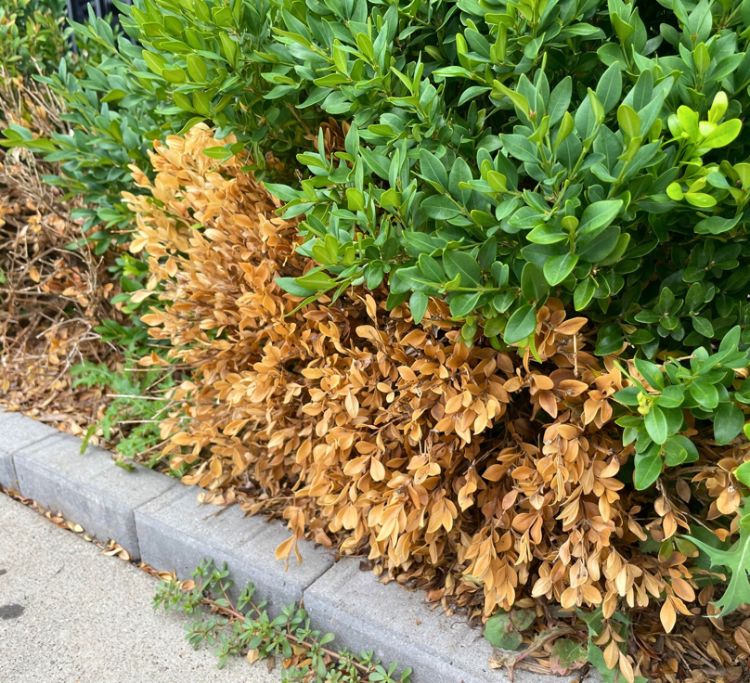
Boxwoods are among the most widely planted ornamental shrubs in Michigan, valued for their year-round color, compact form and deer resistance. In recent years, however, boxwoods have faced increasing stress from invasive pests, environmental damage and serious plant diseases. Early identification is key to preventing long-term decline—and that’s where the new diagnostic guide from Michigan State University Extension comes in.
A simple tool for a complex problem
The “What’s Wrong With My Boxwood?” guide breaks down the most common issues into easy-to-recognize categories based on real visual symptoms. Homeowners can reference photos and descriptions to distinguish between:
- Box tree moth feeding damage, including chewed leaves, webbing and rapid defoliation.
- Winter injury, such as browning foliage, leaf drop and sunscald.
- Boxwood leafminer infestations, which cause blistered, yellowing leaves and characteristic “clicking” when branches are shaken.
- Boxwood psyllid, known for creating cupped or puckered new leaves.
- Boxwood blight, a highly infectious plant disease causing leaf spots, stem lesions and rapid branch defoliation.
- Boxwood mites, which create fine stippling and bronzing on leaves.
Each issue is paired with clear pictures and concise descriptions, helping users easily compare symptoms on their own shrubs with those featured in the guide. Beyond diagnosis, the guide provides actionable management tips for each issue and emphasizes environmentally responsible management. It highlights when chemical control is effective—and when it is not recommended.
Why this tool matters now
Michigan has recently seen expanding reports of invasive pests like the box tree moth, which can completely defoliate and kill boxwoods, sometimes within a single season. At the same time, unpredictable winter conditions and increased disease pressure are making boxwood care more challenging for residents and landscapers alike. This diagnostic guide should help to empower gardeners to respond early—before minor issues escalate into major losses.
Access the guide
The “What’s Wrong With My Boxwood?” diagnostic guide is available as a free, downloadable PDF on the Michigan State University Extension website.
Go to "What’s Wrong With My Boxwood?” Diagnostic Guide
Print copies are available in most southeast Michigan county Extension offices, and community members, landscapers and garden professionals are encouraged to reach out for free copies. Use the guide, share it with clients and neighbors, and stay informed about emerging threats to Michigan’s landscapes.
To learn more about boxwood pests, diseases and management strategies, visit Michigan State University Extension’s boxwood resources.
This work is supported by the Crop Protection and Pest Management Program [grant no 2024-70006-43569] from the USDA National Institute of Food and Agriculture. Any opinions, findings, conclusions, or recommendations expressed in this publication are those of the author(s) and do not necessarily reflect the view of the U.S. Department of Agriculture.