Building Michigan’s Resilience, One Trained Responder at a Time
 Print
Print Email
EmailMSU Extension’s ERAIL program prepares first responders to safely manage livestock during storms, power outages and other high-impact events, not just accidents on the road.
Michigan residents often feel as though severe weather events are becoming more frequent. With constant connectivity through social media and rapid information sharing, it can seem as if storms, tornadoes and power outages are happening more often than ever. NOAA’s long‑term climate records show that Michigan’s severe weather activity—including tornadoes, winter storms and other high‑impact events—varies considerably from year to year. Some recent years have seen more notable events, such as damaging wind outbreaks and occasional tornado clusters, but these fluctuations remain within Michigan’s historical range of variability. Even so, the impacts of these events are significant enough that communities must continue strengthening their preparedness.
Modern society relies heavily on the electric grid and technology to operate critical systems. When power is disrupted for extended periods, essential infrastructure—from communications to emergency response—can quickly become strained. At the same time, Michigan’s agricultural landscape has changed. With fewer farms and more residents several generations removed from hands‑on agricultural experience, emergency responders increasingly face situations involving animals without the foundational knowledge needed to manage them safely.
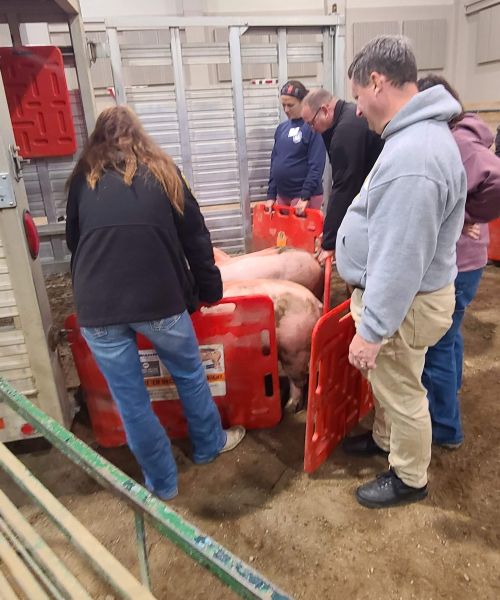
Basic skills such as animal handling, understanding animal behavior, and knowing how to use livestock containment equipment are no longer common knowledge. This gap becomes especially challenging during disasters, when loose or displaced animals can pose risks to responders, community members, and the animals themselves. Developing these skills through specialized training and equipment can help responders feel more confident and proud of their ability to protect both people and animals in emergencies.
The MSU Extension Emergency Response to Accidents Involving Livestock (ERAIL) program was originally developed to support responders during roadway accidents involving animals. However, the training and equipment housed in ERAIL response trailers have far broader applications. In a disaster scenario—such as a tornado that destroys fencing or a storm that damages barns—ERAIL equipment can provide critical support. Imagine loose cattle with no corrals available; having trained personnel and the right tools could make all the difference in safely containing and protecting both people and animals.
To help communities build this capacity, MSU Extension is offering an ERAIL training on October 27 in East Lansing. This full‑day, hands‑on experience will introduce first responders to the fundamentals of animal handling, triage considerations, and practical use of ERAIL response trailer equipment. Participants will gain confidence and skills they can apply not only during roadway incidents but also in broader emergency and disaster situations.
For more information and registration for the 2026 ERAIL training, visit https://events.anr.msu.edu/elerail26/.
RACE (Registry of Approved Continuing Education) Credits for Continuing Veterinary Medical Education
This program has been RACE approved for 5 hours of continuing education credit in jurisdictions that recognize RACE approval.
MSU Extension remains committed to supporting Michigan’s emergency management community with practical, science‑based training. First responders, emergency managers and others involved in disaster preparedness are encouraged to attend and strengthen their ability to respond safely and effectively when animals are involved.