Diagnosing mite problems in tomatoes
 Print
Print Email
EmailLearn how to distinguish tomato russet mite, broad mite and twospotted spider mite damage using key field symptoms, scouting techniques and management considerations.
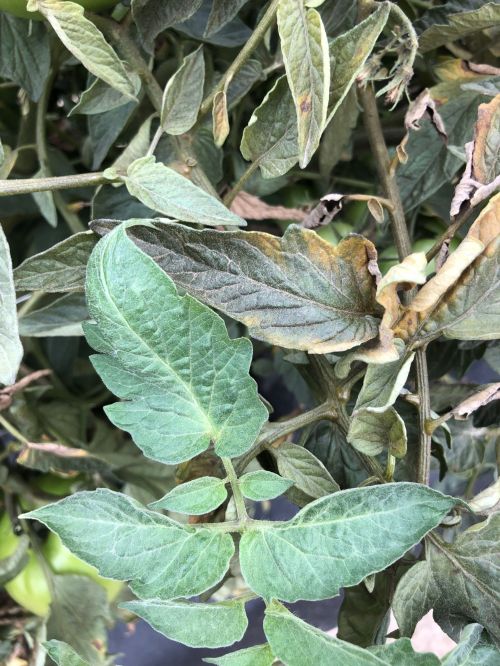
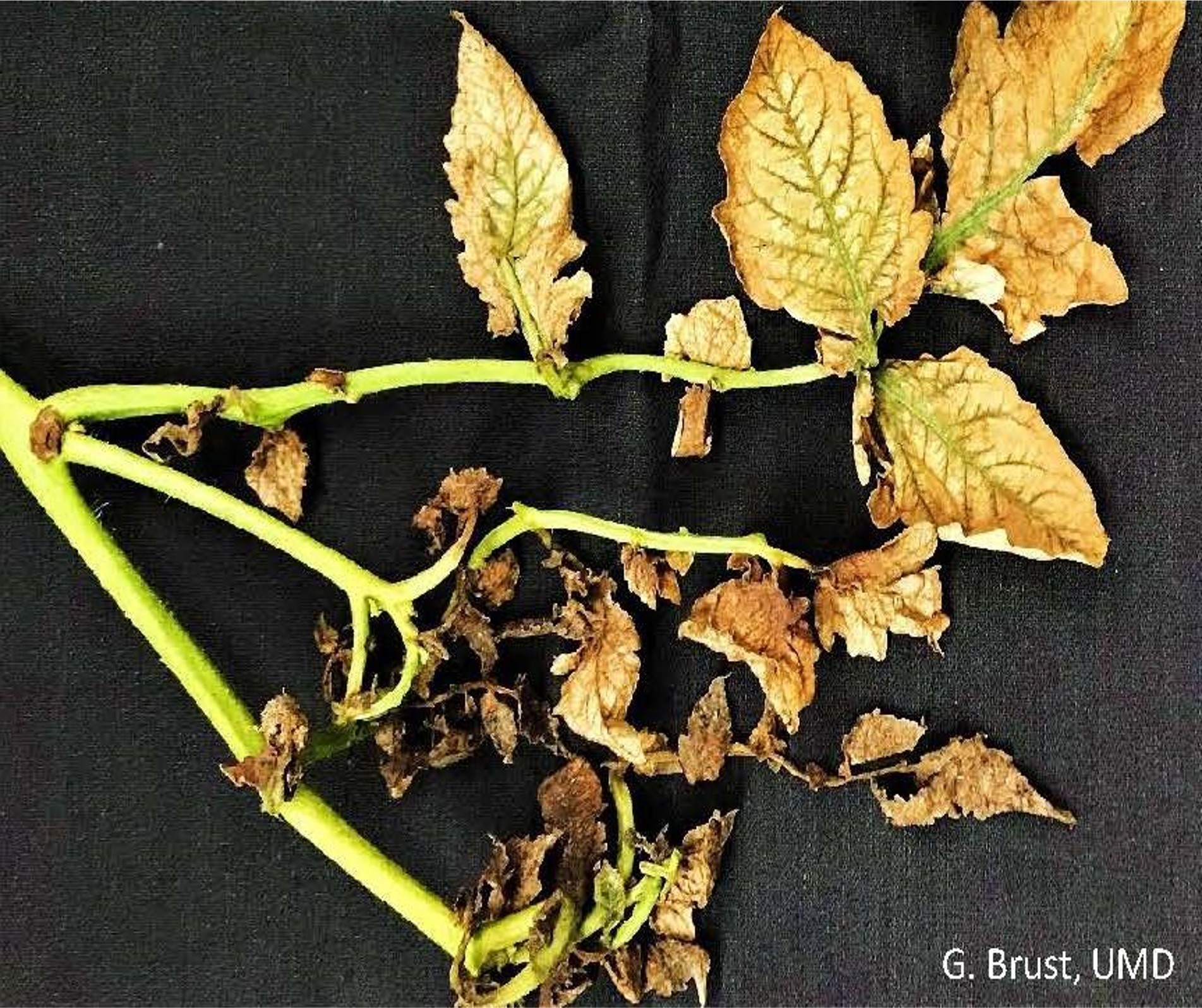
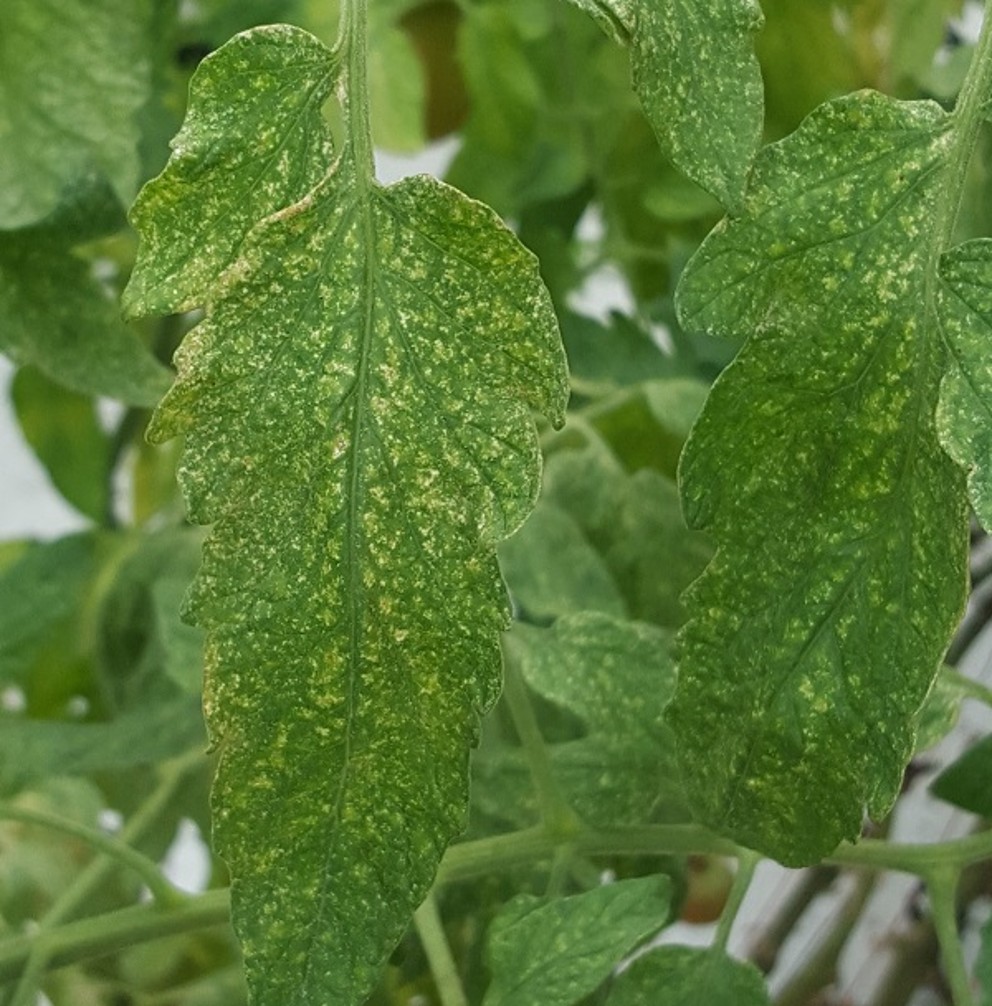
Mites are among the most difficult arthropod pests to diagnose because they are often too small to see without magnification. Mites are primarily a problem in greenhouses and high tunnels, but in hot summers, they can become problematic in the field. However, characteristic plant symptoms can help distinguish among the most common mite pests affecting field, greenhouse and high tunnel tomatoes (Table 1).
The most important way to manage mites is to avoid unnecessary broad-spectrum insecticide applications that kill off their natural enemies. It is also important to avoid stressing the plants, which can happen when plants are drought-stressed. Eliminating weedy hosts from the vicinity of the crop that can harbor mites is also crucial. Not growing vegetables and ornamental plants in the same greenhouse can also help reduce mite problems.
Miticides should not be used preventatively, so scout regularly since many of the miticides need to be applied as soon as mites are first noticed to be effective. Once miticides are used, the mode of action groups will need to be rotated because insecticide resistance can be a problem with mites (Table 2). Thorough coverage of leaves, especially the underside, is important.
Some good sources of further information are this article from Kentucky Pest News focusing on greenhouse and tunnel mite management, and this table from University of Maryland Extension that summarizes insecticides and miticides labeled for use in greenhouse vegetables. Also, check out this bulletin on greenhouse insect pest management by Jeremy Jubenville with Michigan State University Extension for 2026 greenhouse insect management guidelines.
When using beneficial predatory mites, miticides should generally be avoided. However, there are some chemistries that are relatively more gentle on predatory mite populations. Use the Koppert One and BioBest Side Effects app to reference these relationships.
Table 1. Comparison of mite symptoms in tomatoes.
|
Symptom |
Tomato Russet Mite |
Broad Mite |
Two-Spotted Spider Mite |
|
Scientific name |
Aculops lycopersici |
Polyphagotarsonemus latus |
Tetranychus urticae |
|
Where damage begins |
Lower leaves and stems |
Newest growth and terminals |
Lower or stressed leaves |
|
Leaf symptoms |
Yellowing, bronzing, drying, curling, defoliation |
Twisted, distorted, thickened, cupped leaves |
Fine white or yellow stippling that progresses to bronzing |
|
Stem symptoms |
Distinctive greasy bronze or russet coloration |
Distortion of new growth |
Rare |
|
Fruit symptoms |
Russeting, bronzing, cracking, roughened fruit |
Corky patches, deformation, cracking |
Indirect effects from plant stress |
|
Webbing |
No |
No |
Often present |
|
Visibility of mites |
Requires hand lens or microscope |
Requires microscope |
Sometimes visible with hand lens |
|
Typical conditions |
Hot, dry weather |
Warm greenhouse/high tunnel conditions |
Hot, dry weather |
|
Diagnostic clue |
Bronzed stems and upward progression from plant base |
Severe distortion of newest growth |
Stippling plus webbing |
|
Scouting tips |
Examine lower stems and leaves for bronzing and upward progression of symptoms. Use a 10–20× hand lens. |
Focus on terminal growth and newly expanded leaves. Look for distortion, cupping, and thickened foliage. |
Inspect leaf undersides for stippling, mites, and webbing. Shake leaves over white paper to detect mites.
|
Table 2. A list of miticides for use in tomatoes. Tomatoes are often, but not always, grouped under “Fruiting vegetables” on labels. Read the label for more details on how to use these products, there are many restrictions about the number of applications per season. Download a printer-friendly version of this table.
|
Commercial name |
Active ingredient |
IRAC group |
Pre-harvest interval (day) |
Comments |
|
Agri-Mek |
abamectin |
6 |
1 (for commercially grown greenhouse tomatoes), otherwise 7 days |
russet and spider mite; field grown and greenhouse tomatoes |
|
Gladiator |
abamectin+ zeta-cypermethrin |
6+3A |
7 |
russet and spider mites; implied use in greenhouses |
|
Kanemite |
acequinocyl |
20B |
1 |
broad and spider mite; field grown and greenhouse tomatoes |
|
Acramite/Floramite |
bifenazate |
20D |
3 |
spider mites; Floramite for greenhouse and Acramite for field use |
|
Piston |
chlorfenapyr |
13 |
1 |
spider mites, broad mites; greenhouse use only |
|
Nealta/Sultan |
cyflumetofen |
25 |
1 for commercially grown greenhouse tomatoes, otherwise 3 days |
spider mites only; Nealta for field and Sultan for greenhouse use |
|
TetraSan |
etoxazole |
10B |
1 |
spider mites; greenhouse use only |
|
Portal/Akari |
fenpyroximate |
21A |
1 |
controls many species of mites; Akari for greenhouse and Portal for field use |
|
Onager |
hexythiazox |
10A |
1 |
only greenhouse tomatoes, only spider mites, max. 1 application/year |
|
Vykenda/Incipio |
isocycloseram |
30 |
1 |
broad and spider mites; Vykenda for retail plants and Incipio for commercial field-grown tomatoes |
|
Movento |
spirotetramat |
23 |
1 |
controls broad, russet mites; suppresses spider mites; implied use in greenhouses |
|
Oberon |
spiromesifen |
23 |
1 |
broad, russet and spider mites; implied use in greenhouses |
|
Sanmite |
pyridaben |
21A |
2 |
spider mites, broad mites; greenhouse use only |