Digging Deeper: LTAR Collaboration Brings Soil Health Workshops to Michigan
 Print
 Email
One might assume that understanding soil health requires taking a sample and sending it to a laboratory for testing. However, using just a shovel and a careful eye, you can learn a lot about the health of your soil.
During two Soil Health Connections Workshops hosted by KBS-LTAR in September, agricultural and conservation professionals got their hands dirty as they learned new methods for evaluating soil in the field. Led by Dr. Mark Liebig, a USDA-ARS soil scientist from the Northern Plains LTAR site, the workshops introduced participants to a novel visual soil health assessment method that can be conducted with just a shovel and basic observational skills.
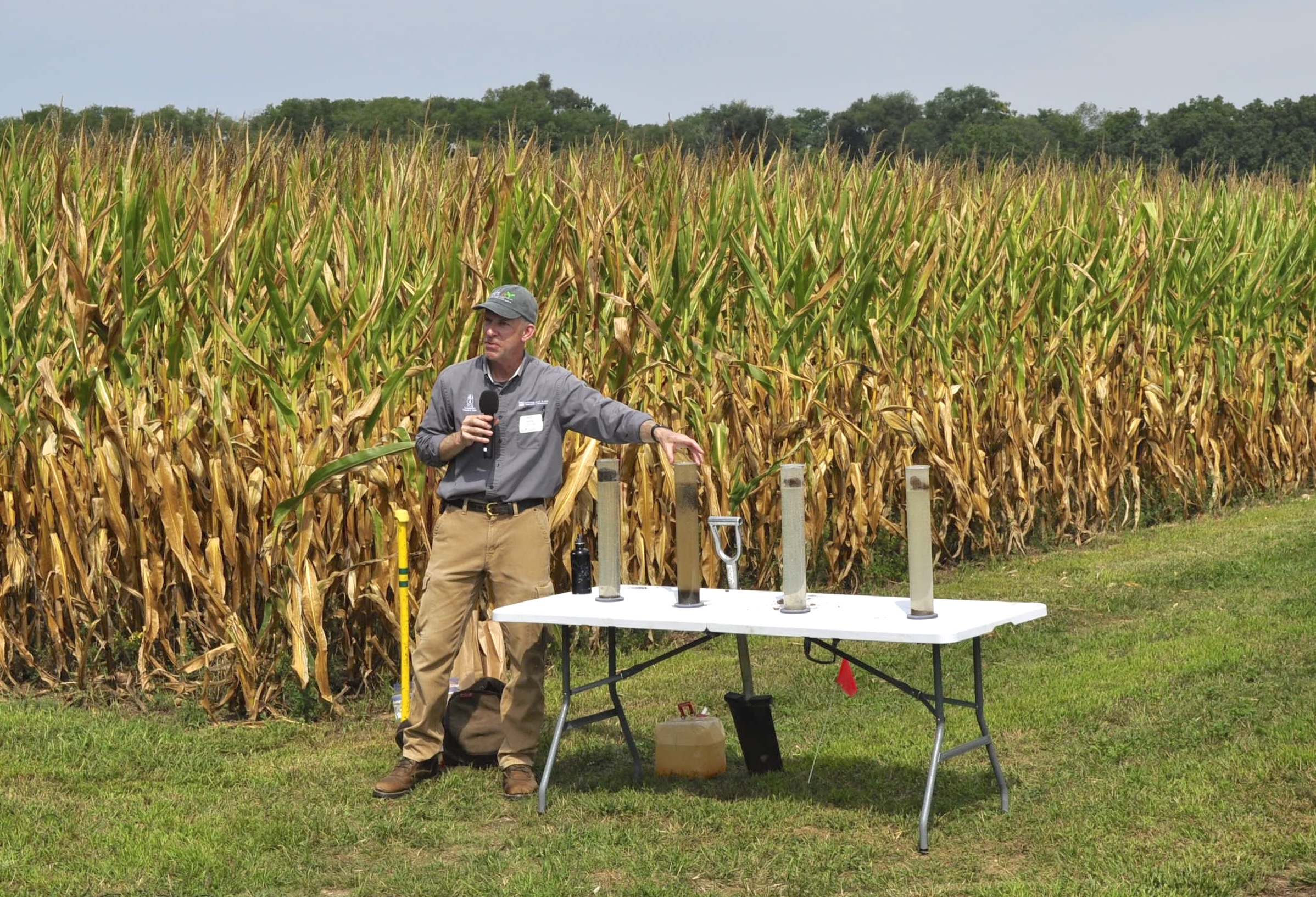
Liebig hails from the USDA Agricultural Research Service’s Northern Great Plains Research Laboratory (NGPRL) in Mandan, North Dakota. His research focuses on how agricultural management practices affect soil properties, crop production, and environmental sustainability. Alongside a multidisciplinary team of scientists at NGPRL, Liebig works to develop practices that improve the productivity and sustainability of northern Great Plains agroecosystems. He also coordinates the LTAR Cropland Common Experiment at the Northern Plains LTAR site.
His work examines how soil responds to different management practices and these efforts have made soil science more accessible to people who work directly with the land. When asked to sum up what he does, Liebig, half-jokingly, puts it simply: “I dig holes and tell stories.”
The Soil Health Connections Workshop grew out of Liebig’s realization that visual soil evaluations could be a useful tool for productive discussions with stakeholders about how land management practices affect soil health, agricultural productivity, and environmental quality. He began testing soil health evaluations in 2014 and launched the first Soil Health Connections Workshop in 2018. Since then, 80 people have participated in different workshops.
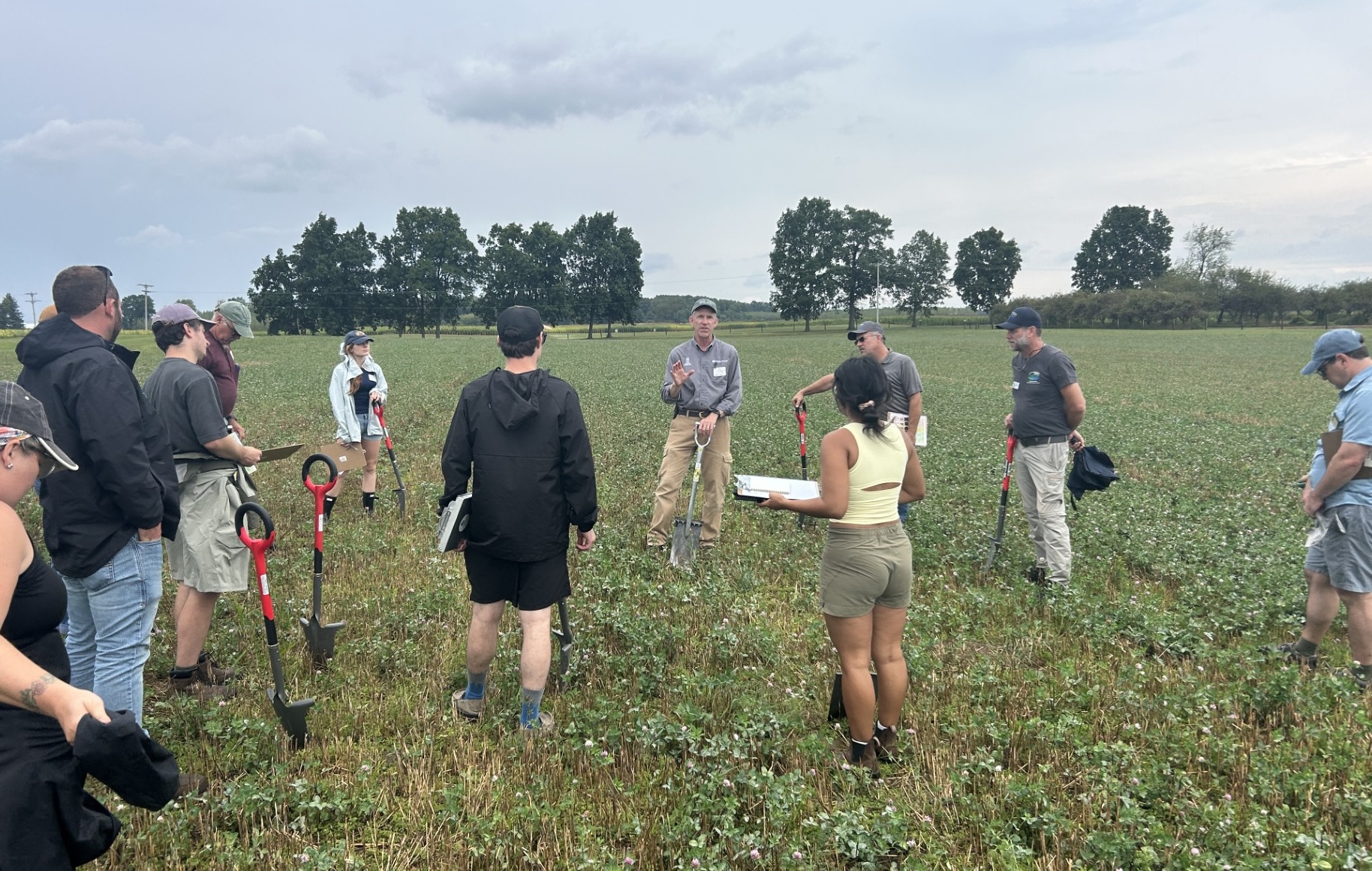
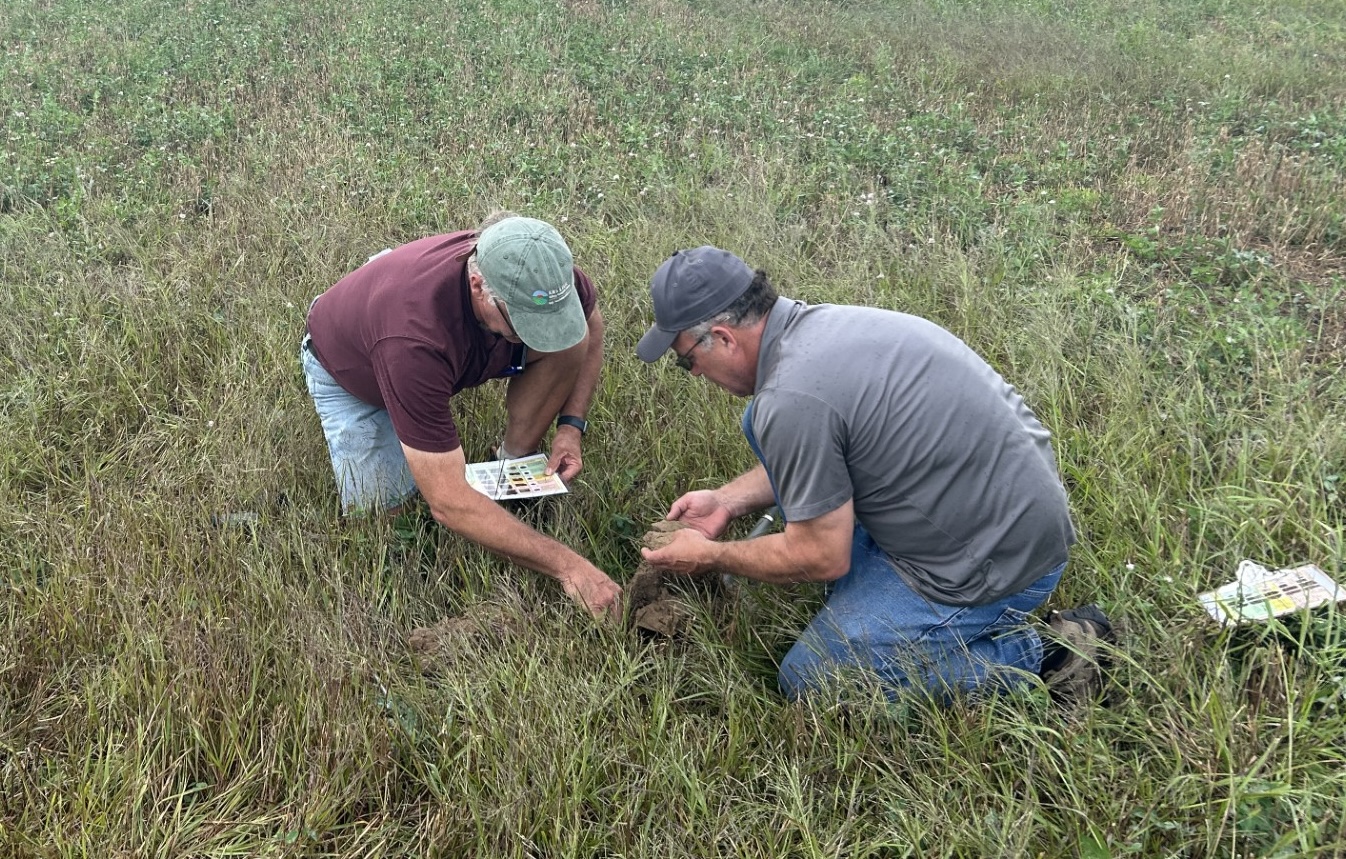
During the workshop, participants learned the Visual Evaluation of Soil Structure (VESS) method, which was developed by Dr. Bruce Ball at Scotland’s Rural College. This method uses observations of soil aggregates, porosity, and plant roots to assign soil structure a score from 1 to 5. After learning the method, participants evaluate fields with the same soil type but different long-term management practices. Liebig notes that one of the most insightful aspects of the workshop is the opportunity for participants to learn from each other about what they are observing in the soil.
In addition to learning the VESS method, participants also learn how different forms of agricultural land use and long-term management practices can affect what they observe in the soil. In the process, participants often realize that the simple act of looking closely at soils with stakeholders can lead to valuable discussions about soil management and, ideally, a shared understanding of soil health.
“In a nutshell, workshop attendees learn a new skill, dig some holes, get their hands dirty, and learn from others through facilitated discussion,” says Liebig. “In a way, hands-on evaluations allow the soil to tell its own story about how it’s been managed, perhaps in a more personal way than we might get through laboratory measurements.”
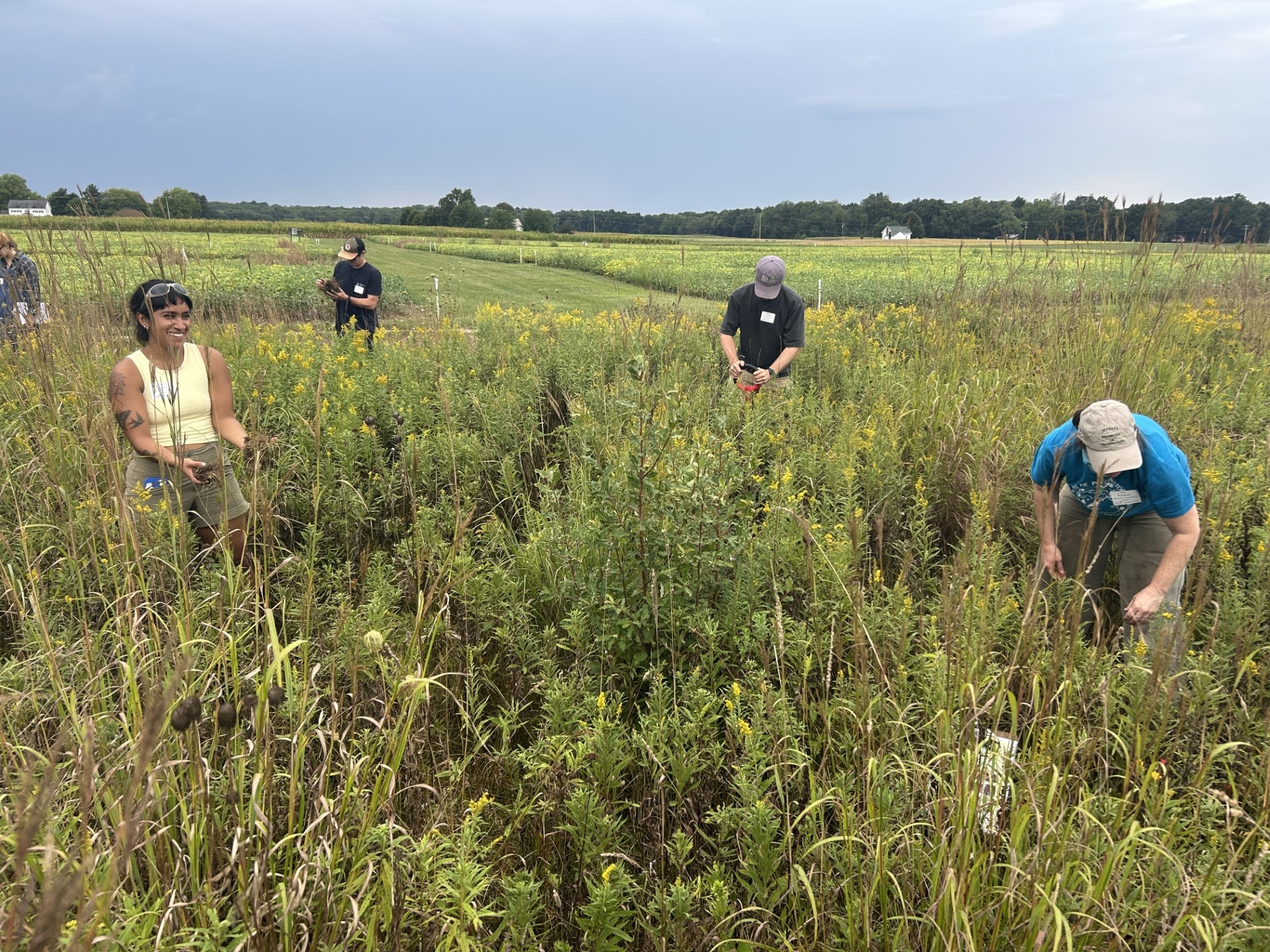
Although Michigan and North Dakota grow a few of the same crops, including corn, soybeans, and wheat, the states differ strongly in climate and soils. North Dakota is considerably drier, receiving about half the average annual precipitation of Michigan, while Michigan soils tend to be more weathered. These differences aside, the same soil health principles can be applied across the regions, giving Michigan participants an opportunity to consider how visual soil assessments can be utilized in their own agricultural systems.
The Soil Health Connections Workshop came to Michigan through a collaboration between KBS-LTAR, the Northern Plains LTAR, and the Michigan Department of Agriculture & Rural Development (MDARD). KBS-LTAR and MDARD have worked closely together on soil health initiatives for years, with KBS-LTAR helping connect MDARD with Liebig and his research on soil health assessments. His work has been influential in informing the MDARD’s Regenerative Agriculture Program and its approach to evaluating soil health.
Alex Svoboda, a Field Coordinator with MDARD, helped bring the training to KBS-LTAR and identify participants, including program technicians who already conduct soil health assessments with farmers across the state.
“Dr. Liebig’s soil health training is so valuable because it empowers conservation professionals and farmers to identify the visual components of soil health in a way that is practical, meaningful, and economical,” says Svoboda.
For Olivia Craig, a Project Coordinator with MSU Extension, the value of the workshop extended beyond learning how to evaluate soil herself. Craig works on a USDA-NIFA-funded project titled “Replenishing the Beings, the Soil Beneath Our Feet,” which provides soil health testing to Indigenous growers in Michigan.
“For me, the most valuable part of the workshop was the train-the-trainer format that will allow me to translate this information to farmers in the future,” says Craig. “Visual assessment of soil is an accessible way for growers to check in with their soil consistently and understand some basic processes that contribute to soil formation and function.”
Bringing the Soil Health Connections Workshop to Michigan highlights how the LTAR network enables researchers and conservation professionals to share knowledge across regions. Through collaboration among organizations such as the Northern Plains LTAR, MDARD, and KBS-LTAR, expertise and practices developed in one region can reach professionals working in another. These workshops introduced 23 conservation professionals in Michigan to the VESS method, giving them a practical technique they can share with landowners and farmers as they work to manage soil health for future generations.
Learn more about Dr. Mark Liebig: https://www.ars.usda.gov/plains-area/mandan-nd/ngprl/people/mark-liebig/
Learn more about the VESS method: https://soils.vidacycle.com/soil-tests/vess-visual-evaluation-of-soil-structure/