Doug Chapin: Investing in Michigan’s dairy future
 Print
Print Email
EmailBoard chairman of the Michigan Milk Producers Association (MMPA), Doug Chapin has been one of the leading supporters of MSU’s Dairy Cattle Teaching and Research Center.
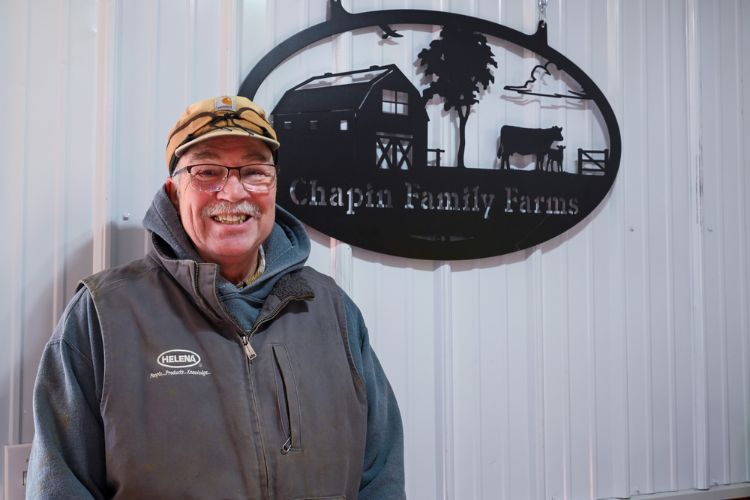
For Doug Chapin, the Michigan State University’s new Dairy Cattle Teaching and Research Center is more than a facility, it’s an investment in the future.
Chapin and his son Sam own and operate Chapin Family Farms in Mecosta County, Michigan. Comprised of a 1,200-cow herd and more than 3,200 acres of cropland, this family operation is rooted in tradition, innovation and a deep commitment to strengthening Michigan’s agricultural backbone.
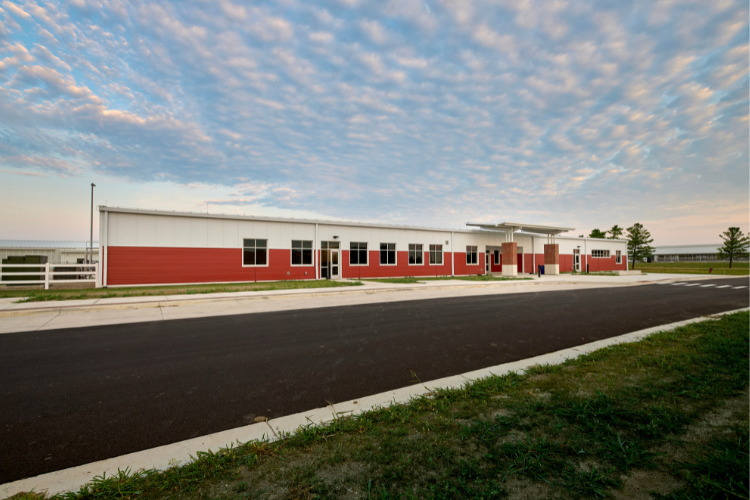
As board chairman of the Michigan Milk Producers Association (MMPA), Chapin has been among the most influential champions of MSU’s new dairy facility, advancing the project through his public advocacy and his philanthropic support. Completed in July 2025, the revitalized center replaces MSU’s aging 1960s-era dairy and is designed to meet the evolving demands of today’s dairy producers, educators and stakeholders.
A lifetime in dairy
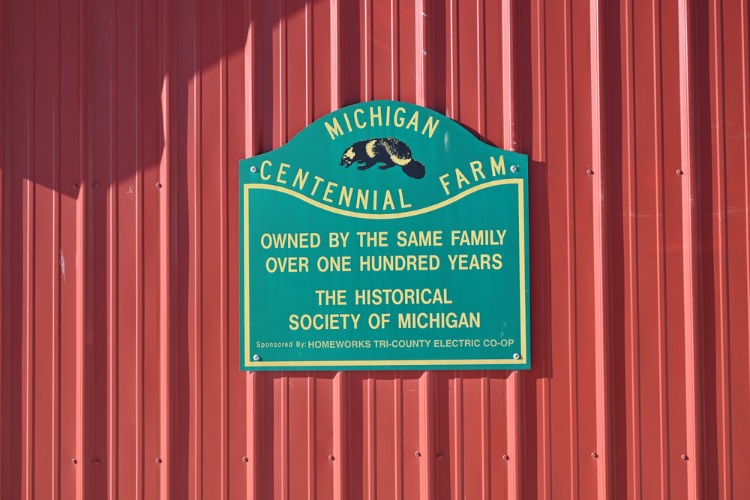
Chapin’s connection to MSU began shortly after high school, when he completed the dairy short course before returning to the family farm. Purchased in the early 1900’s, Chapin’s father transitioned the farm to a dairy in the early 1960s. Since taking over operations on the farm, Chapin and his son Sam have expanded their engagement with MSU, working closely with MSU Extension and utilizing university research to support the farm’s growth.
“My connection to MSU really grew as I became a producer,” he said. “Extension was valuable to us every day. As the farm grew, I used a lot of MSU’s research and built relationships across the university.”
This longstanding partnership made Chapin an active and early supporter of efforts to modernize MSU’s aging dairy facilities. For years, dairy producers and organizations like MMPA identified the need for a new campus center that would match the pace of advancements happening on commercial farms.
Chapin helped carry this message to stakeholders and state legislators, advocating for the investment needed to kick-start the projects. “We recognized that to keep MSU in a strong position nationally, key dairy investments needed to be made,” said Chapin. “So, I became heavily involved.”
Investing in the next generation
While the State of Michigan provided the initial funding for the project, MSU is relying on support from alumni, donors, and stakeholders in the dairy industry to fully realize the farm’s long-term vision for programming and research.
As part of this ongoing fundraising effort, Chapin and his son Sam made one of the foundational gifts in support of the new facility. For Chapin, the motivation behind this contribution was deeply rooted in both gratitude and foresight.
“One reason was to acknowledge the value MSU has provided us in the past,” he shared. “But the real reason was to acknowledge what we need in the future.”
With fewer family farms and fewer young people entering the dairy industry, the need for highly trained specialists—many from non-farm backgrounds—is more critical than ever. Chapin views the new MSU dairy center as a catalyst to attract and train those professionals.
“If we want the dairy industry to survive, we have to invest in education and research. The payoff for farmers, now and in the next generation, will be huge.”
Encouraging others
Chapin is a leading voice encouraging other dairy producers and industry partners to support the MSU Dairy Producer Campaign, a fundraising initiative that invites producers, processors, cooperatives and agribusinesses to contribute to the long-term success of the new facility.
Learn more: www.canr.msu.edu/dairy-facility-campaign
“We’re signaling to lenders, vendors and everyone we work with that producers believe in this. That this facility matters. And that there’s room for everyone to join us in supporting the future of this industry.”
He sees the campaign not only as a thank-you to MSU for decades of partnership, but also as a commitment to the collaborative relationship that will guide the industry forward.
A facility built for the future
When Chapin first walked through the nearly completed facility, he wasn’t just impressed, he saw transformation. “Everything new in the dairy world is in that facility,” he said.
The $75 million, 65,000-square-foot cattle barn houses a herd of 680 cows, more than tripling the previous herd size. This expanded infrastructure and herd size will allow faculty, staff and students to pursue timely research initiatives.
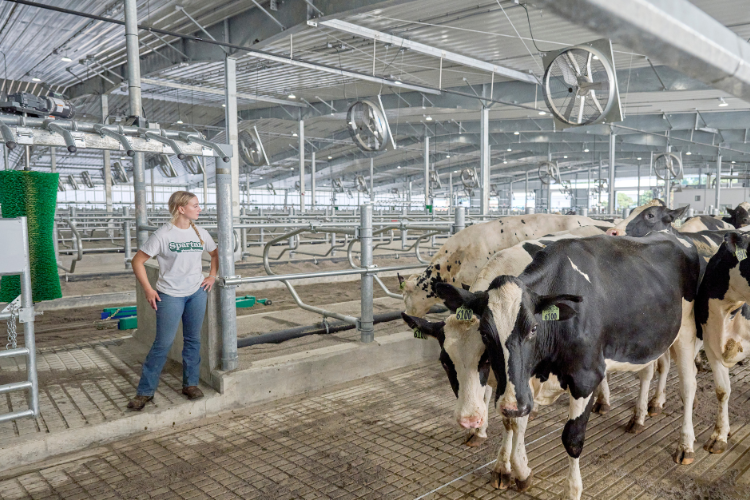
But what matters most to him isn’t what experienced producers like himself see, it’s what new students will experience.
“I want students who don’t have a dairy background to walk in and see the potential for dairy,” said Chapin. “We need to bring expertise from the non‑farm world into dairy. This facility can showcase the future of the industry and bring in the next level of professionals we need.”
With cutting-edge technology, research capabilities and a design that mirrors modern commercial dairy operations, the new center provides hands-on learning for students from a wide range of disciplines.
“We need the professionals on the farm,” said Chapin, “That means veterinarians, nutritionists, agronomists and much more. I believe the excitement this facility will build on campus will build a pipeline of new and talented professionals for the industry.”
Doubling down on our capacity
Michigan dairy is the largest segment of the state’s agricultural economy, generating approximately $20 billion annually through production, processing and related industries. Michigan also ranks sixth in the nation for milk production, a ranking Chapin believes will climb as the state capitalizes on natural advantages like water access and workforce development.
“In a state where dairy is the largest sector of agriculture, our land-grant university should definitely be a leader,” Chapin said. “MSU has a unique relationship with Michigan dairy producers. We provide access to working farms, and they provide the research and expertise that keep us competitive.”
He believes the new facility will allow MSU to “double or triple” its research output, providing solutions to some of the industry's most pressing challenges.
“These are tools we use every day,” Chapin said. “And the challenges we face are only going to be greater in the future. That’s why need it in the expertise that MSU can provide for us in the future.”
A new era for Michigan
Chapin is optimistic about the future, confident that investment in talent, research, and innovation will help Michigan continue to thrive as a dairy powerhouse.
“What excites me most is that dairy will only be a bigger piece of Michigan’s economy,” he said. “MSU is helping us build the professionals, the research capacity and the momentum we need to grow. This facility will magnify those impacts for generations.”
For a leader who entered dairy through family tradition and who hopes to see the next generation continue that legacy, supporting the MSU Dairy Cattle Teaching and Research Center is a natural extension of his commitment to the industry.
“If you ever want payback, this is it. My son will reap the rewards of this, and so will every producer in Michigan.”
To explore special naming opportunities at the MSU Dairy, contact: Kyle Cutler, cutlerky@msu.edu, Director of Development, College of Agriculture and Natural Resources
Learn more: www.canr.msu.edu/dairy-facility-campaign