Faculty Spotlight – Kurt Kipfmueller
 Print
Print Email
EmailKurt Kipfmueller shares his forestry journey and his work with Indigenous communities.
Dr. Kurt Kipfmueller has been hired as the 1855 Professor of Indigenous and Tribal Natural Resource Management, jointly appointed in the Department of Forestry at Michigan State University and the Residential College in the Arts and Humanities. Kipfmueller was born and raised in Mt. Pleasant and received his bachelor’s degree from Central Michigan University, a master’s from the University of Wyoming, and a Ph.D. from the University of Arizona.
Classes he will be teaching
FOR 491: Tree-Ring Analysis and Applications (UGRD/GRAD, Spring 2027); People, Pine, and Fire (an as-yet undesignated 2xx-level course)
Is there a particular experience, place, or lesson from your work with Indigenous Communities that has changed the way you think about forestry/forest ecology?
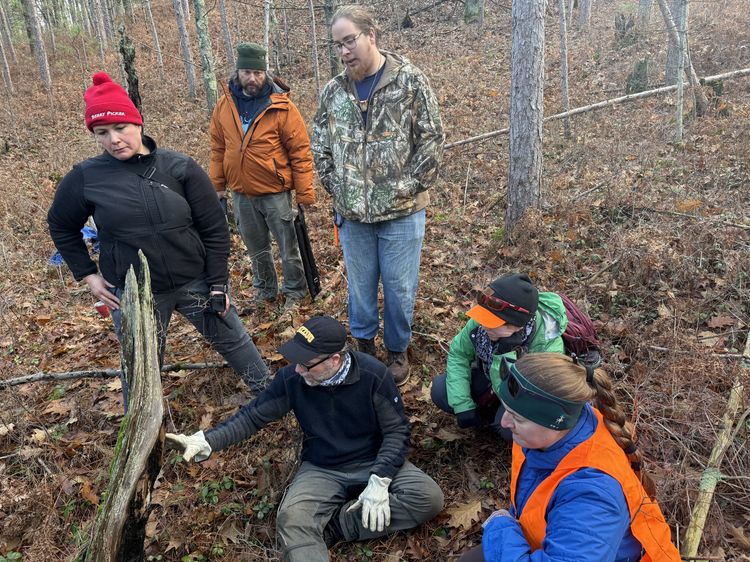
Yes, there was a particular place/moment that changed the way I think about fire ecology in the Great Lakes, in 2010. My career to that point had largely focused on understanding the ‘natural’ role of fire and the relationships between fire and particular drivers, primarily climate patterns. While working on developing a fire history project in the Border Lakes Region of Minnesota (the Boundary Waters Canoe Area Wilderness Area) we visited islands to assess feasibility for the work. Living red pine on one small island exhibited fire return intervals that were very short and had recorded 10-12 fires over less than 150 years before Colonization, but with no fires since the late 1800s. Given the landscape context, it seemed impossible that lightning alone was responsible for the observed frequency of fire on the island. Just observing the physical samples in the field led to a recognition of the importance of reciprocal Indigenous stewardship practices in maintaining resilient, diverse, and supportive landscapes. As additional sites have been examined, it has become clear that the observed frequency of fire in many Great Lakes pine forests cannot be explained by ‘natural’ ignition sources alone, highlighting the importance of direct Indigenous forest stewardship in Great Lakes forest ecosystems.
What is one thing you hope students take away from learning about Indigenous approaches to Natural Resources?
My hope is that students in my courses come to appreciate that understanding landscape change and developing restoration approaches requires tools from both forest ecology and an understanding of the history and culture of a particular place. Second, I hope students in my courses appreciate that ecological restoration is most effective when multiple voices are present to share viewpoints and stories to come together around long-term stewardship goals reflective of community needs to support resilient forests.