Forestry Graduate Student Spotlight - John James Loomis
 Print
Print Email
EmailJohn James Loomis, a hybrid master's student, shares his forestry journey.
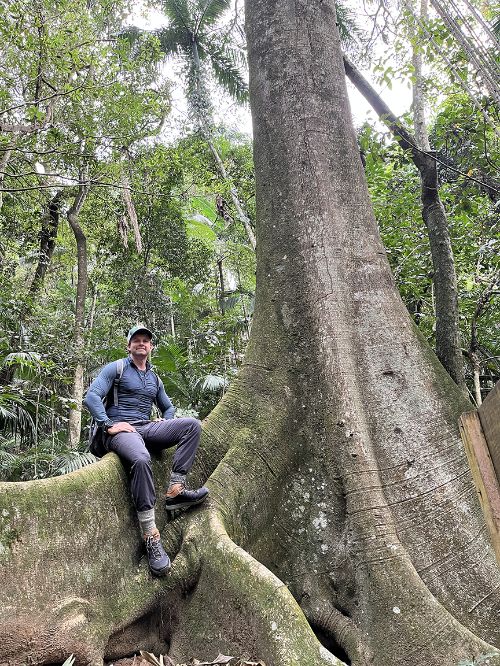
Hometown: I grew up in Downingtown, Pennsylvania.
Degree working on: I’m working on the hybrid master’s in forestry.
Research focus: My research interest and desire with this degree is to focus on carbon credits in tropical forestry.
What inspired your interest in pursuing a MS/PHD in forestry?
I have worked in academia and research in Brazil for 10 years in the sustainability field, and I wanted to develop technical skills in forestry, especially in the Amazon region, where my work is currently centered.
Why did you choose to study at MSU?
I wanted to do a US master’s that would allow me to continue living and working in Brazil. MSU’s forestry program is established, and the in-person portions of the hybrid program were attractive to gain some in-field experience and learning.
What has been one of your best experiences within graduate school so far?
The in-person, week-long course introduction in August of 2024 was a great way to jump into forestry and get to know my classmates. During the program, many of the courses have required going into the field to conduct data collection and field techniques.
What do you want others to know about this program?
This program requires serious dedication and curiosity, but the professors and classmates bring a wealth of knowledge and experience that enrich students’ experiences.
What are some of the best things about being an MSU student?
I think it’s making connections with many of these professors who are experts in their fields.
Any thoughts or advice for current students?
Don’t hesitate to reach out to professors or classmates with all questions. I like to inquire about more practical aspects of forestry with my classmates and professors, as I come from a research background.
What are your future plans?
Upon completing this course, I plan to integrate the skills and tools learned into my ongoing research on carbon credit projects in tropical forests and on sustainable cattle and agricultural systems in the Amazon. My goal is to apply these tools to strengthen the technical and financial rigor of forest conservation initiatives and traceability/monitoring systems in the beef supply chain. In parallel, I intend to start a small business in Brazil focused on supporting forest conservation projects and sustainable land-use solutions in the Amazon region. This would allow me to translate academic research into practical, high-impact applications that benefit local communities, producers, and ecosystems.