Greenhouse disease and insect management recommendations
 Print
Print Email
EmailMSU Extension releases insect and disease management recommendations for the growing season.
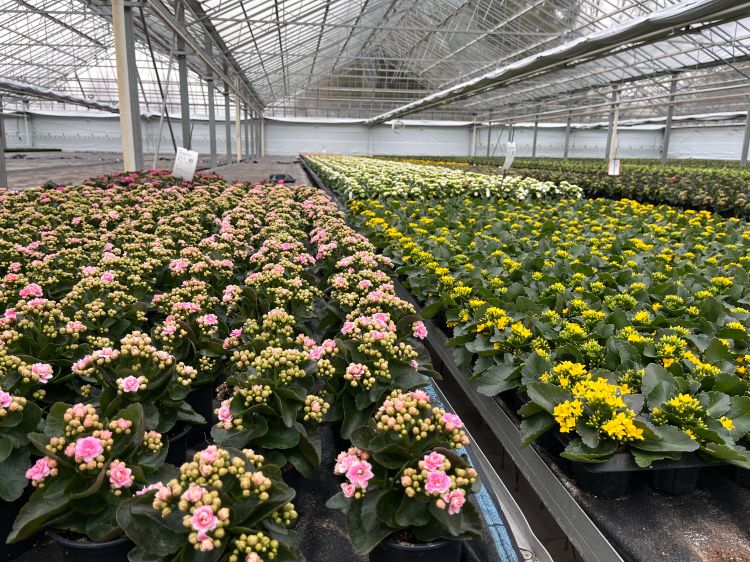
Michigan State University Extension has updated their insect and disease management recommendation guides. These documents are updated yearly to reflect the efficacy of pesticides as Michigan State University (MSU) Extension specialists and their nationwide colleagues perform research trials evaluating the products against common greenhouse insects, mites or diseases.
Insect management
The MSU Extension floriculture team has updated their "Greenhouse Insect Pest Management" guide. While the guide continues to provide a comprehensive list of labelled products for managing common greenhouse insect and mite pests, it is designed to be more than just a product reference. It also offers practical guidance on fundamental greenhouse pest management practices, including sanitation and exclusion strategies, scouting and monitoring, resistance management, and considerations for phytotoxicity and application techniques. These sections help growers build effective, prevention-based programs rather than relying solely on reactive pesticide applications.
Growers of greenhouse vegetables and greens can use the guide "Recommended Insecticides for Common Greenhouse Pests on Vegetables, Herbs, and Leafy Greens" when considering an insecticide application. The guide provides the names of the products, active ingredients, labeled crops and the pests they control. For more information on the guide, see the MSU article "Insecticides for Common Pests on Greenhouse Vegetables and Transplants."
Download the Greenhouse Insect Pest Management Guide
Disease management
MSU Extension plant pathologist Mary Hausbeck has released her updated "Greenhouse Disease Management" guide. Based on years of efficacy trials, the products are graded from “A+” to “B/B-”. The “A” team products provide a high level of disease control, and “B” team products provide good, but more limited control. At the outset of disease symptoms or during a time when disease pressure may become high (wet, cloudy conditions), choosing a fungicide product that has been graded as an “A” could provide the level of plant protection needed. In other situations when prevention is important, disease symptoms are not evident, and the conditions are sunny and dry, a wider range of products can likely do the job.
It’s of utmost importance that fungicides be alternated over the course of the growing season based on their FRAC codes. The FRAC code appears on the first page of the pesticide label and is based on the fungicide’s mode of action. Ensuring that the fungicides included in a program have different FRAC codes is the best way to prevent a pathogen from developing resistance to fungicides. Over reliance on a particular fungicide or group of fungicides with the same FRAC code greatly increases the risk that the target pathogen will become resistant to that chemistry which could result in control failure.
Download the Greenhouse Disease Management Guide
Are you looking for recommendations for vegetables and herbs? Hausbeck and colleagues developed a guide for disease management specifically for vegetable and herb crops. It includes information on registered products’ active ingredient, trade name, FRAC code and re-entry interval and is categorized by crop group and target pathogen. It’s especially important to remember that the vegetable or herb crop must be explicitly stated on the pesticide label. Also, be sure to check that use of the fungicide in the greenhouse is not prohibited. Some fungicides may list a particular vegetable or herb on its label but then include a statement that the use of the product is not allowed in the greenhouse.
Changes to the pest management guides
Many of the insect and disease management recommendations are consistent with those of the previous year, with a couple notable changes.
For disease management, the product Avelyo (mefentrifluconazole, FRAC code 3) is new to the A+ team for powdery mildew.
For insect management, products are still presented in an easy-to-use table format that includes the trade name, active ingredient, mode of action group and restricted entry interval, allowing for quick decision-making in day-to-day production. However, several updates have been made to keep the guide current. The list of insect management products labeled for cutting dip applications has been expanded and revised, and the product tables for key greenhouse pests have been updated to reflect current labels and available chemistries.
New to the guide is a section on biopesticides. This addition provides a brief overview of these products, along with practical guidance on how to use them effectively. It also helps set expectations for performance, emphasizing that biopesticides often work differently than conventional insecticides and are most effective when used preventatively as part of an integrated pest management program.
If you have questions about these insect and disease management recommendations, contact the authors or your local MSU Extension greenhouse educator. You can also find more information on crop safety and the efficacy of products on the Environmental Horticulture Research Summaries page on the IR-4 Project website.
Reference to commercial products or trade names does not imply endorsement by MSU Extension or bias against those not mentioned.