Hen house hunting: The impact of cage-free housing design
 Print
Print Email
EmailThe economic impact of cage-free housing choice may extend beyond the installation cost.
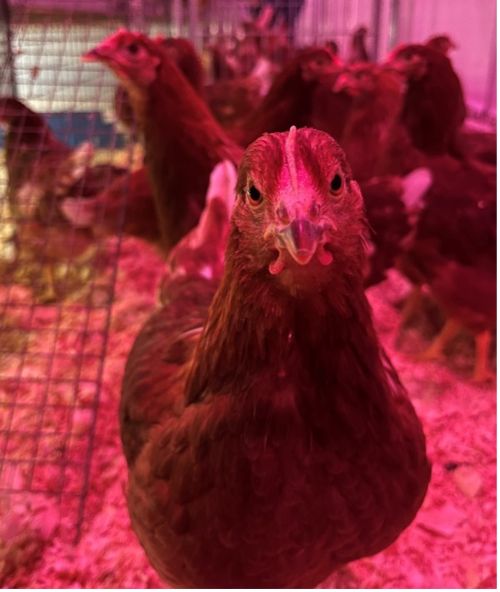
With cage-free housing required for laying hens producing shell eggs in Michigan and accounting for over 40% of laying hen housing in the U.S., it’s important to understand how hens interact with this type of production environment. While a variety of housing systems meet the minimum cage-free requirements of space allowance and resource provision; cage-free systems are often multi-tiered aviaries with colony nests and a litter area where hens can scratch, forage and dust bathe. Each of us has personal preferences for the layout and style of our own homes. Hens also seem to have preferences about their housing that affect their behavior and productivity, including whether they lay eggs in the litter rather than the designated nest. These preferences are shaped by hens’ biological instincts to lay eggs in protected places.
To understand how hens behave in different housing styles, we compared hens’ egg production and choice of laying location in two different cage-free aviary housing designs in the Laying Hen Facility at Michigan State University’s Poultry Teaching and Research Center.
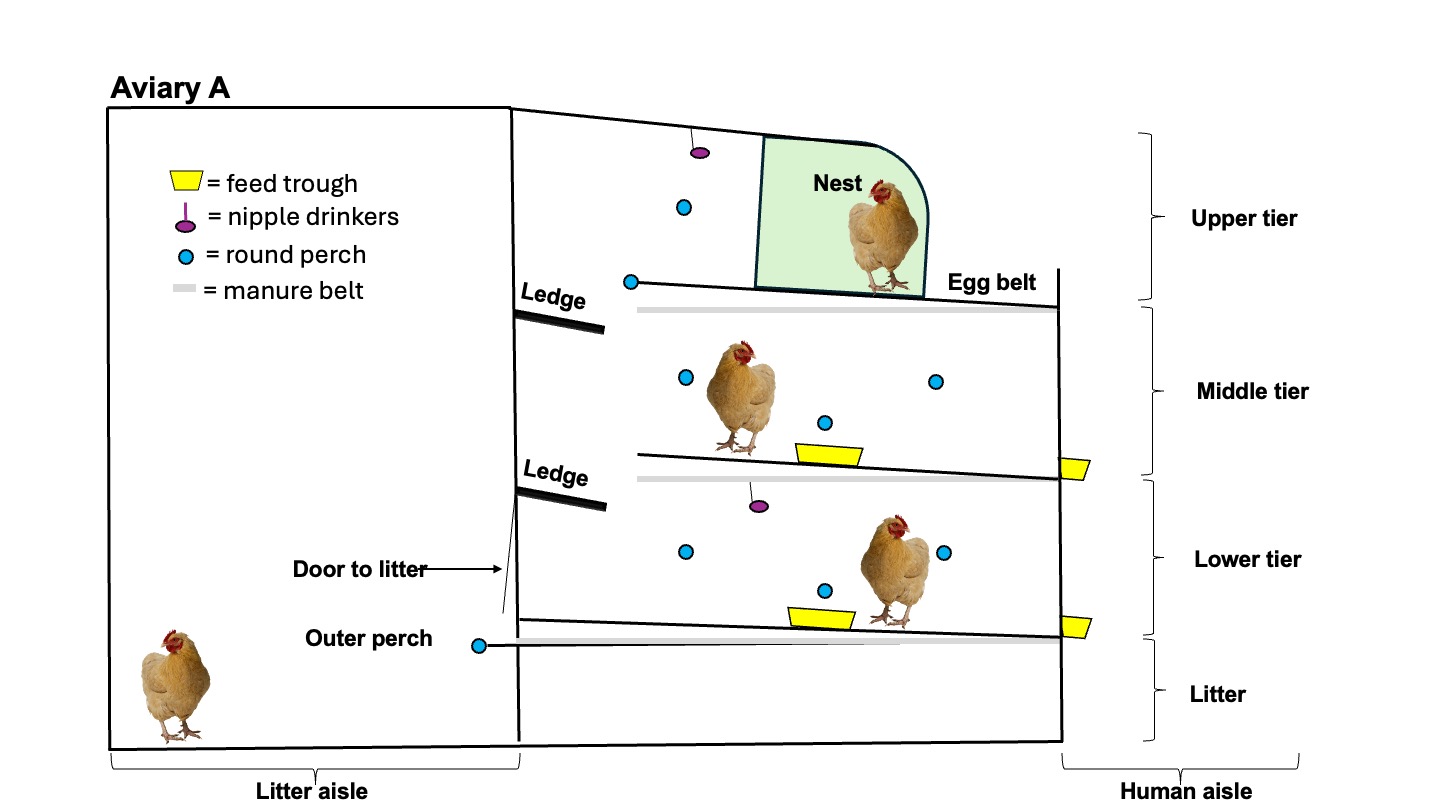
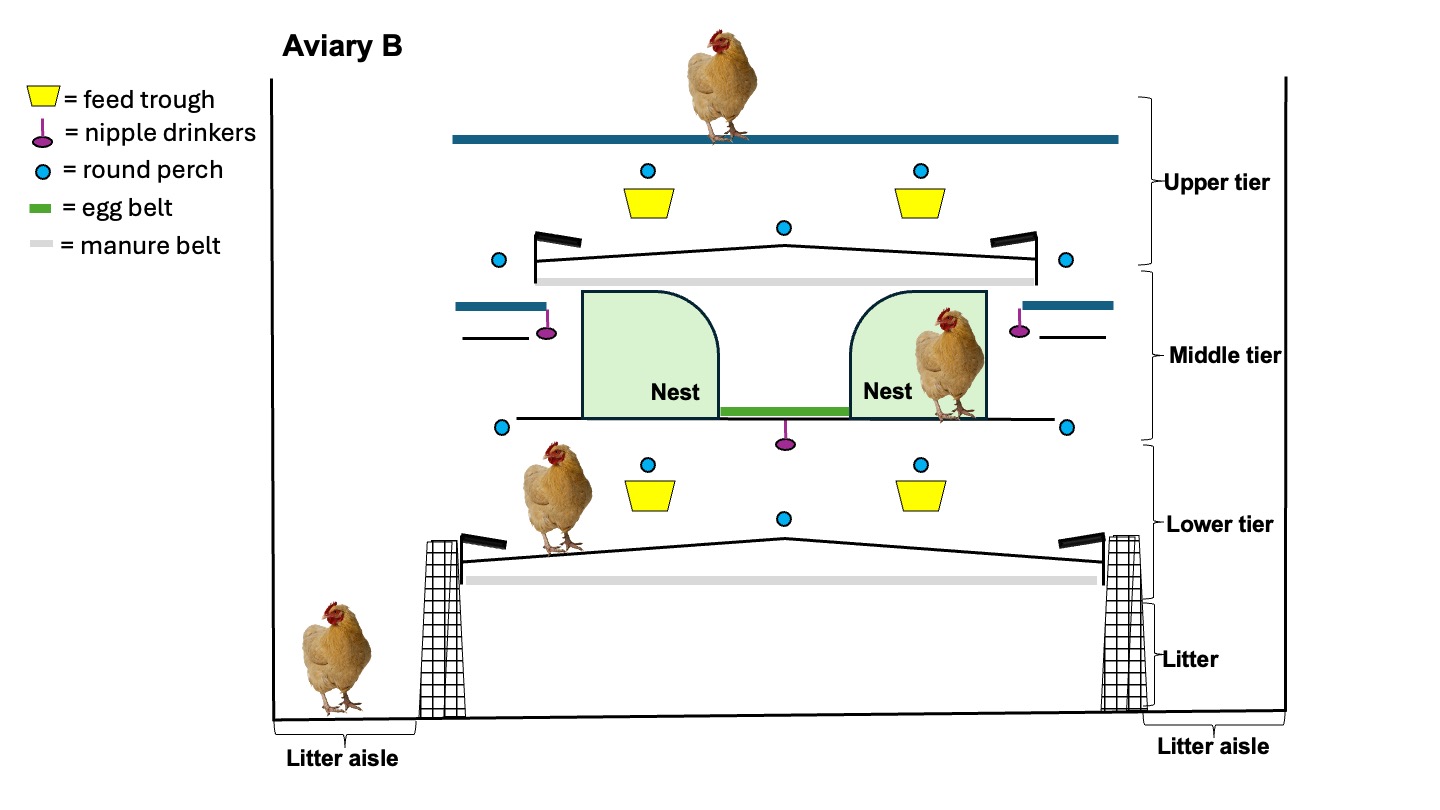
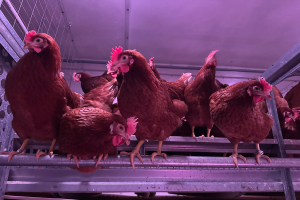
The two cage-free aviaries used in this study had many similarities, such as three tiers, water and feed on two levels, and round perches throughout. However, they differed in a few key areas that could cause hens to behave differently. Aviary A was designed to give producers the option to enclose birds in the tiers and keep them off the litter for certain periods of the day or production cycle. As a result, hens in Aviary A could get to the litter area only from the bottom tier. The colony nest in Aviary A doesn’t have flaps along its front but is separate from more densely populated areas of the tiers for more privacy, requiring hens to navigate multiple hop platforms to the uppermost tier. The open layout of Aviary B lets hens reach the litter from any tier. Nests in Aviary B provide more space per bird, are enclosed with flaps along the front, and are located on either side of an egg belt in the middle tier. To return to the house analogy, Aviary A offers a more traditional discrete-room layout, with each room having a distinct purpose, while Aviary B provides an open plan layout free-for-all. We predicted that overall egg production would be similar between the two housing types because the hens were the same strain, from the same source and received the same feed and other management inputs. However, we predicted that hens in Aviary B would lay more of their eggs in nests as a result of the combination of nests placed closer to the ground and more nest space per hen compared to Aviary A.
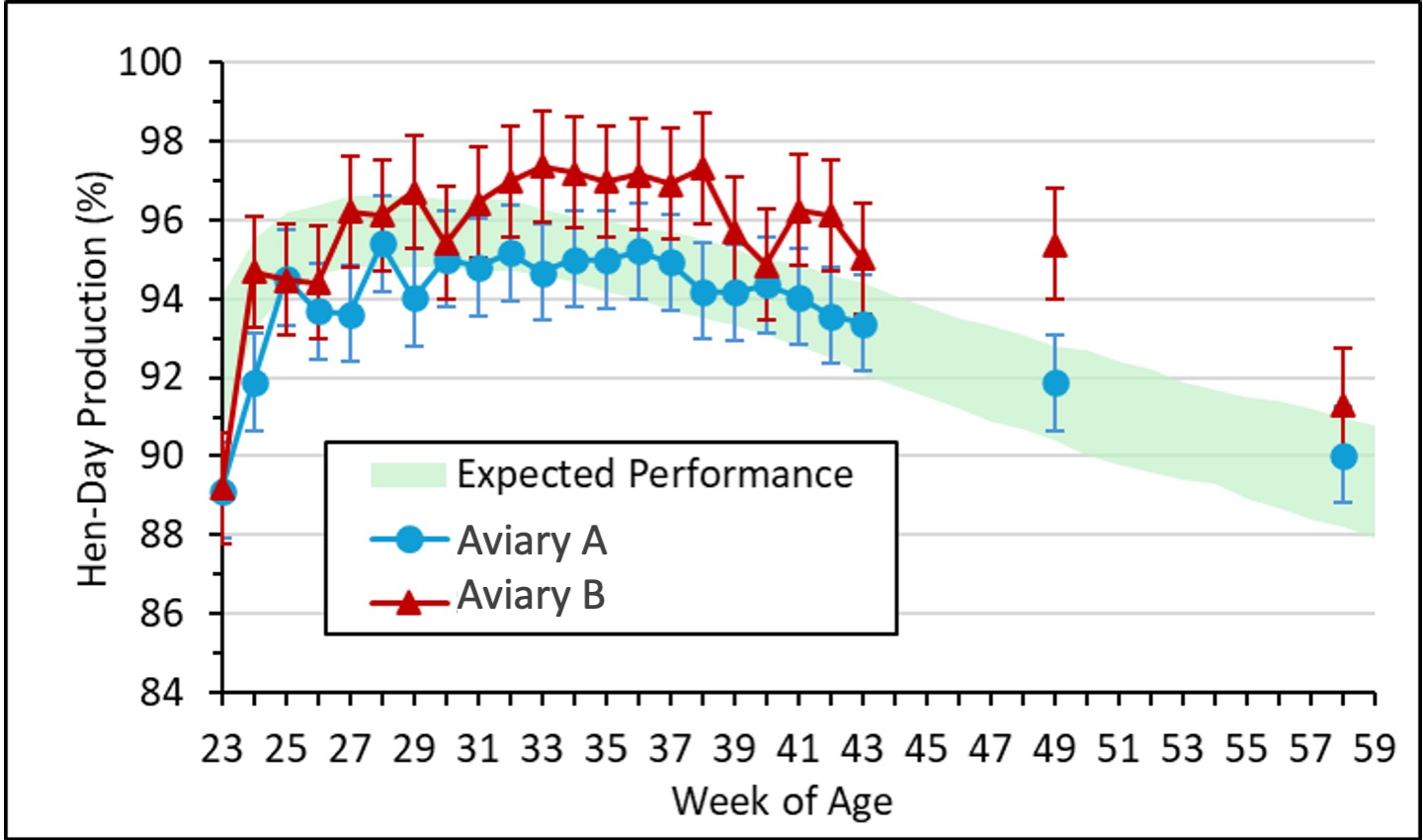
Overall, egg production remained high across both systems, with hens sustaining over 92% hen-day production between 24 and 43 weeks of age. While Aviary A showed stronger early production (20–21 weeks), output declined relative to Aviary B later in the study. To investigate this shift, we analyzed feed delivery data. We found that 5% more feed was delivered to Aviary B than Aviary A on a per-hen basis. However, because this measurement tracks feed disappearance rather than feed intake by hens, we cannot be certain this explains differences in production between the two systems.
Mislaid eggs represent a notable drawback of cage-free production. Floor eggs, which require extra labor to collect and can end up dirty or damaged, are especially concerning to producers. Averaged over the length of the study, hens in Aviary A laid almost three times as many floor eggs compared to hens in Aviary B (8.5% compared to 2.9%). Hens in Aviary A were laying about 11% of their eggs on the floor by the end of the study. For context, in a barn with 1,000 hens, workers would have to manually collect about 110 eggs off the floor daily by the end of the flock cycle. This translates to significant labor and time coupled with product damage or loss.
So, why did Aviary A lead to so many more floor eggs than Aviary B? We can’t say exactly what feature drastically increased nest use in one housing type versus the other, but the nest space provided per bird, ability to reach nests without moving to the highest tier, and increased privacy provided by nest flaps are all potential factors. Future research, including a current study looking at how changing the coverage nest flaps provide, will focus more on what specific housing features hens value most to when deciding where to lay. As Michigan continues its commitment to cage-free egg production, research exploring ways to maximize hens’ use of nests and to reduce floor-laid eggs will help ensure the economic sustainability of the state’s laying hen industry.