


High-oleic, high reward: A unique opportunity for Michigan soybean farmers
 Print
Print Email
EmailHigh-oleic soybeans offer opportunities for increased profitability not only for soybean farmers but also dairy farmers in Michigan.
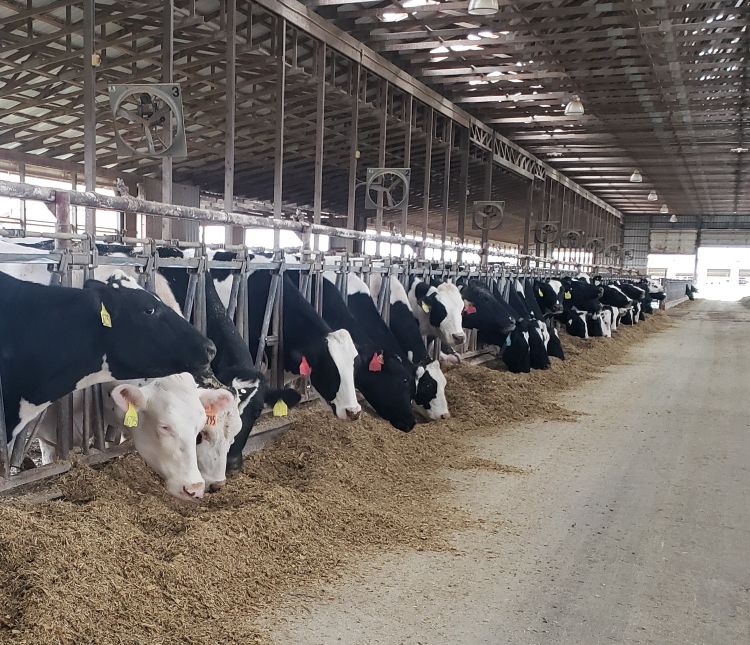
T&H Dairy is operated by Mike Halfman and his family in Fowler, Michigan. They milk 1,600 cows with approximately 4,400 acres of corn, alfalfa, wheat and soybeans. Over two years ago, the family began exploring the use of high-oleic soybeans in their dairy rations after their seed representative introduced them to the concept. In August 2025, they began roasting soybeans onsite, following nearly a year of construction to build their own roasting and storage facility.
High-oleic soybeans (HOSB) have the potential to improve human health and increase farm profits for those able to take advantage of near-term opportunities. They offer Michigan farmers the opportunity to improve profitability while meeting demand for healthier oils and livestock feed. Demand has grown rapidly in recent years, driven by food manufacturers and dairy farms using roasted HOSB in feed rations.
An article discussing HOSB was published in the Winter 2024 edition of the Michigan Soybean News magazine (p. 16) introducing this as a premium opportunity for soy farmers. This article further outlines marketing, feeding, production and contract considerations for HOSB in Michigan.
In 2024, soybean farmers across 14 states grew 800,000 acres of HOSB. The United Soybean Board (USB) projects the potential to grow more than three million acres as human and dairy industry demand for HOSB continue to grow.
“At T&H Dairy, we have traditionally grown commodity soybeans and sold them at harvest. This year we grew 900 acres of high-oleic soybeans and contracted 300 acres of high-oleics with a local farmer to roast and feed to our lactating dairy cows,” Mike Halfman of T&H Dairy said.
High-oleic oil
Linoleic and linolenic acids contribute to instability in oil and reduce shelf life, while oleic acid improves oxidative stability (Table 1). Olive oil, considered by many to be the gold standard when it comes to healthy oil, has approximately 75% oleic acid while oil from commodity soybeans has only 23%. The USB has set industry standards for high-oleic and low-linolenic soybean oil at greater than 75% oleic and less than 3% linolenic acids.
High-oleic soybean oil is highly sought-after in the human food market due to its health and food industry benefits. It is authorized by the U.S. Food and Drug Administration to be labeled as a heart-healthy oil due to its relationship to a reduced risk of coronary heart disease compared to other oil choices. Not only is the health of the oil beneficial to the food industry, but the neutral flavor, improved shelf life and longer fry life have caused increased demand for HOSB oil.
Table 1. Comparison of select oil traits of various oils and current high-oleic soybean developers.
|
Oil type |
Saturated |
Monounsaturated |
Polyunsaturated |
|
|---|---|---|---|---|
|
Oil feedstock / soybean variety |
(%) |
Oleic (%) |
Linoleic (%) |
Linolenic / other (%) |
|
Commodity soybean |
15 |
23 |
54 |
8 |
|
Plenish soybean 1 |
<12 |
75–80 |
4–7 |
2 |
|
Vistive Gold Xtend soybean 2 |
6 |
65–74 |
17 |
3 |
|
SOYLEIC soybean 3 |
<12 |
78–84 |
6–8 |
1–3 |
|
Olive |
15 |
75 |
9 |
1 |
|
Canola |
7 |
61 |
21 |
11 |
|
Corn |
13 |
29 |
57 |
1 |
|
Sunflower |
12 |
16 |
71 |
1 |
1 Corteva Agriscience, GMO; 2 Bayer Crop Science, GMO; 3 Missouri Soybean Merchandising Council, non-GMO
Dairy feed
While in the past the market signaled for strong growth of HOSB acres to be needed for human food applications, today in Michigan the largest growth potential is seen in the dairy sector. One milking cow consumes approximately one acre of HOSB on an average ration per year. Considering 2024 Michigan dairy herd numbers, the dairy industry could create 439,000 acres of HOSB demand in Michigan alone.
Cows utilize both the oil and protein efficiently, leading to improvements in milk yield and component production when HOSB are roasted and correctly incorporated into rations as they provide a feed source rich in both protein and energy while maintaining a favorable fatty acid profile. The balance of fatty acids in HOSB lowers the risk of diet-induced milk fat depression.
Michigan State University (MSU) research has shown including roasted HOSB at 16% of the ration dry matter can increase milk yield without reducing feed intake. Improvements depend on three controllable factors: roast quality, particle size and inclusion rate. Maintaining consistent roasting temperature and managing ration fat levels are key to realizing benefits.
Halfman said, “Since mid-August, we have been feeding 7.5-8.0 pounds per cow per day, with a focus on our high-producing cows. Back in March, we began feeding 3 pounds per cow per day with HOSB we were able to purchase. This lower feeding rate bumped milk production maybe 2-3 pounds per cow, but it didn’t change milk components. On our higher feeding rate, we are now seeing an increase of over 4-5 pounds of fat-corrected milk per cow per day and 0.15-0.2 more butterfat.”
Unlike conventional soybeans, which are limited to roughly 10-12% of ration dry matter because of their higher linoleic acid content, roasted HOSB have been fed successfully at levels up to 24% without measurable signs of diet-induced milk fat depression. As with any ingredient, inclusion should be based on comparative nutrient value and ration cost.
Replacing purchased protein and fat supplements with roasted HOSB can lower feed costs and improve margins. Recent economic modeling at MSU found an average income-over-feed-cost advantage of $0.65 per cow per day for farms producing and roasting their own HOSB and about $0.27 per cow per day for farms buying roasted beans and paying transport.
Halfman said, “We could not have fed this much fat any other way because it would have been far too expensive. While we aren’t quite sure our exact feed savings per cow yet, we are now purchasing a lot less feed back onto our farm.”
Production considerations
Between oil and dairy markets, there is potential for increasing soybean acreage in Michigan and improving soybean farmers’ net income. However, there are concerns that have kept many farmers from growing HOSB in the past. Early accounts of a yield drag with HOSB have been replaced by numerous university and industry trials showing yields are now comparable with commodity soybean varieties. No significant agronomic characteristics are different between HOSB and commodity varieties aside from weed control. However, significant differences may exist in yield potential and agronomic characteristics between differing varietal germplasm sources.
For farms who choose to plant HOSB in fields with no soybean growing history in the last three to five years, a few factors need to be considered. Seed should be treated with a Bradyrhizobium japonicum inoculant to ensure sufficient nodulation. If the field has been heavily manured, nodulation may be poor until soil nitrogen levels are reduced, although the crop may still be highly productive due to the abundance of nutrients. It is less likely that soybean cyst nematode will be present in these fields, but best practices should be maintained with rotating soybean cyst nematode resistance sources to delay potential soybean cyst nematode resistance. Rotating soybeans into long-term corn-on-corn fields will likely be beneficial to reduce corn pathogen and pest populations and provide more herbicide options for challenging weeds.
Weed control is one of the main concerns expressed by farmers who have considered planting HOSB. Three sources of HOSB seed will be commercially available for 2026. Pioneer’s Plenish HOSB are genetically modified organisms (GMO) and have several varieties available in Michigan. Vistive Gold Xtend seed from Bayer Crop Science are also GMO and expected to be available to Michigan farmers with select maturity groups in 2026. SOYLEIC is a non-GMO type of HOSB developed by the University of Missouri, the Missouri Soybean Merchandising Council and the USB that is currently being licensed by Beck’s and other companies.
“This year, we grew three different soybean varieties to see what will work best for our operation,” Halfman said.
Non-GMO varieties of HOSB will require a different suite of herbicides compared with GMO varieties. Both Plenish and Vistive Gold have only glyphosate tolerance, so glyphosate-resistant weeds may pose problems in these fields. Several effective herbicide options exist for all HOSB systems, although herbicide programs with layered residuals will likely be critical.
Select maturity groups of Plenish with glyphosate, glufosinate and 2,4-D tolerance (Enlist E3 varieties) will be available in Michigan for the 2026 growing season. Bayer Crop Science has rebranded its Vistive Gold as Vistive Gold Xtend seed, which is tolerant to dicamba formulations labeled for in-crop applications. However, in the near-term, dicamba use will be limited to burndown applications due to uncertainty over the U.S. Environmental Protection Agency approval of labels for over-the-top dicamba products.
Halfman said, “Moving to a non-GMO soy variety was not as much of a shift as we had expected. We are currently doing an extra spray pass on the high-oleics than we would on our traditional beans. All our acres are on a conventional tillage program, and we are doing a burn down prior to tillage and then putting down a pre-emerge and then doing a post on the 20-inch rows before canopy. Last year we had to go back later in the season and clean up some of our acres, but no cleanup was necessary this year.”
The main difference in production practices between HOSB and commodity soybeans is the need for identity preservation (IP) programs. Since HOSB have distinct genetic differences compared with commodity soybeans, they must be kept separate all along the value chain. Trait stewardship includes such practices as cleanout of planting, harvest and transportation equipment and storage bins. More stringent monitoring during harvest may be conducted when growing non-GMO varieties as presence of GMO seeds will produce a positive detection for the trait and can cause rejection of a load.
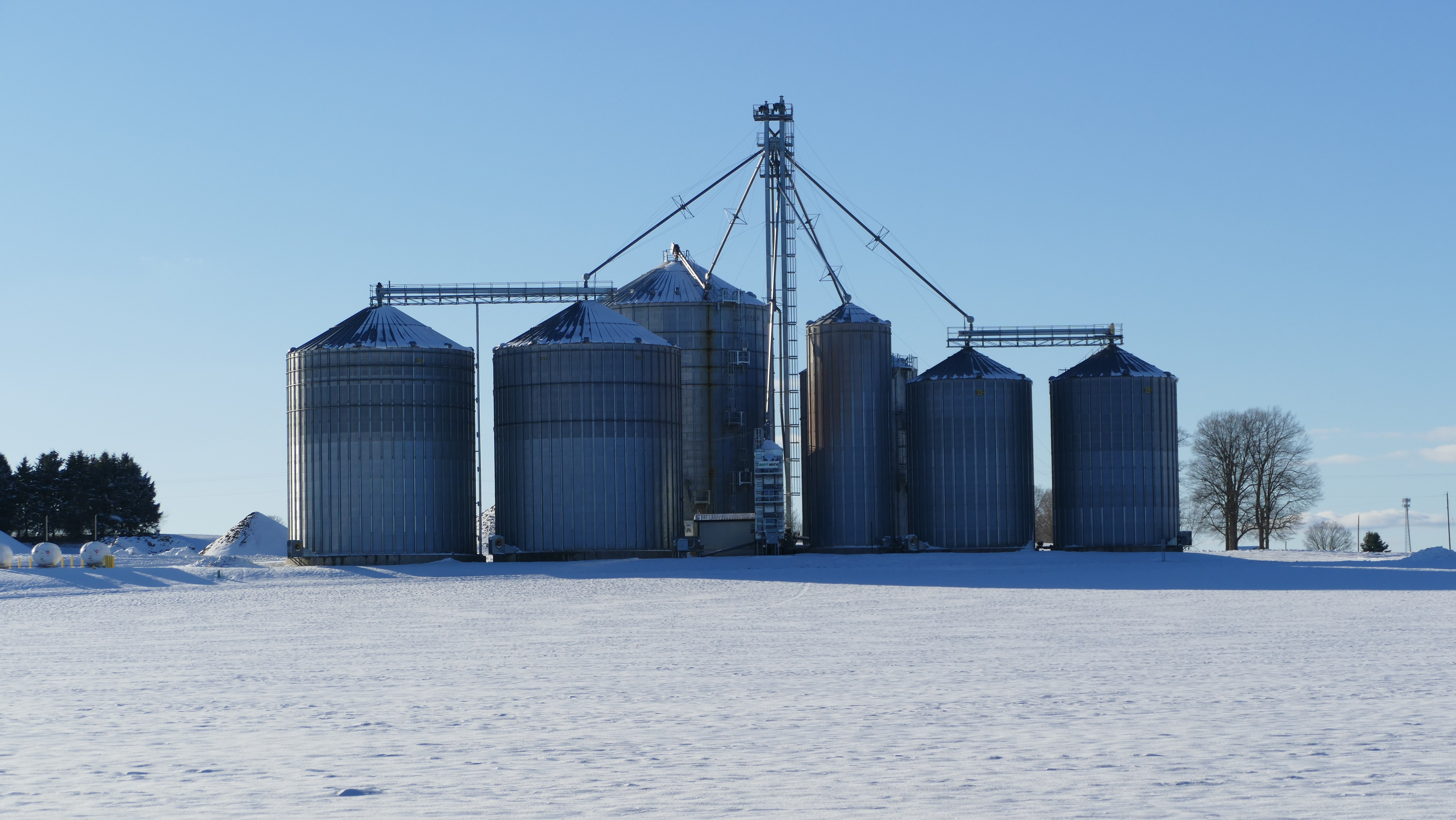
Stewardship is also required when growing GMO varieties since including significant quantities of HOSB in conventional loads will change the fatty acid ratio and nutritional value of the oil and potentially cause problems for end users. If storing grain prior to delivery, growers must have enough separate bins for the HOSB and their other grains.
Contract considerations
Entering into a HOSB contract with another farmer typically means one party, often a dairy farmer, intends to use the soybeans as feed. In this case, it’s important for both parties to identify the number of soybean acres or bushels needed to meet the herd's nutritional requirements as well as the amount the soybean farmer can reasonably supply. In a science-backed ration, one milking cow consumes approximately one acre of HOSB on average per year.
A farmer-to-farmer contract should outline key terms, including the premium to be paid for HOSB—often based on third-party processor premiums, which range from $0.50 to $1.50 per bushel. This price may also be tied to local commodity soybean prices and adjusted for increased input costs, storage, basis or transportation savings. Any trucking or hauling charges should be specified and factored into the premium.
“When deciding on a premium, we used the non-GMO soybean price Zeeland Farm Services was offering and subtracted $0.25 per bushel for the trucking savings. The farm we contract with is only about two miles away, so we are both able to save on the trucking side,” Halfman said.
Harvest and delivery terms should also be clearly defined, detailing how soybeans will be assessed upon delivery—such as test weight, moisture content, oil content testing—and applicable discount schedules for not meeting quality standards. Storage responsibilities should be agreed upon, including whether a storage premium will be paid.
Finally, the contract must address soybean checkoff remittance. If the dairy farm is the first purchaser, they are responsible for collecting and submitting checkoff funds. For more information about how to remit to the checkoff, contact the Michigan Soybean Committee at soyinfo@michigansoybean.org or 989-652-3294. If a dairy farm is growing HOSB for use on their own farm, they are not subject to checkoff remittance.
If you prefer to work through a third-party HOSB processor for either the dairy or human oil market, start by locating a processor in your area and reach out to learn about their contracting process and the premiums they offer. Carefully review the harvest and delivery requirements to ensure your farm can meet them—many processors have strict standards, including moisture level caps between 13-15% and the need for IP procedures.
In both private or third-party sales, a written and signed contract is essential and should be reviewed by an outside party such as an attorney or other qualified professional to ensure clarity and fairness. Because of stewardship considerations, buyer agreements are typically on a per-acre rather than a per-bushel basis. Growers should establish the end user prior to planting HOSB. Viable end users include feed use on the grower’s own farm, feed for another farm, or a specified processing facility. Before entering into any contract, compare the premium offered to your expected cost of production and proceed with the contract only if the financial return makes sense for your farm.
Both the high oleic dairy and oil markets can add value back to soybean farmers through per-bushel premiums which range from $0.50–$1.50 per bushel. If you have interest in growing HOSB—either for a dairy farm or third-party processor—contact the end user to discuss premium opportunities and contract considerations.
A deeper dive into production and marketing HOSB topics can be found in the upcoming Michigan State University Extension bulletin E3540 while dairy feeding topics can be found in E3541. These bulletins will be available electronically on the MSU Extension website later this winter.
This article was produced by a partnership between Michigan State University Extension and the Michigan Soybean Committee. This article was first published in the Michigan Soybean News magazine.