Honoring a legacy, expanding hands-on learning at the MSU Pollinator Performance Center
 Print
Print Email
EmailInspired by the leadership of Dr. Meghan Milbrath, Charlotte Hubbard's gift creates a new gathering place for education and outreach while celebrating the legacy of her late husband, Marshall Beachler.
For beekeepers, there is no substitute for stepping into an apiary and opening a hive.
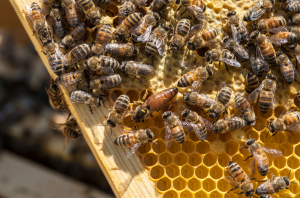
"You can watch webinars, earn online credentials and attend seminars," said Charlotte Hubbard, a beekeeper and educator from Schoolcraft, Michigan. "And then students consistently tell me absolutely nothing compares to actually getting into colonies."
That belief in experiential learning inspired Hubbard's recent gift to Michigan State University's Pollinator Performance Center, making possible the center's new teaching pavilion.
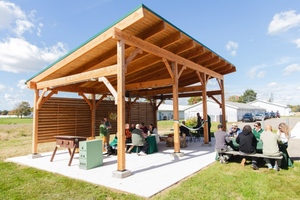
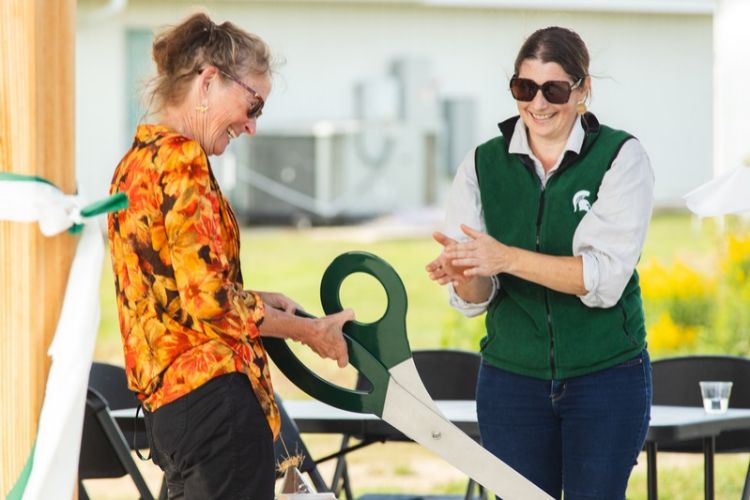
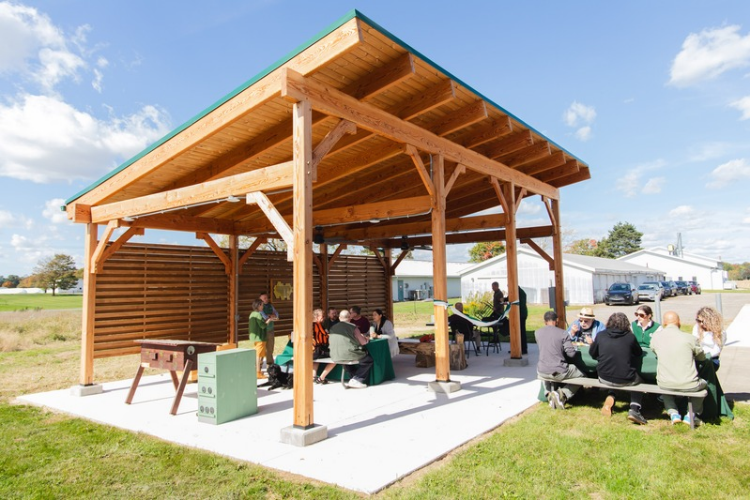
The MSU College of Agriculture and Natural Resources and the Department of Entomology hosted a special ribbon cutting event at the teaching pavilion on Thursday, October 8, 2026. The outdoor learning space will support educational programs, workshops and outreach activities while serving as a lasting tribute to Hubbard's late husband, Marshall Beachler.
The teaching pavilion represents a shared commitment to pollinator education between Hubbard and Dr. Meghan Milbrath, faculty advisor of the MSU Pollinator Performance Center and associate professor in the Department of Entomology.
"I cannot emphasize enough that Dr. Meghan Milbrath was the catalyst and motivation for all of this," Hubbard said.
Advancing pollinator health through education and outreach
Located at the MSU Campus Farms, the Pollinator Performance Center serves as a hub for research, teaching and MSU Extension programming. The center supports faculty, students and researchers while helping meet the growing educational needs of beekeepers and pollinator advocates across Michigan.
"I love that the Pollinator Performance Center is part of MSU Campus Farms because it brings honey bees and other pollinators up to the same level as other important aspects of Michigan animal agriculture," Milbrath said.
The center supports teaching and Extension efforts that reach students, veterinarians, regulatory professionals, researchers and beekeepers throughout the state. As interest in pollinator health continues to grow, so has the demand for hands-on learning opportunities. The new teaching pavilion addresses a longstanding need for a comfortable and accessible outdoor classroom where participants can learn directly from the hives.
"Beekeeping is best taught through in-hive experiences," Milbrath said. "Before the pavilion, we did not have a safe, accessible, comfortable place to do so."
Tragedy and new beginnings
Hubbard's journey into beekeeping began years ago while helping her first husband, Tom Sonday, after he was diagnosed with cancer. "Tom was the original beekeeper," Hubbard said. "Our beekeeping together during the months he fought cancer was intriguing and rewarding, and I became hooked."
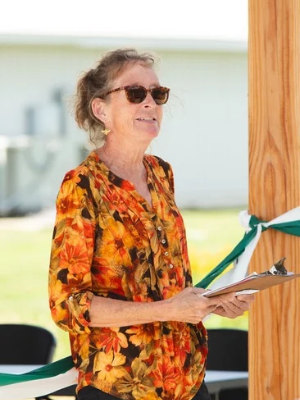
After Tom's passing, Hubbard continued the work that he started. The hives they once worked on together expanded, and the bees became like friends, helping her as she worked through her pain and loss.
As time went on, Hubbard decided to start dating again, though she kept her beekeeping hobby to herself. On their third date, Marshall Beachler asked Hubbard about the snow-covered structures in the backyard. "I brushed it off, thinking, I shouldn’t tell him about this obsession too soon."
But as their relationship evolved, Hubbard gradually introduced Beachler to her beloved hobby. "He quickly became a devout student and devoted beekeeper," Hubbard said. "A natural who was soon comfortable and capable."
Hubbard and Beachler got married in October 2011. Together they managed approximately 50 honey bee colonies at multiple locations and achieved overwintering success rates well above average. Along the way, they collaborated closely with Milbrath, whose reputation as an educator and researcher was already well known throughout Michigan's beekeeping community.
"I knew of Dr. Milbrath early on through my involvement with bees in Michigan," Hubbard said. "She became a valued resource for information and a friend." Hubbard and Beachler occasionally assisted Milbrath and her team during field research activities, gaining firsthand appreciation for both the work and the people behind it.
Over the years, Hubbard attended numerous conferences, workshops and educational programs where Milbrath presented. "She is a natural educator," Hubbard said. "You can learn so much just by working alongside her."
Creating the ultimate outdoor classroom
When conversations turned toward priorities for the Pollinator Performance Center, the idea of a dedicated teaching pavilion emerged as a meaningful opportunity. The new space provides a welcoming gathering space where participants can prepare for hive inspections, discuss management techniques and learn in greater comfort.
"It will be so easy and comfortable for us to teach," Milbrath said. "The new space will allow us to teach and learn in comfort, with shade and fans and seats, rather than standing in a field in full sun."
The facility supports a wide range of educational activities, including instruction for students in the College of Veterinary Medicine's honey bee medicine clerkship, programs offered through the MSU Pollinators Club and the College of Veterinary Medicine Honey Bee Club, hands-on workshops for beekeepers and training opportunities for veterinarians, Michigan Department of Agriculture and Rural Development inspectors and visiting scholars.
For Hubbard, the pavilion's greatest value lies in its ability to help more people gain direct experience working with bees. "There is no better classroom than in the hive itself," she said.
Honoring Marshall's legacy
The Teaching Pavilion also serves as a tribute to Beachler and the values he embodied.
His passing around the time of the COVID-19 pandemic was sudden and unexpected, and opportunities to celebrate his life were limited. The pavilion has helped provide a meaningful way to honor his memory while supporting a cause he cared about deeply.
"I hope students learn that an ordinary person far from the arena of academics or research can make an impact in a little corner of the world," Hubbard said.
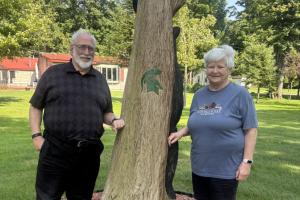
She hopes future visitors who notice the plaque bearing Beachler's name will understand that meaningful contributions come from people of all backgrounds, united by a desire to leave the world better than they found it.
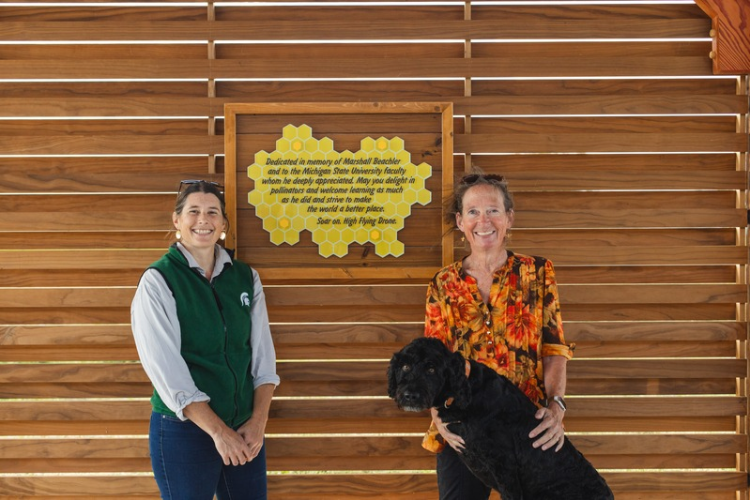
"I think most of us hobbyists are motivated by trying to be better caretakers of our little corner of the world," Hubbard said.
Celebrating a shared vision
For Milbrath, Hubbard’s gift demonstrates the powerful role donors play in the mission of the Pollinator Performance Center. "Donor support is invaluable," she said. "It provides flexibility that is often not found in grants and helps us respond to new challenges and stakeholder needs as they arise."
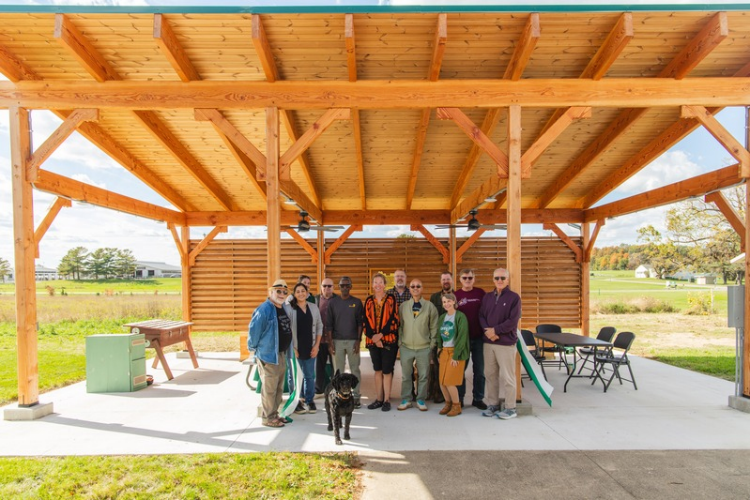
To celebrate the completion of the project, a ribbon cutting and dedication event took place at the new Pollinator Performance Center teaching pavilion on Thursday, Oct. 8, 2026.
This event brought together members of the MSU community to recognize Hubbard’s generosity, honor Beachler’s memory and showcase a new resource that will strengthen pollinator education for years to come. For Hubbard, seeing the pavilion become a reality has brought healing as well as hope.
"This pavilion has helped us gain more acceptance of his passing and shift the pain of his loss by carrying out initiatives that reflect his remarkable life."
Learn more about the MSU Pollinator Performance Center here.