How to identify and manage take-all patch
 Print
Print Email
EmailPreventive control is the key to managing take-all patch in turfgrass.
There were several cases of take-all patch confirmed in the summer of 2026 from golf course diagnostic samples brought into our lab at Michigan State University. Diseases caused by root-infecting pathogens are the most difficult to identify and manage for several reasons. Infections occur below ground, the initial symptoms resemble drought stress, and visible disease symptoms develop after significant root damage has occurred and are difficult to reverse.
Curative control of root diseases has very limited success. Many turf managers report treating take-all patch with fungicides provides only temporary relief, but the problem eventually returns. Multiple fungicide applications are generally required to manage take-all patch curatively. Preventive control with fungicides is often recommended, but it can be costly to treat large areas, and efficacy can vary depending on application timing.
Take-all patch, caused by Gaeumannomyces avenae, is an important disease on bentgrass species, especially newly established creeping bentgrass. The fungus infects the crown and root tissues of the plant during cool, wet weather. Symptoms of take-all patch may appear in late spring and early summer when plants with infected roots begin to undergo stress and then decline.
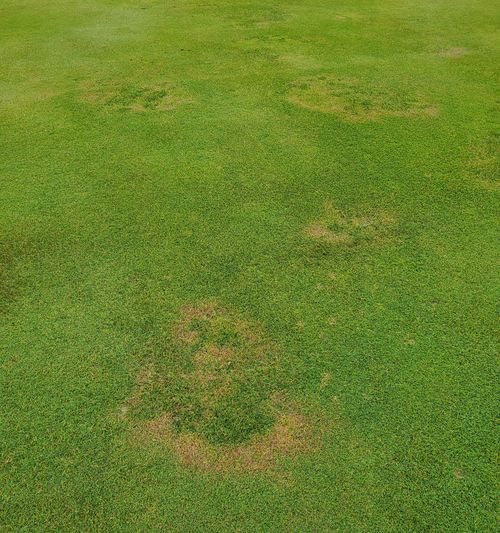
The first symptoms observed with this disease are often tan to bronze-colored circular patches that range in size from 4 inches up to several feet in diameter. When the disease is active, patches may appear bronze to reddish-brown in the perimeter or throughout the entire patch. This symptom can also occur in late summer following periods of hot, dry weather. Often, patches exhibiting bronze-colored perimeters have thinned throughout the patch (Photo 1). These patches can increase in size from year to year if left untreated. As the size of the patches increases, grasses such as Festuca, Poa spp. or weeds may fill in the center where the turf has been thinned (Photo 1).
In cases of suspected take-all patch, a compound microscope can be used to look for darkly pigmented hyphae that grow lengthwise with the roots to help confirm the disease. These hyphae may also be visible on crowns, stolons and rhizomes. The presence of these fungal hyphae, along with knowing the host and the weather conditions when the symptoms occurred, helps to positively diagnose take-all patch.
Reducing plant stress is a key to managing many root diseases. Syringing frequently and hand watering can help reduce stress on plants with infected, damaged roots. Research has shown that manganese (Mn) applications can help reduce the severity of take-all patch if there are deficiencies. Manganese is an important micronutrient; Mn deficiency will weaken plants’ resistance to take-all patch disease. Since high rates of manganese in hot weather can be phytotoxic to turfgrass, it’s best to make applications during cooler weather.
It’s important to know that soil pH affects Mn availability, which indirectly affects take-all patch disease. Manganese solubility decreases as soil pH increases. Manganese deficiency is most common in alkaline soil (pH > 6.5). A soil test can help determine your soil pH and Mn levels.
As we move into fall and soil temperatures begin to drop, consider applying a preventative fungicide to areas with a history of take-all patch. Use soil temperature to help determine when to apply fungicides. Photos 2 and 3, for example, show soil temperatures recorded at a 2-inch depth in East Lansing, Michigan, in 2025 and 2026, respectively.
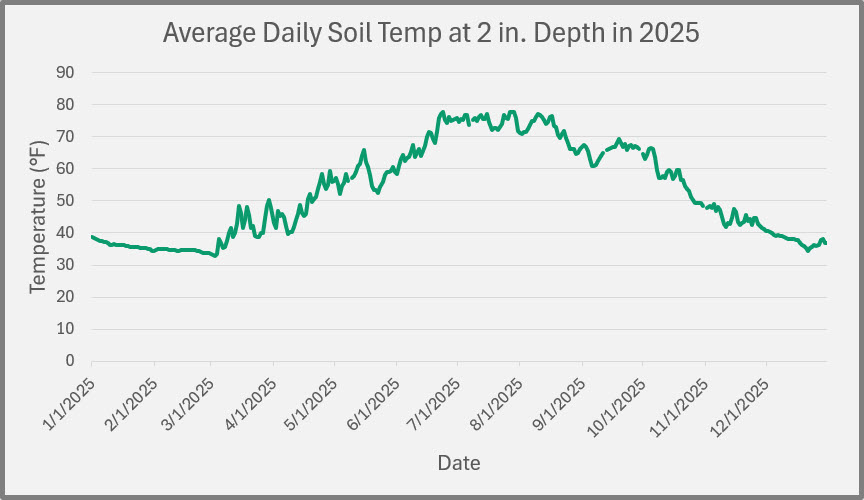
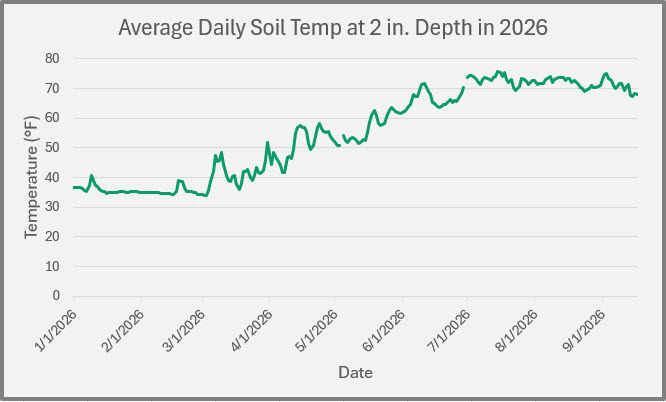
Preventative fungicide treatments are generally recommended in both fall and spring. For fall applications, apply products such as azoxystrobin, pyraclostrobin, propiconazole and tebuconazole approximately two weeks before nighttime temperatures drop into the 50s degrees Fahrenheit (10 degrees Celsius), typically from mid-September to early November. In spring, apply fungicides when the five-day average soil temperature at a 2-inch depth exceeds 55 F (13 C) or approximately two weeks after initial mowing in Michigan.
Increasing spray water volume to at least 2–4 gallons per 1,000 square feet or irrigating with 0.125–0.25 inches of water immediately after fungicide treatment can help distribute the chemicals to the crowns and roots, improving fungicide efficacy. Follow the manufacturer’s fungicide label for application instructions, paying particular attention to timing and application requirements, which can vary by product.
Reference to commercial products or trade names does not imply endorsement by Michigan State University Extension or bias against those not mentioned.