How to obtain a pesticide application business license in Michigan
 Print
Print Email
EmailBusinesses applying pesticides for hire in Michigan must obtain a pesticide application business license. Understanding certification, experience, insurance and application requirements helps ensure compliance and legal operation.
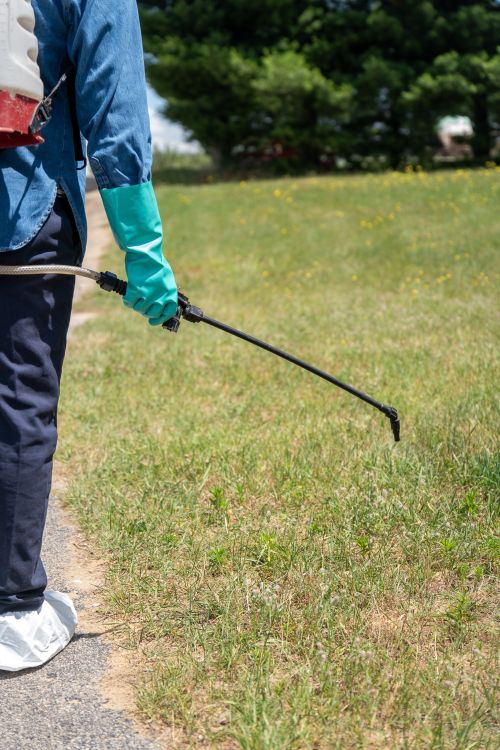
Businesses that apply pesticides for hire in Michigan must meet specific licensing and certification requirements before offering services. Whether you operate a lawn care company, pest control business, agricultural application service or tree care company, understanding these requirements is essential for operating legally and protecting human health and the environment.
The Michigan Department of Agriculture and Rural Development (MDARD) regulates pesticide use and licensing in the state. Businesses that apply pesticides commercially must obtain a pesticide application business license in addition to ensuring that individuals making pesticide applications hold the appropriate applicator credentials.
Who needs a pesticide application business license?
A pesticide application business license is required for anyone who advertises or performs pesticide applications for hire or compensation in Michigan. Certification or registration as an applicator alone does not allow someone to operate a pesticide application business.
Common examples include lawn and landscape care companies, structural pest control services, agricultural pesticide application services, tree care and ornamental pest management businesses.
Individuals applying pesticides on property they own, lease or operate without compensation typically do not need a business license. Farmers applying pesticides to their own crops are also generally exempt from the business licensing requirement.
Step 1: Ensure a certified applicator is associated with the business
To qualify for a pesticide application business license, the applicant must either be a certified commercial pesticide applicator or employ a certified applicator whose credentials cover the pesticide application categories for the business.
Commercial applicators must pass the commercial core exam and at least one category exam related to the types of pesticide applications they perform. (Learn more about how to become a commercial applicator.)
Employees who apply pesticides for a licensed business must also hold appropriate credentials as either:
- A certified applicator.
- A registered technician working under supervision. (Learn more about registered technicians.)
Step 2: Meet experience requirements
New pesticide application businesses must demonstrate experience in pesticide application. Applicants must meet at least one of the following experience requirements:
- At least two application seasons of experience working for a licensed commercial applicator.
- A bachelor’s degree in a relevant discipline combined with at least one application season of experience.
Experience must be documented using the Notarized Letter of Experience form (PI-217) submitted with the application.
Step 3: Obtain liability insurance
Pesticide application businesses must provide proof of financial responsibility through liability insurance. The certificate must list the legal name and address of the business and include coverage limits and policy dates.
Most categories require at least:
- $100,000 for bodily injury per occurrence.
- $25,000 for property damage per occurrence.
- Some categories, such as aerial application, fumigation or right-of-way pest control, may require higher coverage limits.
Step 4: Submit the license application
Applicants must submit the following materials to MDARD:
- Completed Pesticide Application Business License Application (PI-079)
- Proof of liability insurance
- Notarized experience documentation (for new businesses or new categories)
- Applicable business documentation, such as DBA certificates or corporate registration information
- The $100 license fee
Applicants should allow approximately four to six weeks for MDARD to process the business license once certification credentials and application materials are submitted.
Step 5: Maintain compliance and renew annually
Pesticide application business licenses expire Dec. 31 each year and must be renewed annually. Learn more about the renewal process at the MDARD website.
Licensed businesses must also:
- Maintain required liability insurance
- Notify MDARD of changes to the business name, address or certified applicators
- Ensure employees applying pesticides hold valid credentials
- Follow pesticide label directions and state pesticide regulations
In certain settings such as schools, health care facilities and public buildings, pesticide applicators may also need to participate in an approved integrated pest management (IPM) program when making applications other than sanitizers or antimicrobial products.
The Michigan State University (MSU) Extension Pesticide Safety Education Program (PSEP) provides educational resources to help pesticide applicators understand certification requirements and pesticide regulations. For more information about pesticide application business licensing, application forms and detailed requirements, visit the MDARD pesticide application business licensing webpage. For other certification or recertification questions, visit the MSU PSEP website.