What can I do about sandhill cranes in my yard and garden?
 Print
Print Email
EmailUnderstanding their history and diet is a great first step.
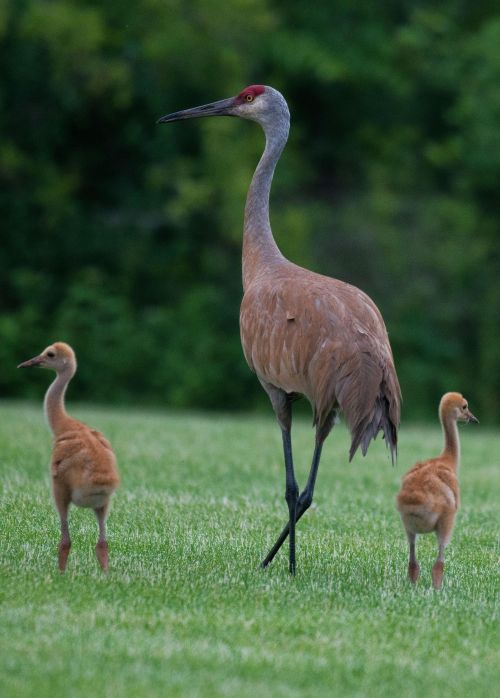
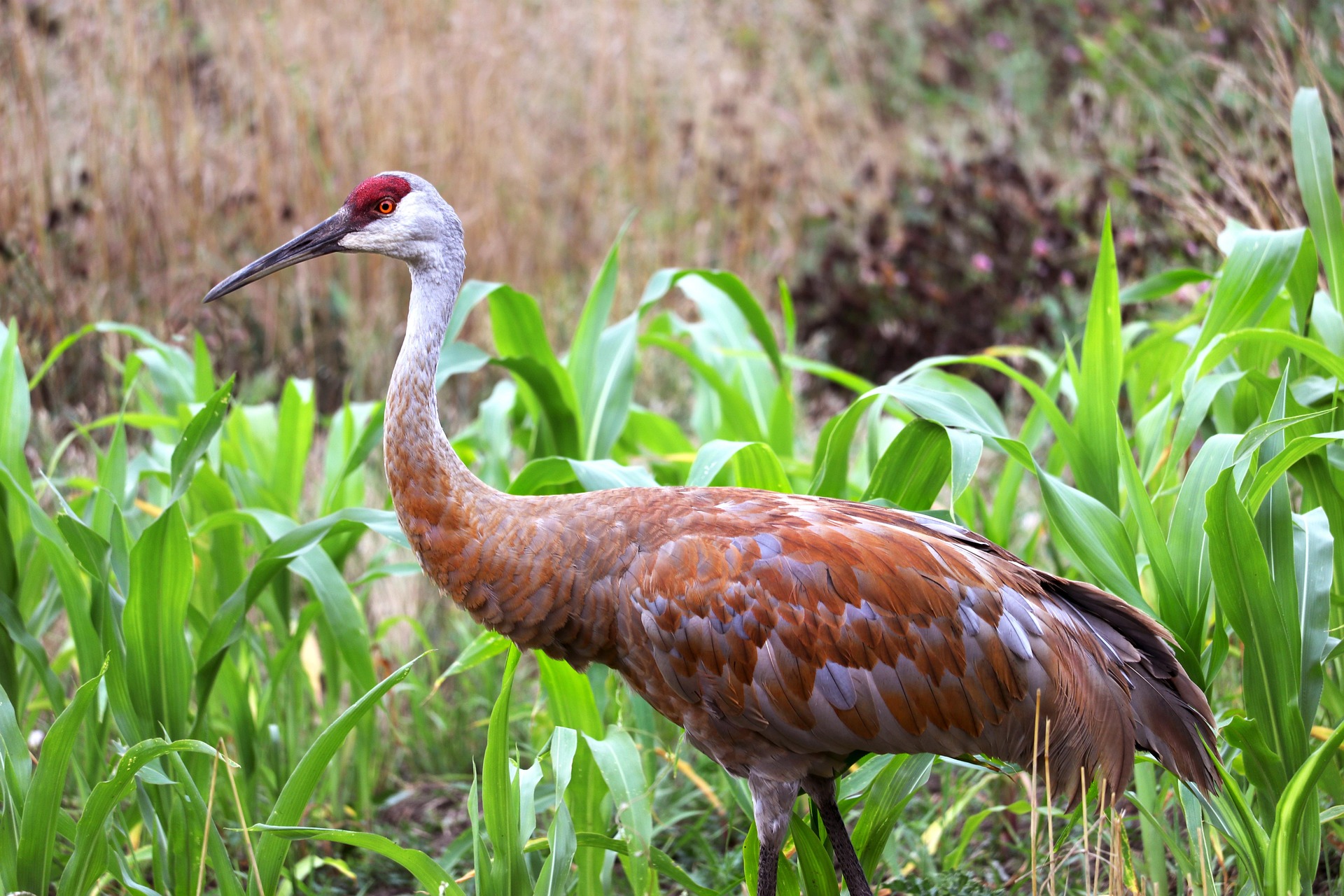
Michigan is a state with many types of large birds. One bird that has become more abundant in recent years is the sandhill crane (Antigone canadensis). Adult sandhill cranes are differentiated from other large birds by their long legs and necks, a patch of red on their featherless foreheads, and white-feathered cheeks. Their body color can be anywhere from soft gray to brown to reddish gray. This is because sandhill cranes preen and groom themselves with different shades of mud that can tint their feathers.
Are sandhill cranes native to Michigan and why do I see more of them?
Sandhill cranes are native to Michigan and most of North America, spending summers in the north and winters in the south. In Native American culture, they (Ajijaak) are symbols of leadership, wisdom and communication, with an ability to see the big picture and guide communities in a balanced way. Birding enthusiasts, like the Michigan Audubon Society, appreciate sandhill cranes for their beauty and role in the environment, but also for having the longest, most stable existence for an extant living bird species (2.5 – 10 million years).
Once near extinction in the early 20th century due to habitat loss and unregulated hunting, Michigan’s sandhill crane population rebounded to over 20,000 birds. This was a result of legal protection, sustained habitat conservation and long-term public engagement. The Eastern U.S. population of sandhill cranes is now increasing at an estimated 4.4% annually, according to the U.S. Fish and Wildlife Service, and is classified as a Species of Low Concern. The future of sandhill cranes in Michigan is closely tied to the continued preservation of high-quality wetland habitats.
Are sandhill cranes becoming overpopulated?
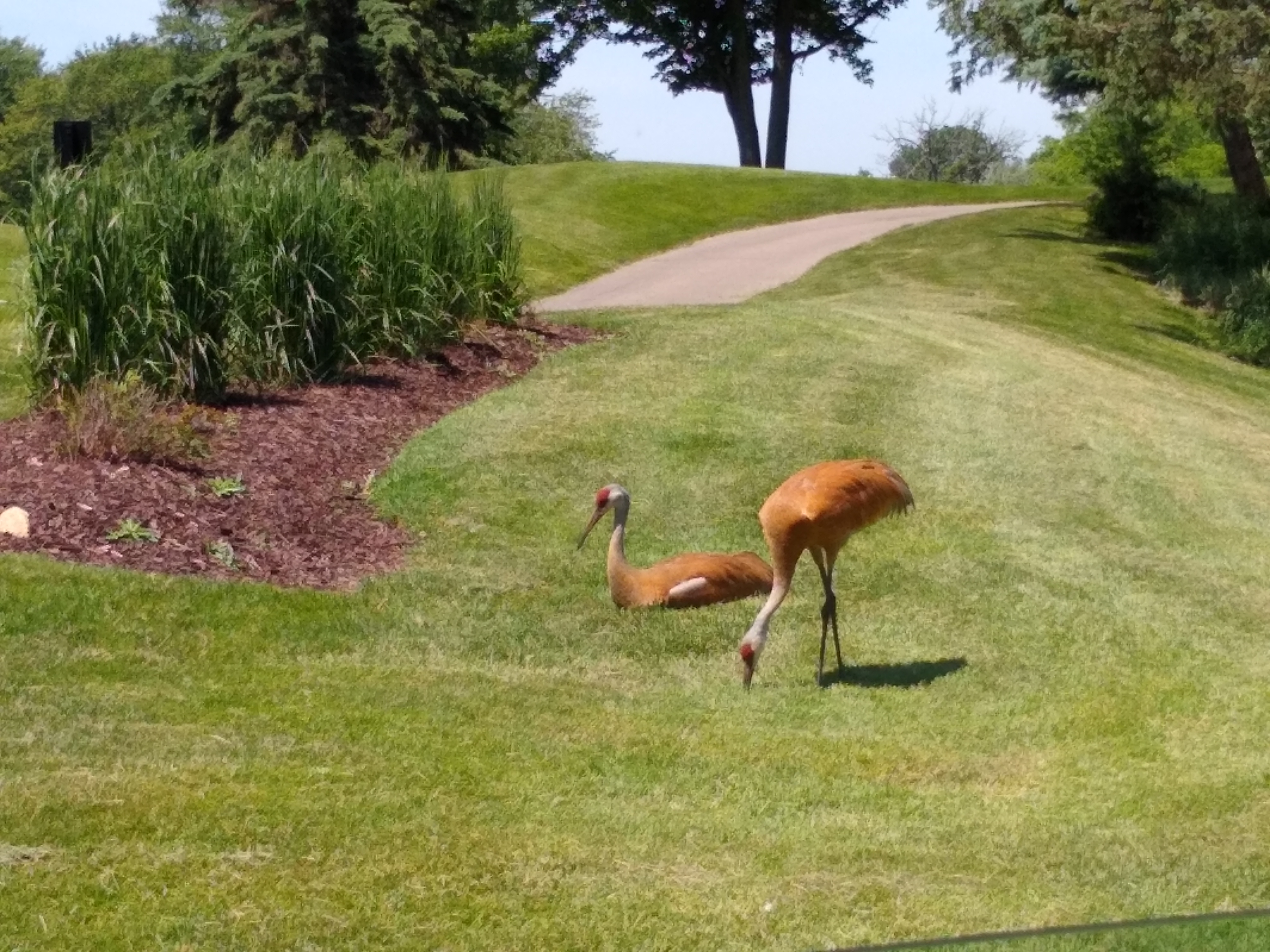
Yes and no. Due to human population growth and the loss of sandhill crane habitat, sandhill crane populations are nowhere close to historical levels and are not overpopulated from an ecological standpoint. Since they have less natural habitat available, they visit areas managed by humans, like farmland, golf courses, lawns and gardens, which can make them seem overpopulated from a human standpoint (Photo 2).
Biologists set population targets based on what they think the current landscape can sustain and have found numbers to exceed those targets. For example, “the Eastern Population sandhill crane fall survey index for 2024 (91,485) was a 17% decrease from the previous year, yet well above the objective of 30,000 cranes for this population,” according to the U.S. Fish and Wildlife Service.
To best support this rehabilitated population of sandhill cranes, farmers and gardeners with a good understanding of what they eat, how much they eat and how long they spend in human spaces can help determine if and what management is needed. Sandhill cranes on farmland may have more significant impacts than in our gardens because they often take advantage of recent seedings and ripening crops, reducing yield and profitability for farmers (Photo 3). This does not mean cranes will not eat seeds in our gardens, but the scale of their impact is much larger in commercial agriculture both domestically and internationally, where groups are looking for ways for cranes and farmers to share space. We address sandhill management at the garden level in this article.
Where do sandhill cranes live and what do they eat?
Michigan sandhill cranes are true snowbirds, spending their winters in Florida and returning to Michigan in late February or March. They mate for life, creating territorial roosting sites in marshes and wetlands protected from predators and with access to food nearby. Pairs build large, ground-level nests and usually lay two eggs, with a 30-day incubation shared by both parents.
Chicks (colts) are active within hours of hatching, but often only one survives, keeping annual population growth relatively low compared to other large wetland species. In contrast, Canada geese and mute swans have large clutches, high juvenile survival rates, and high annual population growth, outcompeting native trumpeter swans and impacting ecosystems.
To date, sandhill cranes do not appear to be disrupting ecosystems. In October – November, sandhill cranes flock to locations near wetlands and lakes in preparation for their winter migration farther south, taking rest or pecking for food. Because sandhill cranes roost and feed in wetlands and farmland, they are most likely to visit yards and gardens that border those areas, albeit temporarily in search of food.
Sandhill cranes are opportunistic feeders with a varied diet, using their long bill to grab recently planted seeds or ripening crops, as well as berries, insects, aquatic plants, tubers and small vertebrates. It is common to find cranes in marshy areas, along roadside ditches, and in fields where wheat, corn or potatoes were planted.
Like other waterfowl, they are attracted to bird feeders. Their yard and garden impacts appear mostly related to their appetite for seeds and berries, and to a lesser extent, some minimal damage to turf while foraging for invertebrates. Given that they nest in wetlands, when they come to gardens, their presence is typically temporary; although they may visit often over periods of several weeks, especially if you have a bird feeder or other consistent food source.
What can I do to coexist with sandhill cranes?
Since sandhill cranes need wetlands or marshy landscapes to breed and reproduce, not everyone is impacted by them. For those who have them nearby or in a back yard, some enjoy their presence while others are concerned about their impacts on seeds, berries and turf. If you are concerned, Michigan State University Extension suggests the following tactics to try to protect areas:
- Remove bird feeders or place them in hard-to-reach locations. This will encourage sandhill cranes to search elsewhere for food.
- Protect newly planted seeds by temporarily covering the area with a fine mesh row cover or a chicken wire tunnel held down by stakes.
- Most scare devices are ineffective or temporary; however, if you want to try one, stick to moving objects since birds are not impacted by stationary items like owl decoys. Some evidence suggests that air dancers or “tube men” can be effective in deterring cranes and other birds from eating crops. Even so, scare tactics only work until birds get used to them and realize they are not a threat.
- Sandhill cranes and most birds are not affected by repellants, so bad-smelling sprays will not change their behavior.
- Geese and swans tend to avoid gardens that have thick areas of tall vegetation because they are good predator hiding locations. It is possible the same techniques could deter sandhill cranes, so try shifting from a flat open palette to a fuller landscape not only to deter sandhills, but geese and mute swans, too.
- Rethink whether the damage is significant enough to act. Small patches of displaced sod can easily be replaced. Save some seeds to reseed if some are eaten by a crane.
- Remember that it is illegal to harass, capture or harm sandhill cranes. Federal protection under the Migratory Bird Treaty Act of 1918 prohibits harm or harassment of them.