"Identifying Reliable Predictors of Cold Tolerance and Winter Survival in Barley”
 Print
Print Email
EmailThis graduate student's research gets a strong push forward from recent Project GREEEN funding
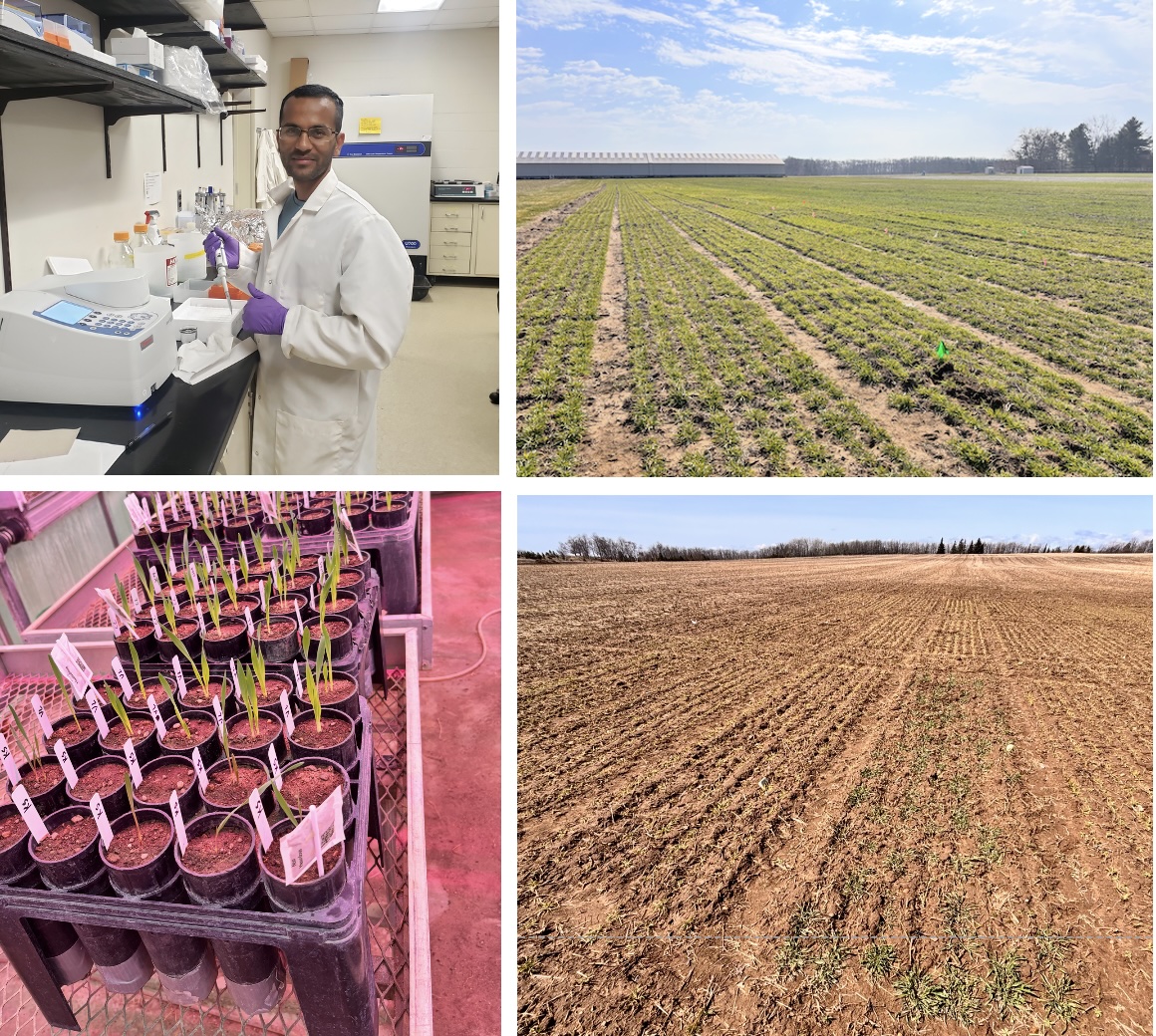
The project, "Identifying Reliable Predictors of Cold Tolerance and Winter Survival in Barley,” is an exciting continuation of the work being done in the Emily Merewitz-Holm lab to help the Michigan malting barley industry adapt to the unpredictable winter stresses brought on by climate change. To answer these questions, graduate student Devendra Chalise is working year round setting up new growth chamber trials and finishing critical laboratory physiological measurements. Here Devendra tells us about his project.
Growth Chamber Experiments:
I will be setting up a new round of controlled experiments to look at how below ground conditions protect plants from winter stress. This involves growing different barley and rye varieties in various common Michigan soil types ranging from heavy clay to pure sand under high, low, or ideal moisture conditions to see how soil wetness and texture affect root and crown survival when a sudden freeze hits. Additionally, I will be working in the greenhouse and growth chambers to evaluate how the cold acclimation process impacts the plants' overall photochemical and light protection health. Specifically, I will be tracking how different varieties alter their internal protective traits, monitoring changes in leaf and crown pigments, and evaluating structural adaptations like cuticular wax layers that help prevent winter dehydration.
Laboratory Physiological Measurements:
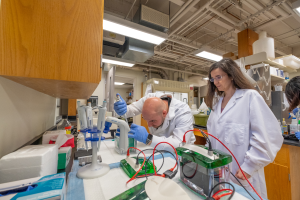
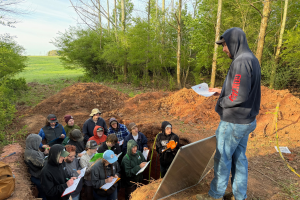
In the lab, I will be processing a large number of barley and rye samples collected from our field trials at both the Kellogg Biological Station (KBS) and the Upper Peninsula Research and Extension Center (UPREC). These plants were harvested at critical physiological time points throughout the season, including the pre-hardening phase, post-hardening phase, and immediately after the winter ice thaws in the spring. Additionally, I will be working with samples from our controlled growth chamber ice and no-ice encasement trials that are currently stored in the refrigerator for analysis. A major focus of my summer will be running biochemical assays on these stored materials to evaluate the physiological differences between resilient and sensitive winter barley and rye varieties. Specifically, I will be analyzing key stress indicators such as lipid peroxidation to determine the exact extent of cellular membrane damage, tracking shifts in protective plant pigments like anthocyanins, and evaluating nucleic acid or RNA damage sustained during severe stress. I will also be measuring structural changes, including modifications to the cuticular wax layers that help the plants retain moisture. Analyzing these chemical and physiological changes across our field environments and controlled treatments will help us pinpoint the primary biological mechanisms that allow certain varieties to successfully tolerate extreme freezing and ice encasement.