The importance of monitoring water pressure in your irrigation system
 Print
Print Email
EmailMonitoring water pressure helps your system work properly, apply water evenly, and catch problems early.
Why measuring water pressure matters in irrigation systems
Measuring water pressure is a fundamental practice for maintaining efficient irrigation and consistent crop production. Irrigation components such as sprinklers, drip emitters and micro‑sprinklers are designed to operate within specific pressure ranges. When operating pressure falls below this range, water application becomes inadequate, potentially leading to plant stress, reduced growth and yield loss. When pressure exceeds the design range, problems such as misting, uneven distribution and damage to system components can occur, increasing maintenance costs and shortening system lifespan. The design range can be found in the sprinkler chart report.
Pressure measurement is a valuable diagnostic tool. Sudden pressure drops can indicate leaks, clogged filters or pump problems, while unexpected pressure increases may signal blocked lines or valve malfunctions. Identifying these issues early helps prevent system failure and costly repairs during critical irrigation periods. To ensure accurate diagnosis, pressure should be measured only after the system has fully started and is operating under normal conditions.
Role of pressure regulators in irrigation systems
Pressure regulators are critical components for maintaining consistent operating pressure throughout an irrigation system. Their primary function is to deliver a uniform outlet pressure to sprinklers or drip emitters, even when inlet pressure fluctuates due to elevation changes, pump performance, or flow variations along the pipeline. For example, a 2.31‑foot elevation change corresponds to approximately a 1‑psi pressure difference. By stabilizing pressure, regulators help ensure that each irrigation device applies water at its intended rate and pattern.
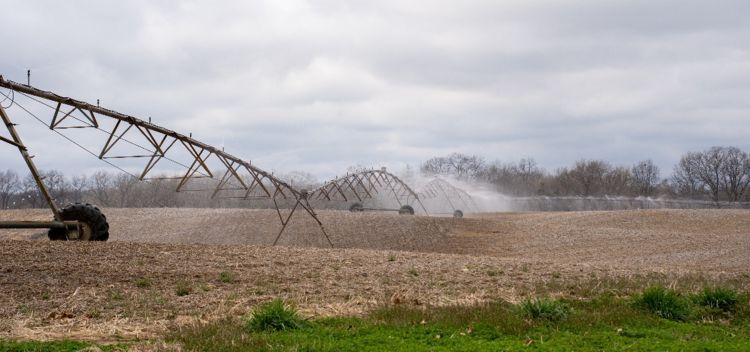
In center pivot systems, pressure regulators are commonly installed at individual sprinkler drops or groups of sprinklers. These regulators compensate for pressure differences caused by elevation changes or friction losses along the pivot. Without properly functioning regulators, sprinklers located at lower elevations may operate at excessive pressure, while those at higher elevations may be under-pressurized, leading to uneven water application across the field.
To operate correctly, center pivot systems with pressure regulators are typically run with pressure at the pivot at least 5 psi greater than the regulator specification. Pressure at the far end of the system should also be maintained at least 5 psi above the regulator setting to ensure proper regulator performance throughout the pivot.
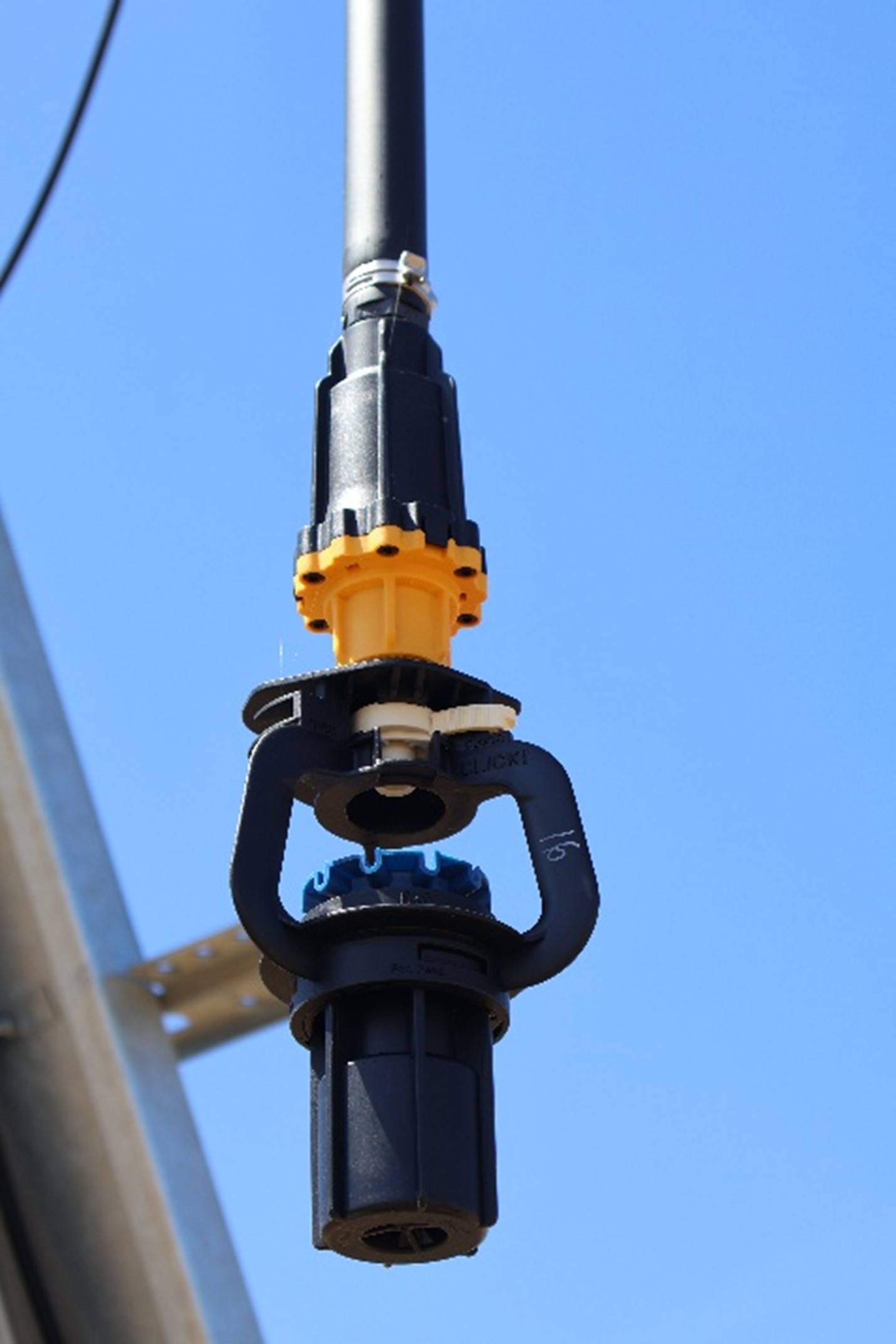
Pressure regulators can degrade over time due to wear, sediment buildup or internal component failure. Clogging is a concern in systems using surface water sources that may contain algae, tadpoles or other organic material. For this reason, some surface‑water users avoid installing pressure regulators unless enhanced filtration is added upstream. Similar concerns apply to systems used for manure or wastewater applications, where adequate filtration is necessary to prevent regulator blockage.
A malfunctioning regulator may deliver pressure that is higher or lower than its rated value, reducing irrigation uniformity even when system pressure appears adequate elsewhere. Regular pressure checks at sprinkler outlets are therefore necessary to verify that regulators are operating correctly, not just that adequate pressure is available in the mainline.
In drip irrigation systems, pressure regulators are typically installed at zone inlets or field manifolds to protect emitters from excessive pressure and to maintain consistent flow. In addition to regulators, many drip systems use pressure‑compensating drip lines to improve water application uniformity. Pressure‑compensating drip lines are designed so that each emitter delivers nearly the same amount of water over a wide range of operating pressures. Inside each emitter, a flexible diaphragm adjusts to pressure changes, allowing the emitter to maintain a constant discharge. This feature is especially useful in fields with elevation changes, long lateral runs, or pressure losses caused by friction.
Pressure regulators may also be used in center pivot systems without end‑gun boosters to maintain higher mainline pressure reserves, ensuring that end guns can operate properly when engaged. However, systems utilizing pressure regulators can experience significantly higher mainline pressures when end guns, cornering arms, or Z‑arm sprinklers are turned off. To avoid the production of excessive pressure under these conditions, variable frequency drives are commonly used to modulate pump output and maintain appropriate system pressure.
Regular inspection and testing of pressure regulators should be part of routine irrigation system maintenance. Replacing failed or out-of-spec regulators helps restore uniform application, improves water-use efficiency, and supports consistent crop performance throughout the field.
Equipment for monitoring irrigation pressure
Pressure monitoring does not require complex or expensive tools. Pressure gauges are commonly used in both center pivot and drip irrigation systems. Liquid‑filled gauges provide stable readings and are easy to read but should be protected from freezing conditions. Dry gauges are more durable for long‑term outdoor installation.
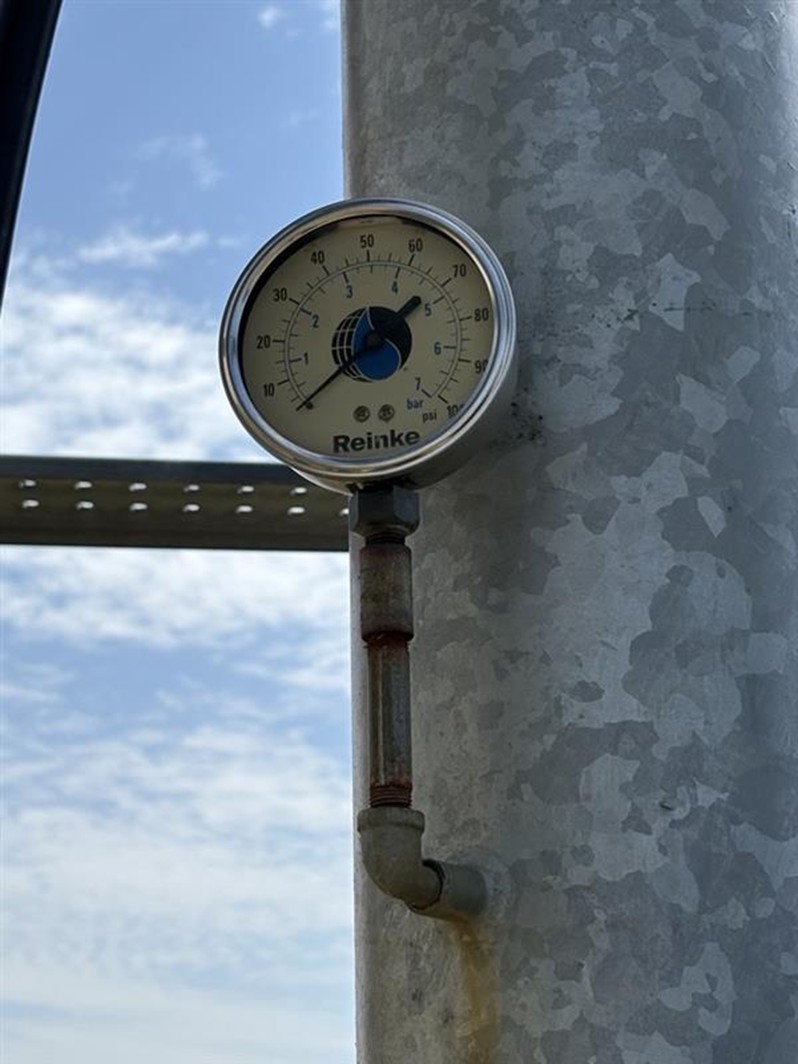
In center pivot systems, pressure gauges should be installed at the pitot tube to check operating pressure. In drip irrigation systems, pressure gauges should be installed at the system inlet and near the ends of laterals or irrigation zones. Flow meters and pressure sensors can also be used to evaluate system performance and help identify leaks, clogs or other flow restrictions.
If you need assistance with pressure monitoring, please contact the Michigan State University Mobile Irrigation Lab.