Investigating sulfentrazone for weed control in turnips
 Print
Print Email
EmailSulfentrazone could complement Dual Magnum to broaden the spectrum of weeds controlled in turnips.
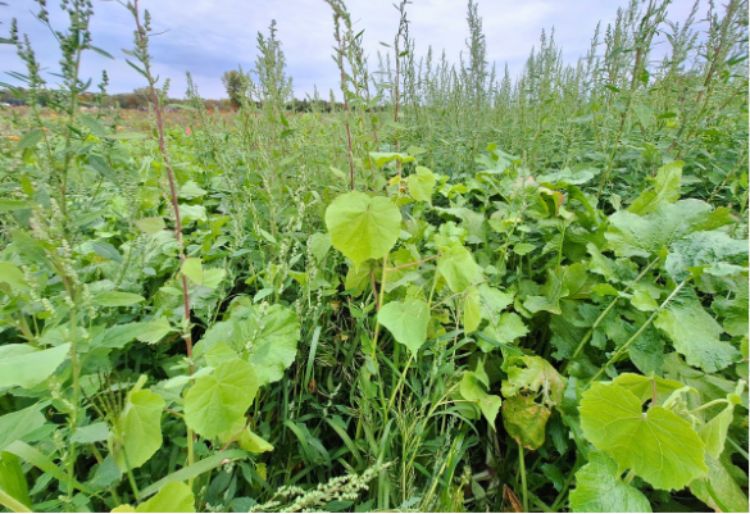
Michigan State University Extension conducted an herbicide trial in 2025 to identify a safe rate and timing for sulfentrazone in Michigan turnips. Growers currently rely on Dual Magnum for residual weed control, which is helpful for grasses and broadleaves including pigweeds and nightshades. However, its activity is limited for some challenging weeds including common lambsquarters and smartweeds.
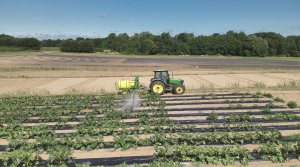
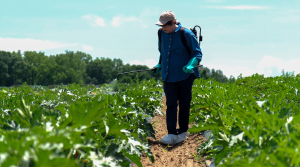
One of our industry partners discovered several sulfentrazone formulations that are labeled for turnips. This active ingredient has a weed control spectrum that compliments Dual Magnum. While it is currently labeled for postemergence (POST) use in turnips, our partner expressed interest in exploring preemergence applications (PRE) at sowing time. We investigated PRE and POST applications to identify rates that provide adequate weed control with acceptable levels of crop injury.
Study overview
In 2025, we worked with our industry cooperator to conduct a trial on a cooperating farm on mineral soil in Ottawa County, Michigan. Dual Magnum at 1 pint per acre (pt/a) was applied at sowing time for all treatments except the control. Treatments included six rates and two timings of sulfentrazone, plus a nontreated control. The three PRE treatments included 1, 2 or 4 ounces per acre (oz/a) of a 4F formulation of sulfentrazone tank-mixed with Dual Magnum and applied over the rows immediately after sowing. The POST treatments included Dual Magnum at planting plus 1, 2 or 4 oz/a of the sulfentrazone 4F formulation applied 12 days later. The study evaluated weed control, weed density, crop injury and yield.
Weed control results
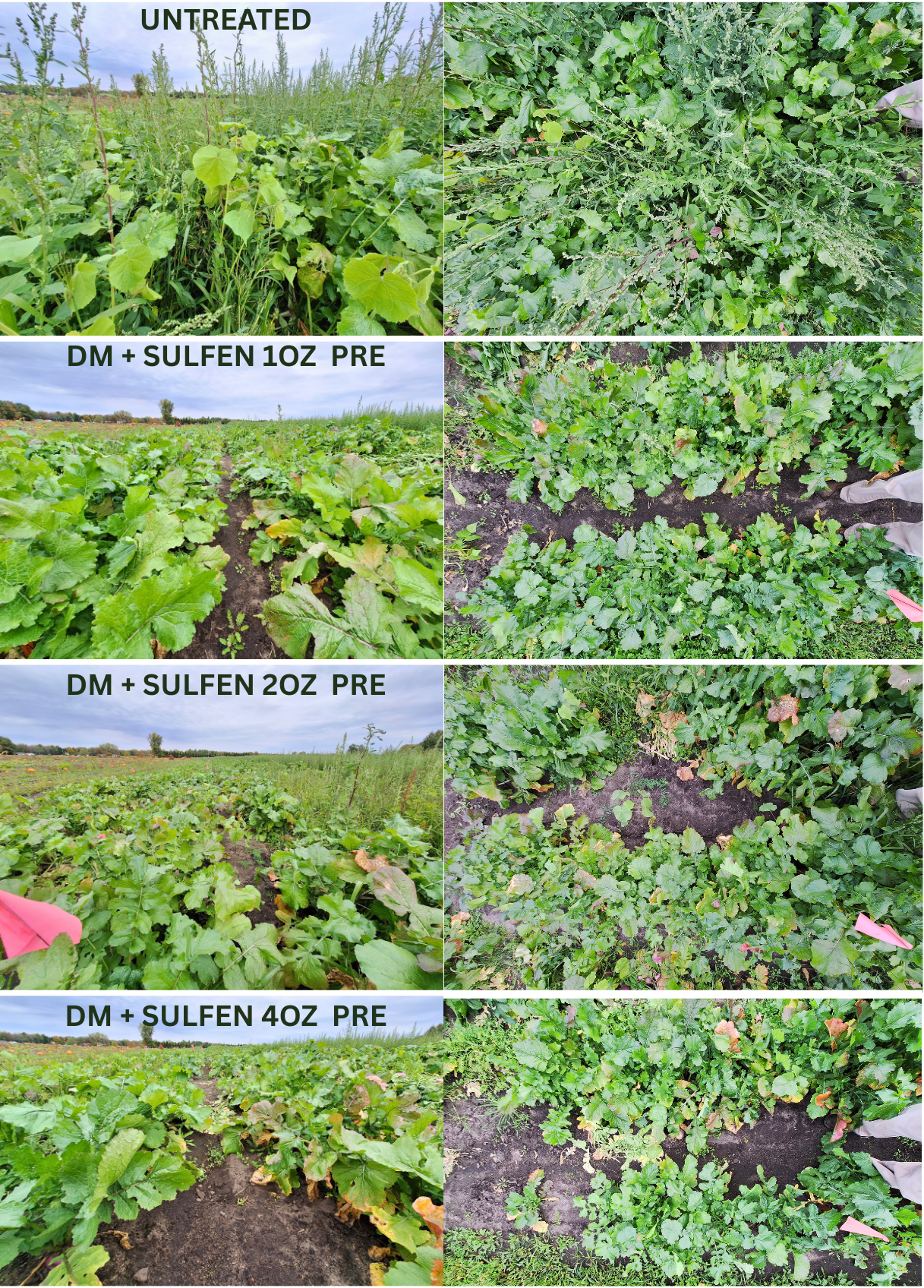
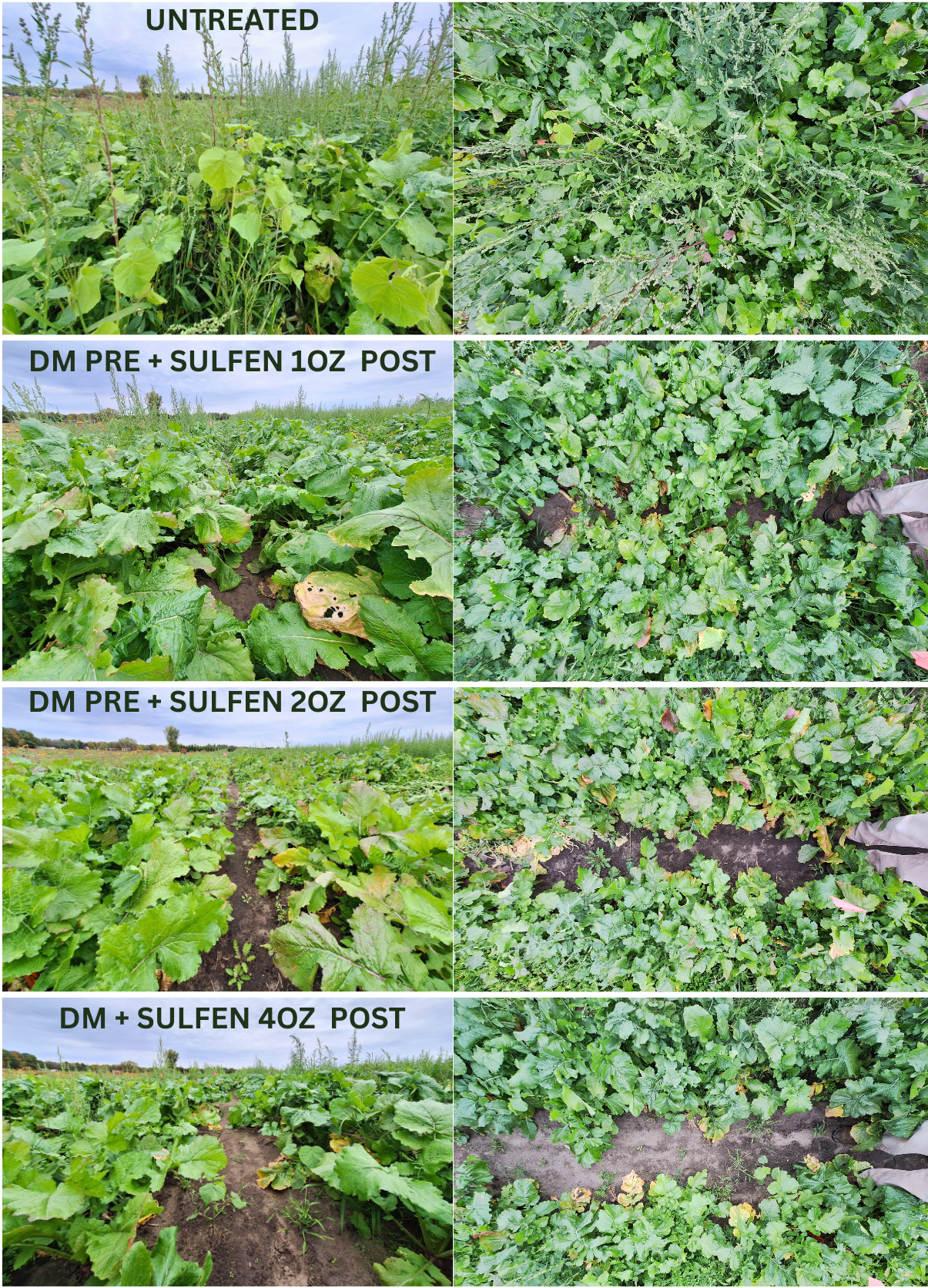
Annual grasses and common lambsquarters were the dominant weeds at this location. Sulfentrazone plus Dual Magnum provided strong overall control of both grasses and broadleaves, with 80–100% control across rates and timings (Table 1, Figures 1–2). Weed control was similar whether sulfentrazone was applied PRE or POST.
Dual Magnum provided residual control of annual grasses. At an Aug. 27 rating, grass densities were reduced in both the PRE and POST programs compared to the untreated control (Table 1). At that time, only Dual Magnum — and no sulfentrazone — had been applied to the POST plots, confirming that Dual Magnum alone provided effective early-season control. Grass control extended through harvest in all treatment plots.
Adding sulfentrazone improved control of common lambsquarters. Weed densities were measured on Aug. 27 and again at harvest on Oct. 13 (Table 1). At the Aug. 27 rating, the POST plots had only been treated with Dual Magnum. Lambsquarters densities in those POST plots were similar to the untreated control, indicating that Dual Magnum alone did not provide adequate early-season control.
In contrast, all PRE treatments, which received sulfentrazone and Dual Magnum at planting, had significantly less lambsquarters. By harvest, lambsquarters densities remained lower in the PRE treatments, and POST applications of sulfentrazone killed lambsquarters that emerged prior to application and provided residual control through the remainder of the season (Table 1, Figures 1–2).
Table 1. Overall weed control (%WC) measured as the percent reduction in weeds compared to the control (%WC) at harvest, and the number of annual grass (GR) and lambsquarters (LQ) plants per square foot at two rating dates. Bolded numbers were statistically different from the untreated control.
|
Treatment |
%WC |
GR (8/27) |
GR (10/13) |
LQ (8/27) |
LQ (10/13) |
|---|---|---|---|---|---|
|
Untreated control |
0% |
12.2 |
26.0 |
5.0 |
9.0 |
|
DM + SULFEN 1OZ PRE |
84% |
1.2 |
3.0 |
0.5 |
2.0 |
|
DM + SULFEN 2OZ PRE |
70% |
0.7 |
3.0 |
0.1 |
0.5 |
|
DM + SULFEN 4OZ PRE |
85% |
0.0 |
1.0 |
0.0 |
0.5 |
|
DM PRE + SULFEN 1OZ POST |
87% |
2.1 |
4.0 |
4.1 |
1.0 |
|
DM PRE + SULFEN 2OZ POST |
92% |
0.5 |
4.0 |
7.4 |
0.5 |
|
DM PRE + SULFEN 4OZ POST |
95% |
0.7 |
4.0 |
6.1 |
0.5 |
Crop injury and safety
We took a stand count about two weeks after both the PRE and POST applications of sulfentrazone. Two weeks after the PRE application, turnip stands were similar between plots with the 1 oz/ac rate of the sulfentrazone 4F formulation and plots with no herbicide. Stands were 35% lower in plots treated with 2 oz/ac PRE and reduced by 59% with the 4 oz/ac rate (Figure 1, Table 2). There was no evidence of stand reduction two weeks after POST applications of 1-2 oz/ac, but stands were reduced by 46% at 4 oz/ac (Figure 2, Table 2).
Table 2. Stand counts taken about two weeks after the preemergence (PRE) and postemergence (POST) applications and harvest-time crop injury ratings (1=0 injury, 10=highest injury) and yield. Bolded numbers were statistically different form the untreated control. Note, when plots were rated two weeks after the PRE application, POST applications had not been applied yet.
|
Treatment |
Plants/ft after PRE |
Plants/ft after POST |
Injury |
lbs/ac |
|---|---|---|---|---|
|
Untreated control |
4.3 |
3.7 |
0 |
36,000 |
|
DM+SULFEN 1OZ PRE |
4.1 |
3.8 |
1 |
33,100 |
|
DM+SULFEN 2OZ PRE |
2.8 |
2.4 |
2 |
40,600 |
|
DM+SULFEN 4OZ PRE |
1.8 |
2.1 |
2 |
33,100 |
|
DM PRE + SULFEN 1OZ POST |
4.4 |
3.7 |
1 |
32,500 |
|
DM PRE + SULFEN 2OZ POST |
4.9 |
3.3 |
1 |
32,500 |
|
DM PRE + SULFEN 4OZ POST |
4.5 |
2.0 |
5 |
20,900 |
Crop injury (less than or equal to 5%) was observed in some treatments at harvest (Table 2). Injury symptoms, including slight stunting and reduced vigor, were more evident at higher sulfentrazone rates, especially 4 oz/acre POST (Table 2). Yield in pounds per acre was generally unaffected by sulfentrazone treatments (Table 2). In past work, we have observed a similar trend: When stands are reduced each turnip is bigger, so yield in pounds per acre is less affected. The highest POST rate (4 oz/acre) resulted in the lowest yield and stand density. Lower rates at each timing (1–2 oz/acre) maintained yields equivalent to the nontreated control, confirming crop tolerance to sulfentrazone under Michigan growing conditions.
Sulfentrazone applied PRE at 1 oz/ac in combination with Dual Magnum provided weed control, crop safety and yield outcomes comparable to programs that used Dual Magnum PRE followed by sulfentrazone POST. Rates of 1 oz/ac preemergence were safe at the study site, while applications of up to 2 oz/ac were safe postemergence. These findings suggest that sulfentrazone provides a good compliment to Dual Magnum for turnip growers. It will be important to find rates that balance crop safety and weed control on different soil types.
This work is supported by the Crop Protection and Pest Management Program [grant no 2024-70006-43569] from the USDA National Institute of Food and Agriculture. Any opinions, findings, conclusions, or recommendations expressed in this publication are those of the author(s) and do not necessarily reflect the view of the U.S. Department of Agriculture.