LandTexture: Education Abroad - MSU LA in Japan
 Print
Print Email
EmailReagan Millard, 1 of 17 students to join LA's 23-day education abroad program in the Spring 2026 semester, details her experience visiting and studying in Japan.
In March of 2026, seventeen Landscape Architecture students from the Michigan State University School of Planning, Design, and Construction, led by Professor Patricia Machemer, traveled across the world to study abroad in Japan. We spent our first week in Tokyo, the second in Kyoto, and the third final week in Kanazawa. Throughout the journey, our class explored historic gardens, temples, memorials and urban districts while documenting our experiences through field sketches and observation. What began as an academic trip quickly became an unforgettable experience in cultural immersion, collaboration, and personal growth for many of us.
Our class would like to extend sincere gratitude to the Chipman family, whose generosity funded a majority of our travel expenses. Their support made this opportunity possible for us all, allowing us to embark on such a beautiful journey across Japan. We had all looked forward to this trip for years in advance, it’s safe to say that this experience exceeded our expectations beyond imaginable.
After a long 13-hour flight over the Pacific, our class arrived late at night at Haneda Airport before traveling to our first hotel in Tokyo. Despite our travel exhaustion, we all quickly ventured out to explore the surrounding city. We were located near the Tokyo Skytree, where we spent our first evening wandering through nearby streets and shopping outlets in disbelief that we had finally arrived in Japan after years of anticipation. What first struck us was the atmosphere of the city itself. The streets were remarkably clean, quiet, and peaceful despite being located in one of the world’s largest metropolitan areas. Even late at night, we all felt safe to venture out independently. Though this evening was brief, it marked the beginning of an unbelievable experience.
Our second day began with a trip to Tokyo Station to receive our JR passes, allowing us to travel freely across Japan throughout our stay. While the process took several hours, it also presented the opportunity to experience the major transportation hub firsthand as we developed our first field sketch. Later that afternoon, we visited Kiyosimu Gardens, our first strong introduction to traditional Japanese garden design. Here we navigated the perimeter of a large pond, walking across natural stone bridges to neighboring islands to sketch the site. The vegetation was beautifully maintained, and wildlife was abundant with turtles, fish, and birds inhabiting the water and surrounding landscape. This was also where many of us first discovered Japan’s stamp stations. Throughout the trip, we devoted sketchbook pages to collecting commemorative stamps gathered from gardens, transportation stations, and cultural sites across the country.
That evening, our class attended our “welcome dinner” at a traditional Japanese restaurant. For many of us, this was our first experience with authentic Japanese cuisine. Many dishes challenged us to step outside of our comfort zones, but everyone approached the experience with curiosity and open-mindedness. This was also where we were first introduced to Mahiro and Yuzu, the Japanese students who kindly accompanied our group throughout the trip alongside our faculty leaders and chaperones.
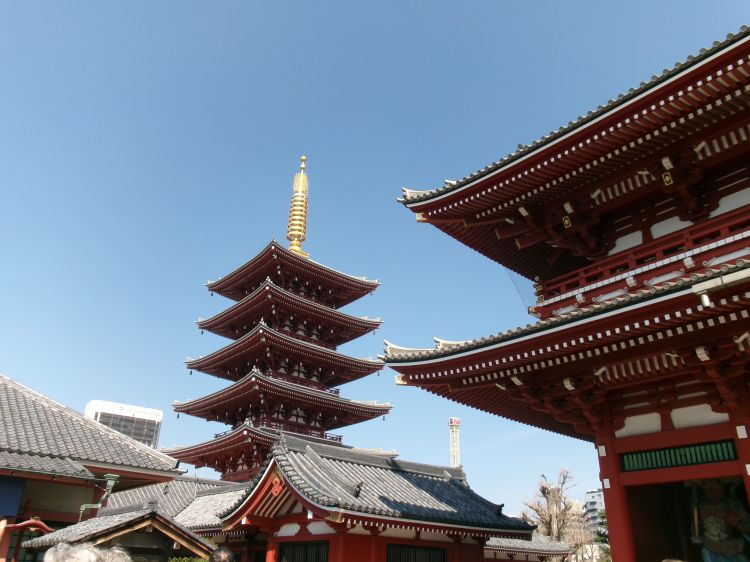
On our third day, we visited Senso-ji, the oldest temple in Tokyo and one of the city’s most culturally significant landmarks. As we approached the temple, busy commercial streets gradually transitioned into sacred public space in a manner that blended tourism, commerce, and spiritual tradition as a cohesive experience. After presenting our research on the site, we dispersed independently to sketch and explore. Many students participated in the temple’s fortune-drawing tradition, where fortunes predicting poor luck are tied onto nearby racks in hopes of leaving misfortune behind.
One of the most memorable experiences that day came unexpectedly when three young Japanese students approached members of our class to practice conversational English. They excitedly inquired about our trip and what we’ve enjoyed most throughout our study abroad experience thus far, and kindly offered us each small snacks and candies, while we gifted them MSU Japan EA pins created before the trip. The interaction was brief but deeply meaningful, reminding us how cultural exchange often occurs in the smallest and most genuine moments.
Day four brought our first major journey outside Tokyo as we traveled to Nikko to explore temple sites within the mountains. After presenting the site, we split off into smaller groups and hiked through the surrounding landscape in search of waterfalls. Along the way, we encountered many hidden torii gates and towering forests. Next, we visited Meiji Jingū and the Shinjuku Gyoen National Garden to discuss the many strengths and limitations of the spaces through the lens of design and wayfinding analysis. The following day, we set off on our day trip to Mito to visit Kairakuen, which is widely recognized as one of Japan’s three great gardens. We dispersed throughout the garden to sketch cherry blossom orchards and bamboo groves, which eventually led many of us to pause and listen to a musician performing traditional woodwind music near the garden paths. I recall this to be one of the most peaceful moments of the trip.
At this point we had concluded our time in Tokyo, and began our journey to Kyoto. There was an apparent shift in atmosphere, Kyoto felt far more intimate; The city seemed to be centered around neighborhoods and daily life rather than commercial businesses. Our first full day in Kyoto began with a visit to Kinkaku-ji, commonly known as the Golden Temple. The structure reflected across the water beautifully, although the bustling crowd became overwhelming. We soon departed to visit two zen gardens that we had previously sketched in class, Ryoan-ji and Daisen-in, which each served as an excellent example for how landscape design conveys a story.
The following day carried emotional weight as we traveled to Hiroshima to visit the Peace Memorial Park. Our experience navigating the memorial left a lasting impression on many of us. Learning about Hiroshima in a classroom can only prepare someone so much; standing in the space itself made the reality of the tragedy that much more impactful. Afterward, many of us continued on to Miyajima island to visit the famous floating torii gate and Nara deer who were persistent in sharing our food. We took a ferry boat to reach the island, the shoreline views were stunning.
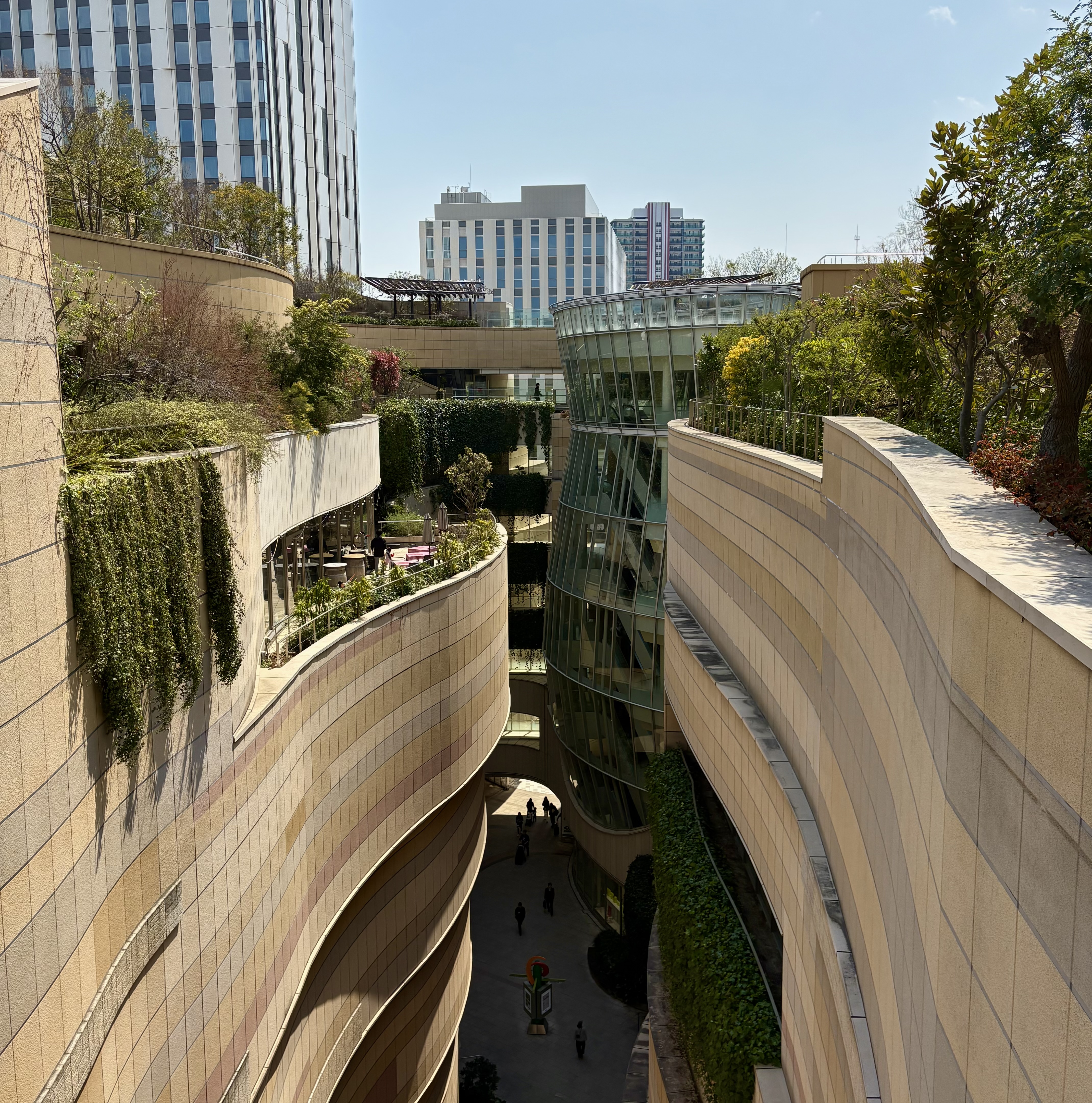
Our next day was uncoordinated, so many of us traveled out to Osaka together. We explored Namba Parks to see the layered green roofs, which served as an inspiring example for how each of us design. Later that day, we visited the Osaka Aquarium, where we saw two adolescent whale sharks and collected attraction stamps! That evening, we regrouped with Mahiro and Yuzu, who kindly organized a dinner reservation for us all. It became a wonderful opportunity to experience Osaka at night, surrounded by crowded streets and layers of lighting that made the city feel energetic and lively. Lastly, we concluded our time in Kyoto with a trip out to Kiyomizu-dera, where we climbed a tall hill laced with storefronts and food venues, and assessed traditional Japanese construction techniques used throughout each temple.
From Kyoto, we traveled back north to Kanazawa. In contrast to Kyoto’s calmer atmosphere, our hotel sat beside a large and active intersection, which left us with less opportunity to explore freely. Although, only a short walk away was Kenroku-en, one of the most beautiful gardens we visited throughout the trip. The expansive landscape, carefully framed viewpoints, and scattered tea houses created an environment that encouraged quiet reflection.
The next day we traveled to Mukaiwagasaki to explore the coastline. The tide was unusually low, and we walked down a long dock lined with local fishermen while overlooking the ocean and mountainscape. Later that evening, we discovered a small rooftop venue overlooking the river adjacent to our hotel, so we spent the remainder of our night together here listening to live music.
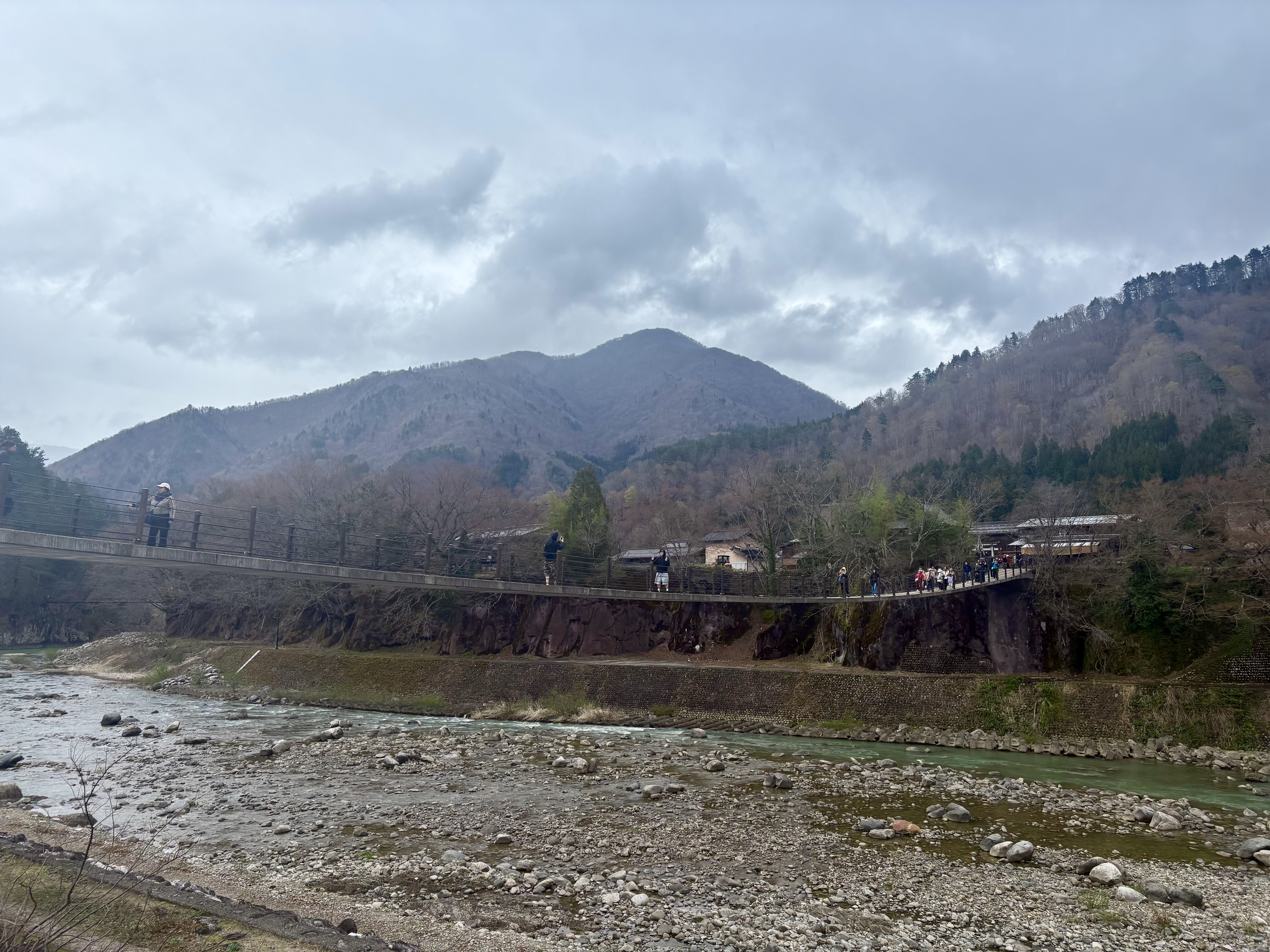
One of our longer excursions brought us to Skirakawa-go, the rural village surrounded by dense forests, farmland, and mountain trails offering incredible views of the town. We had to cross a long bridge suspended over a remarkably beautiful stream to reach the town, which became an experience in itself. We followed up this trip with our e-bike tour through Hakusan, where we traveled roughly ten miles through quieter rural areas, and stopped along riversides to help collect trash. Finally, the tour concluded with us all eating dinner together at a beautiful multi-story Italian restaurant.
We were incentivized to pursue a cultural experience in Kanazawa, so four of us visited the Mokoto Tea House to participate in a traditional tea ceremony. The wife of the teishu, our host, acted as our guide throughout the ceremony, giving us a short introduction to the history of green tea– specifically matcha– and its cultivation in Japan before entering the ceremony room. The ceremony took place in complete silence, we sat cross legged on floor pillows. Once the teishu joined us, he neither spoke nor stood up at any point. The ceremony consisted of our host brewing us individual bowls of ceremonial grade light matcha, using traditional procedures and manners, called “otemae.” After the ceremony was complete, the teishu departed and we were able to participate in a hands-on matcha experience, brewing our own bowls following ceremonial guidelines. Our host’s wife also provided small sweets and brought out a grinding Tencha, where we created the powdered green tea used in the ceremony. Overall, this experience was significantly memorable and a worthwhile opportunity to engage in Japanese culture.
One of the most memorable experiences was our day trip traveling across the Noto Peninsula. We met with our guide to learn more about the peninsula’s history following the devastating 2024 earthquake, bearing witness to dozens of reconstruction teams at work to restore the landscape. We traveled by bus and made frequent stops along the way to sightsee, eventually stopping to learn traditional salt-making techniques. Later along the way we stopped at a school and were taught by older residents to make clay wind chimes for an upcoming festival. Spending time with local residents and witnessing their resilience firsthand transformed the experience in a far more personal manner. We concluded the evening with our “departure dinner,” where we learned how to prepare matcha and make our own sushi rolls. Many of us purchased our bowls used during the workshop, becoming a memorable souvenir to conclude our time in Kanazawa.
Finally, we returned to Tokyo for our last two nights in Japan. We revisited memorable locations like Shibuya and the Tokyo Skytree. The final days were filled with last-minute shopping, struggling to pack our carry-on luggage, and preparing ourselves for the long flight back to Michigan. Few of us felt ready to leave Japan; the experience was bittersweet, but above all, it felt rewarding to reflect on how fortunate we were to have shared such a wonderful experience together as a class. We’d again like to thank the Chipman family for generously granting our class this opportunity through the John and Patti Chipman Endowment. These experiences will undoubtedly shape us throughout the remainder of our studies within the LA program, and into our future careers.