Local basis strength could yield maximum profits on stored grain
 Print
Print Email
EmailHave you checked local basis and pricing opportunities for your stored grain?
When it comes to today’s grain marketing, do old rules of thumb still apply? One of the oldest rules of thumb is to sell all stored grain by July. The rationale for this rule is that by July, markets start to look ahead to the new crops growing in the field. If expectations are good, then markets will have little interest in old crops. That’s the message we’ve heard most of the spring and summer months, especially when early crop conditions looked favorable. Now it’s July, and weather concerns are starting to influence production expectations. What does that mean if you still have stored grain on your farm?
USDA’s crop progress report indicates that conditions for the 2026 corn and soybean crops are similar to 2025. However, weather volatility is one of several concerns for grain markets heading into corn pollination and soybean pod setting. Increased export demands and tighter-than-expected stocks have added to market pressures, looking at the latest USDA WASDE report. The result is a strengthening of basis at many local markets.
In a recent report from Purdue’s Center for Commercial Agriculture, basis for corn and soybeans is stronger than normal in regions across several states. Michigan is no exception, with strength being seen for both corn and soybeans.
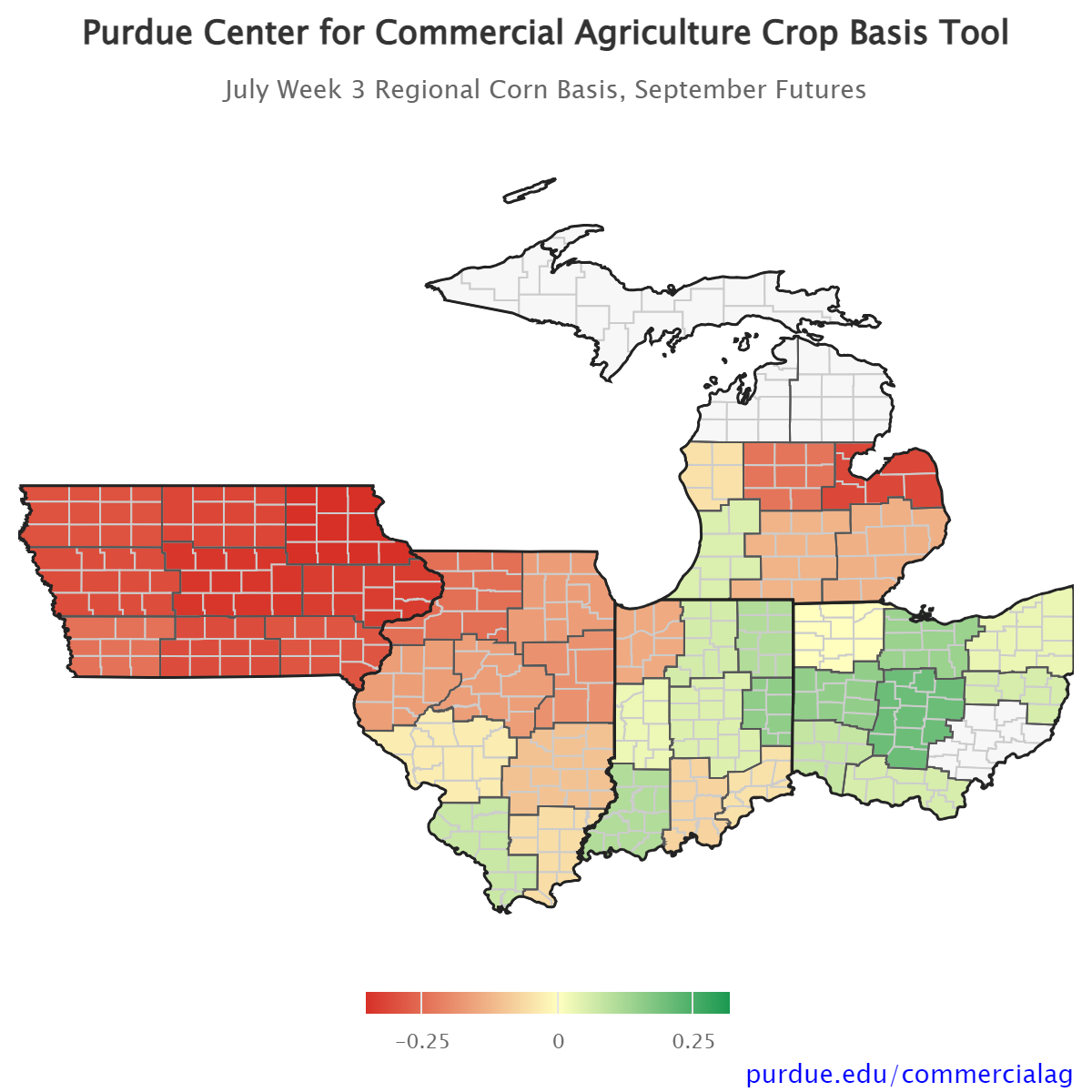
The map in Figure 1 highlights that strong basis levels for corn exist in several regions of Michigan. In the southwest region, basis is average $0.05 per bushel above Futures, indicating that a premium exists in some of the region’s local markets. The strong basis tracks just below the historical 3-year average for the southwest region at $0.09 per bushel. The west central region is showing a stronger-than-normal basis, averaging at -$0.05 per bushel below Futures. Historical 3-year averages for the region are typically -$0.18 per bushel below Futures. Basis in the southeast region is also averaging stronger at -$0.14 per bushel compared to a historical average of -$0.19 per bushel. With basis strength at close to or better than normal in these areas, a closer look at your local markets may yield opportunities to maximize profits on stored grain.
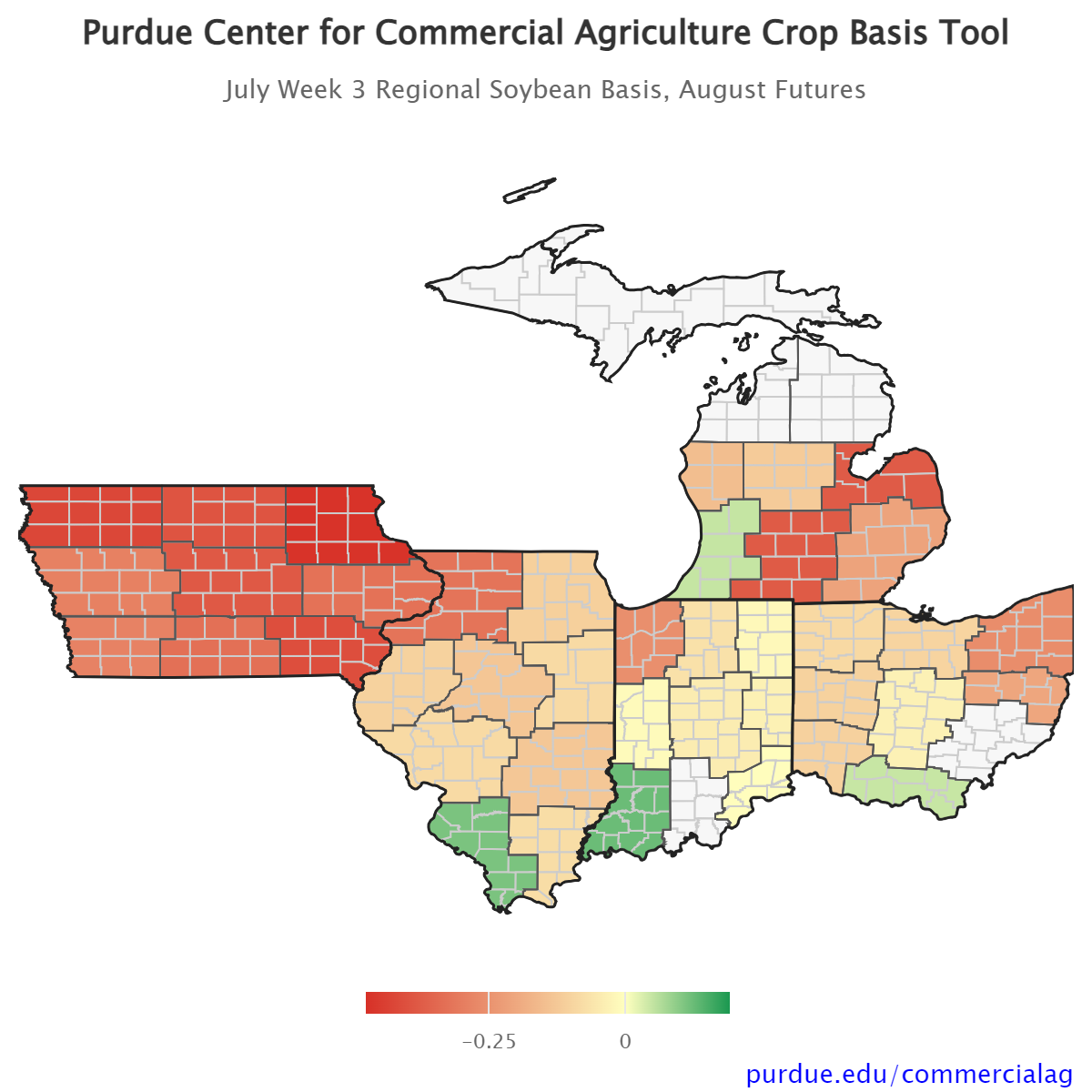
The map in Figure 2 highlights that strong basis levels exist for soybeans in several regions of Michigan. The west central, central, east central and southeast regions all indicate stronger basis levels above the historical 3-year average. West central has a basis of -$0.15 per bushel compared to the historical average of -$0.27 per bushel. Central has a basis of -$0.12 per bushel compared to the historical average of -$0.15 per bushel. East central has a basis of -$0.38 per bushel compared to the historical average of -$0.48 per bushel. Southwest has a basis of -$0.21 per bushel compared to the historical average of -$0.45 per bushel. With basis strength at close to or better than normal in these regions, opportunities to maximize profits on stored grain may readily exist.
Both corn and soybean maps indicate opportunities may exist to maximize profits on stored grain. Keep in mind that basis can change daily as markets continue to adjust to new information. Weather, production expectations, and grain reports are just a few of the shifting market forces that influence grain prices. As market forces change, it creates the reality that pricing opportunities may only exist for a short time.
If profits exist, the key to locking them in is proactive investigation and timely decisions on when to move stored grain. MSU Extension recommends speaking with your local grain markets to identify pricing opportunities for your stored grain. Working with these individuals can help to create a plan to sell stored grain. Especially as markets start to look towards new crop harvest this summer.
For more grain marketing resources, visit MSU Extension’s Commodity Marketing website. If you’re looking to build your skills in marketing or just need a refresher on market basics, also check out the Grain Gains: An Introduction to Grain Marketing self-paced virtual course from MSU Extension. To view the maps in Figures 1 and 2 with live information and to track future information, visit Purdue’s Crop Basis Tool.