Lukasz Stelinski Awarded the 2026 Department of Entomology Distinguished Alumnus Award
 Print
Print Email
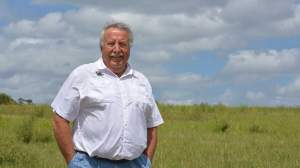
EmailTwo-time MSU Entomology graduate Lukasz Stelinski received the Department of Entomology's 2026 Distinguished Alumni Award for his extension work and longstanding commitment to developing solutions to agricultural pest challenges in Florida.
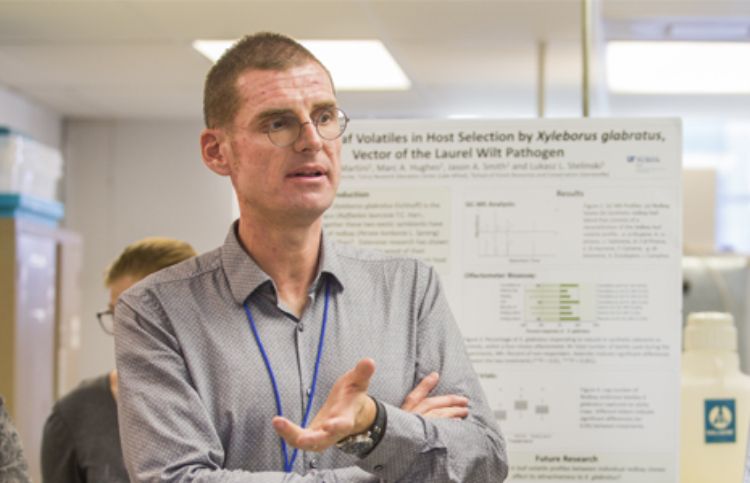
Lukasz Stelinski, an agricultural entomologist and professor in the Department of Entomology and Nematology at the University of Florida, has spent his career developing sustainable solutions to some of agriculture's most challenging pest problems. A two-time graduate of Michigan State University Entomology, he earned his master's degree in 2001 and his doctorate in 2005 before joining the University of Florida faculty in 2007.
Nationally and internationally recognized for his research and extension work, Stelinski focuses on integrated pest management strategies that improve agricultural productivity while reducing environmental impacts. His research has advanced understanding of insect behavior, pheromone-based mating disruption and management of invasive pests and citrus greening disease. Elected a fellow of the American Association for the Advancement of Science in 2022 and the Entomological Society of America in 2023, he has helped develop innovative tools for growers across a wide range of agricultural systems. In recognition of his contributions to entomology, research and extension, he was selected to receive the Department of Entomology's 2026 Distinguished Alumni Award.
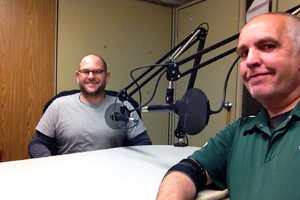
We caught up with Lukasz to reflect on his career, his time at MSU and the lessons he's learned along the way in the most recent episode of Bug Talk, our department podcast. A transcript of the episode is available below.
Listen to the full episode here
Alyssa DuChene: Hello and welcome to Bug Talk, a podcast hosted by the Department of Entomology at Michigan State University. My name is Alyssa. I'm a current sophomore at MSU, and today we're talking with the 2026 MSU Entomology Distinguished Alumnus, Dr. Lukasz Stelinski. He's a professor in the Department of Entomology and Nematology at the University of Florida and a two-time graduate of MSU Entomology. He's been widely recognized for his work, including being elected a fellow of the American Association for the Advancement of Science in 2022 and the Entomological Society of America in 2023.
To start us off, can you tell us a bit about who you are and what your current research and extension program focuses on?
Lukasz Stelinski: I'm a professor at the University of Florida. I'm in the Department of Entomology and Nematology, as you said, but I'm located at one of the off-campus research and education centers in Lake Alfred.
I'm an agricultural entomologist, so I try to intervene where I can to solve pest problems in agriculture for the many growers in Florida. My research focuses on developing new tools and translating that research into tools that can make agriculture more economically viable and environmentally friendly. I predominantly work in citrus, but no crop is really out of bounds in terms of my interest.
Alyssa DuChene: That's awesome. You're a two-time graduate of our department, earning your master's in 2001 and your Ph.D. here in 2005. When you were working on your master's research, what was one big question you were trying to answer or challenge you were trying to solve?
Lukasz Stelinski: During my master's research, we wanted to manipulate the behavior of flies that infested fruits. We were trying to trick them into flying to fruits that were laced with insecticides, attract them and kill them to reduce their populations so they wouldn't infest fruit.
That was the big challenge: how to trick them and make them think they were going to their host fruit, when instead they would be ensnared in an attract-and-kill trap that was supposed to lower their populations. That was the subject of my master's research.
Alyssa DuChene: Cool. Was there a specific type of fly that you were working with?
Lukasz Stelinski: Yes. These flies have a long history of research at Michigan State and elsewhere. They were in the genus Rhagoletis. These include blueberry maggot flies, apple maggot flies and cherry fruit flies in the family Tephritidae, the true fruit flies.
Unlike Drosophila, it's a different group. They lay their eggs inside fruit, and the maggots develop there. At the time, they were important agricultural pests. Since then, so many other invasive pests have arrived that they're no longer regarded as major pests.
They've also been the subject of many interesting ecological studies because they are one of the best-documented examples of sympatric speciation, occurring without geographic separation but through ecological separation based on preference for different host fruits. It was a very neat group that I remember fondly.
Alyssa DuChene: That's cool. Your master's work focused on the integrated pest management of Rhagoletis, which is important in fruit crops. For listeners who may not be familiar, what are Rhagoletis, and how do they impact fruit production?
Lukasz Stelinski: Flies in the genus Rhagoletis develop inside fruit. Today, there's another invasive fly, spotted-wing drosophila, which occurs at such high population densities that it has essentially outcompeted these Rhagoletis flies.
When I was doing my master's research, these flies could render an entire fruit load unmarketable because a single maggot in a load of fruit would be intolerable. Consumers don't want to open a yogurt cup and find a maggot-infested blueberry inside.
To control these flies, growers had to use fairly harsh organophosphate chemicals. At the time, companies such as Gerber were moving away from using those chemicals on fruit destined for baby food. We were trying to develop more environmentally friendly methods of managing these flies rather than relying on broad-spectrum, toxic insecticides. That was the problem we were trying to solve.
Alyssa DuChene: Do you think Rhagoletis is still prominent, or has it been overshadowed by pests like spotted-wing drosophila?
Lukasz Stelinski: It depends on the part of the country and the specific grower. They still crop up in places such as Washington state and along the East Coast. By and large, though, they've been overshadowed by invasive species such as spotted-wing drosophila that have effectively outcompeted them.
To manage spotted-wing drosophila, growers have to be so aggressive that they also end up managing Rhagoletis flies. Over time, the problem became bigger than just those flies.
Alyssa DuChene: You also went on to earn your Ph.D. in 2005 studying the mechanisms underlying pheromone-based mating disruption. What is pheromone-based mating disruption, and what does it mean to study the mechanisms behind it?
Lukasz Stelinski: That's a very good question.
Many insects find each other for mating using chemical signals called pheromones. This is especially common among moths. Female moths release highly specific chemical signals that attract only males of their species. These pheromones are released at specific times of day and create long plumes in the air.
Male moths are highly attuned to these chemicals. Their antennae can detect picogram amounts of pheromone. As they search for a mate, they follow these plumes to locate females. This is the primary way male and female moths find each other.
Mating disruption is the idea that if we broadcast large amounts of synthetic versions of the female's pheromone throughout a crop, we can interfere with the male's ability to find females. If mating is disrupted, fewer eggs are laid and fewer larvae infest the crop.
There are several advantages to this approach. The pheromones are specific to the pest, so other organisms aren't affected. There are no impacts on bees or other non-target organisms. They're also environmentally benign since they don't kill anything and are released at very low levels.
The challenge is that mating disruption doesn't always work as effectively as pesticides. We couldn't improve the technology because we didn't fully understand how it was disrupting mating. Was it acting like camouflage? Were we creating false plumes that males followed instead of authentic female plumes?
We knew it worked, but not exactly why. By studying the mechanisms, we were trying to determine how it worked so that we could improve the technology. That was the purpose of my Ph.D.
Alyssa DuChene: That's super cool. Could you share what your research focus was as a postdoc at MSU?
Lukasz Stelinski: My Ph.D. work kind of bled into the postdoc. At that point, we were getting a fairly good idea of how mating disruption was working. We were figuring out that it primarily worked through false plume following, meaning the synthetic pheromone releasers were competing with female moths.
Now that we understood that mechanism, we wanted to improve and create new technologies that would be economically viable for growers and exploit that mechanism. We were developing technologies that could create large densities of pheromone-releasing point sources in crops that could be mechanically applied so growers wouldn't have to place them by hand. They needed to last the entire season and be deployed at high enough densities per acre to outcompete authentic females. That was the purpose of the postdoc.
Alyssa DuChene: That's awesome. You were hired in February 2007 as a tenure-track assistant professor at the University of Florida and achieved the rank of full professor in 2019. What was the transition from graduate student to professor like, and were there any things that surprised you?
Lukasz Stelinski: That transition was probably the biggest leap of my career. It was a steep learning curve.
What surprised me was how many other things I would have to master beyond science and research. Running a laboratory is like running a small business. I had to learn how to manage budgets and hire students, postdocs and technicians. You're essentially the leader of that team, so you have to learn how to resolve conflicts, amplify people's strengths and minimize their weaknesses.
Learning how to manage finances, function as a human resources department and become a good advisor isn't something that's necessarily taught in graduate school. You learn those skills through experience. I certainly haven't mastered all of them, but I've become better over time.
My first cohort of students and postdocs probably didn't receive as strong of mentoring as my more recent groups. Those are things you learn through trial and error, and I made many mistakes.
Another challenge was juggling so many priorities at once. There are countless projects, deadlines and demands competing for your attention. Learning how to prioritize and multitask effectively comes through experience and wasn't really part of my graduate training.
Alyssa DuChene: It definitely sounds like a learning curve.
Lukasz Stelinski: It was a big learning curve.
Alyssa DuChene: Which do you prefer: Michigan or Florida?
Lukasz Stelinski: That's a tough one. I love them equally.
For the first 15 years I was in Florida, I probably would have had a knee-jerk reaction and said Michigan. But now that I've spent almost two decades in Florida, I've really come to appreciate it. They're very different places.
My two children are very different, and I love them equally, too. Michigan and Florida both have their own charm and special qualities. I think I would miss both equally if I had to leave them. So I can't choose between the two.
Alyssa DuChene: I definitely wouldn't miss the winters here, though.
Now that we're caught up on your background, can you share a bit about your research and extension program serving the citrus industry in Florida?
Lukasz Stelinski: The number one challenge we face is a devastating bacterial disease called citrus greening. It's transmitted by an insect, kills trees, greatly reduces productivity and has no cure. It has been ravaging the citrus industry for years.
Developing tools and systems to mitigate this disease has been a major focus of my work. We've been on the defensive from the start because the disease got a significant head start on us and we've always been playing catch-up. I think we're beginning to turn a corner with a lot of new technologies. The industry has gone through a major bottleneck and has been severely impacted. I'm hopeful it will eventually emerge as a revitalized industry.
There are many other aspects of our program as well. We study both pests and beneficial insects, as well as insects and nematodes. It's a diverse laboratory focused primarily on agricultural problems.
Beyond citrus, our group conducts research in avocados, strawberries, blueberries and even forestry. Florida is a magnet for invasive species and remains a highly agricultural state, so there is no shortage of problems to solve and new challenges continually arise.
Alyssa DuChene: Your research focuses on developing integrated pest management strategies for insect pest control. For people who may not be familiar with terms like that, could you explain what integrated pest management is and how it pertains to your work specifically?
Lukasz Stelinski: Sure. Integrated pest management, or IPM, is an approach to pest management that relies on understanding both the pest insects and beneficial insects present in a particular crop system. The first step is being able to correctly identify them, monitor their populations and understand how their abundance relates to economic damage.
Once you know how much pest pressure is too much, you can make more informed decisions about interventions such as insecticides or other management tactics.
IPM focuses on knowing when intervention is necessary, but it also emphasizes maximizing other tools. For example, you might establish refuges for natural enemies to enhance biological control. You might reduce pesticide applications by using economic thresholds, which can also improve biological control.
The goal is to integrate multiple management tools and use them together to control pest populations while making decisions based on monitoring both pests and their natural enemies. We develop systems-based approaches that don't rely solely on spraying. Chemical controls are treated as one tool among many and often as a last resort that can be combined with other strategies.
Alyssa DuChene: Is there anything you learned at MSU that still shapes how you approach research, collaboration or mentoring today?
Lukasz Stelinski: Absolutely.
One of the most important things I learned is to listen. Sometimes the person with the most valuable insight on a team may be the quietest or least likely to speak up. It's important to listen carefully and not be afraid to change your mind.
You may have a hypothesis about how something works. You test that hypothesis and collect data. If the data begin to contradict your assumptions, don't be afraid to rethink your conclusions. Be a lifelong learner.
Science is self-correcting. Many of the most important discoveries I've made happened because my original assumptions turned out to be wrong. Being open to the possibility of being wrong and willing to change your mind is something I learned at MSU, and it's been true throughout my entire career.
Alyssa DuChene: Absolutely. Last question: As our department's 2026 Distinguished Alumnus, can you share any advice for students or early-career scientists who are interested in pursuing a similar path?
Lukasz Stelinski: One thing that has been very important in my career is persistence.
If your goal is to become a researcher, scientist or professor, it's an attainable goal. Persistence, hard work and simply continuing to move forward will pay off. Success is not necessarily about natural ability as much as it is about persistence.
I would also say that it is a truly satisfying and rewarding career path. I feel fortunate to have landed where I did. For anyone who is on the fence about pursuing this kind of career, I would encourage them to keep at it.
That dream position is out there at the end of the rainbow if you're persistent and continue working toward it.