Michigan AgrAbility 2025 updates
 Print
Print Email
EmailFor farmers, injuries, chronic health conditions, disabilities and the effects of aging can make everyday tasks more difficult and increase the risk of further injury.
For farmers, injuries, chronic health conditions, disabilities and the effects of aging can make everyday tasks more difficult and increase the risk of further injury. The Michigan AgrAbility Project helps agricultural workers address these challenges and continue working safely and productively. Through on-farm assessments, AgrAbility staff identify barriers and recommend assistive technology, adaptive equipment and workplace modifications tailored to each client’s needs. Funded largely by the USDA National Institute of Food and Agriculture, the program is delivered through a partnership between MSU Extension and Easterseals MORC. Funding supports free on-farm consultations, individualized recommendations, and connections to funding resources when appropriate, while also allowing staff to provide education and outreach at events across Michigan.
Why this work matters
The average age of Michigan’s agricultural producers – like farmers across the country – is in the late 50s: 56.5, to be exact. Agriculture is a dangerous occupation with an average injury rate of 2.3 per 100 workers in Michigan from 2022-2023, with cows and tractors leading the cause of injury (20.8% and 12.8%, respectively). Rural communities also tend to experience higher rates of disability. Combined with the growing number of people with disabilities who report working in agriculture, these trends highlight the need for programs like Michigan AgrAbility, which helps farmers remain productive, independent, and engaged in their livelihoods.
The average age of Michigan AgrAbility clients in 2025 was 58, matching the age of U.S. farmers and producers. The most common causes of disability for clients were chronic conditions (58.1%), followed by other non-agricultural incidents at 11.8% and non-agricultural vehicle incidents at 8.1%. Arthritis was the most reported primary disability (24.4%), followed by conditions grouped into the "other" category (15.6%). Joint injuries (8.1%), back injuries (4.4%), below-the-knee amputations (3.8%), and spinal cord injuries resulting in paraplegia (each 3.8%) were also among the more frequently reported conditions. Because arthritis can include a wide range of diagnoses and the "other" category encompasses conditions that do not fit neatly into predefined classifications, both categories may be overrepresented. Overall, the responses reflect the wide variety of injuries, illnesses, and disabilities experienced by agricultural workers and underscore the need for individualized accommodation and support.
How Michigan AgrAbility helps
Since 2015, Michigan hospitals have been required to report work-related injuries. The Michigan State University Occupational and Environmental Medicine (OEM) program compiles, tracks, and investigates these incidents, then follows up with injured individuals and their families by mail, including AgrAbility information when appropriate. For many potential clients, this outreach serves as an important first introduction to AgrAbility services. By helping connect injured agricultural workers with available services, AgrAbility supports access to rehabilitation resources, assistive technology, and other solutions that can improve safety, accessibility, and long-term participation in agricultural work.
During the 2025 calendar year, Michigan AgrAbility staff worked with 193 clients. Michigan Rehabilitation Services provided a total of $379,945 in funding support to implement equipment modifications and assistive technologies on client farms, with an average of about $19,000 per case. During follow-up, when clients were asked about their ability to work following AgrAbility services, 85% of those who responded reported excellent or good outcomes. Additionally, 100% of respondents rated the information provided about accommodation and assistive technology as excellent or good. Overall, 87% said their level of satisfaction with the program was excellent.
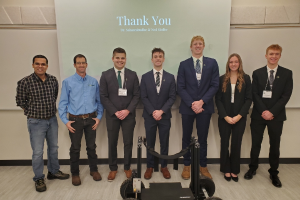
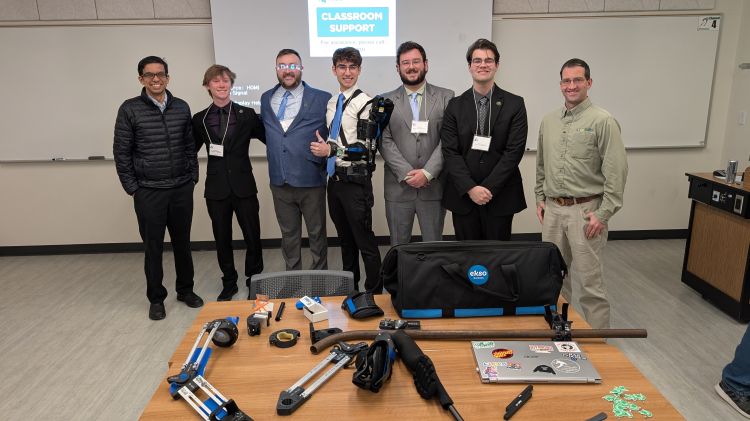
In addition to direct client services on farms, Michigan AgrAbility collaborates with MSU’s Mechanical Engineering capstone course to develop assistive technology solutions for clients. These student-led design teams have focused on creating assistive devices that are replicable, low-cost (around $1,000), and practical for real clients. Three design groups have contributed to the development of a mechanized rolling kneeler cart that helps small farms tend low-growing crops. The first group designed and built the initial cart, which included steering and motorization controlled by two switches (power and direction) and a speed dial. Subsequent groups refined the design by improving the drivetrain and extending battery life. Another group created a prototype for an addition to an exoskeleton to provide additional support to one arm. Though created for a particular client, this design could be used by anyone with one-sided paralysis or severe weakness caused by a spinal cord injury or a stroke.
Beyond its engineering collaborations, Michigan AgrAbility benefits from several additional strong partnerships. The Tau chapter of the Alpha Gamma Rho (AGR) fraternity at Michigan State University remains a generous supporter and, in 2025, their annual Beef Preview Show at the Farm Bureau Pavilion at Michigan State University in February brought in $23,000 for Michigan AgrAbility. Other key supporters in 2025 included the Thomas Daley Memorial 5K, The Andersons, and Greenstone Farm Credit Services.
Michigan AgrAbility staff also conducts outreach throughout the state, ensuring that farmers, agricultural workers and ag service providers are aware of available resources. In 2025, Michigan AgrAbility staff and volunteers participated in 21 presentations and hosted booths at nine agricultural and health-related events such as the Great Lakes Fruit and Vegetable Growers Expo, Michigan Pork Producers, and the Northern Michigan Small Farms Conference. Staff also attended events with the MI Department of Health and Human Services and Labor and Economic Opportunity offices and the Michigan Farm Bureau annual meeting.
Michigan AgrAbility continues to help farmers and agricultural workers navigate injuries, disabilities, and age-related challenges so they can remain active in agriculture. Through on-farm assistance, educational programming, partnerships, and practical solutions, the program connects individuals with resources that improve safety, accessibility, and independence. As the needs of Michigan’s agricultural community continue to evolve, Michigan AgrAbility remains committed to helping producers find ways to continue doing the work they value and enjoy.
To learn more about Michigan AgrAbility or request services, visit https://michiganagrability.org or contact Samantha Wolfe at wolfesa4@msu.edu.