Michigan grape scouting report – August 12, 2026
 Print
Print Email
EmailConcise, research-based updates on weather trends, vine development, pest pressure and disease risk.
Key takeaways
- Track vine development closely: Southwest Michigan vineyards are entering veraison while northwest Michigan and the Tip of the Mitt remain mostly at bunch closure or earlier stages.
- Use canopy and crop-load management strategically: Pre-veraison leaf removal and cluster thinning can improve ripening, fruit composition, disease management and vine balance when timed appropriately.
- Scout for grape berry moth: Third-generation activity is increasing in southwest Michigan; check clusters weekly, especially near wooded edges, and protect fruit where needed.
- Prepare for sour rot: Tight-clustered cultivars become increasingly vulnerable as berries ripen; consider protection beginning around 15 Brix.
- Stay ahead of disease pressure: Continue monitoring for downy mildew, powdery mildew and black rot, and rotate fungicide modes of action to reduce resistance risk.
- Manage summer weeds before they become established: Target small, actively growing weeds, avoid herbicide contact with green vine tissue and integrate chemical and nonchemical tactics where possible.
- Keep scouting through harvest: Continue monitoring insects, diseases, weeds and fruit condition as ripening progresses to prevent late-season problems.
Regional weather and seasonal progress
Seven-day forecasts for Michigan grape regions are as follows:
- Southwest Michigan: Benton Harbor | Fennville | Lawton | Watervliet
- Northwest Michigan: Old Mission | Suttons Bay| Traverse City | Leland | Northport
- Tip of the Mitt AVA: Petoskey | Harbor Springs | Charlevoix | East Jordan
Weekly in-season weather updates are provided to the MSU Extension fruit team by Jeff Andresen, PhD, MSU agricultural meteorologist. These reports offer timely insights into weather conditions affecting fruit production across Michigan. You can watch recordings of these agricultural weather outlooks.
Growing degree day (GDD) report
You can track vine development using the MSU Enviroweather Growing Degree Day Map. Visit the Enviroweather site to find your nearest weather station, create a free account, and monitor GDDs daily.
Biweekly GDD summary (base 50 degrees Fahrenheit)
The following table summarizes current GDD accumulation, last week's totals and the biweekly increase for each monitored location across Michigan:
|
Location |
Current GDD (Base 50 F) |
Forecast GDD (Base 50 F) |
Average Annual GDD Accumulation (Base 50 F) |
|
Southwest Michigan |
2130.6 |
2283.6 |
~2,700–3,100 (typical ≈ 2,900) |
|
Northwest Michigan |
1500.7 |
1635.1 |
~2,200–2,500 GDD (typical ≈ 2,350) |
|
Tip of the Mitt AVA |
1477.4 |
1603.1 |
~1,900–2,200 GDD (typical ≈ 2,050) |
Vine development
Southwest Michigan
Southwest Michigan vineyards are going through veraison, depending on the location and the cultivar. In southeast Michigan, we are seeing more hybrid wine grape varieties entering veraison, but we are still waiting on Concord to change. Some table grapes, like Fredonia are starting to show color. Japanese beetle populations have dropped. Growers should also monitor for spotted lanternfly, which has been found in the region.
Northwest Michigan
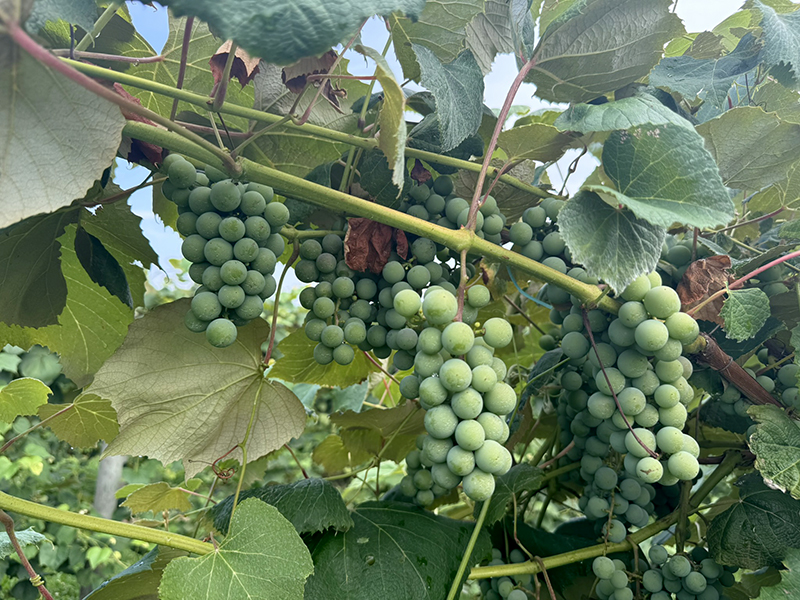
Across northwest Michigan, grape berries are currently about 9–10 millimeters in diameter, ranging from peppercorn size to pea size. The berries remain firm and green, and in tighter clusters, they are beginning to touch as the clusters continue to fill out.
Tip of the Mitt
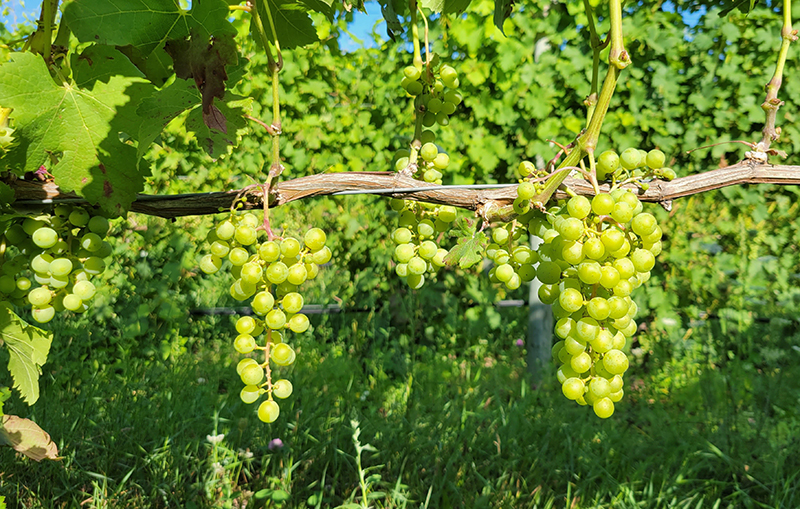
Early hybrid cultivars are beginning veraison while most are in the bunch closure stage. Vitis vinifera cultivars are in the bunch closure stage. Japanese beetle activity is persistent. Black rot pressure remains but should be on the decline. Downy mildew pressure has increased while powdery mildew has been less noted in vineyards. Risk for each remains moderate.
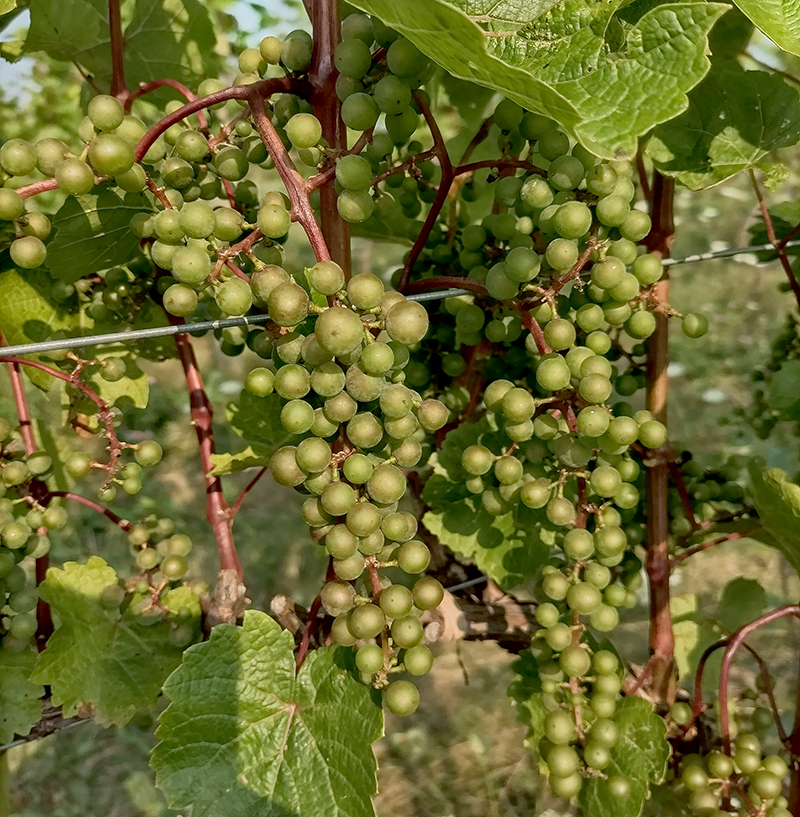
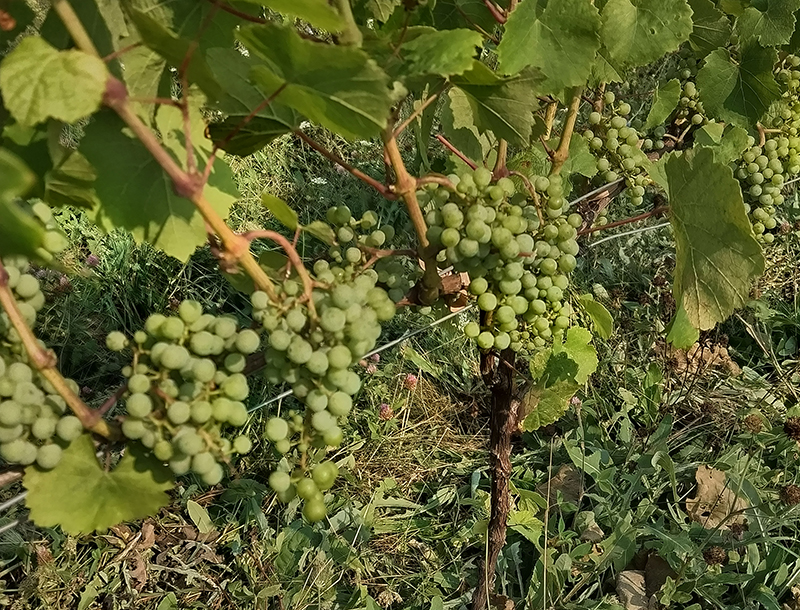
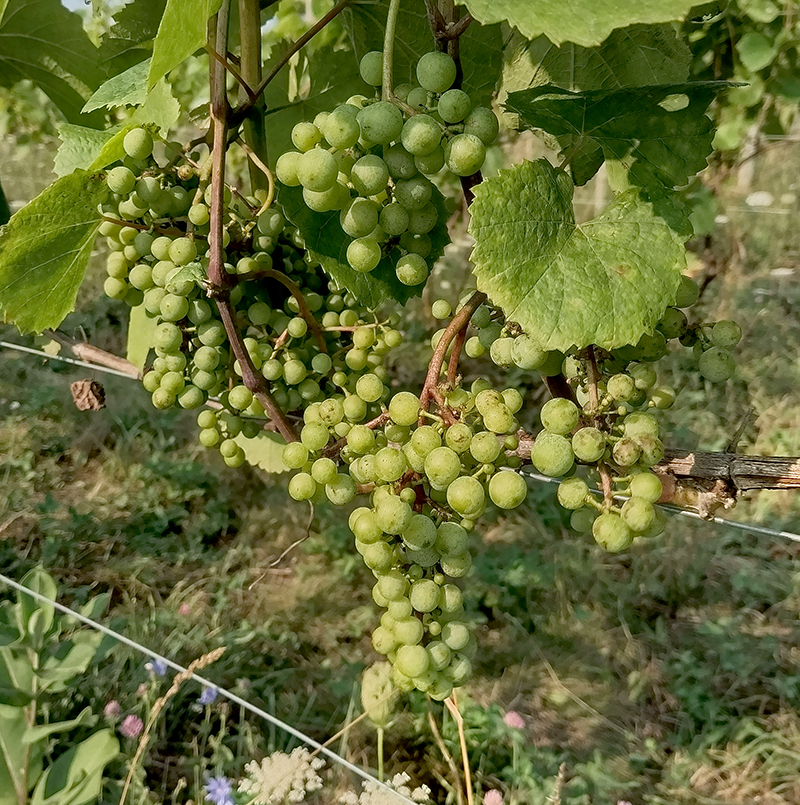
For reference, see MSU Extension’s grape growth stages chart.
Viticulture
Two vineyard management practices—pre-veraison leaf removal and cluster thinning—are widely used in Michigan vineyards to improve grape and wine quality, particularly in premium wine production. Each practice can provide benefits on its own, but research from the Michigan State University Department of Horticulture has shown that when properly timed and combined, they can further improve fruit composition, disease management and overall vine balance.
Pre-veraison leaf removal
Pre-veraison leaf removal involves removing leaves from the fruiting zone before or around the onset of veraison. The primary goals are to increase sunlight exposure and improve air circulation around the clusters. These changes can reduce humidity within the canopy and lower the risk of Botrytis and other bunch rots, particularly in cultivars with compact clusters.
From a physiological perspective, strategic leaf removal can also improve the balance between photosynthetically active leaf area and crop load, supporting more efficient fruit ripening. In trials conducted at the Southwest Michigan Research and Extension Center, researchers observed an average increase of more than 5% in Brix at harvest compared with untreated vines, along with higher concentrations of anthocyanins, flavonols and other phenolic compounds. These improvements in berry composition can contribute to wines with deeper color, greater aromatic intensity and enhanced mouthfeel.
Cluster thinning
Cluster thinning, typically performed near veraison, involves removing a portion of the crop to better match yield with the vine’s capacity to ripen fruit. By this stage, berry size and cluster weight are more predictable, allowing growers to make more precise crop-load adjustments.
MSU research has shown that reducing excessive crop load can redirect vine resources toward the remaining clusters, supporting sugar accumulation, color development in red cultivars and more concentrated fruit composition. In cool-climate regions such as Michigan, cluster thinning can also help reduce delayed or uneven ripening, particularly in seasons with variable flowering, fruit set or high crop levels.
The combined effect
When pre-veraison leaf removal and cluster thinning are used together, their effects can be complementary. Cool-climate studies with Cabernet Franc at the Southwest Michigan Research and Extension Center found that the combined treatment improved fruit uniformity, increased anthocyanin accumulation and advanced ripening more effectively than either practice alone.
In warmer climates, treatment differences may become less pronounced by harvest, although earlier improvements in ripening and cluster health can still be valuable, particularly under high disease pressure. These vineyard responses can also carry through to wine quality, with combined canopy and crop-load management associated with improved color, aromatic intensity and structural characteristics.
The key is to use both practices strategically rather than routinely. Their effectiveness depends on cultivar, vine vigor, crop level, canopy density, seasonal conditions and the desired production goals.
Pest management
Diseases
Fungicide programs should prioritize materials with strong protectant and systemic activity, while rotating modes of action to manage resistance. Products in FRAC groups 3 (DMIs) and 11 (QoIs), often used in premixes, remain key options for powdery mildew and black rot, while multi-site protectants such as captan (M4) or mancozeb (M3) provide additional coverage and help reduce resistance risk.
For downy mildew, materials in FRAC groups 40, 45, 21 and 11, as well as phosphorous acid products, are effective choices when conditions favor infection. Careful selection and rotation of these chemistries, combined with thorough coverage during bloom, are essential to protect developing clusters and limit early-season disease establishment.
Insect pests
Japanese beetles are still active causing some leaf defoliation. Some feeding can be tolerated especially if there is a light crop, so targeted sprays may not be needed. Product selection for berry moth treatments can also include activity on this pest to reduce their abundance.
Potato leafhoppers were observed on grape canopies in Southwest Michigan this week, which is a good reminder to also scout the leaves on your canopies. Potato leafhopper adults are light green and walk sideways when disturbed, causing damage in sensitive winegrape cultivars. Leaf yellowing and cupping are the main types of symptoms to watch out for. Late summer is also when we see a potential for grape leafhopper second generation. This is mostly a pest in juice grape vineyards, with this species favoring the interior of the canopy. Checking inside the canopy will disturb adults that fly around, and turning over the leaves will reveal if there are nymphs present. Discoloration of the leaves from feeding is another symptom to look for. Canopies with light feeding shouldn’t affect ripening of a typical crop, but if the damage is increasing, the systemic neonicotinoids such as Assail or Admire Pro can control this pest.
Third generation grape berry moth has been starting to increase in Southwest Michigan vineyards with more cluster damage noticed in the last week. Scout host spots and areas adjacent to woods to see how your 2026 program has been holding up. Protecting clusters through the remainder of August should be a priority in vineyards with a history of grape berry moth, and with the early season this year, we are expecting some risk of a fourth generation too.
Keeping a weekly check on clusters through to harvest is a good plan for reducing the chance of a late-season surprise from grape berry moth. There are various effective insecticides to reduce their infestation and protect clusters, and with cooler temperatures in the coming weeks there should also be some longer residual control. The weather forecast also includes a higher chance of rain, so it is worth using the guidance from John Wise, PhD, about when to reapply.
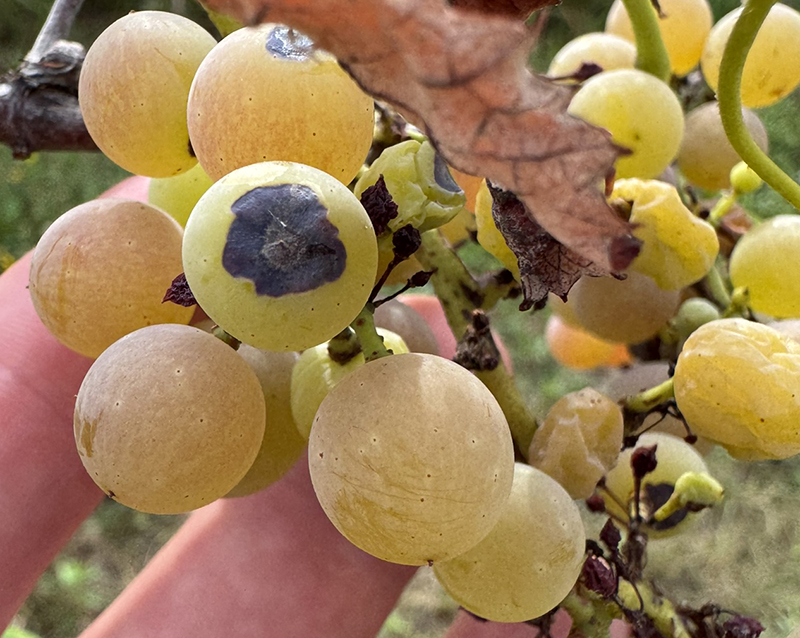
With veraison and ripening comes an increased risk of sour rot. For cultivars with tight clusters that are prone to this, we recommend protecting from sour rot starting at about 15 Brix. Sterilants such as Oxidate and Jet Ag can help keep the clusters from developing rots, with repeat application a week later. We also have seen excellent protection with ProBlad Verde which we are also finding has some activity on the vinegar flies that help to cause sour rot outbreaks. Including an insecticide can help limit these outbreaks by stopping the vinegar flies from moving the pathogens. Talk to your winemaker about potential restrictions on late-season treatments, and check the E-154 guide for recommendations.
Weeds
Summer weed management in vineyards should focus on scouting and controlling weeds that escaped spring preemergence herbicide programs or emerged after residual activity began to decline. This is especially important during hot, dry periods because weeds compete with vines for soil moisture and nutrients at a time when vines may already be under heat and water stress. Young or newly planted vineyards are especially vulnerable, but even established vineyards can lose vine vigor when large weeds are allowed to remain in the undervine strip.
Growers should scout vineyard floors now and identify which weeds are present, their size, and whether they are broadleaves, grasses or perennial weeds. Summer annual weeds such as pigweed, lambsquarters, ragweed, foxtails, crabgrass, barnyardgrass and other annual grasses may continue to emerge through the summer, especially after rainfall or irrigation. Perennial weeds such as Canada thistle, bindweed, quackgrass, yellow nutsedge and dandelion may also be present and often require repeated management. If spring residual herbicides were applied earlier in the season, some breakthrough is expected as those products begin to lose activity, especially where weed pressure is high or where rainfall patterns affected activation or persistence.
Postemergence herbicides are most effective when weeds are small and actively growing. During heat waves or droughty periods, weeds may be stressed, dusty, hardened off or less actively growing, which can reduce herbicide performance. If possible, target applications before weeds become large and avoid waiting until weeds are moisture-stressed. Good spray coverage is especially important for contact herbicides. Also consider vine stress: avoid drift, use directed sprays, and do not allow herbicides to contact grape leaves, green shoots, green bark, suckers or young vines.
Several postemergence options are listed in the 2026 Michigan Fruit Management Guide for grapes. In established vineyards, glufosinate can be used as a directed application to actively growing weeds and is generally more effective on smaller weeds; higher labeled rates may be needed for larger weeds. Paraquat provides contact control of emerged annual weeds, but coverage is critical and it must be kept off green grape tissue. Aim can be used for burndown of small broadleaf weeds and is often most useful when weeds are small. Venue can be tank-mixed with glyphosate or glufosinate to improve desiccation of small broadleaf weeds. Gamma may also be used in grapes established at least two years and should be applied with another postemergence herbicide to improve control of established weeds. Glyphosate can control annual and perennial weeds, but it must be used with caution in grapes because contact with leaves or green shoots can cause serious injury, and applications after bloom should generally be avoided based on label and guide precautions.
For grass-only problems, products such as Fusilade DX, Poast, or Assure II may be used when grasses are actively growing and within the labeled size range. These products will not control broadleaf weeds, so growers should match the herbicide to the weed spectrum present. For mixed broadleaf and grass populations, a broader postemergence program or tank mix may be needed where labeled and appropriate.
At this point in the season, adding another residual herbicide may only be useful if the label allows the timing and if rainfall or irrigation is expected to activate the product. In established vineyards, some residual options such as Prowl H2O may be applied during the growing season where labeled, but residual herbicides will not control large, emerged weeds by themselves. If emerged weeds are present, a labeled burndown partner is needed.
Always follow the product label for grape age restrictions, rates, adjuvants, maximum seasonal use, preharvest intervals, restricted-entry intervals, tank-mix compatibility and crop-safety precautions. Apply all postemergence herbicides as directed sprays to the vineyard floor and avoid contact with green grape tissue. Rotate herbicide sites of action and integrate mowing, cultivation, cover crops or other nonchemical tactics where possible to reduce herbicide-resistance risk and improve long-term vineyard floor management.
Scouting and recordkeeping tools
The Sustainable Agriculture Management (SAM) Tool continues to evolve through close collaboration with Michigan vineyard managers. By observing day-to-day vineyard operations and listening to grower feedback, the SAM Tool team is identifying opportunities to reduce bottlenecks in task management, communication, and recordkeeping. Recent vineyard visits have revealed several management challenges, and solutions to these pain points will be incorporated into upcoming SAM Tool releases.
What's new in the SAM Tool?
Recent updates to the SAM Tool continue to improve day-to-day vineyard management. Finding the tasks you need is now faster with an enhanced Task Management page. Users can search activities using a flexible date range, the system automatically remembers each user's preferred filter settings, and the default view now focuses on tasks that still require attention. These improvements reduce the time spent navigating records and help you focus on managing your vineyard.
To further improve planning and communication, managers can now specify a preferred task due time in addition to a due date when assigning work. This provides workers with clearer scheduling expectations, helping teams better coordinate daily activities and complete important vineyard operations on time.
If you have any questions about the SAM Tool or would like to participate in the Yield Estimation Modeling for Michigan Winegrapes research project, please contact the SAM Tool team at sustainableag@msu.edu.
Events and announcements
2026 Dirt to Glass Conference
Registration is open for the fifth annual Dirt to Glass Conference, taking place Aug. 20–21 in Traverse City, Michigan. Early bird pricing is available for a limited number of registrations.
Register for the 2026 Dirt to Glass Conference
The program features 23 speakers covering vineyard management, winemaking, soil science, vine physiology and wine evaluation, combining Michigan expertise with national and international perspectives. The conference is designed as a working forum with moderated panel discussions focused on practical, vineyard-to-winery decision-making.
Highlighted speakers include:
- Nick Dokoozlian (E. and J. Gallo) – vineyard-to-wine quality benchmarks
- Jacopo Miolo (Simonit and Sirch) – pruning and vine longevity
- Tom Plocher – disease-resistant varieties
- Madeline Triffon – sensory evaluation
- Bruno Basso (MSU) – soil health and site-specific management
The program also features applied sessions on scouting, soil biology and vineyard establishment.
A key focus this year includes collaboration with E. and J. Gallo to pair sensory evaluation of Michigan wines with advanced chemical analysis, supporting improved quality assessment and production strategies.
The conference includes a two-day format:
- Day one (Aug. 20): technical sessions, panel discussions and guided tastings at the Cathedral Barn at Historic Barns Park
- Day two (Aug. 21): field tours of vineyards and wineries with visiting experts
Space is limited. Day two participation requires day one registration.
This work is supported by the Crop Protection and Pest Management Program (grant no 2024-70006-43569) from the USDA National Institute of Food and Agriculture. Any opinions, findings, conclusions, or recommendations expressed in this publication are those of the author(s) and do not necessarily reflect the view of the U.S. Department of Agriculture.