Michigan Moths: Highlights from the A.J. Cook Collection
 Print
Print Email
EmailMSU Entomology highlights a few fascinating moths from Michigan’s A.J. Cook Collection in celebration of National Moth Week.
July 18-26 is National Moth Week, and MSU Entomology wants to share the fantastic world of moths we have right here in Michigan. From beautiful, well-known species to moths that don’t even look like moths, the A.J. Cook Arthropod Research Collection offers access to millions of specimens for study. We dipped into the collection to share some of our favorites.
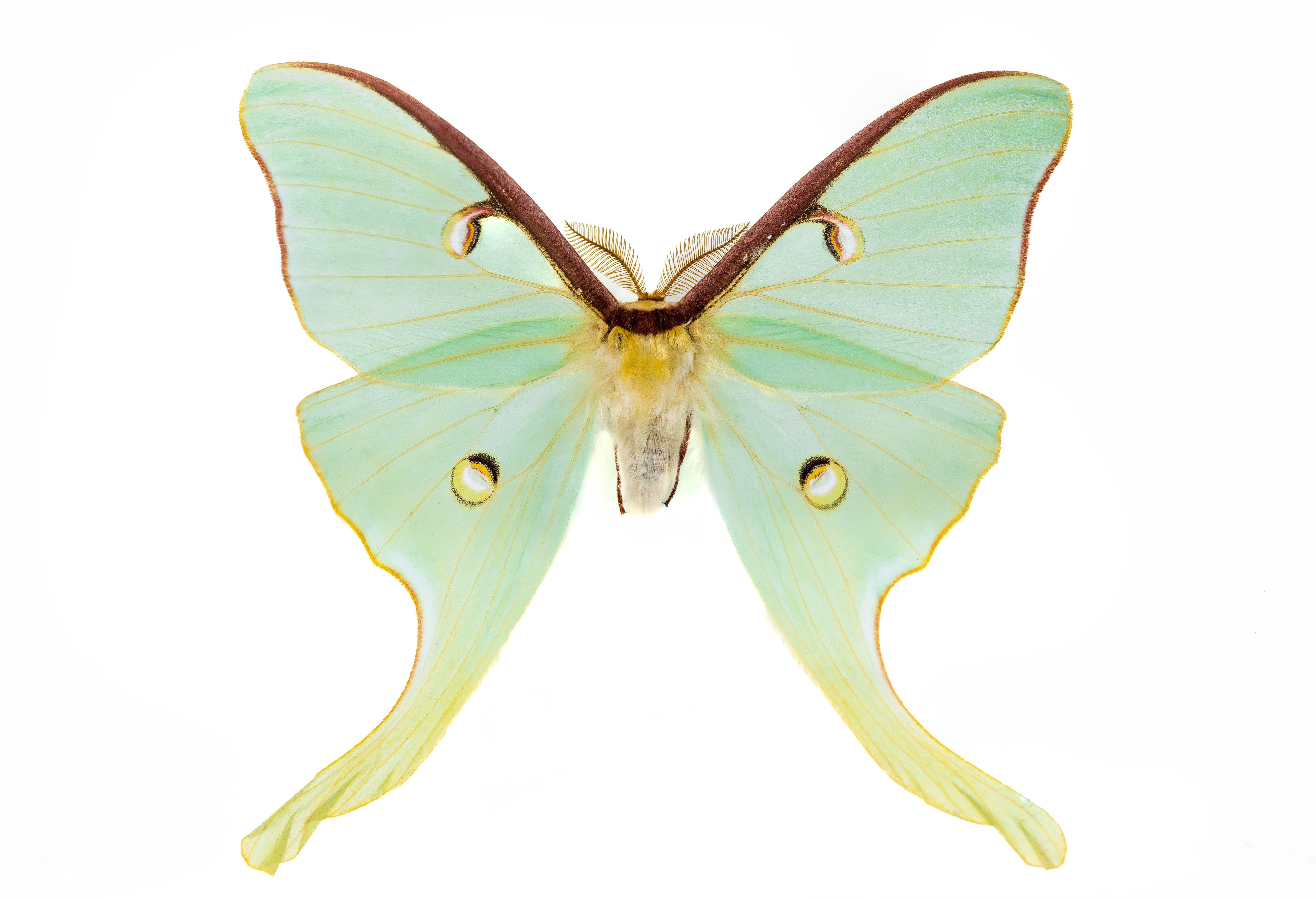
Actias luna
The luna moth is arguably one of the most iconic moths in the world. Its Latin name means “moonbeam,” likely referring to the long tails on the hindwings and perhaps the moonlike pale eyespots. This ephemeral creature doesn’t live long in this form. In fact, it does not even have mouthparts or a digestive tract in its final stage. Adults live for about one week, relying on energy stored during the larval stage while they search for a mate. As caterpillars, they feed on trees like white birch, sweetgum, hickory and walnut. A frequent visitor to up-north cabin porch lights, these giants (with wingspans up to 7 inches) are a sight to behold.
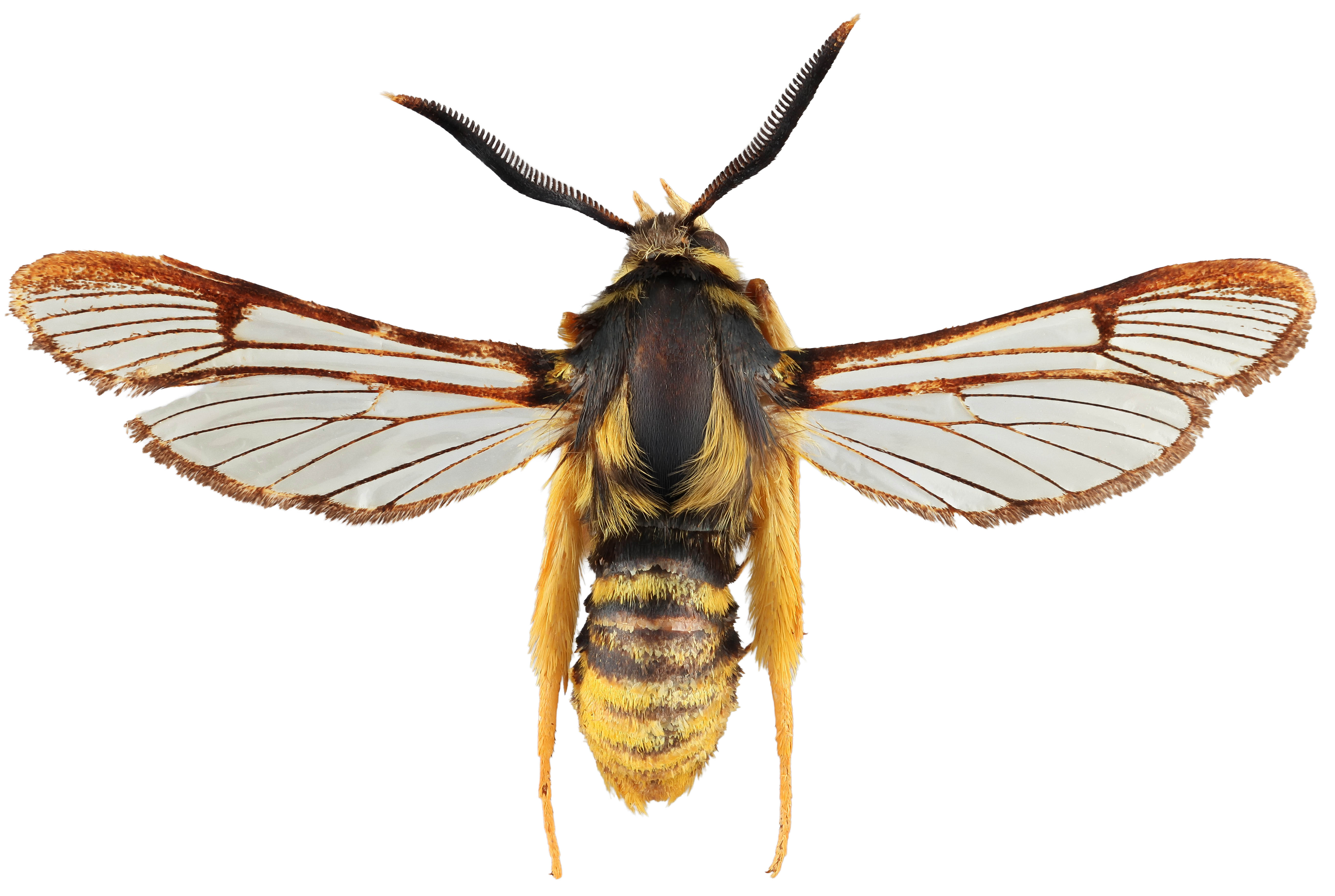
Sesia spartani
We may be biased, but the Spartan clearwing moth holds a special place in the hearts of MSU entomologists. Discovered by an MSU entomology alumnus in 1987, its scientific name reflects the university’s iconic mascot Sparty. It was first collected at Rose Lake, a popular field trip destination for MSU biology classes. At first glance, this species may not look like a moth. Its bee-like markings are actually a common evolutionary strategy that encourages predators to think twice, in fact, these moths are harmless and do not have stingers.
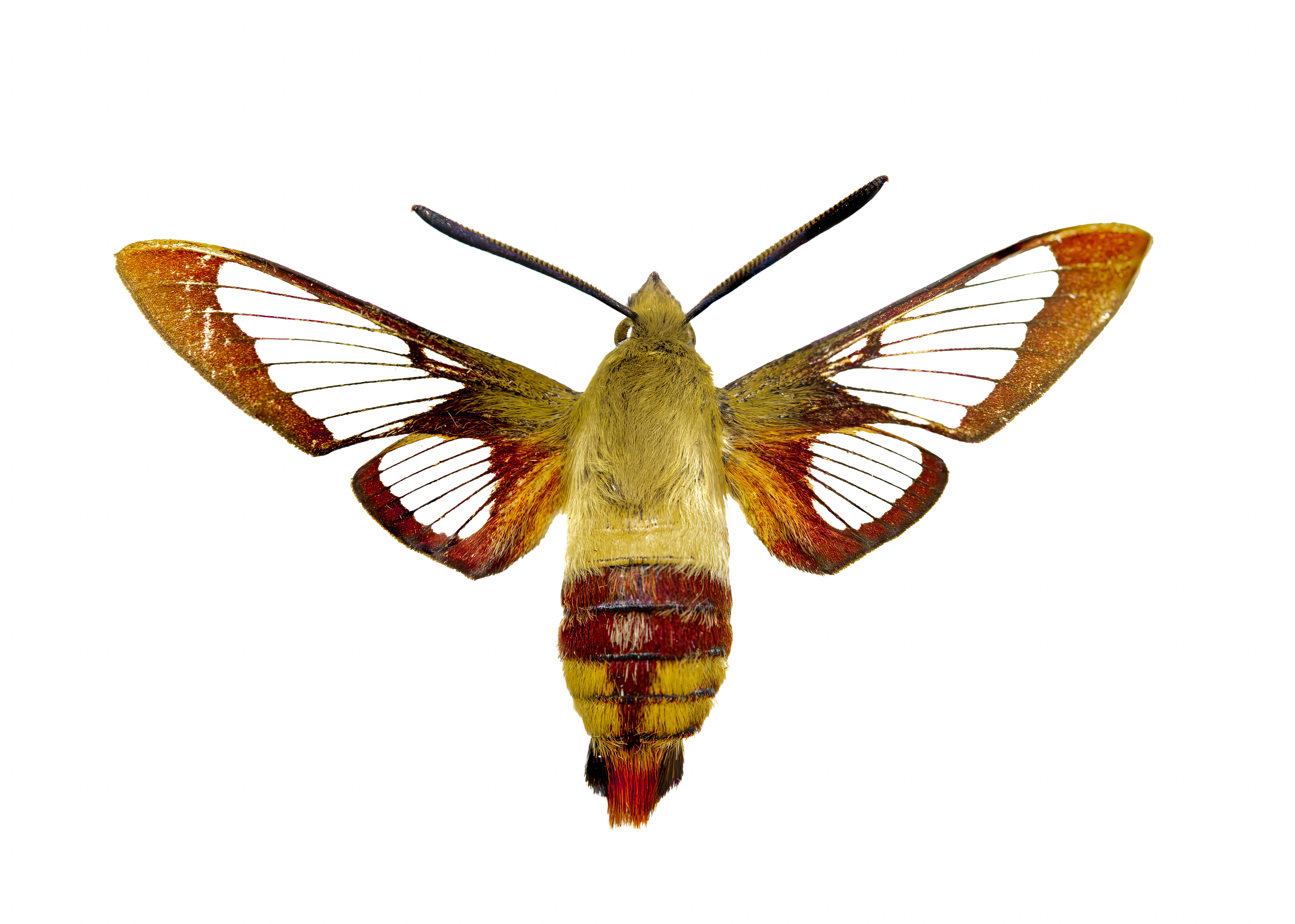
Hemaris thysbe
Commonly known as the hummingbird clearwing moth, this species gets its Latin name from its dart-like shape, meaning “dart-tasseled.” Unlike many moths, it flies during the day and resembles a hummingbird in both size and behavior, or as close as a moth can come to looking like a bird. It has a long, strawlike mouthpart for drinking nectar. Its wingspan ranges from about 1½ to 2¼ inches, comparable to a hummingbird’s 1.2 to 2.4 inches, and it has a soft, furry appearance. Caterpillars feed on viburnums, hawthorns and honeysuckles. Adults visit many garden flowers, including bee balm, phlox and verbena.
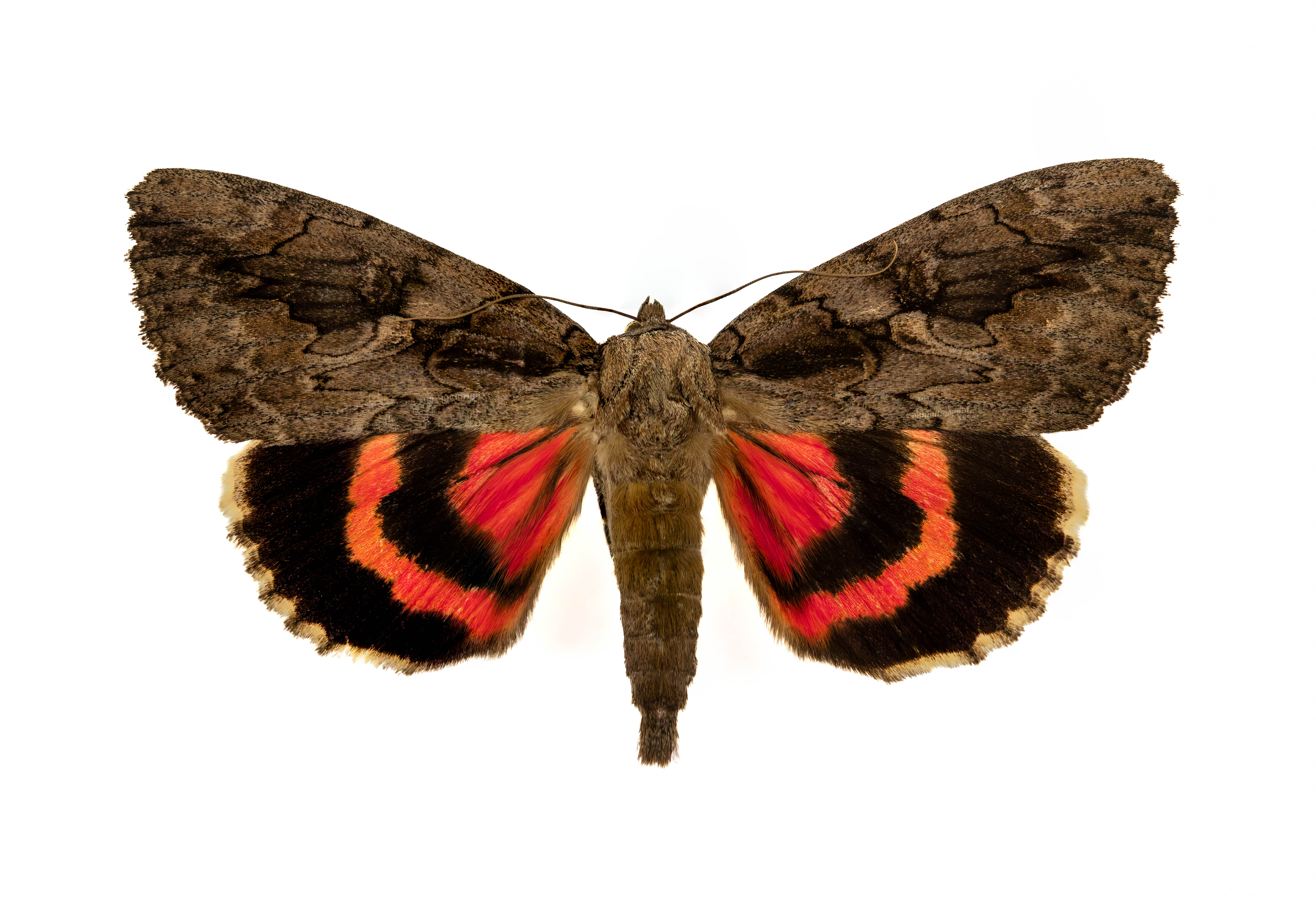
Catocala amatrix
Commonly known as the sweetheart underwing moth for its red, heart-shaped hindwings, this species uses beautiful camouflage to hide on tree bark while resting. When disturbed, it flashes a bright red burst of color to startle predators. Its native range includes much of eastern North America, and its larvae feed on poplar and black willow.