Michigan vegetable crop report – May 6, 2026
 Print
Print Email
EmailDespite cold fits and starts, things are happening on vegetable farms with warmer weather ahead.
Weather
There is a large trough in the Jetstream over the Great Lakes, bringing northwesterly airflow out of Canada and increased risks of freezing. For the past week, temperatures were 2-8 degrees below normal with drier than normal weather north of I-94 but rain south of it. Even with this cool weather, degree days are still ahead of normal, with a greater surplus in southern Michigan.
Check out Jeff Andresen’s weekly forecast:
- Variably cloudy, breezy and cool Wednesday through Friday (May 6–8). Scattered showers possible north on Thursday and south on Friday. Variably cloudy and warmer this weekend with scattered showers possible again late Saturday to the north and Sunday to the south. Fair, mostly dry and cooler early next week.
- High temperatures from the 40s north to the 50s south Thursday and Friday, warming to the 60s north to near 70 south by Saturday.
- Low temperatures from the upper 20s and low 30s north to the upper 30s south Thursday and Friday warming to the 30s north through the 40s south this weekend. Frost and freezing temperatures possible north and central Thursday and Friday mornings.
- Precipitation totals of 0.25-0.5 inch through May 13.
- Medium range outlooks call for a return of warmer than normal mean temperatures during late May.
New insecticide update article
Zsofia Szendrei has released an article, “Update your veggie insect management tools in 2026,” which outlines some new products and new uses of older products. Check it out!
Crop updates
Submit your ideas for 2026 GLEXPO sessions or speakers
The Great Lakes Fruit, Vegetable and Farm Market Expo (GLEXPO) is a premier conference for fruit, vegetable, horticulture and farmer market growers to see and learn about all of the latest research and innovations in farming. The GLEXPO board along with Michigan State University Extension hosts a variety of educational sessions and discussions to further the knowledge and resources growers need to be competitive in today’s markets. The 2026 GLEXPO will be Dec. 8-10 at the DeVos Place in Grand Rapids, Michigan.
The GLEXPO organizers and Michigan State University Extension would like your ideas as we plan future education sessions. We want to hear from growers and industry members about ideas for topics and speakers that you think would be of value to your farming operations as well as other growers. To facilitate this endeavor, the Great Lakes Expo board has created a fillable online form. Ideas can be submitted year-round via the online form. For ideas to be considered for inclusion in the 2026 education program, they must be submitted by June 12, 2026.
Access the form to submit your ideas
For more information on the Great Lakes Expo, visit https://glexpo.com.
Asparagus
Asparagus harvest continues in fits and starts. West central Michigan fields were in various stages ahead of the freeze, as earlier wet weather meant it was difficult to spray and make a final fern chop until this past weekend in some fields, while others were mowed the previous week. The impacts of Saturday morning's freeze were likewise variable. As of Monday, some growers saw minimal impacts, others saw a mix of frozen and non-injured spears.
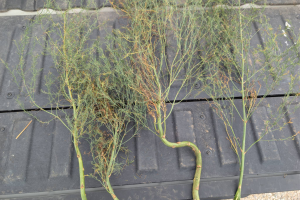
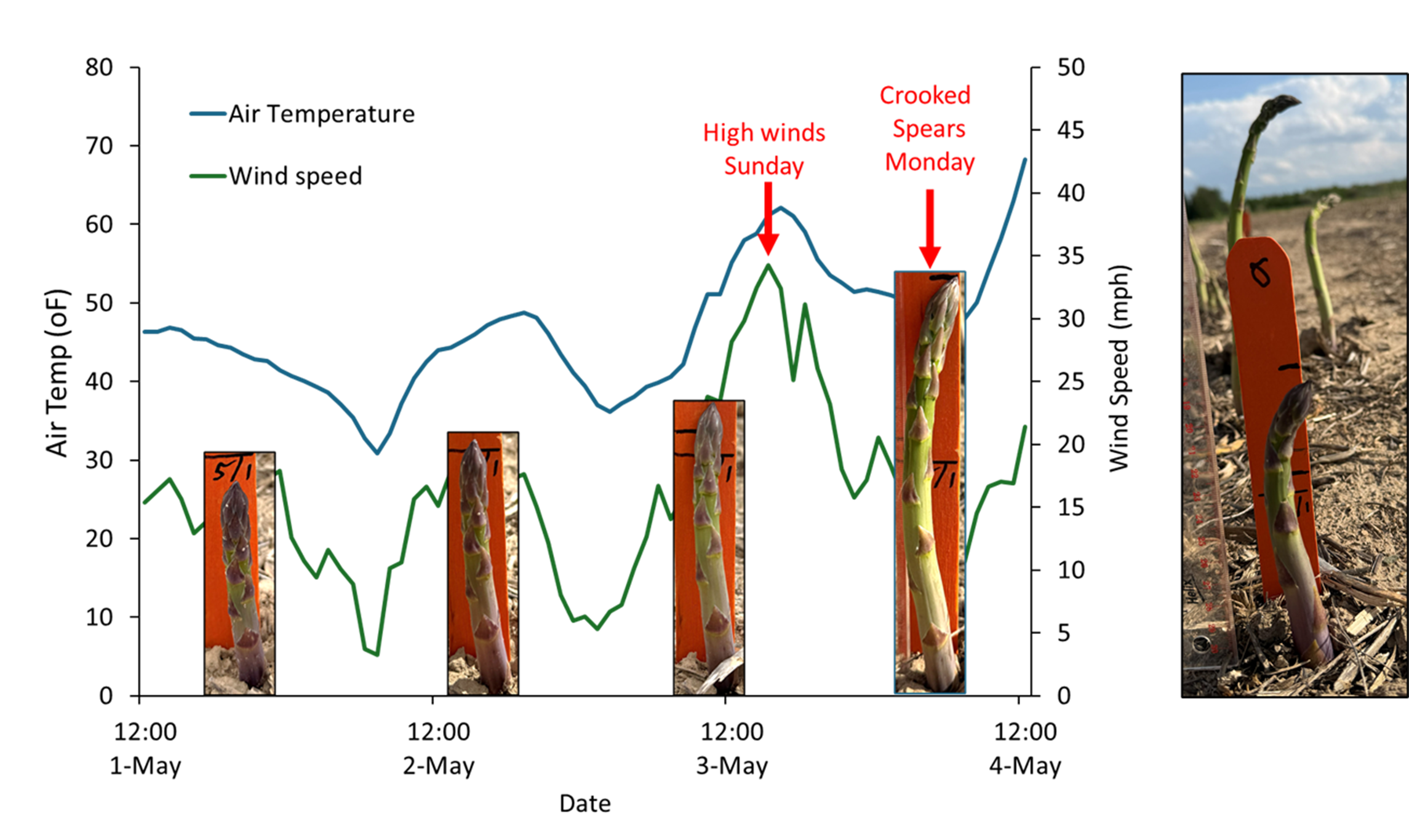
Harvest was expected to ramp up towards the end of this week, but growth may be slow with cool overnight temperatures that don’t warm until the afternoon. The MSU Brainard Lab has been informally tracking spear growth on campus during this cool weather (Figure 1), staking out individual spears and tracking height over time. Spears are growing, but slowly.
As spears grow, anything that slows growth on one side but not the other can cause crooking, including windblown soil. Spears were crooked towards the direction of high winds that occurred on May 3 (Figure 1).
Check low spots that have had standing water for symptoms of Phytophthora asparagi on emerging spears. Phytophthora asparagi belongs to the water mold group and thrives in a wet and saturated environment. According to Disease and Insect Pests of Asparagus, “Spear rot begins as soft, water-soaked lesions and/or shriveling occurring slightly above or below the soil line. Continued growth of infected spears result in shepherd’s crook of spears….” Checking for water-soaked symptoms on the spears in fields where you have suspected Phytophthora could help confirm whether the pathogen is present, since it is not possible to isolate it from non-dormant crowns and roots. The pathogen can be isolated from symptomatic spears through MSU Plant and Pest Diagnostics.
Read more about symptoms of crown infection. Since this pathogen is highly destructive and significantly decreases the productive life of an asparagus planting, it is important to use Phytophthora-free crowns when establishing a new planting.
Root crops
Carrots, parsnips, potatoes, beets, turnips and radishes are being planted or already up on some farms. Onions and shallots have been planted on some farms as seeds, sets and transplants. Direct sown onions were in various stages this week. Some were in the one- to two-leaf stage while later planted ones were just knuckling, with herbicide application the main focus.
For onions, silver plastic mulch is employed by some farms as an alternative to the standard black type. Added benefits include reflecting more sunlight upwards into the sparse onion canopy and deterring winged insect pests from colonizing crops. Recent research at Michigan State University highlighted in this Onion World article found that thrips control from both reflective and red-colored plastic mulch rivalled the results of insecticide application. Previous research from Cornell suggests that the silver mulches keep soil cooler than black plastic, which may reduce the incidence of bacterial bulb decay (read in more detail in the article “Stop the Rot! - Using Cultural Practices to Manage Bacterial Diseases of Onion”). All compelling reasons to consider its place on your farm—just don’t forget your sunglasses!
Cucurbits
Squash and cucumbers are being planted. Some early planted cucurbits were saved in the nick of time from last week’s frosty weather by being covered in advance.
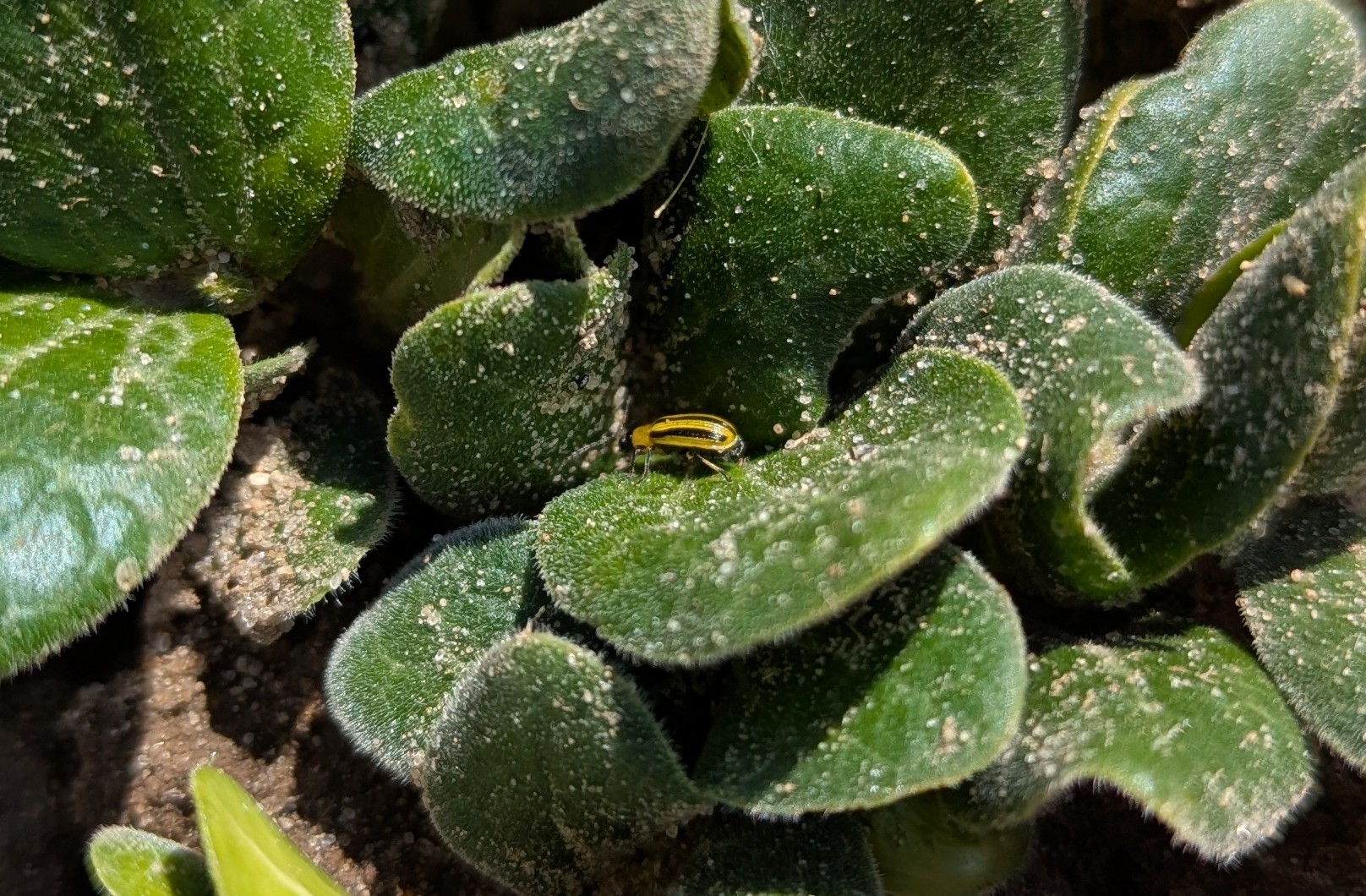
Questions on roller-crimping a cereal rye cover crop for no-till vegetable production? MSU Extension’s new publication “Roller Crimping to Terminate Cereal Rye Cover Crop in Michigan” covers this in detail.
Brassicas and greens
Broccoli, cabbage, cauliflower and other brassicas have all been and continue to be planted. Lettuce and celery transplanting is ongoing. Damping-off can be an issue this time of year. Damping off is the term given to the transplant decline caused by any of several pathogenic fungal species. Key symptoms include wilting or the plant breaking off at the soil line due to rotting away of the young stem tissue. These fungi prefer cool wet soil conditions where they can move, reproduce and infect stressed seedlings.
Once the plants have started to go downhill, not much can be done to remedy the situation, so preventative action is best. Planting into warm and not overly wet soils, using new trays and containers, never reusing potting mix, and practicing good sanitation in the greenhouse are all ways to maximize your luck in keeping transplants damping-off free. Learn more in this article from University of Minnesota Extension.
Garlic
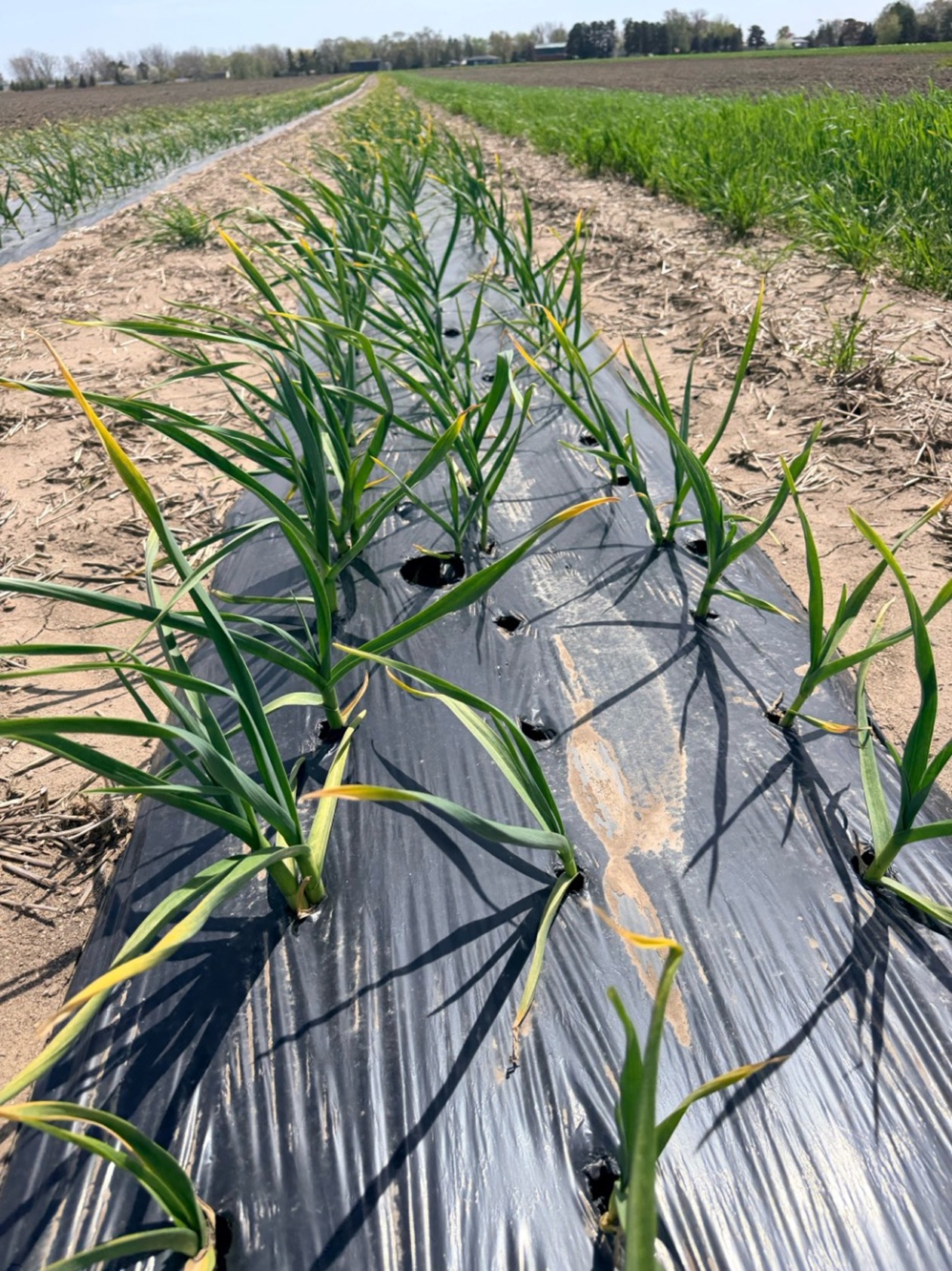
Yellow tip on garlic has been reported. This symptom may be associated with the cold and fluctuating temperatures we are experiencing this spring, nutrient deficiency (especially nitrogen), or excess moisture. If nitrogen fertilizer has not been applied, consider doing it as soon as possible prior to the initiation of bulbing in mid-May. An MSU Extension guide on garlic production in Michigan is available for reference.
Fruiting vegetables
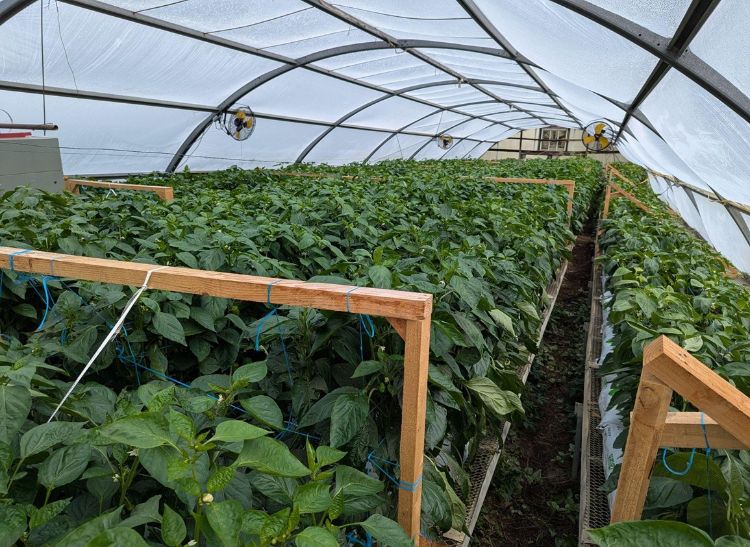
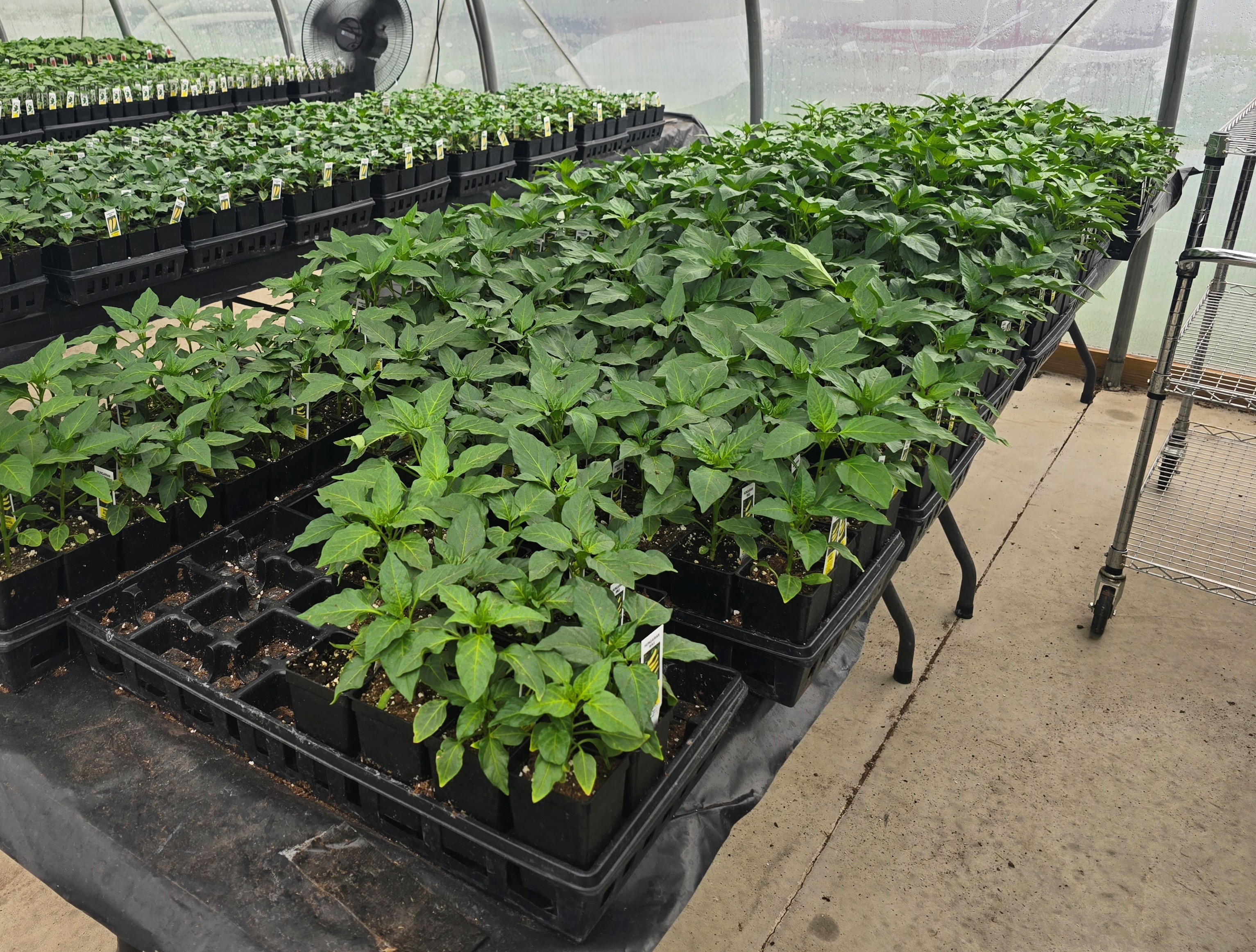
Greenhouse tomatoes and peppers are setting fruit, sizing and coloring, with first harvests starting in southwest Michigan. There are about six fruit trusses right now. Tomato transplants are being hardened off for early field plantings.
Legumes
Peas are in and up on some farms. Green beans have been planted. Some frost damage was reported on beans in southern Michigan.
Sweet corn
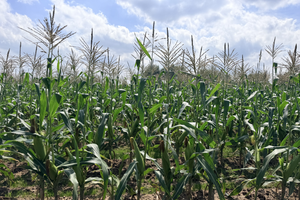
Sweet corn successions are being seeded on many farms and some young sweet corn seedlings are developing well in some fields, up to V4 by some reports. As a grass, sweet corn can be more resilient to frost than other warm-season vegetables due to its growing point being safely nestled underground in early growth stages. While exposed leaves may get affected, the plants can send up new growth and continue on.
Rhubarb
Strawberries
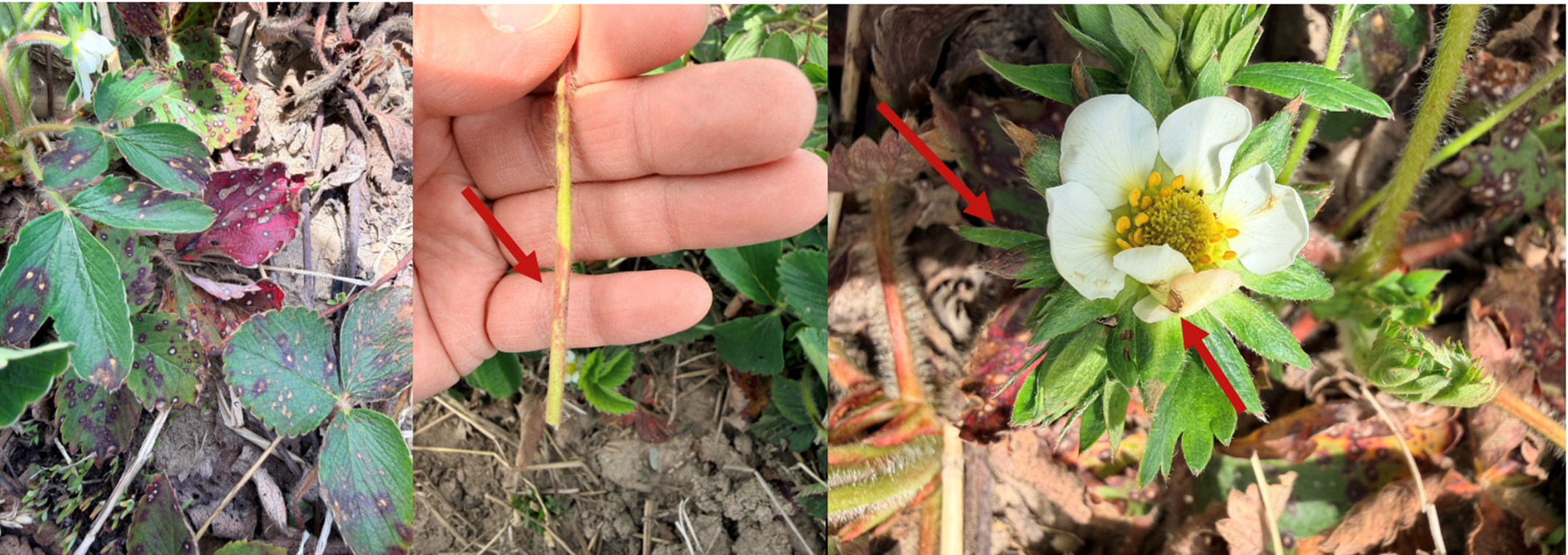
Leaf spot disease has been reported on strawberries in the eastern part of the state. The pathogen overwinters on infected leaves (overwintering structures) and produces spores that spread in spring and early summer, primarily via rain splash or irrigation water. Lesions may develop on leaves, petioles, runners and fruit.
For fungicide recommendations and spray schedules, refer to the 2026 Fruit Management Guide. The Pacific Northwest Pest Management Handbooks has information on this disease and fungicide recommendations, but always verify that products are labeled for use in Michigan.
For cultural control, remove older and infected leaves from runner plants before planting and during fall renovation. Establish plantings in well-drained soils with full sun exposure and good air circulation. Maintain effective weed control, as weeds reduce airflow and prolong leaf wetness, increasing disease risk.
Produce Food Safety On-Farm Readiness Reviews
Schedule an On-Farm Readiness Review (OFRR) today for a 2-hour educational visit that takes place during the harvest season and is meant to be casual and low stress. Everything discussed during an OFRR is confidential and focused on ways you can reduce your own risks in relation to produce safety. There is no pressure to take our advice either, we are just here to support you in your produce safety efforts!
Events
- May 12, 2026: TomSPOT Webinar Series: Aerosolized dispersal of Xanthomonas euvesicatoria pv. perforans during spray applications – Virtual
- May 13-14, 2026: 2026 Agritourism Summit – Acme, MI
- May 19, 2026: Drip by Drip: Building Irrigation Know-How, Saginaw Valley Research and Extension Center, Frankenmuth, MI
- June 2-4, 2026: 2026 Conservation Drainage Network Annual Meeting – East Lansing, MI
- June 3, 2026: Beginning Farmer Field Day - Agritourism, Farm Marketing, Farm Business Management – Freeland, MI
- June 10, 2026: Food Grade Grains Field Day at Boyer Livestock – Clarklake, MI
- June 17, 2026: Food-Grade Grains Field Day at Kellogg Biological Station – Hickory Corners, MI
- June 18, 2026: Healthy Habitats and Productive Pollinators – Flint, MI
- June 20, 2026: Michigan Farm Bureau Farmers Teaching Farmers Event – Lansing, MI
- June 22-23, 2026: State of the Western Lake Erie Basin Conference – Adrian, MI
- June 29, 2026: Technical Assistance Provider Training for Pay for Performance Program – Adrian, MI
- July 21, 2026: Washtenaw TOPP Farm Tours – Whitmore Lake/Dexter/Willis, MI
- July 31, 2026: Berrien County Organic Agriculture: Tour 3 Value-Added & Agritourism Farms – Sodus/Buchanan/Three Oaks, MI
- August 11, 2026: West Michigan Organic Farm Tour: Explore Farm to Institution Markets from schools to hospitals – Muskegon/Whitehall, MI
- August 18, 2026: Northwest Michigan TOPP Field Day: Farming for People, Purpose, and Profit – Petoskey, MI
- August 20, 2026: Hillsdale Nutrient Management Field Day – Waldron, MI
- August 28, 2026: Washtenaw Conservation District Field Day – Ann Arbor, MI
- September 9, 2026: MSU Extension Monroe County Field Day – Monroe, MI
- September 10-11, 2026: Great Lakes Tek Flex – Benton Harbor, MI
- September 16, 2026: 2026 Midwest Mechanical Weed Control Weed Day – Benton Harbor, MI
- September 22-24, 2026: Farm Science Review 2026 – London, OH
- October 4-6, 2026: Northern Michigan Small Farm Conference – Bellaire, MI
- November 4-6, 2026: Michigan Agritourism 20th Anniversary Convention – Frankenmuth, MI
- December 8-10, 2026: Great Lakes Fruit, Vegetable, & Farm Market Expo – Grand Rapids, MI
This work is supported by the Crop Protection and Pest Management Program [grant no 2024-70006-43569] from the USDA National Institute of Food and Agriculture. Any opinions, findings, conclusions, or recommendations expressed in this publication are those of the author(s) and do not necessarily reflect the view of the U.S. Department of Agriculture.