MSU Extension offers information on deworming practices and how to avoid resistant worm populations in your herd
 Print
Print Email
EmailAn educational webinar series from MSU Extension will help sheep and goat farmers understand how to implement effective parasite control programs on their farms.
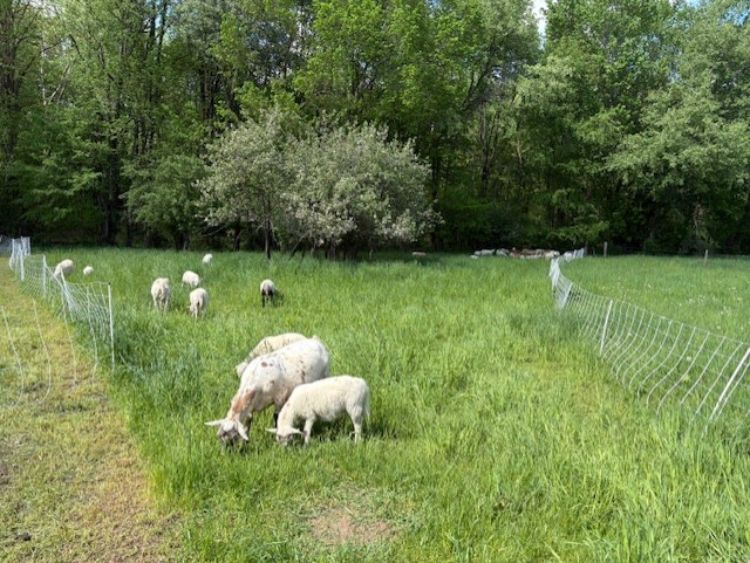
Farmers who raise small ruminants face many challenges, including increasing costs of production, weather changes and health issues that can arise in their herd. One of the biggest challenges to herd health is the management of parasite infections in sheep and goats. Internal parasite infections can be a significant obstacle in any farming operation and if not managed correctly, can impact the health and well-being of the animals and the profitability of the farm.
Understanding management practices that can be implemented to address parasite control is helpful for all small ruminant farmers. Michigan State University Extension is offering a webinar series, followed by an in-person workshop for farmers focused on this topic. This program will be on Tuesday evenings from 7-9 pm EDT from April 14 through May 5, 2025. The in-person workshop will be held on May 9, noon to 4 p.m. at the MSU Sheep Teaching and Research Center (MSU STRC) and MSU Main Campus.
The webinar series, hosted by the MSU Small Ruminant Extension Team, will discuss which parasites are a problem in the Midwest/Northeast, risk factors for infection, grazing strategies to reduce parasite load, infection monitoring, effective drug treatments and farm-specific control programs. These virtual sessions will also focus on the control of internal parasites on sheep and goat farms, including how previous control methods have led to the development of drug-resistant parasites. The webinar series will be followed by an optional workshop on May 11 on the Michigan State University campus that will provide instruction on the FAMACHA parasite monitoring program and the practice of fecal egg counting.
Virtual program
All sessions at 7 p.m. ET with recordings available 2 days later.
Session 1: April 14 - Parasites of impact in sheep and goats, and basics of their life cycles
Session 2: April 21 - Factors that determine risk of parasite infection and grazing management strategies to reduce exposure
Session 3: April 28 - Control and infection monitoring approaches and methods to maintain refugia
Session 4: May 5 - Putting it all together: developing a successful, sustainable integrated parasite control program for your farm
In-person workshop (optional attendance)
May 9, noon to 4 p.m., Participants will learn how to monitor infection using the FAMACHA system on sheep at the MSU STRC and then travel to the nearby MSU main campus to learn how to perform quantitative fecal egg counting. Participants will receive a FAMACHA anemia scoring card and training certificate.
Workshop participants must attend or listen to the recordings of the 4-part webinar series to attend the workshop.
The cost for this program is $25 per household for the webinar series only and $30 per person additional for the in-person workshop (50 participant limit, each will receive a FAMACHA card and guide). There is no cancellation fee if cancelled in advance.
Farmers who attend this program will better understand how an effective and sustainable program will reduce animal health and productivity losses while minimizing the advance of parasite resistance problems, thus improving the productivity of their herd. Questions regarding this educational opportunity can be directed to Mike Metzger, MSU Extension educator at metzgerm@msu.edu.