MSU researcher examines impact of management practices on Michigan farms
 Print
Print Email
EmailPartnering with farmers across Michigan, Dr. Christine Sprunger is examining how soil health and biodiversity can be improved through land management
Michigan farmers are teaming up with Michigan State University (MSU) researcher Christine Sprunger and the MSU W.K. Kellogg Biological Station to explore how land management practices impact soil health.
Sprunger, Associate Professor of soil health in the Department of Plant, Soil, and Microbial Sciences, based at KBS, is collaborating with more than 90 farmers across Michigan to examine the impact different agricultural practices have on soil health, ecosystem diversity and crop productivity.
The KBS research team is working closely with partner farms. Researchers collect samples of each farm’s soil, greenhouse gas emissions, and above-ground biomass, while also working with each farm to understand management practices and unique socioeconomic conditions.
“We're really grateful that so many farmers wanted to participate in the study,” Sprunger said. “We have a large interdisciplinary team working on this project who are getting to know the farmers very well. There is a lot of collaboration and communication with faculty in a wide range of departments at MSU. We get a management survey from each farm that is critical to our study, because we can't really analyze the data without understanding the management.”
The collaboration allows researchers to collect a large data set to better understand dynamics across different soil types, different climates, and under different management conditions. Future work from this study will also link biophysical results to socioeconomic aspects of regenerative agriculture as well.
Land management’s impact on soil health
The Agricultural Resiliency Program (ARP) provided $1.25 million over three years to fund the research. ARP is a partnership among MSU AgBioResearch, the Michigan Plant Coalition, and the Michigan Department of Agriculture and Rural Development (MDARD). Sprunger leads one of these large interdisciplinary projects funded through this program. The team is comprised of 12 other researchers and Extension Educators from MSU.
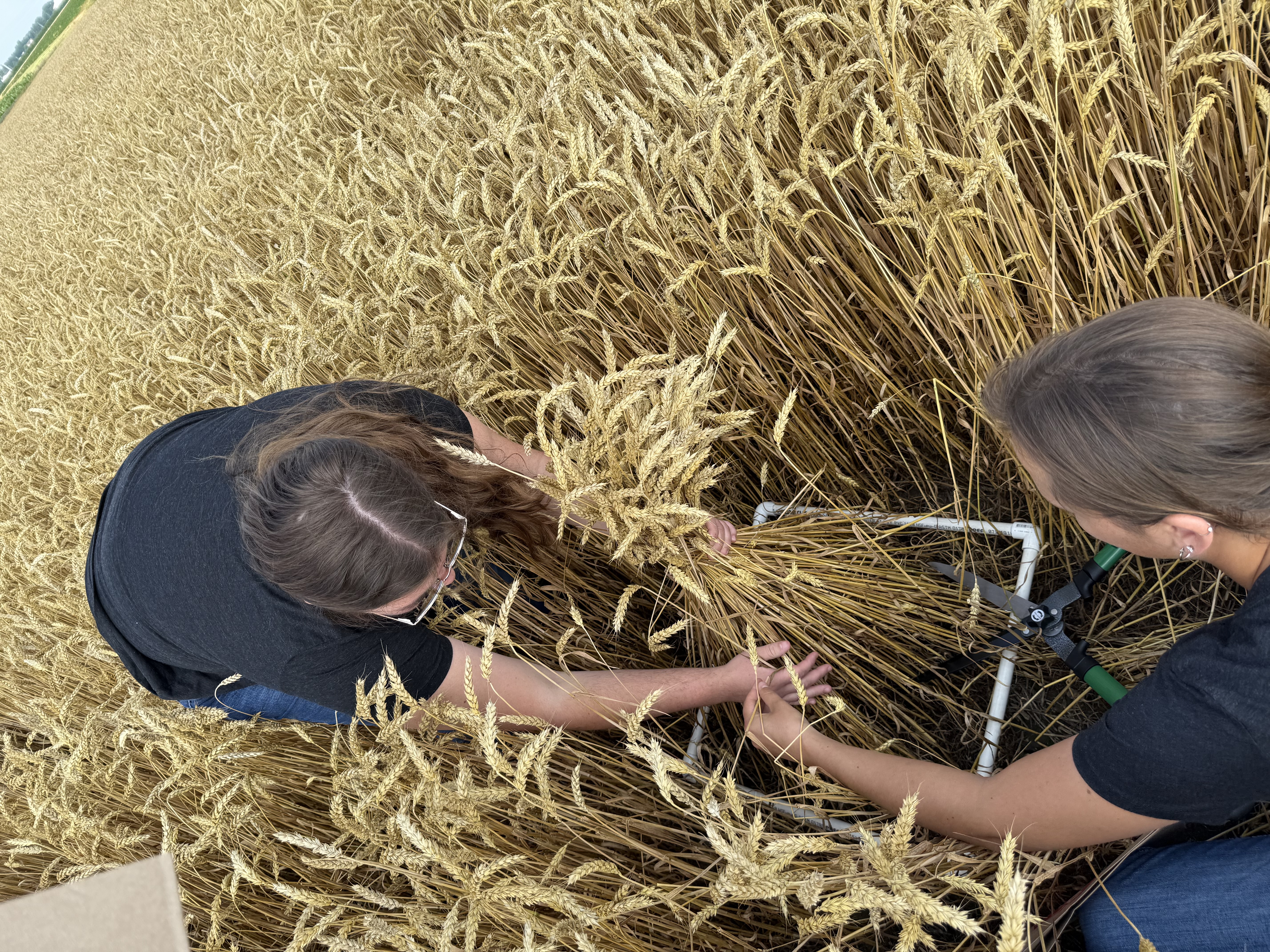 The team is working to assess factors influencing climate adaptation and mitigation of major commodity crops in Michigan. Researchers are examining how regenerative agriculture practices enhance soil health and yield stability, evaluate the relationship between soil health and greenhouse gas emissions, and identify factors that influence farmer adoption of climate-smart practices.
Through the first year of the study, Sprunger said a key finding is that, regardless of soil texture, management practices play a pivotal role in the soil health of a field.
“Fundamental soil science says that your soil texture influences your soil health and your soil organic matter. What our study has found is soil texture does indeed play a role, but we saw multiple instances in which a sandy or silt loam soil had better soil health indicators than a clay soil,” Sprunger said. “That's showing that management also plays a critical role.”
Practices like reducing the number of tillage passes or incorporating cover crops or perennials have shown to improve soil heath, Sprunger said. “We can definitively say that management can boost your soil health if you're doing things correctly, even if you’re farming on sandy soil.”
Farms contribute to comprehensive look at Michigan soil
Andrea Polverento, MSU College of Agriculture and Natural Resources alum, operates Zeeb Farms with her family. Zeeb Farms is a sesquicentennial farm in Bath, Michigan, that grows corn and soybeans.
Polverento was excited to participate in the study to learn more about her family’s operation and give back to her alma mater and the Michigan farming community.
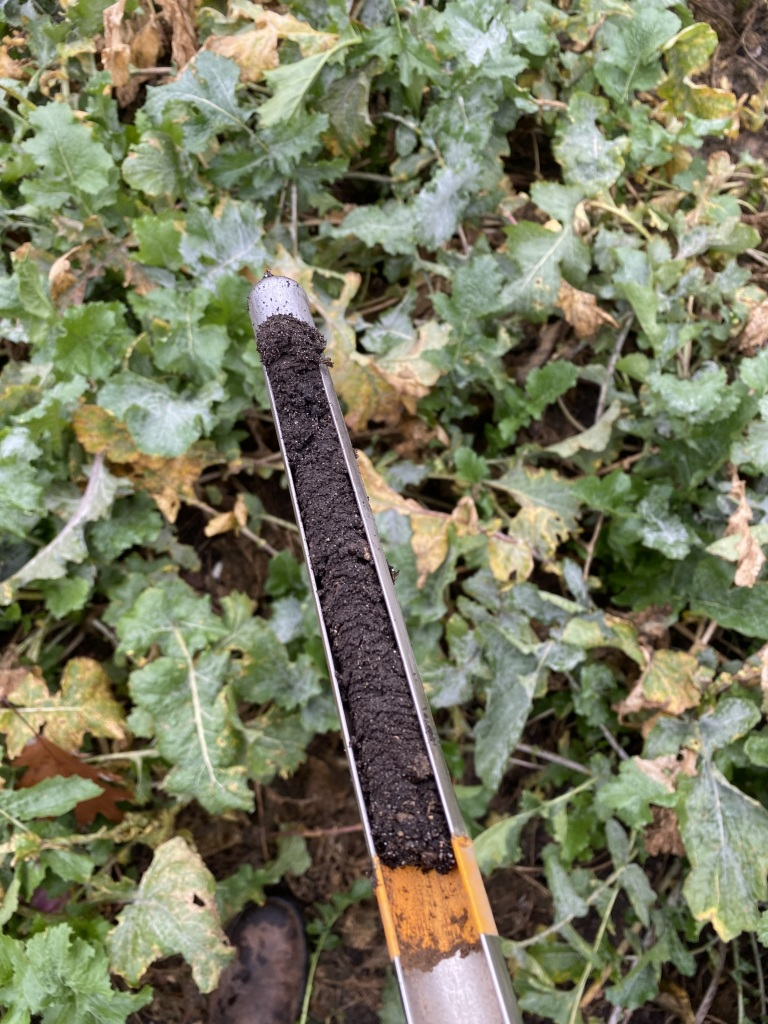 “I've always appreciated what I learned during my time at MSU, and there's no better way to give back to current and future students than to participate in research like this,” Polverento said. “Agriculture is a field that's subject to change from so many factors - farmland loss, climate change, invasive pests, economics, animal disease, succession, flooding and droughts. The next generation of agriculture will be producing food on less land with more complications. We need quality research in all sectors of agriculture to be ready to face what's next.”
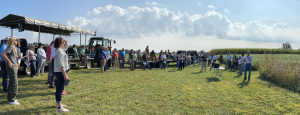
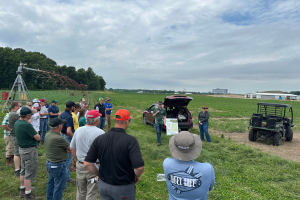
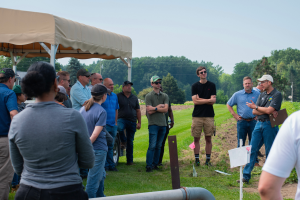
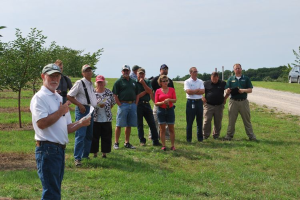
The KBS research team is working with each farm to analyze management plans. Researchers and Extension experts hosted a series of field days in five regions across the state to meet with farmers and discuss questions and concerns about the research and its findings. Participating farms receive an individualized soil health report to better understand their operation and compare their data with farmers around the state to compare soil health metrics to farms with the same soil type.
Farms were also offered a free consultation with the KBS team to discuss management practices and potential improvements based on the research results.
“As we near our bicentennial, we know that in order to continue to thrive, it is important to make soil management decisions that are based on quality research, that is specific to our location, soil types, crop types, and other factors,” Polverento said. “The information is incredibly valuable long-term. I think the organic matter data will be critical to share with our agronomist as we make decisions regarding nitrogen, particularly.”
Providing critical data for management decisions
The study offered Kevin Messing, a certified crop advisor and agronomist by day at Michigan Sugar Company, an opportunity to see the results of recent operational changes on his own wheat, dry bean and corn farm in Ubly, Michigan.
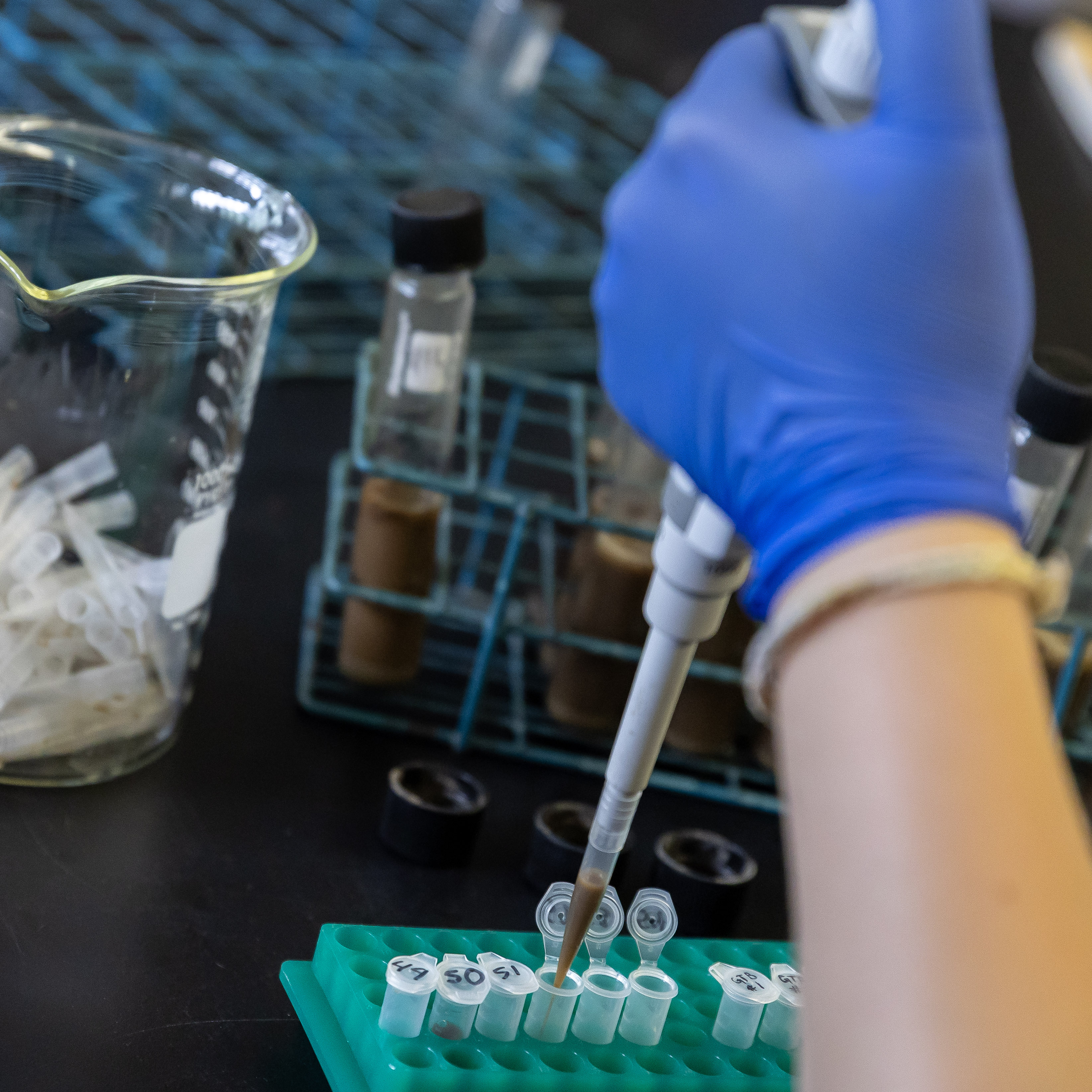 Historically, Messing’s farm has been conventional with some transitional organic management of some crops, he said, but he is currently seeking organic certification and incorporating more cover crops. He connected with Monica Jean, MSU Extension Field Crops Educator and a current Ph.D. student researcher on Sprunger’s team, to get involved in the research project.
“I was interested in the soil health study and seeing how my farm compares to others as I transition our farm’s practices,” Messing said. “The study will be a good barometer. Farmers don’t always have the ability to quantify what is happening on the farm. Studies like this make that possible. With private companies looking to capitalize on carbon credits from farms, this study can clearly demonstrate the value of on-farm practices.”
Mike Bronkema, of Shady Side Farm, located north of Holland, has been farming with his wife, Lona, since 1988. Shady Side Farm raises several types of beans, including many heirloom varieties.
Bronkema said he was excited to contribute to this comprehensive look at soil health across Michigan and to see what management practices are contributing to healthier soils and healthier crops.
“I was curious to know if my regenerative practices were making a difference that could be measured. I can see it with my eyes, but data is good,” Bronkema said. “There are two main ways to change the way farmers farm: showing them successful regenerative farms around them and showing them the data from those farms. It’s time we start looking at long-term impact of conventional farm practices. Each generation has only a short time with their soil, and we need to look at the bigger picture—both in conventional farming and regenerative farming.”
KBS team lends a helping hand
The second year of the study will reduce the sample size to 25 farms and 50 fields but deepen the understanding through more extensive examination of how soil management practices affect soil health, greenhouse gas emissions, above-ground biomass and plant yield.
Collecting and analyzing soil data from more than 90 farms across Michigan required a team of researchers and students from KBS. The Long-Term Agricultural Research (LTAR) project at KBS provided critical baseline data for the researchers to compare with farms across the state.
“We have a really large team working on this. I have a Ph.D. student, Monica Jean, working on this full-time. We have a project coordinator, Lisa Hargest, working on this full-time. We have multiple technicians, and they are the ones that really get to know the farmers through their collaborations,” Sprunger said. “Monica has been working with farmers for years in MSU Extension. She has great insight into working with individual farms because she has been on the ground so long doing consultations.”
From Extension educator to Ph.D. researcher

Jean is a field crop educator for MSU Extension, serving central lower Michigan with an emphasis on the Saginaw Bay watershed region. She is also pursuing a Ph.D. in the Department of Plant, Soil and Microbial Sciences in Sprunger’s Lab.
“I am almost in my tenth year of being an extension educator. I love visiting our farms, working on pest and management issues with the growers and helping my community thrive through farming and food production,” said Jean, whose position covers a large variety of crop production including corn, soybean, edible dry beans, potato and integrated crop and livestock systems. “I still remember our field crops educator who visited my family’s farm when I was growing up, so I’ve always felt connected with MSU Extension.”
Jean serves as the project lead for the Extension component of the soil health project – working with growers to collect management data and providing recommendations on best management practices for soil health.
Results from this study will inform growers across the state on the most successful management practices for the diverse soil types across Michigan. MSU faculty and Extension educators will also have an extensive database to further inform growers on how new management practices might improve soil quality.
“This will give me a better foundation in soil science, making my diagnostic and management recommendations to growers more holistic and accurate,” Jean said. “My end goal is to continue serving my community, keeping farms in business as we adapt and mitigate to climate change.
The ability to layer social data and financial results with field results will give a practical and realistic picture of climate resilience on Michigan’s row crop farms.
"The comparison of soil health with greenhouse gas emissions is a novel data set, and I also feel this is very significant to the growers in Michigan, but also to the body of research that is shaping around climate resiliency,” Jean said. “This project is multidisciplinary, like how an Extension educator must be to serve their community. I feel at home trying to tackle a large, complicated problem, because this is often what we are doing with growers. It is a privilege for me to be able to continue with my position, blending this project with my responsibilities as a Field Crops educator.”
Prairie strips play key role in ecosystem health
In 2023, Sprunger, KBS colleague Nick Haddad and Marshall McDaniel, associate professor in Soil-Plant Interactions at Iowa State University, received funding from the Bayer Initiative to examine short- and long-term impacts of prairie strips on partner farms. This work was then extended by a Sustainable Agriculture Research and Education (SARE) award with collaborators Kathryn Docherty and Elizabeth Schultheis.
Sprunger’s team is working with farmers in Michigan and Iowa with varying degrees of prairie strip experience. The research explores the influence of prairie strips on soil health and farm yield.
Insect pollinator diversity decline has consequences for local and global food production. Researchers have determined land-use change in agriculture is the leading cause of biodiversity loss, Sprunger said. The team is examining how prairie strips might help negate some of agriculture’s adverse effects on pollinators and soil diversity.
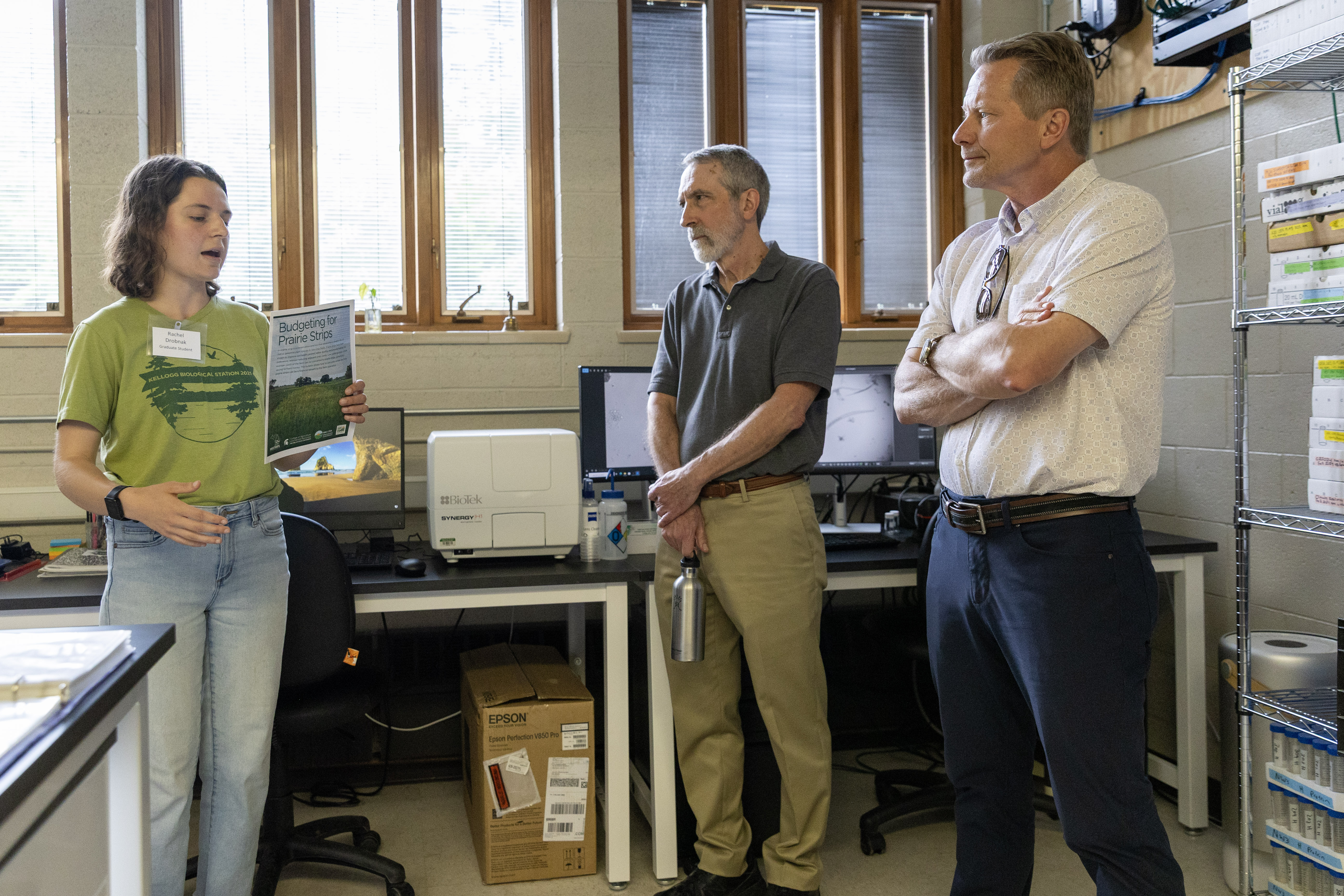
“Incorporating prairie strips within row-crop agriculture is an innovative strategy that could reverse biodiversity trends, while simultaneously providing farmers with additional income via bailing prairie vegetation,” Sprunger said. “My Ph.D. student, Rachel Drobnak, and I visited the Ecological Society of America in August, where Rachel presented some interesting findings on the difference in soil health between prairie strips and adjacent row crops. This study is capturing information on working Michigan farms, so we can see that prairie strips are working out in the real world on real farms.”
The study funded via SARE examines how prairie strips influence soil health and crop productivity using the LTAR site located at KBS. Data gathered from the LTAR will be paired with information from on-farm trials ranging from newly installed strips to ones that have been in place for nearly a decade.
Working with farmers to examine prairie strip benefits
Drobnak is a third-year graduate student and earned a bachelor’s degree in Crop and Soil Sciences from MSU in 2023. Her doctoral research is focused on how conservation practices impact soil health, specifically implementing prairie strips as a practice to assist farmers in converting their farmland into prairie.
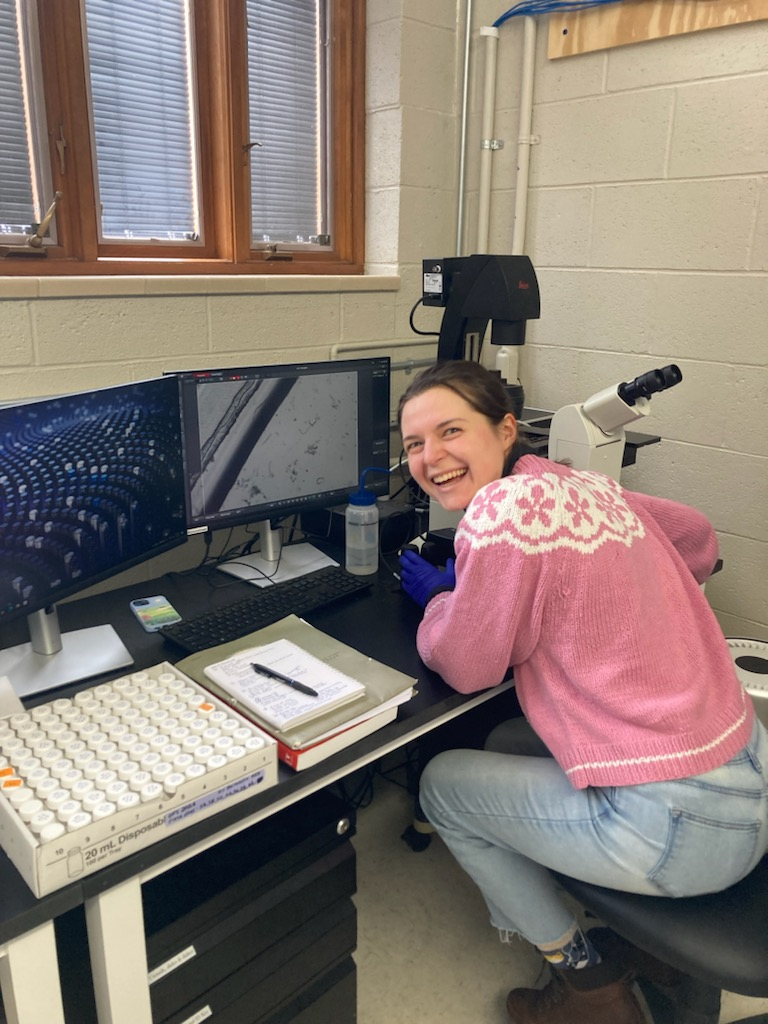 Drobnak is contributing to the overall examination of prairie strips by working with six farm partners to examine eight different farms across Michigan to evaluate how prairie strips impact soil health through multiple different factors, as well as examining the economics of conservation practices.
“I've developed soil health reports and consulted with our farm partners, trying to educate myself on their practices and provide them information on soil health. It’s been great to work one-on-one with farmers,” said Drobnak, who previously worked with Monica Jean for a summer as Extension educator in between undergraduate and graduate school at MSU. “That really was an impactful experience to solidify my interest and passion in working with farmers in Michigan.”
Data from the prairie strip research, which continues through the end of 2026, will inform how this practice impacts soil health across a variety of soil types and crop rotations.
Trials serve as outreach opportunities where farmers can view prairie strips in action, learn about establishment and implementation, and see key soil health results first-hand. The project incorporates partner economists to refine a partial budget template and disseminate a decision support tool that informs farmers when prairie strip installation is financially beneficial.
MSU is partnering with MiSTRIPS, MSU Extension, Edward Lowe Foundation, and the American Farmland Trust on this study. The partnership will provide additional opportunities to distribute the resources developed from the study and educate interested farmers on prairie strips across the region.
Since its launch in July 2021, the MiSTRIPS Program at the Kellogg Biological Station Long Term Ecological Research Program (KBS LTER) has established over 50 acres of prairie in agricultural lands across Michigan that have helped to improve water quality, increase wildlife diversity, and build soil health.
After five years of collaboration, there are 11 participating farmers with over 50 acres of prairie in agricultural lands across Michigan. An additional 10 farmers have expressed interest in implementing prairie strips. MiSTRIPS has been leveraged by LTER researchers to gain a better understanding of how and why the practice of prairie strips is more diverse in Michigan than it is in Iowa.