MSU researcher Mojgan Nejad named Fulbright U.S. Scholar
 Print
Print Email
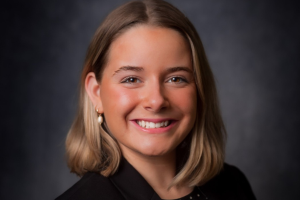
EmailMojgan Nejad, an assistant professor in MSU's Department of Forestry, has received a Fulbright U.S. Scholar Program award for the 2026-27 academic year. The award will support her research in Sweden focused on advancing sustainable wood adhesives.
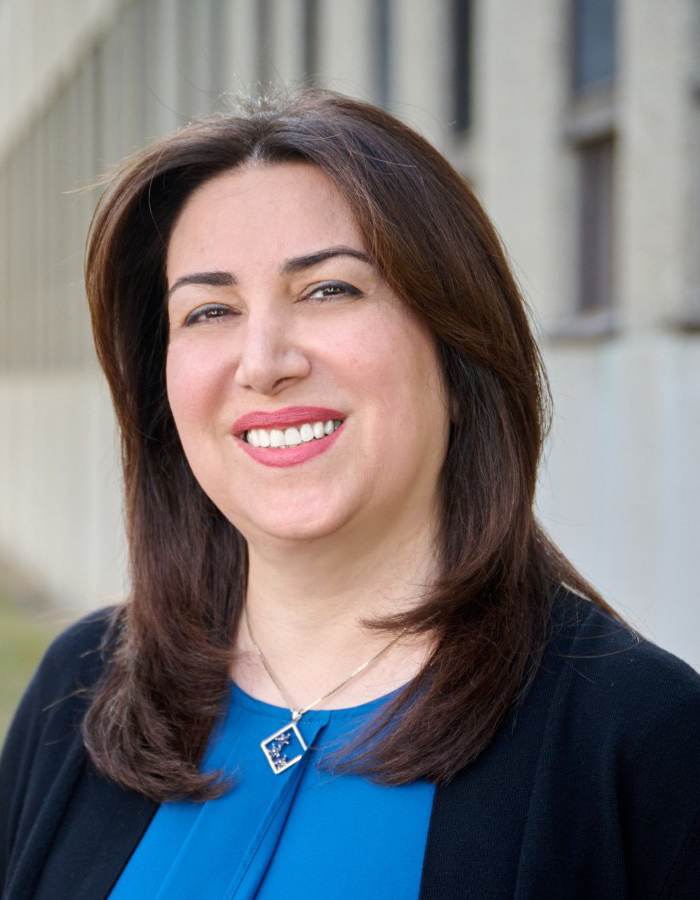 Mojgan Nejad, an assistant professor with a joint appointment in Michigan State University's Department of Forestry and the Department of Chemical Engineering and Materials Science, has received a Fulbright U.S. Scholar Program award for the 2026-27 academic year. The award will support her research in Sweden focused on advancing sustainable wood adhesives.
The Fulbright Program is the U.S. government's flagship international academic exchange program, supporting research, teaching and collaboration between scholars and institutions around the world.
Nejad is one of five MSU faculty members selected as finalists for the 2026-27 academic year.
As part of her award, Nejad will collaborate with researchers at KTH Royal Institute of Technology in Stockholm, working alongside experts affiliated with the Wallenberg Wood Science Center and BioGlue Center. Sweden's leadership in sustainable technologies, forestry and the circular bioeconomy makes it an ideal setting for the research.
Her project, "Advancing the Production of Biobased Wood Adhesives at Scale," seeks to develop sustainable adhesives made from lignin, a naturally abundant plant polymer that makes up roughly 30 percent of wood and is produced as a byproduct of the pulp and paper industry. The initiative will combine Nejad's expertise in lignin-based adhesive development with KTH researchers' knowledge of lignin extraction and characterization to advance the production of bio-based adhesives that can be manufactured at a commercial scale.
The collaboration also aims to strengthen research partnerships between MSU and Swedish institutions while creating opportunities for future faculty, student and industry engagement. Access to leading researchers, advanced facilities and industry partners will help accelerate efforts to refine and scale lignin-based adhesive technologies.
Nejad's research focuses not only on developing renewable alternatives to petroleum-based adhesives but also on making them practical for widespread commercial use. Creating scalable solutions has been a central goal of her work, which has already produced significant advancements in lignin-based adhesive technologies.
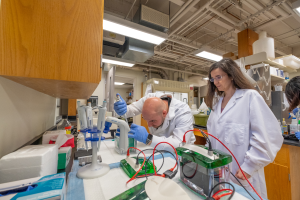
At MSU, Nejad leads research exploring how lignin can be used to develop bio-based adhesives, coatings and foams for applications in the construction, automotive and packaging industries. Working with industry partners, her team seeks to transform an abundant renewable resource into high-performance materials that reduce reliance on fossil-fuel-derived chemicals.
Her Fulbright project builds on years of research advancing lignin-based technologies. Nejad's laboratory was the first to fully replace petrochemical phenol with unmodified lignin derived from corn stover in phenolic adhesives. More recently, her team developed a fully bio-based adhesive in which both phenol and formaldehyde were replaced with renewable alternatives.
The collaboration with KTH aims to optimize the use of kraft softwood lignin, a renewable material produced by the forest products industry, for use in high-performance wood adhesives. Partnerships with industry leaders and academic collaborators are expected to help move the technology closer to commercial adoption while supporting future joint research projects and student training opportunities.
The research may help reduce dependence on fossil-fuel-derived chemicals, support more sustainable manufacturing practices, lower emissions associated with traditional adhesive systems and advance a circular bioeconomy.
Established in 1946, the Fulbright Program provides opportunities for accomplished students, scholars and professionals to study, teach and conduct research abroad. Fulbright alumni include Nobel laureates, Pulitzer Prize winners, heads of state and leaders across science, education, government and industry.