Need a farm business plan? Start here
 Print
Print Email
EmailRead along for a quick overview of the what, why and how of writing a farm business plan.
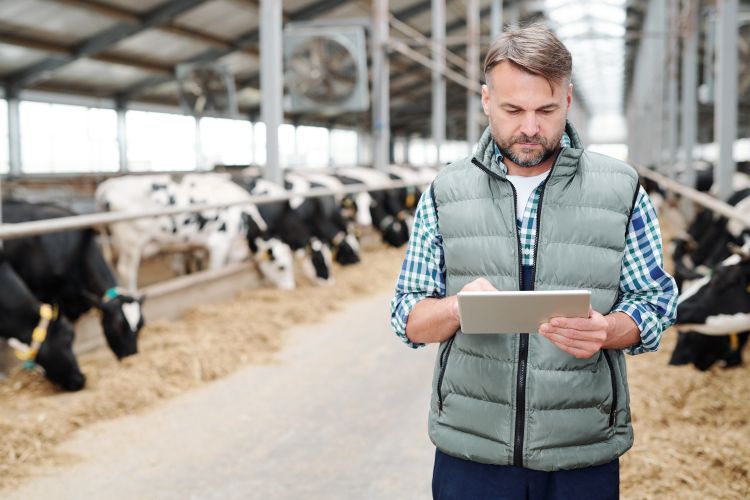
A business plan is a written document outlining concisely what you do or plan to do as a business, and how.
Why write a business plan?
In business, we make tactical and strategic decisions. Tactical decisions are the everyday ones, the “fires” we deal with to achieve a greater goal. Strategic decisions are those that establish the long-term direction of our business. The business plan helps ground your goals and reflects the value that you bring to the industry. It’s not about standardizing or conforming to what’s already out there; instead, it is about highlighting your core values and unique traits. This reflection exercise will help you identify needs for your business, such as finances and personnel, set goals and plan for the future. The business plan can also help you tell your story to a funder or potential partner. Businesses grow and evolve, so when writing the business plan, have the long term in mind. It should guide the next five years, but also account for business growth, consolidation, succession or exit. You should revisit your business plan every year and update it to reflect your current situation and direction. A business plan is a living document. For planning purposes, many businesses take two to three months to write their business plan for the first time.
Sections of a Business Plan
A typical business plan includes these main sections:
Cover Page
A cover page includes the owner's name and contact information along with a photo, a logo or a picture of your farm business. If you are sharing your plan with an individual or organization, include their name on the cover page as well. Remember, the cover page is the reader's first impression of you and your business.
Table of Contents
Depending on the length of your business plan, you may decide to include a table of contents. This should include the major sections of your plan, e.g., Executive Summary, Market Analysis, Competition, etc. Plan to add page numbers to your document and return to the table of contents to add them once your plan is complete.
Executive Summary
Goal: Quick overview of your business plan
- 2 to 3 pages
- Only the main details from the different sections of your plan
- Write this section LAST
- It may be the only section some people read
- It needs to briefly, but very effectively, describe your business and your plan
- Write it with your intended audience in mind, usually external-facing for a lender or investor
Business description
The business description section is a way to introduce you and your farm business to the reader. You may want to include:
- Overview of your business
- History of how your farm started, including how long it has been in operation
- Ownership information
- Legal structure, e.g., LLC, sole proprietorship, cooperative, non-profit
- Your personal history, e.g., number of years and your experience in farming, other skills, including financial management, accounting, marketing, general business management, etc.
- Your current and past customers and sales strategy
- What crops/livestock do you raise?
- What do you produce and what services do you provide?
- What is your primary market?
- What size is your business?
- What does the future hold for your business and industry as a whole?
- Location
- Facilities
Operations
Goal: Explain what you produce/sell and how
Sometimes called the production section. It’s a larger section that explains how your business operates. This may include products you sell, the licenses that are required, as well as how you process orders, quality control, equipment and risk. Include any expansion plans, adding a timeline for each step of that expansion. Include estimated project costs and any unforeseen obstacles that could hold up the project. Explaining your growth plan may take some visioning. Consider how far you have come and where you want to go. If you are adding a value-added product to your business, describe the plan and timeline, how much product you will produce, where you will sell, how many employees you will add, etc. Refer to your mission statement, SWOT analysis, and SMART goals (which you should have written before starting your business plan) to help you complete this section.
Include
- Products and services
- Production system
- Customer service
- Inventory management
- Licenses, permits and regulations
- Patents and trademarks
- Risk management
- Environmental issues
- Quality control
- Implementation timeline
- How do you plan to manage production threats/risks
Marketing Plan
Goal: Describe your ideal customers and market trends
Understanding your customers and market trends in food and farm products is critical to the success of your business. Focusing on who your customers are will help you develop your marketing and sales strategies. In this section, include a description of your ideal customer. Explain where they are located and provide demographic information such as gender and age range. Include your target customers’ buying behavior, e.g., how much of the product they purchase, how often they buy the product, etc.
The reader will look for an explanation of what problem your product or service solves. If you are selling salad greens you will grow year-round, one problem you are solving is assuring that retailers have a consistent product of farm-fresh produce, despite weather conditions.
In this section, you will also include a market analysis. Depending on who will be reading your business plan, you can either do your own research or hire an agricultural economist to write the report. Oftentimes, you may need to submit a formal market analysis report for grant and loan applications.
What makes you and your product unique? What brings a customer to your farm or farmers' market booth? If you have an agriculture tourism enterprise on your farm, what will bring a customer to your farm instead of your neighbors? Potentially, you operate a third-generation farm, so your long-standing reputation attracts customers. Alternatively, your farm has a reputation for selling the best sweet corn or freezer beef around.
Include
- Market Trends
- Customers
- Market Segments
- Target Market
- Sales Strategy
- Competition
- Pricing
- Promotion
- Marketing Contracts
- Distribution
- Strategic Partners
Management and Organization
Goal: Explain who runs the farm and their role
The Management and Operations section include who runs the farm and what their role is in its operation. You should also explain your growth plans, obstacles to getting there, and how much funding you will need to achieve your goal.
This is a section of your plan where you can talk about yourself and your experience. It is your time to explain your experience in farming or accounting or marketing. Once you have described yourself, describe your partners’ (if relevant) work experience, e.g., attorney, bookkeeper, marketing /media consultant, etc. Explain who is making your farm business run. Describe what each employee does on the farm. Readers may look to understand if you have adequate staff for successful operation. You should also include contractors that might be assisting with bookkeeping, technology, legal services, and human resource management. Also, you should discuss if/when you will add employees. Consider and include information a human resource manager should know, including who will supervise them, who will do the hiring and firing, etc.
Include
- Management team
- Advisory board
- Personnel plan
- Volunteers
- Professional services
- Succession Plan
- Who manages your business?
- What are their roles?
- What are the qualifications of the management team?
Financial Plan
Goal: Identify specific potential financial problems and opportunities
The financial plan has three basic components: income statement, cash flow projection, and balance sheet. These three statements together describe a business's financial situation at a certain point in time. They provide details on when, how much, and on what money is made, spent, held and owed.
Balance sheet: what the farm owns, what it owes, and how it is financed through liabilities (debt) or owner equity.
Income statement: Measures the profitability (or net farm income) of the farm over a period of time. Expenses are subtracted from sales to arrive at net income. Include non-farm income streams and projected needs, including personal living expenses.
Cash flow statement: As you record your transactions, the collection of the totals in your income and expense accounts will form what is known as the cash flow statement. It is useful to complete a cash flow statement monthly. Then, it can be summarized in four quarterly statements and eventually, an annual statement. The cash flow statement has most of the necessary information for the income statement. A cash flow budget is similar to a cash flow statement, except that it is written beforehand. It is a series of monthly or quarterly budgets estimating cash receipts, cash payments and the borrowing requirements necessary to meet financial needs promptly.
This section typically includes two years’ worth of past financial statements and three years' worth of projected (pro-forma) financial statements. If you were not farming for the past few years, describe your personal financial situation as an investor, and any other individuals who may have an interest in the farm.
The financial summary is an exercise of predicting where your money will come from and where it will go. It aims to identify specific potential financial problems and opportunities. In doing so, it helps you prepare to address them through appropriate strategies. It can be useful to forecast three different financial scenarios: optimistic, realistic, and worst-case. If the numbers do not work out for the worst-case scenario (i.e., if you do not have a plan for how to deal with it), an investor or lender may not be interested.
Include
- Financial position
- Historical performance
- Financial projections
- Asset management
- Benchmarks
- Capital request
Appendix
The appendix can include any other supplementary information you want to share with your readers including photos, architectural designs, resumes, financial statements, etc.
Resources to help you build your business plan
- UMN AgPlan includes specialized plans for various farm-types: https://agplan.umn.edu/
- An online program that makes writing a business plan much easier by walking you through the steps. Ag Plan includes videos that explain the sections of the business plan, allows you to share your plan with others so you can get help reviewing it, updating it.
- Building a Sustainable Business: A Guide to Developing a Business Plan for Farm and Rural Businesses: https://www.sare.org/resources/building-a-sustainable-business/
- Farm Service Agency, Business Plan Template: https://www.fsa.usda.gov/Assets/USDA-FSA-Public/usdafiles/Farm-Loan-Programs/pdfs/direct-loan-apps/Form_FSA_2038_Projected_Actual_Income_Expense_Worksheet.pdf
- Michigan State University Extension, Farm Business Management team or Product Center
- Centro – a free app for business planning on your phone
- Funding your Farm, Selling your Story in a Business Plan webinar series
- MSU Center for Regional Food Systems Loan Readiness Toolbox for Food and Farm Businesses - https://www.canr.msu.edu/resources/loan-readiness-toolbox-for-food-and-farm-businesses
- MSU Organic Farmer Training Program
- Michigan State University Extension has many other resources available, including bookkeeping and financial analysis tools to help you with the important decisions you have to make as a farm manager. Many of these resources can be found at the MSU Extension Farm Management website: https://www.canr.msu.edu/farm_management. Contact your Farm Business Management Extension Educator if you need help finding the right resources for your situation.
We suggest you consider filling in this form to receive updated resources, answers to common questions, notices of future farm business management events, and other useful information from Florencia Colella.