NSF-Funded Team to Study Forest Management and Fungal Biodiversity in Michigan Oak Savannas
 Print
Print Email
EmailOak savannas—once widespread across the Midwest—have declined significantly due to land-use changes and fire suppression. “When oak savannas disappear, the fungi that cycle nutrients and support healthy soil are also harmed.”
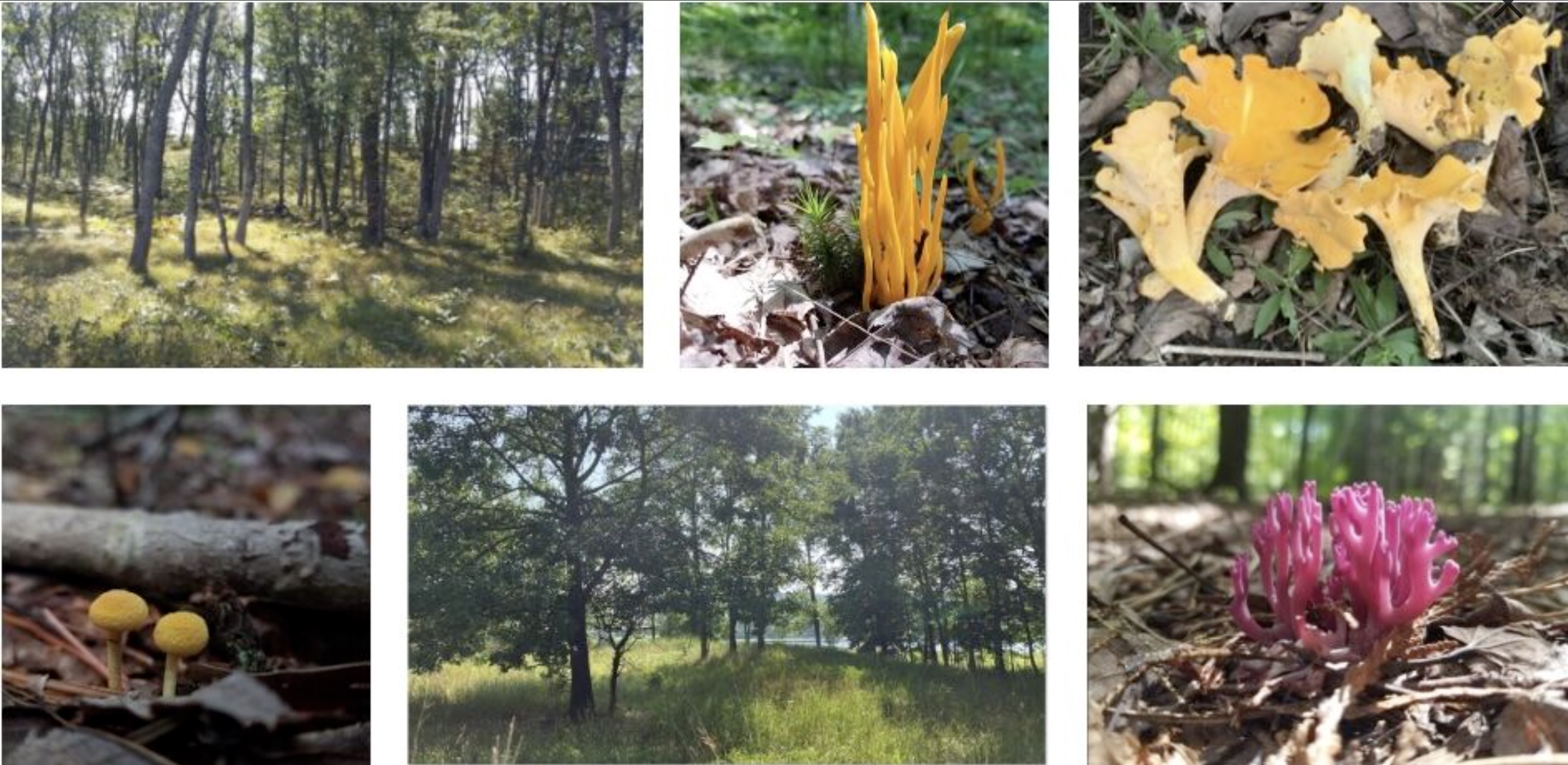 PSM Mycologist Dr. Gregory Bonito is leading an interdisciplinary, multi-institutional team that has received a $1,000,000 grant from the National Science Foundation over 5 years to investigate how fire management influences fungal biodiversity in Michigan’s oak savannas, and ultimately, to develop science-based recommendations for fungal conservation.
Oak savannas—once widespread across the Midwest—have declined significantly due to land-use changes and fire suppression. “When oak savannas disappear, the fungi that cycle nutrients and support healthy soil are also harmed,” Bonito explains.
Working with collaborators at The Ohio State University and the University of Michigan, the team has formed a “Partnership to Advance Conservation Science and Practice” with the Midwest American Mycological Information organization, the Michigan Nature Association and Mycota Lab who will receive 100% matching funds from the Allen Foundation Philanthropies. Together, these researchers will study how land management practices impact fungal community diversity and functions critical to ecosystem health.
The project will engage citizen scientists to collect fungal fruiting bodies, monitor airborne spores, and will analyze DNA from soil and leaf litter at sites across Michigan. “The results will improve our understanding of fungal biodiversity and guide strategies to preserve and restore fungal communities and these important ecosystems,” says Bonito.