


Ready to pick? Preparing for harvest and evaluating wine grape quality in Michigan
 Print
Print Email
EmailHarvest decisions should integrate fruit chemistry, ripening physiology, sensory maturity, fruit condition, wine style and the risks associated with leaving the crop on the vine.
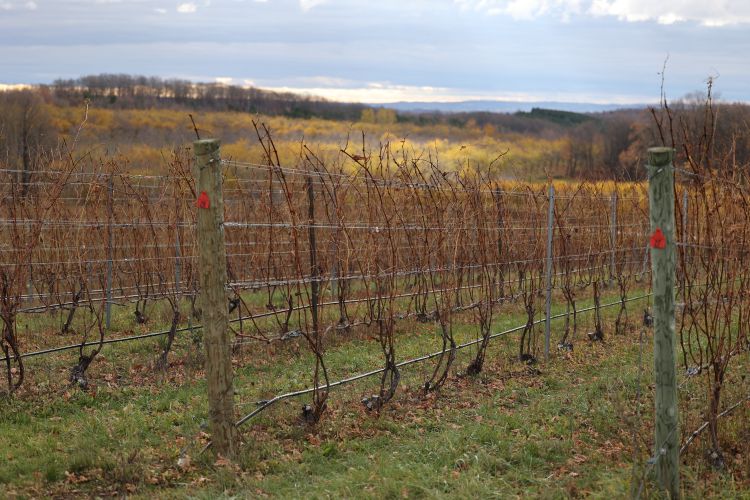
As harvest approaches, one question begins to dominate discussions between grape growers and winemakers: Are the grapes ready? The answer is rarely provided by a single measurement. Degrees Brix remains one of the most widely used indicators of grape maturity, but sugar accumulation represents only one component of the ripening process. Grapes with an apparently desirable degrees Brix may still have excessive acidity, immature flavors or poorly developed phenolic characteristics. Conversely, fruit with a lower degrees Brix may already possess the flavor profile, acidity and structural characteristics appropriate for the intended wine.
For Michigan vineyards, harvest decisions can become especially complex. Late-season rainfall, cool temperatures, Botrytis bunch rot, sour rot, berry cracking, bird injury, frost and declining canopy function can rapidly alter the value of leaving fruit on the vine. The objective is therefore not simply to obtain the maximum possible maturity. The objective is to identify the point at which additional time on the vine is still expected to improve wine quality more than it increases the risk of fruit deterioration.
Ripening is a coordinated physiological process
Understanding what occurs in the berry during the final weeks before harvest helps explain why a single measurement cannot adequately define maturity. The beginning of ripening, or veraison, represents a major physiological transition in grape development. Berries soften, red cultivars begin to accumulate anthocyanins, and the berry becomes a strong sink for carbohydrates. Sugars produced through leaf photosynthesis are transported and accumulate predominantly as glucose and fructose. At the same time, organic acid concentrations decline, berry texture changes and many aroma and phenolic compounds continue to develop.
Berry growth also changes during this period. Early in ripening, water and sugars accumulate simultaneously and berries continue to expand. Later, berry volume may stabilize or even decrease. This means that changes in berry water content can substantially influence measured sugar concentration. This distinction becomes particularly important close to harvest. An increase from 21 to 23 Brix does not necessarily indicate that the vine imported enough additional carbohydrate to account for the entire change. If berry water content decreases because of dehydration, part of the apparent increase in soluble solids is caused by concentration rather than continued sugar accumulation. This is one reason why harvest decisions based only on degrees Brix can be misleading.
Grapes are also non-climacteric fruit. Unlike fruits such as peaches, bananas or tomatoes, grapes do not continue a substantial ripening process after harvest. The composition and sensory characteristics present when fruit is picked therefore establish much of the potential available to the winemaker.
Representative sampling is the foundation of a good harvest decision
A laboratory analysis is only as reliable as the vineyard sample submitted for analysis. Ripening is rarely uniform within a commercial block. Differences in soil characteristics, vine vigor, water availability, crop load, canopy exposure, slope and cluster position can produce substantial variation among vines and even among clusters on the same vine. A sample collected from only a few convenient vines can therefore produce precise laboratory numbers that do not accurately describe the vineyard.
Sampling should represent the block that will actually be harvested. Fruit should be collected from multiple locations throughout the vineyard, avoiding an overrepresentation of border rows or unusually vigorous or weak areas unless those zones will be harvested separately. Both sides of the canopy should be represented. Exposed and shaded clusters should be included in approximately the proportions in which they occur in the block. If individual berries are sampled, berries should be selected from different clusters and from different positions on those clusters rather than repeatedly collecting the most accessible berries. The objective is not merely to collect a large number of berries. It is to capture the biological variability of the vineyard.
Consistency becomes equally important when monitoring maturity over time. The same sampling strategy should be repeated throughout the ripening period. Under this approach, the change from one sampling date to the next often provides more useful information than the absolute value recorded on any single date. Early in ripening, weekly sampling may be sufficient. As fruit approaches the anticipated harvest window, sampling every two or three days can become more informative, particularly when rainfall, disease pressure or frost risk is increasing.
Measure Brix, but understand what Brix represents
Brix measures the concentration of soluble solids in grape juice. Because glucose and fructose represent the majority of soluble solids in mature berries, degrees Brix is commonly used as an approximation of sugar concentration and potential alcohol. However, degrees Brix is not a direct measurement of sugar alone. Other dissolved compounds contribute to soluble solids, and the relationship between degrees Brix and fermentable sugars is not perfectly fixed. For greater analytical precision, measurements of glucose plus fructose can provide a more direct estimate of fermentable sugar and potential alcohol.
More importantly, the rate and mechanism of change in degrees Brix should be considered. A vineyard progressing steadily from 18 to 19.5 to 21 Brix while maintaining healthy foliage and stable berry weight is biologically different from fruit progressing from 21 to 23 Brix while berry weight is declining rapidly.
Monitoring berry weight together with degrees Brix can therefore be extremely informative. If degrees Brix increases while berry weight remains relatively stable, continued sugar import is likely contributing significantly to the change. If degrees Brix increases while berry weight decreases substantially, dehydration may be playing an increasing role.
This distinction is especially important after frost, severe water stress or extensive canopy senescence. Under those conditions, photosynthetic capacity and carbohydrate import may decline sharply, while berries can continue to lose water. The numerical increase in degrees Brix may therefore exaggerate the amount of true physiological ripening that is still occurring. Close to harvest, one useful question is therefore not simply, “Is Brix increasing?” but rather, “Why is Brix increasing?”
Sugar accumulation and acid metabolism do not proceed at the same rate
The principal organic acids in grape berries are tartaric acid and malic acid, and the two behave very differently during ripening. Malic acid accumulates earlier during berry development and is subsequently metabolized as ripening progresses. A substantial portion of this decline occurs through respiratory metabolism. Temperature has an important influence on this process, and warm berry temperatures can accelerate malate degradation.
Tartaric acid is different. Grapevines metabolize relatively little tartaric acid during ripening. Its concentration nevertheless declines because berries increase in volume and the existing tartaric acid becomes diluted. This distinction explains why two seasons producing the same degrees Brix at harvest may have very different acid compositions. A warm ripening season may produce more rapid malic acid degradation, whereas a cooler season may retain substantially more malate at an equivalent sugar concentration.
This is particularly relevant in cool-climate regions such as Michigan. High acidity can be an important advantage for wine freshness and aging potential, but excessive malic acid can strongly influence the final wine if malolactic fermentation is conducted. The rate at which sugars accumulate, and acids decline should therefore be evaluated together rather than independently.
pH and titratable acidity describe different aspects of fruit chemistry
Both pH and titratable acidity, or TA, should be measured because they describe different chemical properties. TA provides an estimate of the quantity of titratable acids present in the juice and is closely associated with the perception of acidity. pH describes hydrogen-ion activity and has major implications for microbial stability, sulfur dioxide effectiveness, wine color and chemical stability. Two grape samples can therefore have similar TA values but substantially different pH values. The composition of the acid pool contributes to this difference. Tartaric acid is a stronger acid than malic acid, and changes in their relative proportions can alter pH even when total titratable acidity changes only modestly.
For red wines that undergo malolactic fermentation, this becomes especially important. During malolactic fermentation, malic acid is converted into the weaker lactic acid. The process generally decreases TA and increases pH. Therefore, knowing the malic acid concentration at harvest can help predict how substantially wine acidity may change during fermentation and aging. A harvest decision based only on TA therefore provides an incomplete picture. pH, TA and, when possible, malic acid should be interpreted together.
Potassium can strongly influence juice and wine pH
Potassium is the major cation in grape berries and represents another important component of harvest chemistry. During ripening, potassium accumulates within the berry, with particularly high concentrations in the skins. Potassium interacts with tartaric acid and can contribute to the formation of potassium bitartrate. These chemical equilibria influence juice pH and can help explain situations in which grapes have relatively high TA but also unexpectedly high pH. This relationship is particularly important for red grapes because potassium is concentrated in the skin and can be progressively extracted during fermentation. The pH measured immediately after crushing may therefore be lower than the pH reached later during skin contact and fermentation.
Elevated pH has several practical consequences. Microbial stability generally decreases as pH increases. Sulfur dioxide becomes less effective in its antimicrobial form, and the color of red wines can become less intense because anthocyanin chemistry is strongly pH dependent. Potassium should therefore not be viewed only as a vine nutrient issue. In some vineyards and cultivars, it is directly connected to juice and wine chemistry at harvest.
Technological maturity and phenolic maturity are not the same
For red cultivars, one of the most important scientific concepts in harvest management is that sugar maturity and phenolic maturity are only partially synchronized. Traditional measurements such as degrees Brix, pH and TA describe what is often referred to as technological maturity. However, the development of color, tannins, aroma compounds and berry texture follows partially independent physiological pathways.
Beginning near veraison, anthocyanins accumulate in the skins of red grapes. At the same time, important changes occur in tannin composition, seed characteristics, skin structure and cell-wall properties. These changes influence not only the amount of phenolic material present but also how easily those compounds can be extracted during fermentation. A Cabernet Franc vineyard may therefore reach a desirable sugar concentration while still showing pronounced herbaceous aromas, relatively harsh skin tannins or immature seed characteristics.
Extending hang time may improve these components, but that improvement must be weighed against other changes occurring simultaneously. Sugar concentration may continue to increase, pH may rise, acids may decline and disease risk may become progressively greater. For this reason, the harvest decision for red grapes represents a compromise among technological maturity, phenolic maturity, sensory maturity and fruit integrity.
Taste the grapes, but taste them systematically
Sensory evaluation is sometimes perceived as less objective than laboratory analysis; however, when berry tasting is conducted systematically and consistently, it can reveal important aspects of fruit maturity that chemical measurements alone cannot fully describe. As the French enologist Émile Peynaud famously observed, “Grapes not ripe enough to eat aren’t fit for wine making.” His statement underscores an important principle: analytical measurements such as degrees Brix, pH and titratable acidity should be complemented by direct evaluation of berry flavor, texture and phenolic development. The key is to standardize the tasting procedure and record observations over time, so that sensory changes can be interpreted together with the analytical evolution of the fruit.
For white grapes, the grower or winemaker should evaluate pulp texture, sweetness-acidity balance and the transition from neutral or vegetal flavors toward cultivar-specific aromas. The appearance of recognizable varietal characteristics can be a useful indication that physiological ripening is progressing beyond simple sugar accumulation. For red grapes, it is useful to evaluate the pulp, skin and seeds separately. Skin texture and astringency can be assessed by chewing the skins after removing the pulp. Seeds can be examined for changes in color, texture, bitterness and astringency. Seed browning is often associated with advancing maturity, but it should not be interpreted as an absolute measure of phenolic maturity. The relationship between visual seed color and tannin characteristics is not sufficiently precise to use seed color alone as a harvest criterion.
For cultivars such as Cabernet Franc, sensory evaluation can be particularly useful for following the progression from strong green or herbaceous characteristics toward more developed fruit, floral or spice characters. For Pinot Noir, the balance can be different. Because compact clusters can become highly susceptible to deterioration, modest additional sensory improvement must be evaluated against increasing disease risk. Sensory assessment should therefore be recorded through time, exactly as degrees Brix, pH and TA are recorded. The value comes from the trajectory.
Fruit health is part of fruit quality
A perfectly mature berry collected for laboratory analysis does not necessarily describe the quality of the crop if a substantial proportion of the vineyard is deteriorating. Fruit condition should therefore be evaluated quantitatively as harvest approaches. Botrytis bunch rot, sour rot, berry cracking, insect damage, bird injury, shriveling and dehydration all reduce the proportion of sound fruit available for winemaking. More importantly, damaged berries undergo chemical and microbiological changes that can directly affect wine quality.
Once berry integrity is lost, juice becomes available to yeasts, bacteria and fungi present on the fruit surface. These microorganisms can metabolize sugars and produce metabolites such as acetic acid and other volatile compounds. Oxidative reactions also accelerate once the berry skin has been compromised. Consequently, the gain associated with an additional 1 or 2 degrees Brix may be insignificant if the percentage of compromised fruit is increasing at the same time. This is why clean fruit harvested slightly earlier can have greater winemaking potential than analytically riper fruit affected by rot or extensive berry breakdown.
Rainfall near harvest changes both chemistry and fruit integrity
Rainfall shortly before harvest can influence grape composition in several ways. If berries absorb water, berry volume may increase and soluble-solids concentration can temporarily decline. This does not mean that sugar has disappeared. Rather, existing sugars have been diluted into a larger volume of berry water. If subsequent conditions are dry and fruit remains physiologically active, some of this dilution may reverse.
The greater concern is often physical rather than chemical. Rapid water uptake can increase berry turgor. In cultivars with thin skins or compact clusters, this may increase the risk of berry cracking. Once berries crack, the probability of Botrytis, sour rot and other forms of microbial deterioration increases substantially. The response to rainfall should therefore not be based simply on whether degrees Brix decreases by one or two units. The condition of the fruit, susceptibility of the cultivar, canopy drying conditions and forecast for the following several days may be more important than recovering the previous sugar concentration.
YAN provides information about fermentation potential
Another useful parameter near harvest is yeast assimilable nitrogen, or YAN. YAN represents the nitrogenous compounds that wine yeast can readily use during alcoholic fermentation, principally ammonium and primary amino nitrogen. YAN is not a maturity index in the same sense as degrees Brix, pH or flavor development. Instead, it provides information about how the must may behave during fermentation. Musts with inadequate YAN can present a greater risk of sluggish or incomplete fermentations and may alter the production of aroma compounds and undesirable fermentation metabolites. At the same time, nutrient supplementation should not be performed blindly because excessive nitrogen additions can also create fermentation and microbial problems.
Measuring YAN before or at harvest allows nutrient management to be based on actual must composition and expected fermentation requirements. The amount of YAN required is not universal. Requirements depend on sugar concentration, yeast strain, fermentation temperature, inoculation strategy and the style of wine being produced. It is therefore more appropriate to interpret YAN as part of the fermentation-risk assessment than to define one universal target for all fruit.
Watch the trajectory, not simply today's numbers
One of the most useful approaches to harvest decision-making is to create a maturity record for each vineyard block and update it consistently throughout the final weeks of ripening (Table 1). The importance of the table is not to establish universal target values. Its value lies in following the trajectory of the vineyard. For example, consider a block in which degrees Brix continues to increase while berry weight remains relatively stable, malic acid declines slowly, pH rises only moderately, flavors continue to improve and the fruit remains healthy. In that situation, additional hang time may represent genuine physiological progress.
The interpretation changes if degrees Brix increases while berry weight decreases rapidly, pH rises sharply, malic acid is already low, fruit begins to shrivel and rot incidence increases. In this second situation, the apparent advance in maturity may be driven increasingly by concentration and deterioration rather than by desirable physiological ripening. The numbers may look better on paper, while the winemaking potential of the crop is actually declining.
Table 1. Key vineyard and fruit parameters that can be monitored during the final stages of grape ripening to support harvest decisions. Individual measurements should not be interpreted as independent harvest thresholds. Their principal value is obtained by following changes over time and interpreting them together with cultivar, vineyard conditions, fruit health and intended wine style. In particular, degrees Brix should be considered together with berry weight to distinguish continued sugar accumulation from concentration caused by dehydration, while pH, titratable acidity, malic acid and potassium provide complementary information on acid balance and potential wine stability. Sensory observations, phenolic development, canopy function and fruit condition add information that cannot be captured adequately by routine juice chemistry alone.
| Measurement | Biological or chemical significance | What to watch near harvest |
|---|---|---|
| Degrees Brix | Approximation of soluble solids and sugar concentration | Rate of increase and whether the change reflects sugar import or dehydration |
| Berry weight | Berry growth and water status | Increases after rainfall or decreases associated with dehydration |
| pH | Hydrogen-ion activity; influences microbial stability, color and SO₂ effectiveness | Rapid increases during late ripening |
| TA | Concentration of titratable acids | Rate of acid decline and its relationship with pH |
| Malic acid | Respirable organic acid and substrate for malolactic fermentation | Seasonal decline and potential influence on post-MLF wine acidity |
| Potassium | Major berry cation affecting tartrate equilibria | High concentrations associated with elevated must and wine pH |
| Glucose + fructose | Principal fermentable sugars | More direct estimate of fermentable sugar than °Brix alone |
| YAN | Nitrogen available to wine yeast | Potential requirement for fermentation nutrient management |
| Anthocyanins | Major pigments of red grapes | Development and extractability during ripening |
| Skin and seed characteristics | Indicators of phenolic and sensory development | Changes in texture, bitterness and astringency |
| Varietal flavor | Development of cultivar-specific sensory characteristics | Decline of immature characters and emergence of desired aroma and flavor |
| Fruit condition | Integrity of the harvestable crop | Rot, splitting, shrivel and other forms of deterioration |
| Canopy condition | Remaining photosynthetic capacity of the vine | Maintenance of functional foliage versus disease, senescence or frost injury |
| Weather forecast | Future ripening opportunity and risk | Rain, humidity, temperature changes and frost |
Harvest according to the wine you intend to make
There is no universal definition of grape maturity because different wines require different fruit composition. Fruit intended for sparkling wine is normally harvested earlier to preserve acidity and maintain moderate potential alcohol. Grapes destined for aromatic white wines may be harvested when varietal aroma and acid balance reach the desired point. Fruit for structured red wines may benefit from additional time for flavor and phenolic development.
The intended wine style should therefore be defined before the vineyard reaches the critical harvest period.
This point is particularly important when growers and wineries operate under contracts based primarily on degrees Brix. A single sugar specification cannot completely describe the technological suitability of grapes for different wine styles. The same Pinot Noir vineyard, for example, could have one appropriate harvest window for sparkling wine and a substantially later one for still red wine. Similarly, Cabernet Franc intended for a fresh, moderate-alcohol style may not require the same level of ripeness as fruit destined for a more concentrated and structured wine. Harvest maturity is therefore better understood as fitness for purpose than as achievement of a universal numerical threshold.
Protecting fruit quality after the decision to harvest
Once fruit has reached the desired maturity, harvest logistics become an integral part of quality management. As enologist André Tchelistcheff observed, “The winemaker should be living much closer to the wine grower.” This idea is especially relevant at harvest, when close coordination between vineyard and winery becomes essential to preserve the quality achieved in the field.
Grapes continue to respire after picking, while damaged berries remain biologically and microbiologically active. High fruit temperatures can accelerate enzymatic activity, oxidation and microbial development; consequently, delays between harvest and processing may rapidly reduce fruit quality, particularly when berries are warm, damaged or already partially compromised.
Whenever possible, harvesting during cooler periods of the day can help reduce fruit temperature. Picking containers should be clean, fruit should be protected from prolonged exposure to direct sunlight, and unnecessary berry crushing should be minimized. Rapid communication between the vineyard and winery is equally important. The winery should know approximately when fruit will arrive, its composition and whether significant rot or other problems are present. This allows receiving, sorting, crushing and cooling capacity to be adjusted before the fruit reaches the crush pad.
Late-season pesticide applications also require careful management. Preharvest intervals must be respected, and recent applications should be communicated to the receiving winery. This is particularly important when disease pressure near harvest creates pressure for additional vineyard treatments.
What will we gain by waiting?
As harvest approaches, the central question should gradually shift from “Are the grapes ripe?” to “What additional quality are we realistically likely to gain by leaving this fruit on the vine?”
If several additional days are expected to improve varietal flavor, reduce undesirable herbaceous characters, enhance skin characteristics or improve the sugar-acid balance while fruit and canopy remain healthy, waiting may be justified. Eventually, however, the biological return from additional hang time begins to diminish. Sugar import may slow. Malic acid may continue to decline. pH may rise. Berry water loss can concentrate sugar without producing an equivalent improvement in physiological maturity. Fruit integrity may begin to decline and the probability of disease or weather damage may increase rapidly. At that point, longer hang time is no longer synonymous with greater maturity.
This distinction is especially important in Michigan, where the final stages of ripening often coincide with rapidly changing fall weather. The best harvest date is therefore not necessarily the date on which degrees Brix reaches its maximum value. It is the point at which sugar accumulation, acid balance, phenolic and sensory development, berry integrity, canopy function, weather risk and the requirements of the intended wine reach their best achievable combination. That is the fruit that gives the winemaker the greatest opportunity to produce the best wine that the vineyard and vintage can provide.
When more ripening no longer means better fruit
Robert Mondavi’s observation that “I like gentle, friendly, food-centered wine. The big, rich, overripe wines are not my favorites,” provides a useful perspective for interpreting the hypothetical Pinot Noir example in Table 2. The example illustrates why harvest maturity should be viewed as a dynamic process rather than as the achievement of a single target value. Its purpose is not to define ideal numerical thresholds, but to show how sugar accumulation, acidity, berry weight, sensory development, and fruit condition evolve together over time. In this context, greater ripeness is not automatically synonymous with greater quality; the optimum harvest point is reached when additional hang time no longer produces a proportional improvement in fruit composition or sensory maturity.
Table 2. Hypothetical example of changes in fruit composition and condition during the final stages of ripening of Pinot Noir in Michigan. Values are intended to demonstrate how multiple maturity parameters can be interpreted together and should not be considered universal harvest targets. Brix represents soluble-solids concentration; TA is titratable acidity expressed as g/L tartaric acid; YAN is yeast assimilable nitrogen expressed as mg N/L. Berry weight is included to help distinguish continued sugar accumulation from concentration caused by berry dehydration. Sensory maturity integrates changes in varietal flavor, skin texture, seed characteristics and perceived astringency. Sound fruit represents the estimated proportion of clusters without significant rot, cracking or other deterioration.
| Sampling date | Brix | Berry weight (g) | pH | TA (g/L) | Malic acid (g/L) | Potassium (mg/L) | YAN (mg N/L) | Sensory maturity* | Sound fruit (%) | Interpretation |
|---|---|---|---|---|---|---|---|---|---|---|
| Sept. 7 | 18.4 | 1.32 | 3.15 | 10.2 | 4.8 | 1,050 | 165 | 2 | 100 | Fruit still immature. High acidity and malate; vegetal flavors remain evident. |
| Sept. 14 | 20.1 | 1.36 | 3.24 | 8.8 | 3.7 | 1,180 | 158 | 2.8 | 100 | Normal ripening progression. Berry weight increasing slightly; flavors beginning to develop. |
| Sept. 21 | 21.7 | 1.34 | 3.34 | 7.5 | 2.8 | 1,320 | 152 | 3.8 | 95 | Good physiological progression. Acidity moderating and varietal fruit character becoming clearer. |
| Sept. 25 | 22.5 | 1.31 | 3.42 | 6.9 | 2.3 | 1,430 | 148 | 4.4 | 95 | Strong harvest candidate. Good fruit character and improved skin maturity; berries remain largely sound. |
| Sept. 29 | 23.1 | 1.25 | 3.52 | 6.3 | 1.8 | 1,520 | 145 | 4.6 | 90 | °Brix rises, but berry weight declines. Some increase may now reflect dehydration rather than sugar import. |
| Oct. 2 | 23.5 | 1.19 | 3.6 | 5.9 | 1.5 | 1,590 | 143 | 4.6 | 80 | Little sensory improvement, increasing pH and fruit deterioration. Additional hang time is no longer clearly beneficial. |
*Sensory maturity is represented here on an illustrative 1–5 scale, where 1 = clearly immature and 5 = fully developed characteristics for the intended wine style.
The value of the table is not the specific numbers themselves, which are illustrative, but the way the different parameters change together over time. In the example, the period between approximately Sept. 25 and Sept. 29 represents the most favorable harvest window because sugar accumulation, acidity, sensory development and fruit integrity are still in a productive balance. At that stage, degrees Brix is increasing, pH and titratable acidity remain within a manageable range, malic acid is declining gradually, and sensory maturity continues to improve. At the same time, berry weight remains relatively stable and the percentage of sound fruit is still high, indicating that the fruit is continuing to ripen without major losses in berry integrity.
After this point, however, the interpretation changes. Degrees Brix continues to increase, but berry weight begins to decline more rapidly. This suggests that a progressively greater portion of the apparent increase in soluble solids is being driven by berry dehydration rather than by continued sugar import from the vine. At the same time, pH continues to rise, malic acid declines further, and the proportion of sound fruit begins to decrease. These changes are particularly important because they show that the fruit can appear chemically “riper” while its overall winemaking potential is no longer improving at the same rate.
The sensory score provides another important element of interpretation. In the example, sensory maturity increases substantially during the earlier sampling dates but then begins to plateau. Once flavor development, skin characteristics and seed maturity show little further improvement, the justification for leaving fruit on the vine becomes weaker. If the additional hang time produces mainly higher degrees Brix, lower berry weight and increasing disease or dehydration risk, then the biological and enological return from waiting has begun to decline.
This is the central message of the table: the best harvest date is not necessarily the date associated with the highest sugar concentration. Instead, it is the point at which multiple components of fruit quality are simultaneously favorable and further delay is unlikely to generate meaningful improvement. For Pinot Noir, this balance is especially important because the cultivar can rapidly lose fruit integrity under late-season rainfall or disease pressure. In a cool-climate environment such as Michigan, waiting for additional sugar or slightly greater sensory maturity may therefore expose the crop to disproportionate risk.
More generally, the same approach can be applied to other cultivars. The relative importance of individual measurements will change according to variety and wine style, but the principle remains the same. Harvest decisions should be based on trajectories in fruit chemistry, berry water status, sensory development, canopy condition and fruit health rather than on isolated measurements. A vineyard that continues to gain flavor and maintain healthy berries may justify additional hang time, while a vineyard showing declining berry weight, rising pH, loss of acidity and increasing fruit deterioration may already have passed its optimum harvest window.
The practical objective is therefore to identify the moment when additional time on the vine stops producing proportional gains in quality. At that point, continued hang time becomes less a strategy for improving ripeness and more a gamble against weather, dehydration and fruit deterioration. The strongest harvest decisions are those that recognize this transition early and integrate both analytical measurements and direct observation of the vineyard.