Restorative practice – Part 1: Instead of punishment
 Print
Print Email
EmailCreate positive culture by building caring and inclusive relationships.
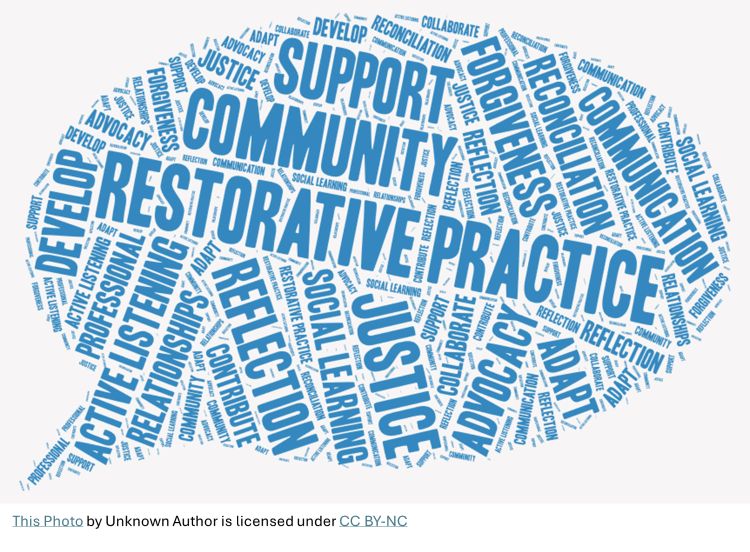
Imagine an environment where we focus on repairing relationships and fostering understanding with young individuals who misbehave instead of resorting to punishment. Restorative practice embodies this approach and offers a fresh perspective. It brings together all those involved in a conflict and seeks solutions that facilitate healing for those who were harmed while ensuring accountability for those who caused the harm. Restorative practices places importance on dialogue, communication and building relationships, while also developing strategies to enhance youths’ communication, social and emotional skills. It prioritizes healing over punishment and can be a powerful tool for bullying prevention.
According to Restorative Practices International, the foundations of restorative practices are rooted in indigenous cultures and their spiritual values. Within Native perspectives, the aim is to restore harmony and balance, to distinguish the behavior from the individual, and to reintegrate people back into their communities. This approach serves as a meaningful alternative to punitive measures, which often fail to tackle the deeper issues behind the behavior.
Characteristics of restorative practices
Restorative practices involve the participation of everyone affected; the harmed youth is given an opportunity to express themselves, while the youth responsible for the harm acknowledge their actions. Repairing the damage may involve an apology or some other consequence, leading to a successful reintegration into the group. For these practices to be effective and for better outcomes, it is crucial that all participants engage voluntarily.
According to the Centers for Disease Control, specific restorative practices can be conducted in a variety of formats: circles, affective statements, restorative questions, impromptu conversations and formal conferences. Circles and affective statements are where team building, community building and social emotional learning occur. For minor misconduct, you can add restorative questions and informal conferences to redirect behavior and with major misconduct, you would use formal conferencing to address wrongdoing.
Restorative practices balance accountability and meaningful support. These approaches are based on the idea that youth tend to be happier, healthier and more cooperative, as well as more inclined to make positive behavioral changes when they participate in decision-making. It is essential for those in authority to engage collaboratively with youth, rather than imposing decisions upon them. Restorative practices allow young people to think about the impact of their actions on others. Developing this sense of empathy is crucial in helping prevent future harm.
Read more about restorative practices in "Part 2: Using circles to build positive relationships" and "Part 3: Interventions based on context and seriousness."
Michigan State University Extension and Michigan 4-H Youth Development help to prepare young people for successful futures. To find out how to get involved as a youth participant or an adult volunteer, contact your county MSU Extension office.