Smart drainage in practice: A hands‑on conservation drainage workshop
 Print
Print Email
EmailGet hands-on training in automated controlled drainage systems and conservation drainage decision-support tools.
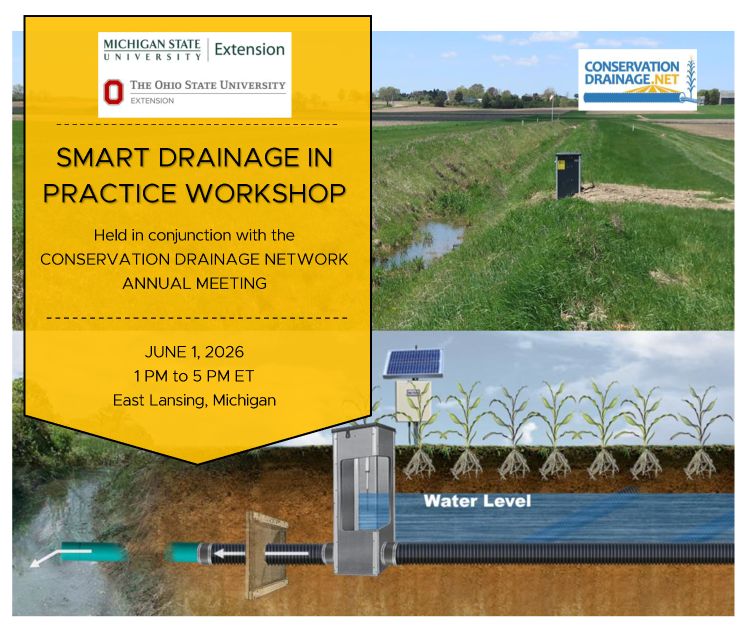
Michigan State University Extension and the Ohio State University researchers and industry professionals will lead an in-person 2026 Smart Drainage in Practice Workshop on Monday, June 1, 2026, from 1 to 5 p.m. in East Lansing, Michigan, held in conjunction with the Conservation Drainage Network Annual Meeting.
The workshop will take place in the Capitol Room at the Marriott East Lansing at University Place, 300 M.A.C. Ave., East Lansing, MI 48823, and is designed for Natural Resource Conservation Service staff, state and local agency professionals, university researchers and Extension educators, and other water professionals. Attendance is limited to 30 participants to ensure a high-quality, hands-on learning experience.
Why attend the Smart Drainage in Practice Workshop?
This workshop combines automated controlled drainage technology with practical decision‑support tools to help professionals plan, manage and evaluate conservation drainage systems under site‑specific conditions.
Participants will:
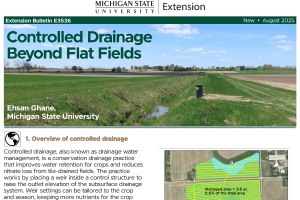
- Learn about advances in automated controlled drainage, including system hardware, installation considerations, and real-time data access.
- Gain hands-on experience with automated drainage water management systems and data portals.
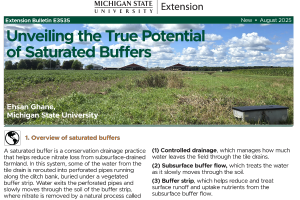
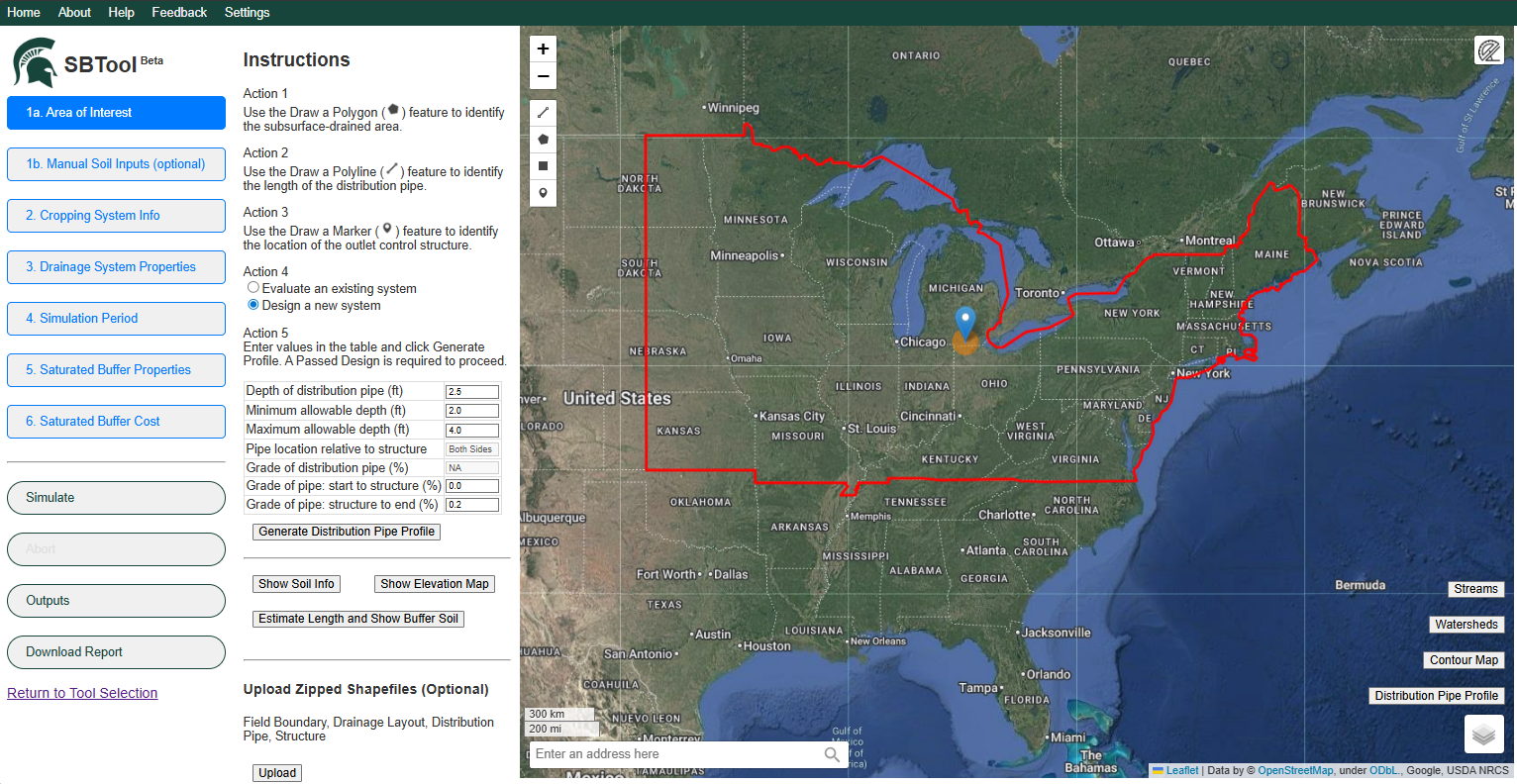
- Receive guided training on the new Controlled Drainage Tool (CDTool) and Saturated Buffer Tool (SBTool).
- Learn how to use the tools to evaluate site suitability, quantify nitrate‑removal benefits, compare outlet‑management strategies, and assess the cost‑effectiveness of conservation drainage practices under site‑specific conditions.
Workshop agenda highlights
Part 1: Automated Controlled Drainage – Hardware, Data Portal, and Management
1–2:30 p.m.
This session will feature recent advances in controlled drainage automation and real-time monitoring. Instructors will cover key hardware components, installation considerations, and data access platforms, followed by hands-on demonstrations and discussion of management considerations.
Instructors:
Vinayak Shedekar, PhD, The Ohio State University
Ben Reinhart, Ecosystem Services Exchange
Josh Shuler, AgriDrain Inc.
Part 2: Conservation Drainage Decision-Support Tools
2:45–5 p.m.
This session introduces the new controlled drainage tool (CDTool) and saturated buffer tool (SBTool), interactive tools that help evaluate the performance of controlled drainage and saturated buffers under site-specific conditions. Participants will learn the basics of using these tools to support conservation planning, system design, and performance assessment.
Instructors:
Ehsan Ghane, PhD, Michigan State University
Falasy Anamelechi, PhD, Michigan State University
Ashkan Tehrani, Michigan State University
For questions about the workshop, contact Ehsan Ghane at ghane@msu.edu.
Registration and additional information
The Smart Drainage in Practice Workshop is held in conjunction with the Conservation Drainage Network Annual Meeting, with full registration details and the complete agenda available online.
Contact ghane@msu.edu for more any questions.
Funding acknowledgement: This workshop is supported by the Critical Agricultural Research and Extension, project award no. 2024-68008-42638 from the US Department of Agriculture's National Institute of Food and Agriculture, and a grant “Small Watershed Implementation of ADWM in Western Lake Erie Basin” from the United States Environmental Protection Agency through an assistance agreement with the Ohio Environmental Protection Agency: (1) Small Watershed Implementation of ADWM in Western Lake Erie Basin (2) Nutrient management focused on edge-of-field practices.