The 2027 Southeast Michigan Vegetable and Field Crop Grower Winter Meeting is set for February 18
 Print
 Email
This event will once again feature a general session in the morning and breakout vegetable and field crop sessions in the afternoon.
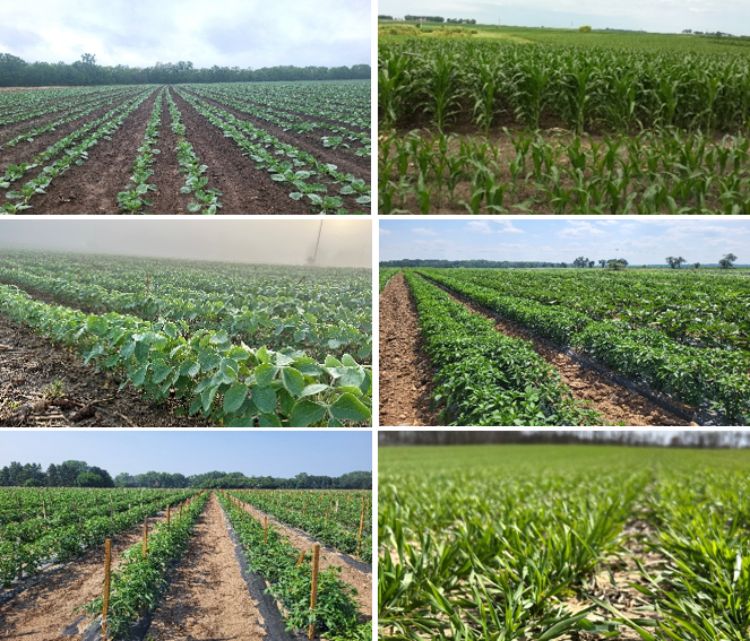
Enhance your knowledge of vegetable and field crop production by attending the 2027 Southeast Michigan Vegetable Grower and Field Crop Grower Winter Meeting on Feb. 18 at the Wayne County Community College – Ted Scott Campus, 9555 Haggerty Rd, Belleville, MI 48111. This free program will provide opportunities to learn from and engage with Michigan State University Extension specialists and educators as well as exhibitors on important issues facing the vegetable and field crop industries today.
The educational sessions include topics on crop protection against pests (insects, diseases, weeds), enhancing soil fertility and nutrient applications, safeguarding water quality and more.
Everyone can learn something from this diverse educational offering to help equip you with the knowledge and connections to improve vegetable or field crop production on your farm for the 2027 growing season.
The event is free to attend, will include a catered lunch and count towards four restricted use pesticide credits and four certified crop adviser continuing educational units.
Registration is required to ensure there is room. Space is limited, so please only register if you are certain you will attend. Register online or by calling the Jackson County MSU Extension office at 517-788-4292.
Event agenda
Check-in starts at 8:30 a.m.
Morning Session - General
9:00 a.m. Farm Safety and Motor Vehicle Safety – Laurel Harduar Morano, Michigan State University
9:30 a.m. Farm and Trade Policy Outlook – Alan Ker, Michigan State University
10:00 a.m. Break
10:15 a.m. Introduction to Pay-for-Performance – MSU Extension
10:30 a.m. Chemigation and Water Quality – Angie Gradiz and Brenden Kelley, MSU Extension
11:00 a.m. Soil Health/Beneficial Nematodes Effects on Plant-Parasitic Nematodes – Monica Jean, MSU Extension
11:30 a.m. Nutrient Management Update – Kurt Steinke, Michigan State University
12-12:45 p.m. Lunch
Afternoon Session 1 - Vegetables
12:45 p.m. Adjusting pH of Irrigation Water and How to Handle Compounds Safely – Caitlin Splawski, MSU Extension
1:15 p.m. Produce Safety Update – Phil Tocco, MSU Extension
1:45 p.m. Putting Together a Disease Management Strategy that Works – Mary Hausbeck, Michigan State University
2:30 p.m. Making Better Management Decisions About Bugs in Vegetable Crops – Zsofia Szendrei, Michigan State University
3:15 p.m. Evaluations/Credits
Afternoon Session 2 - Field Crops
12:45 p.m. Agronomy Research Update – Manni Singh, Michigan State University
1:35 p.m. Weed Management Update – Michigan State University
2:25 p.m. On-Farm Soybean Trial Research Update – Eric Anderson, MSU Extension
3:15 p.m. Evaluations/Credits
Growers won’t want to miss this opportunity to learn from and connect with fellow producers, Extension staff and other individuals working within the vegetable and field crop industries.
Visit the 2027 Southeast Michigan Vegetable Grower and Field Crop Grower Winter Meeting registration page or call the Jackson County MSU Extension office at 517-788-4292 to register for this event.
Register or download event flyer
Contact Chris Galbraith (galbra53@msu.edu, 734-240-3178) or Madelyn Celovsky (celovsk2@msu.edu, 517-768-2048) with any questions or if you are interested in being an exhibitor.
This farmer event is supported in part by the WLEB Pay-for-Performance Conservation Incentive Program, a bold new initiative led by Michigan State University’s Institute of Water Research in partnership with MSU Extension and local conservation partners to directly address phosphorus pollution in the Western Lake Erie Basin. This innovative program pays producers based on the actual performance of their conservation practices, measured in dollars per pound of phosphorus loss reduced.