Southwest Michigan field crops update – August 13, 2026
 Print
Print Email
EmailSeed and kernel fill are progressing in corn and soybeans. Late blight discovered in St. Joseph County.
Weather
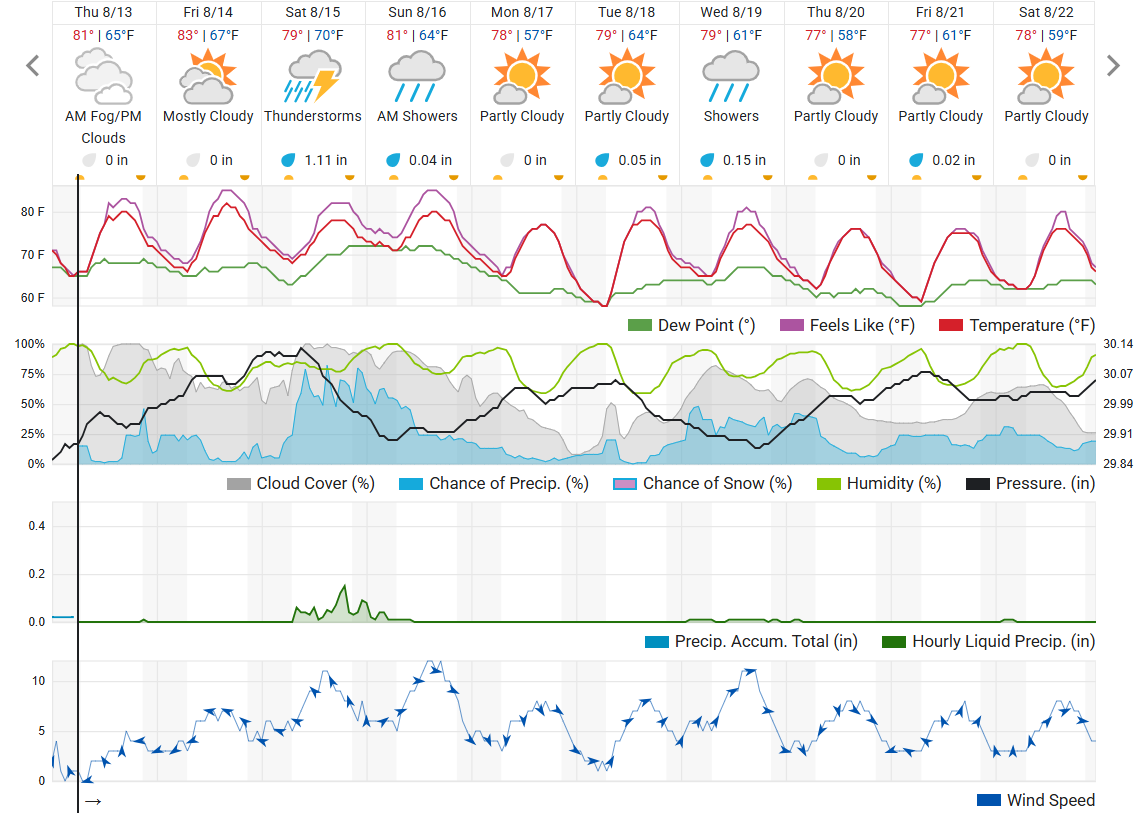
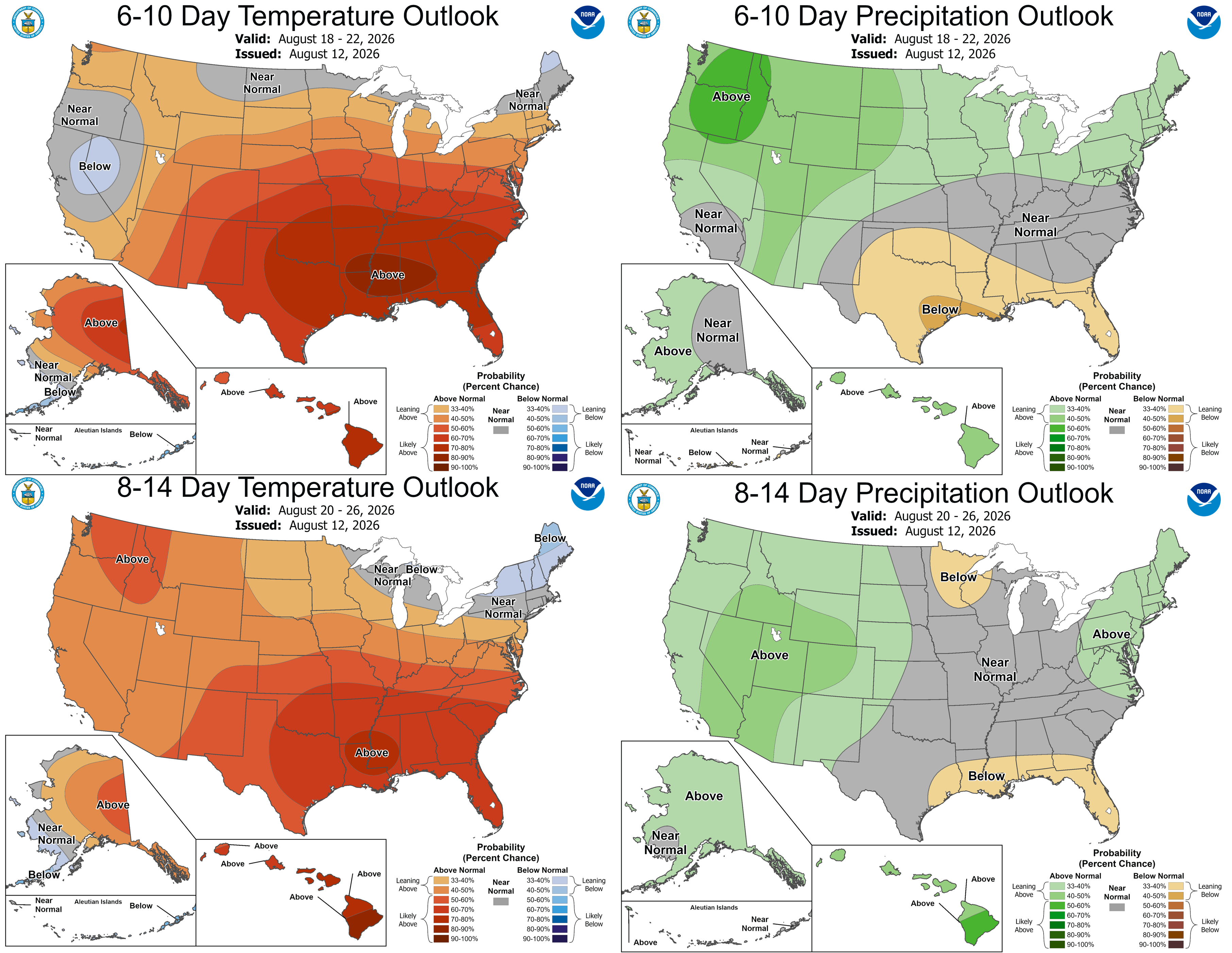
Storms starting on Sunday, Aug. 9, and continuing into Wednesday brought cumulative precipitation of over an inch in some parts of southwest Michigan. The next week is expected to be warm and mostly sunny, except for storms and showers over the weekend. The forecast for Saturday, Aug. 15, shows significant precipitation, calling for over an inch in some areas.
Crops and pests
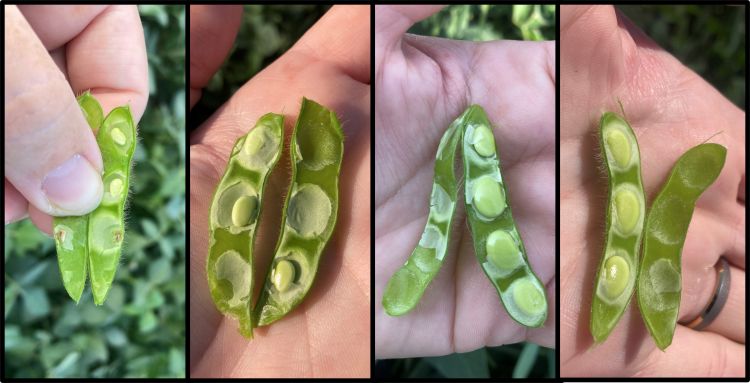
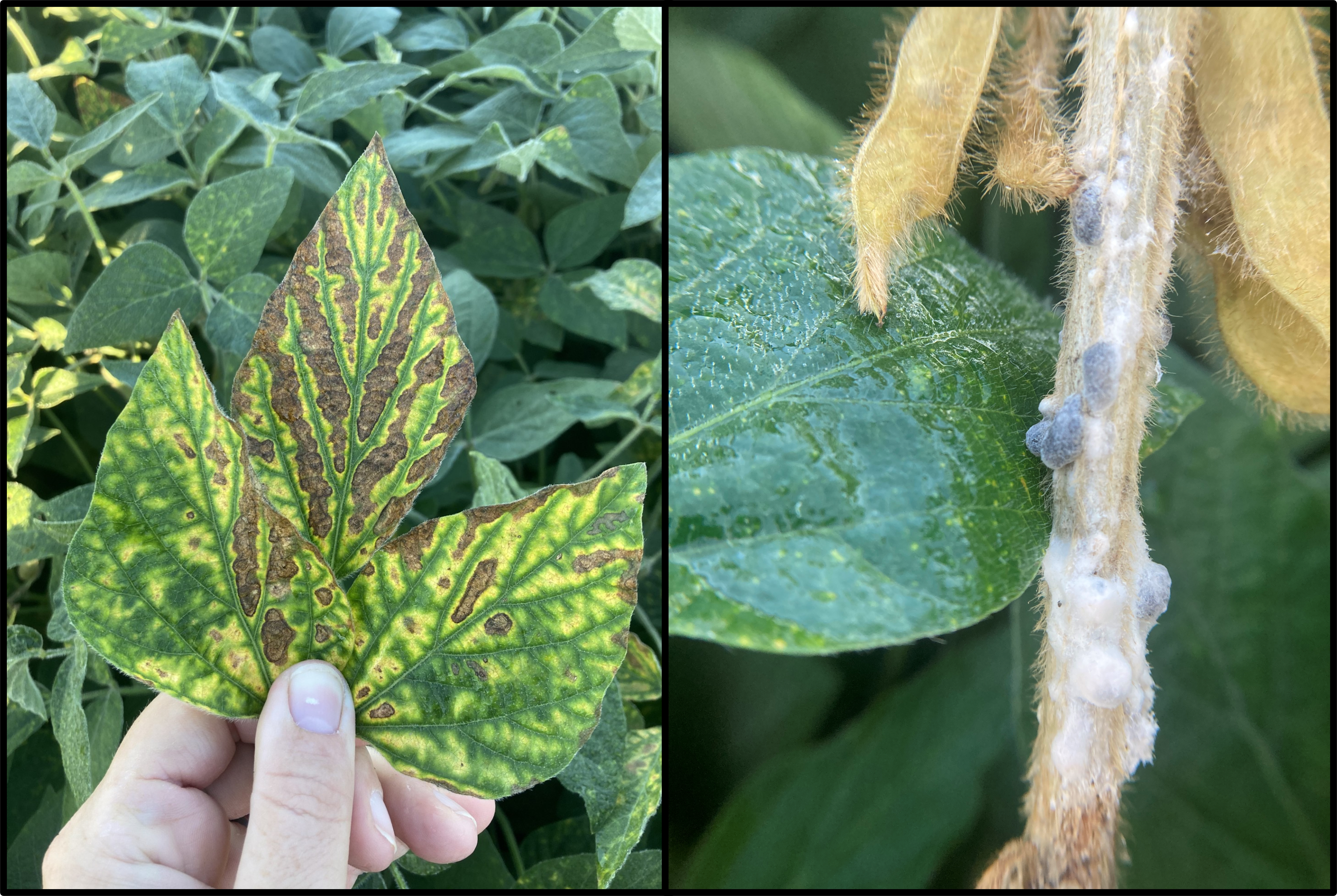
Most full-season soybeans are in R5 (seed fill) and will remain in that stage until the seed fills the pod cavity. Symptoms of white mold, sudden death syndrome (SDS) and brown stem rot may start to become visible, although the window for managing them has closed. Watch out for red crown rot, which is a disease not yet confirmed in Michigan that looks similar to SDS and brown stem rot. If you suspect red crown rot, submit a sample to the Michigan State University Plant and Pest Diagnostics Lab. Michigan Soybean Committee and the United Soybean Board will cover the diagnostic fees. You can request soybean sampling kits.
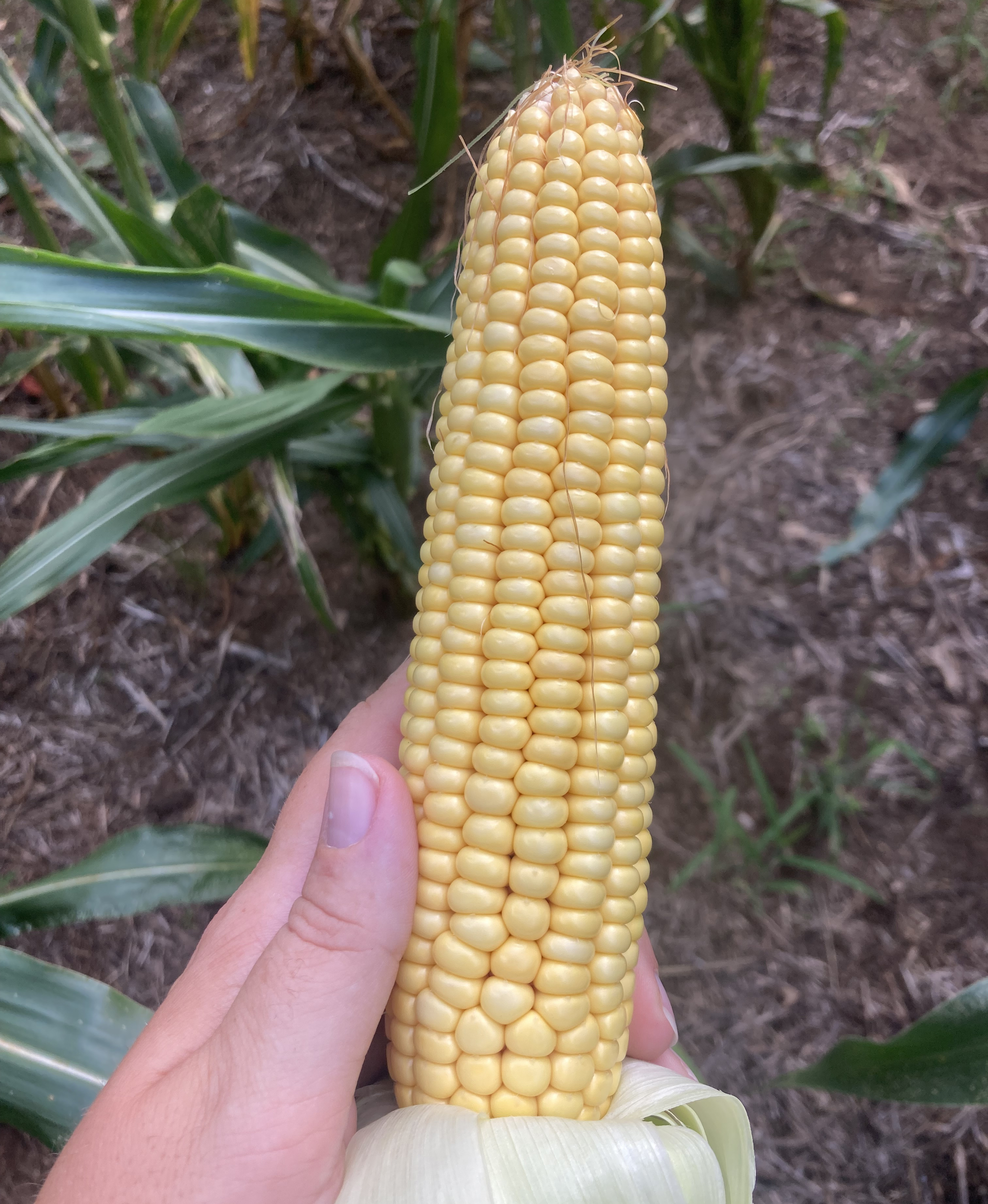
Corn is mainly in kernel development stages. At R2 (blister), the kernels are filled with clear fluid. At R3 (milk), the fluid becomes milky as starches accumulate. R4 (dough) has a pasty consistency, and at R5 (dent), the outside edge of the kernel has an indent. In seed corn, male row destruction continued, and defoliant applications have started to go out.
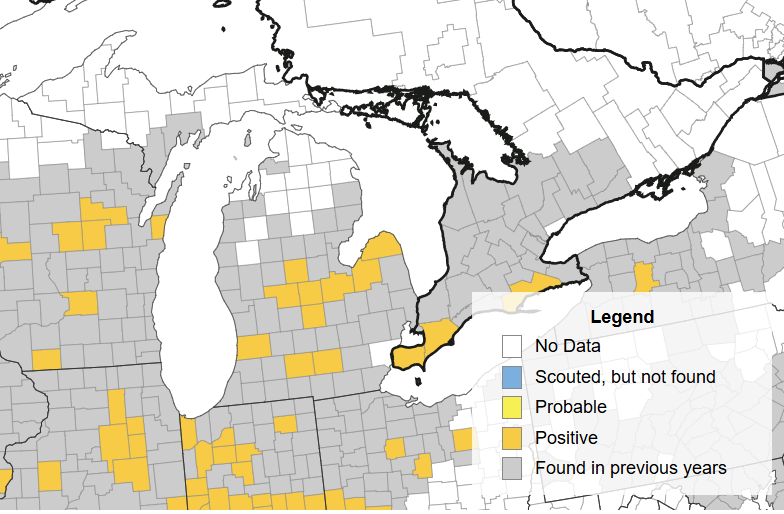
Tar spot was confirmed in Allegan County this week, according to the Tar Spot Map. Continue to scout for tar spot and evaluate crop risk as kernels develop. Tar spot fungicide applications are most profitable when applied between R1 (silking) and R3 (milky kernel) in corn. According to the Crop Risk Tool, the risk of tar spot development and/or progression was low over the past week.
Western bean cutworm adult moth counts have remained low for the past few weeks, and most fields are out of the highest risk window. Bucket traps in Berrien (Eau Claire), Branch (Union City), St. Joseph (Centreville and Sturgis) and Van Buren (Lawrence) counties have caught the following:
|
Date |
Branch 1 |
Branch 2 |
Centreville |
Eau Claire |
Lawrence |
Sturgis |
|
7/27 |
13 |
1 |
5 |
46 |
38 |
30 |
|
8/3 |
2 |
5 |
0 |
3 |
7 |
5 |
|
8/10 |
-- |
-- |
0 |
1 |
4 |
5 |
Late blight was found in St. Joseph County this week, and with current moist weather conditions, the risk of pathogen spread is higher. Monitor fields for symptoms. Potato vine kill continued, and fresh crop chip potato harvest picked up over the past week. Early Russet harvest started. With only a few weeks left of the season, canopies are especially vulnerable to aphids, heat and water deficits.
Irrigation and water use
Corn and soybeans remain at peak water use, although estimated potential evapotranspiration is lower this week than in previous weeks. Peak water use is approximately 1.1 inches per week.
Potato water use is declining significantly. During the pre-senescence stage, potatoes require approximately 0.30 inches of water per week.
Rainfall is expected to vary across the region. Southwest Michigan may receive more than 2 inches of rainfall this week, while west-central areas are expected to receive minimal rainfall. Account for effective rainfall when scheduling irrigation to avoid over-irrigation and continue monitoring irrigated soybean fields for increased white mold risk.
To improve irrigation management, consider using irrigation scheduling tools such as the free and updated MSU Irrigation Scheduling Mobile App, available for Apple and Android devices. The app provides field-specific irrigation recommendations based on crop growth, weather, and soil type.
This year, weekly crop water use updates will continue to be shared through the Southwest Michigan Crop Updates, and for added convenience, updates will also be sent through direct email and text messages. If you would like to see an additional location included in the report, please contact Angie Gradiz at gradizme@msu.edu or 531-249-4956.
The table below summarizes estimated crop water use (inches per week) for major irrigated field crops across Michigan's primary irrigated regions.
Estimated weekly crop water use for field crops in Michigan (inches per week) for the week of Aug. 10–16, 2026:
|
Crop |
Growth stage |
Constantine |
Berrien Springs |
Entrican |
Hart |
|
Reference ET |
0.88 |
0.95 |
1.05 |
1.01 |
|
|
Corn |
V14 |
0.97 |
1.05 |
1.16 |
1.11 |
|
Corn |
VT, Silk, Blister, Dough, Begin Dent |
0.97 |
1.05 |
1.16 |
1.11 |
|
Corn |
Full Dent |
0.88 |
0.95 |
1.05 |
1.01 |
|
Soybeans |
R2 (Full bloom) |
0.97 |
1.05 |
1.16 |
1.11 |
|
Soybeans |
R3 (Begin pod) - R4 (Full pod) |
0.97 |
1.05 |
1.16 |
1.11 |
|
Soybeans |
R5 (Begin seed) |
0.97 |
1.05 |
1.16 |
1.11 |
|
Potato |
Blossom |
0.88 |
0.95 |
1.05 |
1.01 |
|
Potato |
Tuber bulk |
0.75 |
0.81 |
0.89 |
0.86 |
|
Potato |
Pre-Senescence |
0.26 |
0.29 |
0.32 |
0.3 |
Field Crops Virtual Breakfast Series

Nematode management in field crops, presented by Marisol Quintanilla, was the topic for the MSU Extension Field Crops Virtual Breakfast this week. Crop rotation and genetic resistance continue to be the most successful methods of control for managing soybean cyst nematode.
Recordings of this and all the Virtual Breakfast meetings are closed-captioned and available at the Field Crops Virtual Breakfast webpage and the MSU Extension Field Crops Team social media platforms: Facebook, Spotify, Mediaspace, YouTube, Apple Podcasts and Twitter/X.
This work is supported by the Crop Protection and Pest Management Program (grant no 2024-70006-43569) from the USDA National Institute of Food and Agriculture. Any opinions, findings, conclusions, or recommendations expressed in this publication are those of the author(s) and do not necessarily reflect the view of the U.S. Department of Agriculture.