Southwest Michigan field crops update – July 30, 2026
 Print
Print Email
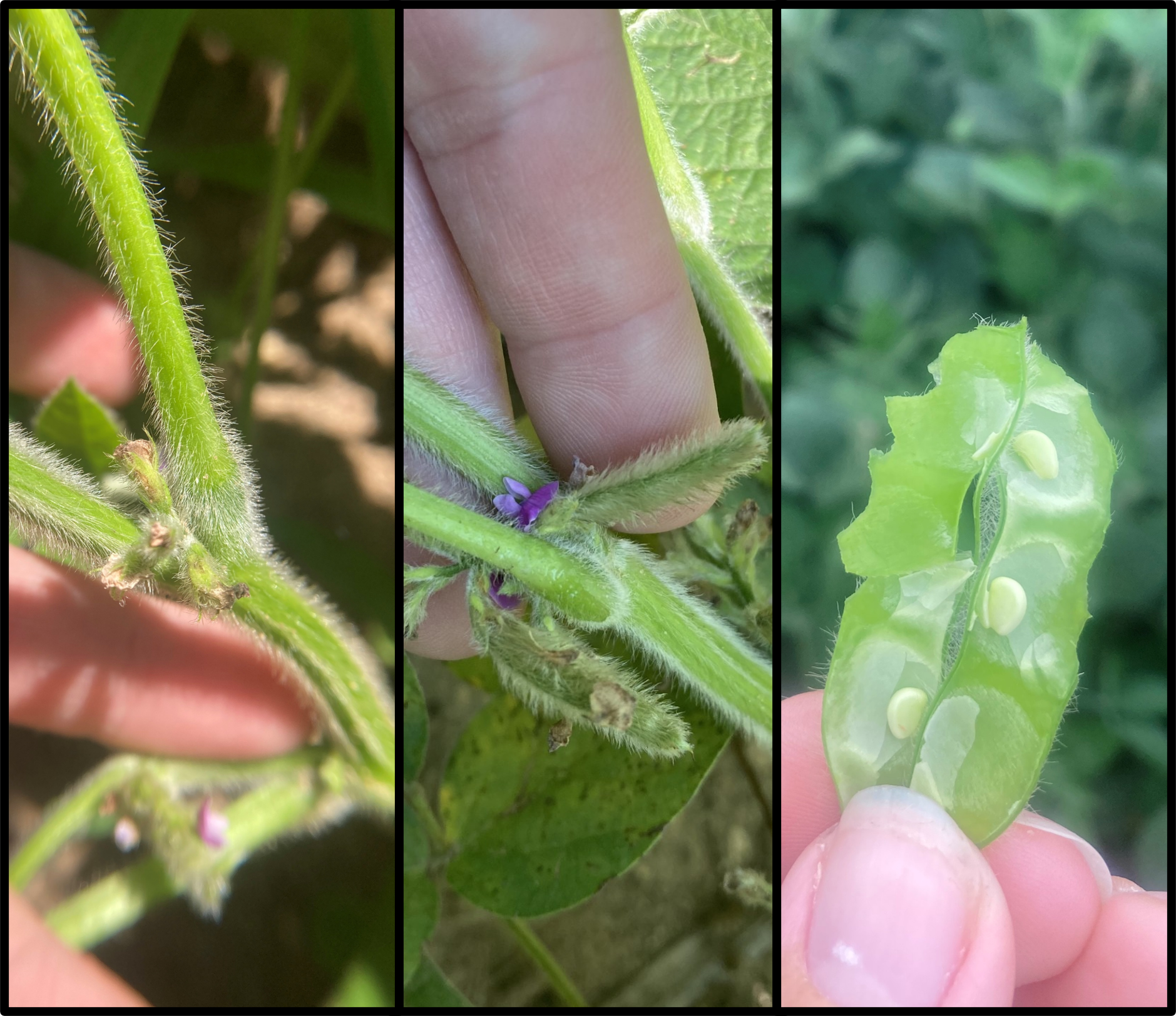
EmailSoybeans are in pod or seed formation stages.
Weather
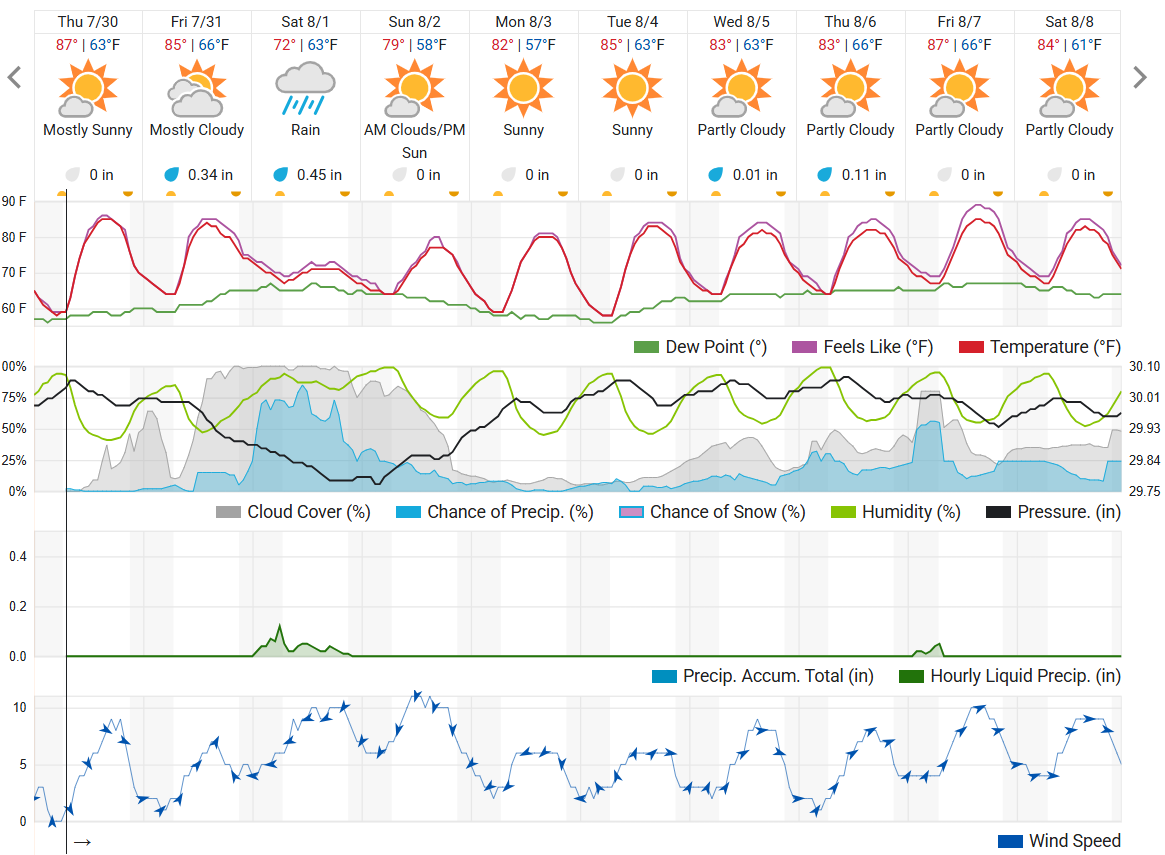
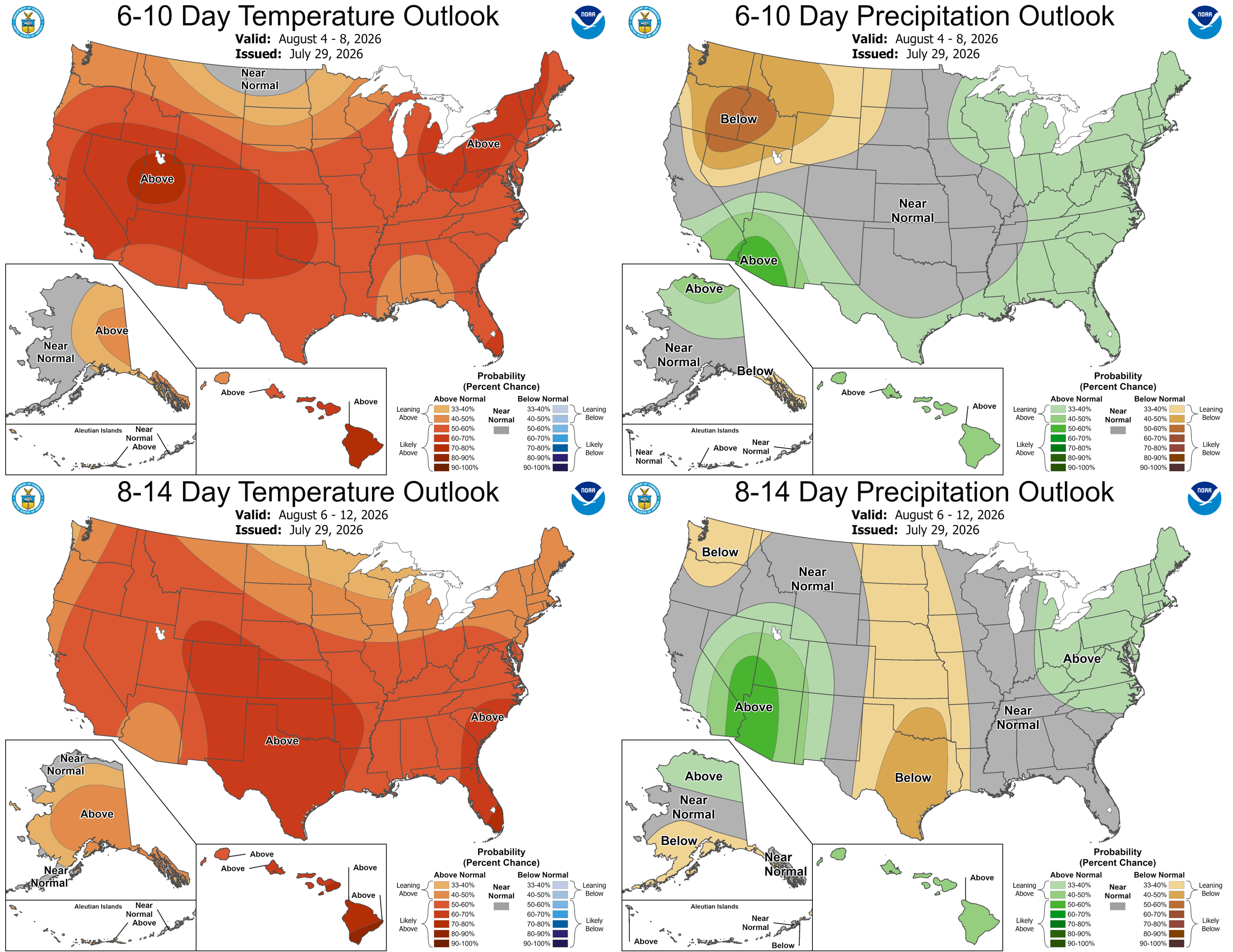
Temperatures started out mild this week before climbing into the mid-80s, and storms on Monday brought precipitation to much of the region. The upcoming week will remain pretty similar to the past couple days temperature-wise. Precipitation is expected heading into the weekend, but otherwise it will be a dry and sunny week.
Crops and pests
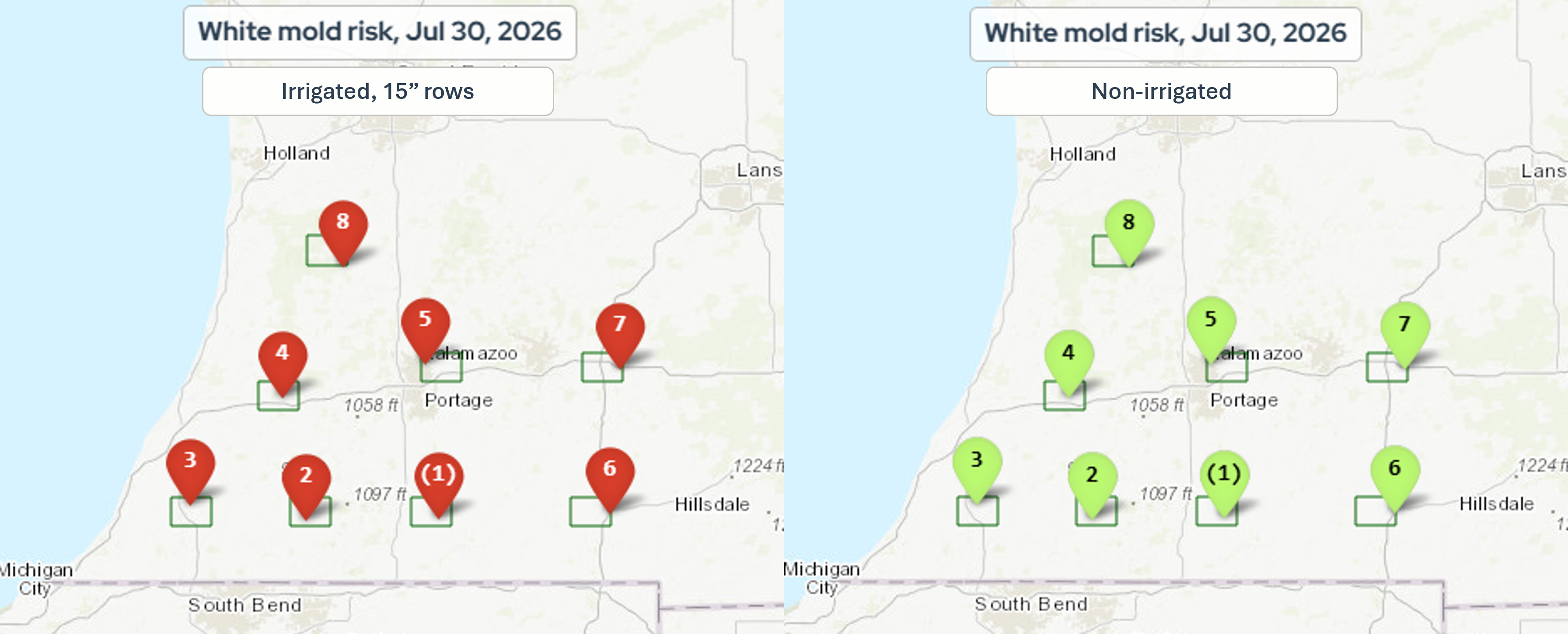
More soybeans have moved into R5 (seed 1/8 inch long within pod). Others remain in R3 and R4 (pod 3/16 inch and pod 3/4 inch, respectively). R3 is the last effective stage to apply a white mold preventative fungicide. The Crop Protection Network’s Crop Risk Tool showed high risk of white mold development on irrigated soybeans and low on non-irrigated soybeans in southwest Michigan for the past week. While non-irrigated soybeans are at a lower risk of white mold development, they may be showing signs of drought stress such as flipped or rolled leaves after the week of mostly dry weather.
Double cropped soybeans following wheat progressed nicely over the past week.
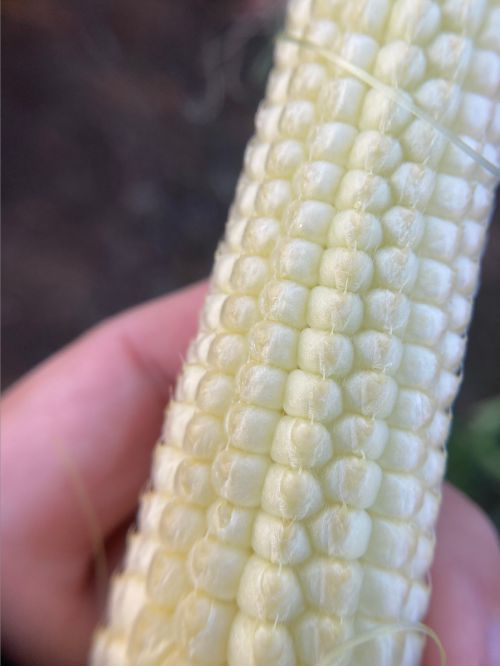
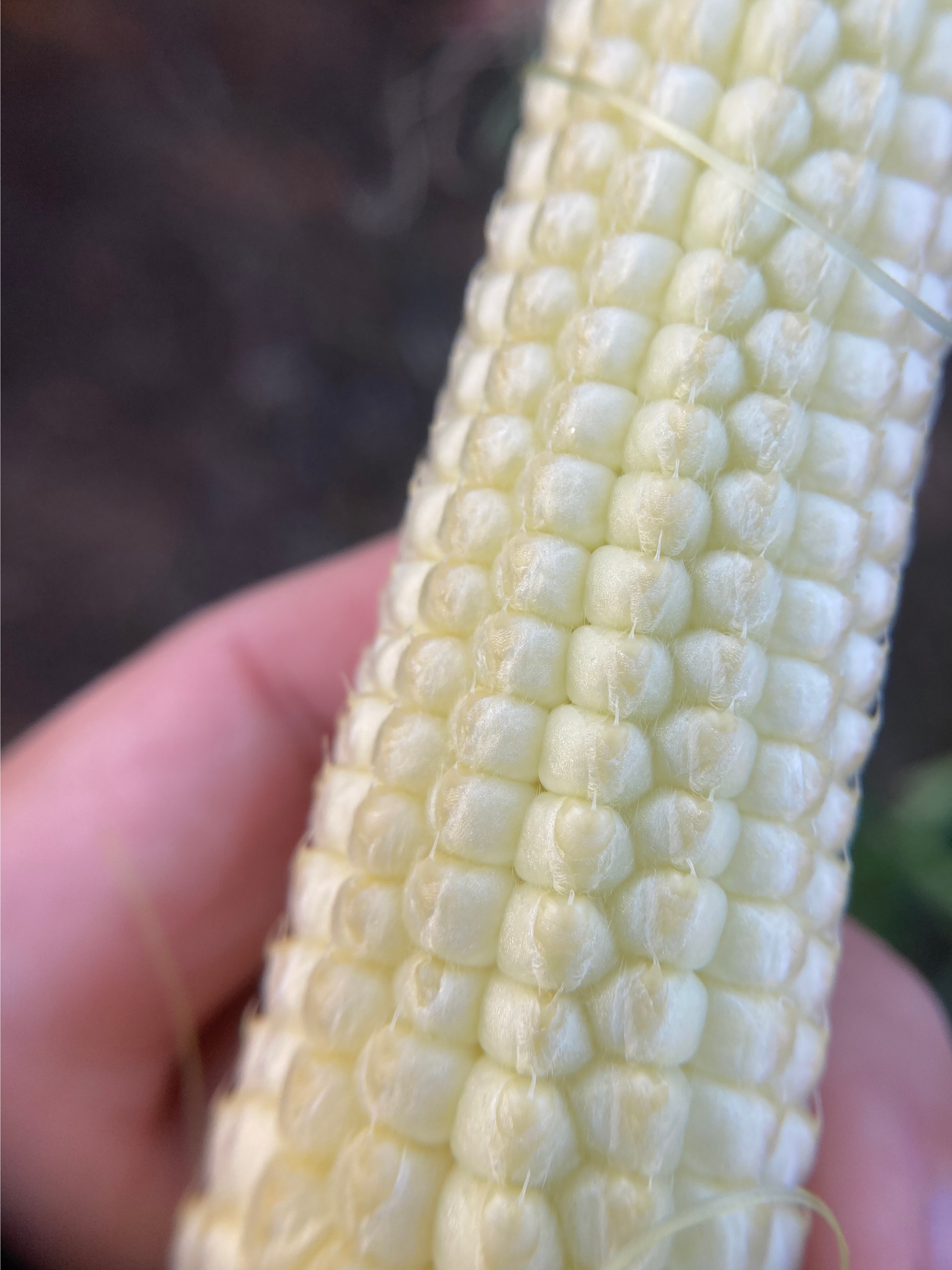
By now, most of the corn throughout the region has started pollination, and some fields have moved into kernel development stages. Male row destruction in seed corn started, and detasseling is starting to wrap up.
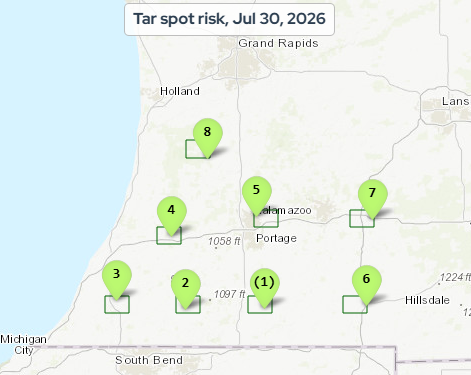
Continue to scout for tar spot by looking for small dark lesions on leaves. Make sure to add water and try to rub the lesion off. If it can be rubbed off, it is not tar spot, but insect droppings. Tar spot fungicides are most profitable when applied between R1 (silking) and R3 (milky kernel) in corn. The Tar Spot Map shows that, of the region, only Calhoun and Jackson Counties have had tar spot infection confirmed. The Crop Risk Tool showed low risk for tar spot development over the past week. Cooler temperatures and irrigation increase tar spot risk.
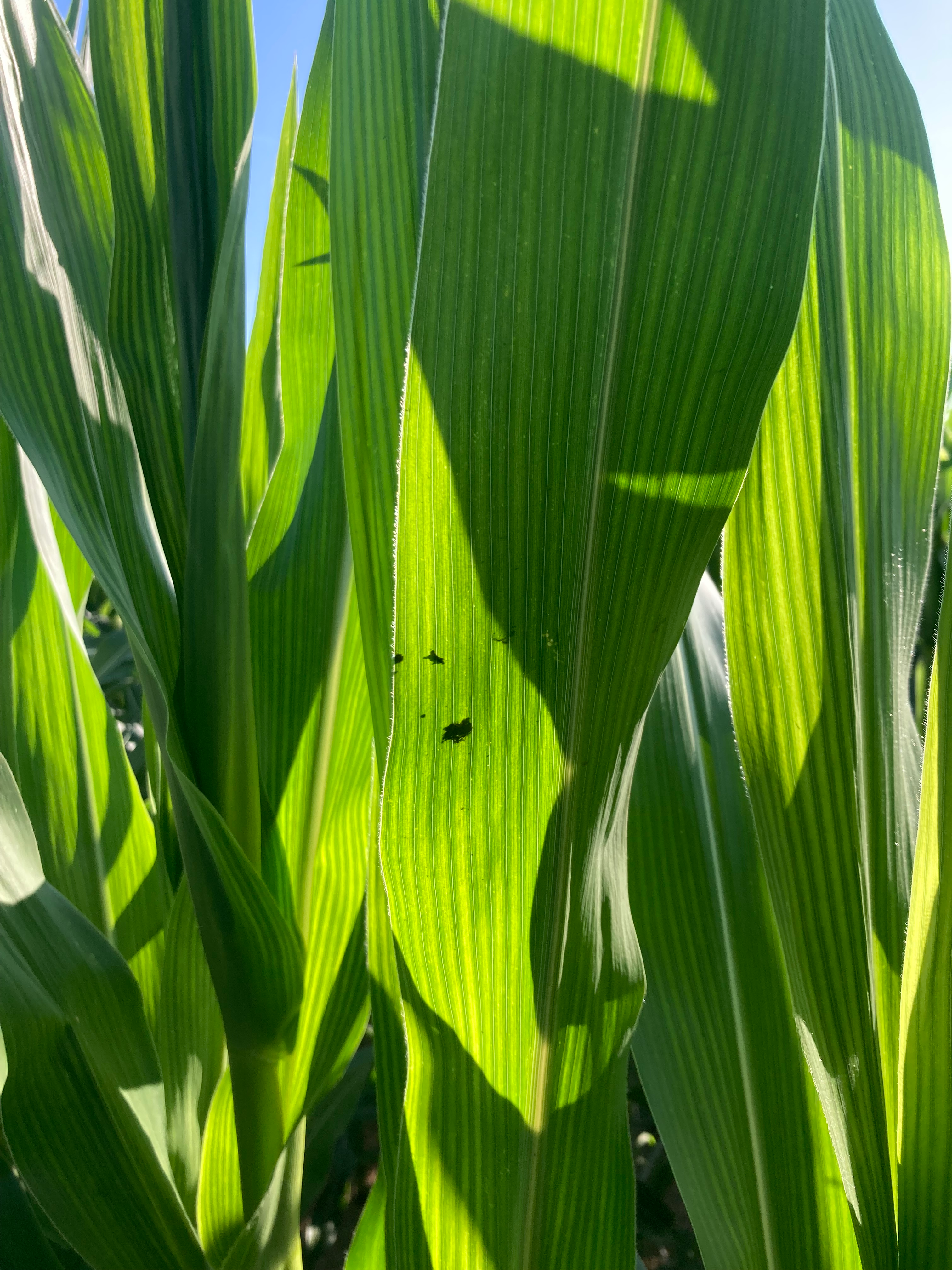
Continue to scout for western bean cutworm in fields that are close to tasseling or freshly tasseled. Put the sun behind the leaves to watch for egg masses, which will appear as dark shadows on the backlit leaves of the upper canopy. The threshold for western bean cutworm treatment is 5% of plants affected (cumulative week after week).
Western bean cutworm adult moth counts dropped this past week and will probably remain low for the rest of the season. Bucket traps in Berrien (Eau Claire), Branch (Union City), St. Joseph (Centreville and Sturgis) and Van Buren (Lawrence) counties have caught the following:
|
Date |
Branch 1 |
Branch 2 |
Centreville |
Eau Claire |
Lawrence |
Sturgis |
|---|---|---|---|---|---|---|
|
7/13 |
85 |
76 |
33 |
50 |
45 |
41 |
|
7/20 |
109 |
9 |
14 |
41 |
93 |
21 |
|
7/27 |
13 |
1 |
5 |
46 |
38 |
30 |
Winter wheat harvest and straw baling finished over the past week. Some cover crops following wheat have been planted. With such an early harvest window, wheat leaves an excellent opportunity to establish warm season cover crops or diverse mixes. Learn more about cover crops following wheat.
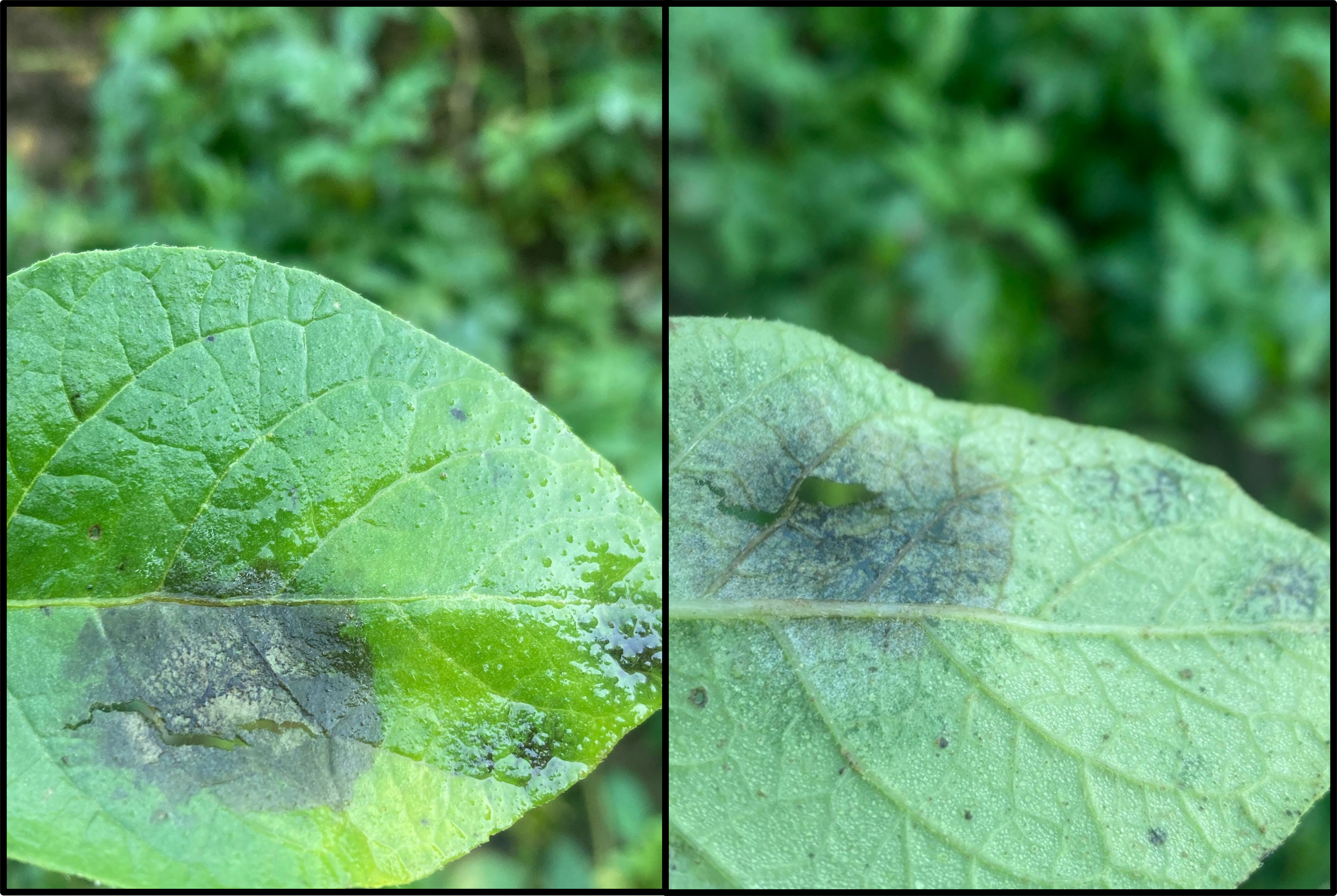
Potatoes are in tuber bulking stages. Vine kill began last week on early crop russets to allow them to set skins before harvest in a couple weeks. Harvest started this week on fresh crop chippers. In full-season and storage potatoes, continue to scout for aphids and late blight. Late blight risk over the past week was moderate to low, according to the Vegetable Disease and Insect Forecasting Network. Don’t forget to attend the Montcalm County Potato Field Day on Aug. 6 at the Montcalm Research Center.
Irrigation and water use
Corn and soybeans are at peak water use and their most critical growth stages for water stress. Corn from VT (tasseling) through early dent is using approximately 1.3 inches of water per week. For soybeans, the most critical stages are R3 through R6, with crop water use also reaching approximately 1.3 inches per week (0.19 inches per day).
Potatoes continue to have a high water demand. During the tuber bulking stage, crop water use is approximately 1.0 inch per week.
Rainfall occurred early this week, and in some areas, it was sufficient to meet crop water demand. Be sure to account for effective rainfall when scheduling irrigation to avoid over-irrigation. Irrigated soybean fields are also at greater risk of white mold, particularly when frequent or prolonged wetting events occur.
To improve irrigation management, consider using irrigation scheduling tools such as the free and updated MSU Irrigation Scheduling Mobile App, available for Apple and Android devices. The app provides field-specific irrigation recommendations based on crop growth, weather, and soil type.
Weekly crop water use updates will continue to be shared through the Southwest Michigan Crop Updates. For added convenience, updates will also be sent through direct email and text messages. Sign up here. If you would like to see an additional location included in the report, please contact Angie Gradiz at gradizme@msu.edu or 531-249-4956.
The following table summarizes estimated crop water use (inches per week) for major irrigated field crops across Michigan's primary irrigated regions.
Estimated weekly crop water use for field crops in Michigan (inches/week) for the week of July 22 - August 2, 2026:
| Crop | Growth stage | Constantine | Berrien Springs | Entrican | Hart |
|---|---|---|---|---|---|
| Reference ET | 1.17 | 1.11 | 1.19 | 1.19 | |
| Corn | V10 | 0.89 | 0.84 | 0.9 | 0.9 |
| Corn | V12 | 1.17 | 1.11 | 1.19 | 1.19 |
| Corn | VT, Silk, Blister, Dough, Begin Dent | 1.29 | 1.22 | 1.31 | 1.31 |
| Soybeans | R1 | 1.17 | 1.11 | 1.19 | 1.19 |
| Soybeans | R2 (Full bloom) | 1.29 | 1.22 | 1.31 | 1.31 |
| Soybeans | R3 (Begin pod) – R5 (Begin seed) | 1.29 | 1.22 | 1.31 | 1.31 |
| Potato | Tuberization | 1.06 | 1.01 | 1.08 | 1.08 |
| Potato | Tuber bulk | 0.99 | 0.94 | 1.01 | 1.01 |
| Potato | Bulk | 0.7 | 0.67 | 0.71 | 0.71 |
Field Crops Virtual Breakfast Series
Late summer and fall cover crops, presented by Brook Wilke, was the topic for the MSU Extension Field Crops Virtual Breakfast this week. Cover crop establishment in the late summer and fall can help keep the soil cool and dry, which conserves organic matter in the soil.
Recordings of this and all the Virtual Breakfast meetings are closed-captioned and available at the Field Crops Virtual Breakfast webpage and the MSU Extension Field Crops Team social media platforms: Facebook, Spotify, Mediaspace, YouTube, Apple Podcasts and Twitter/X.
This work is supported by the Crop Protection and Pest Management Program (grant no 2024-70006-43569) from the USDA National Institute of Food and Agriculture. Any opinions, findings, conclusions, or recommendations expressed in this publication are those of the author(s) and do not necessarily reflect the view of the U.S. Department of Agriculture.