Southwest Michigan field crops update – June 25, 2026
 Print
Print Email
EmailRainfall and cool temperatures slowed down fieldwork and plant development.
Weather
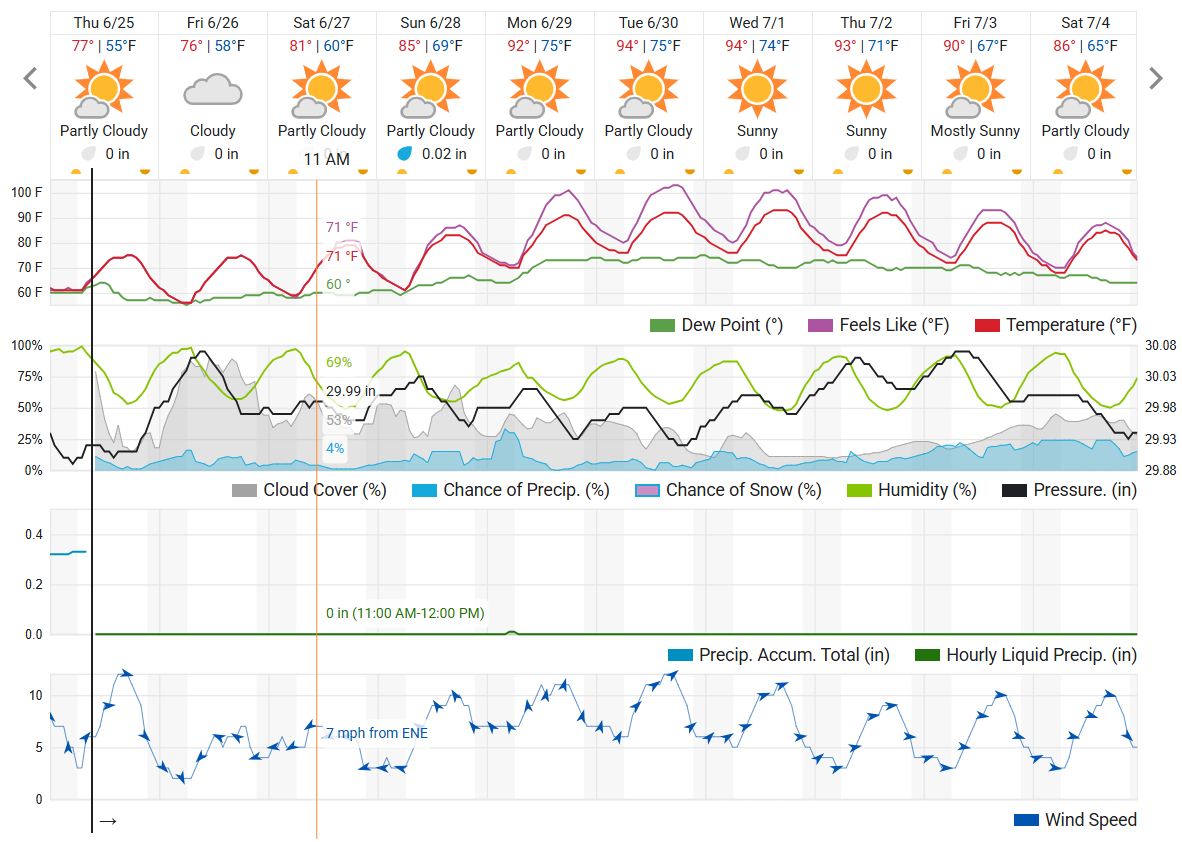
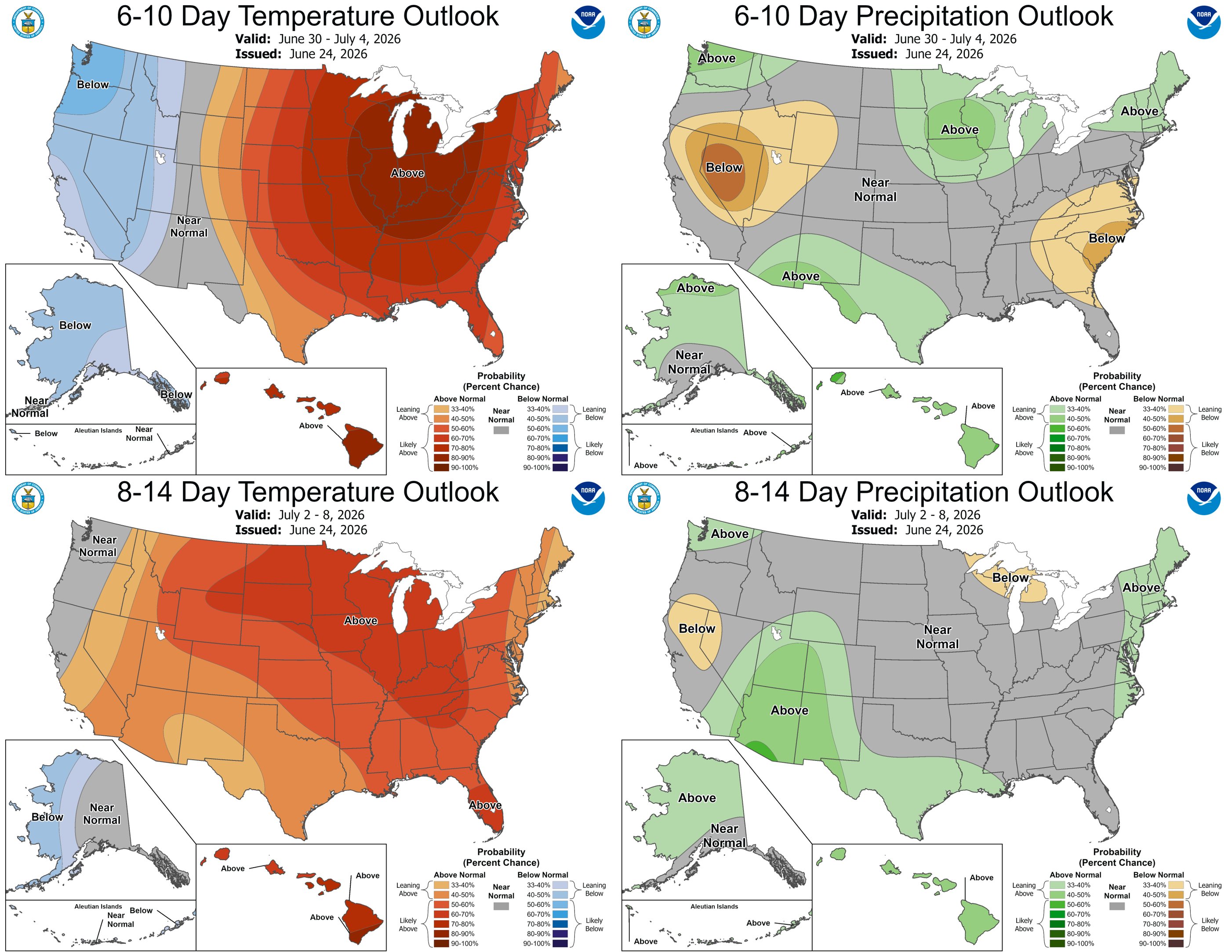
The past week was cool, with consistent rainfall every few days. Despite starting the season off with more growing degree days (GDDs) than average, the recent cooler weather has brought the 2026 GDD accumulation right in line with the thirty-year average as of June 25. Temperatures will increase over the weekend, leveling off in the 90s for next week. No significant precipitation is forecast for the next week.
Crops and pests
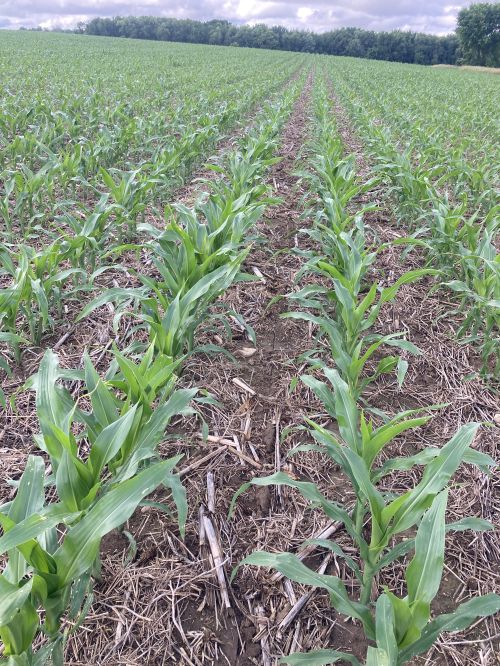
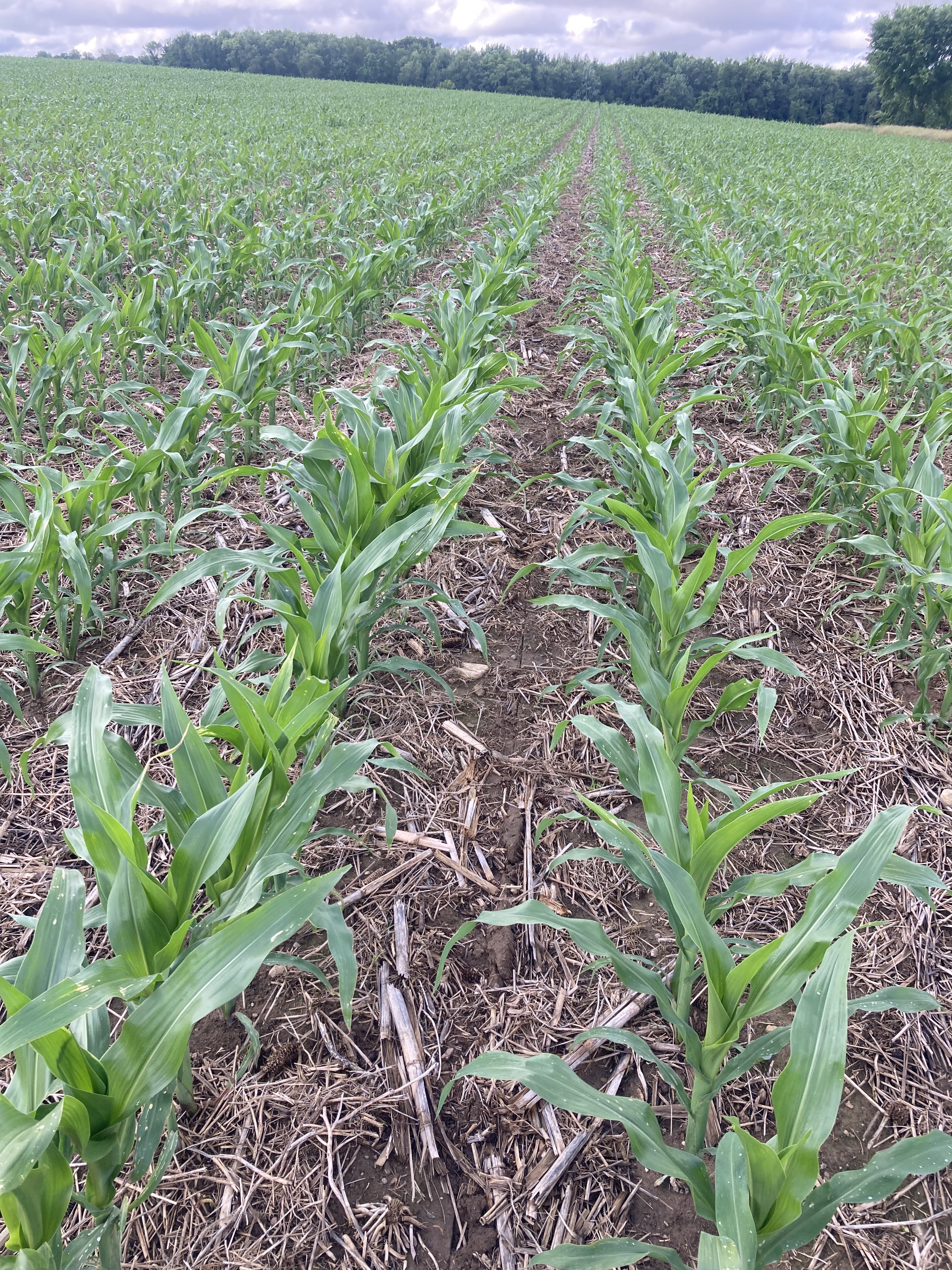
Both soybeans and corn progressed slowly over the past week, with early soybeans at V5 and early corn at V7/8. Side-dress nitrogen continued to go out in corn as weather and field conditions permitted.
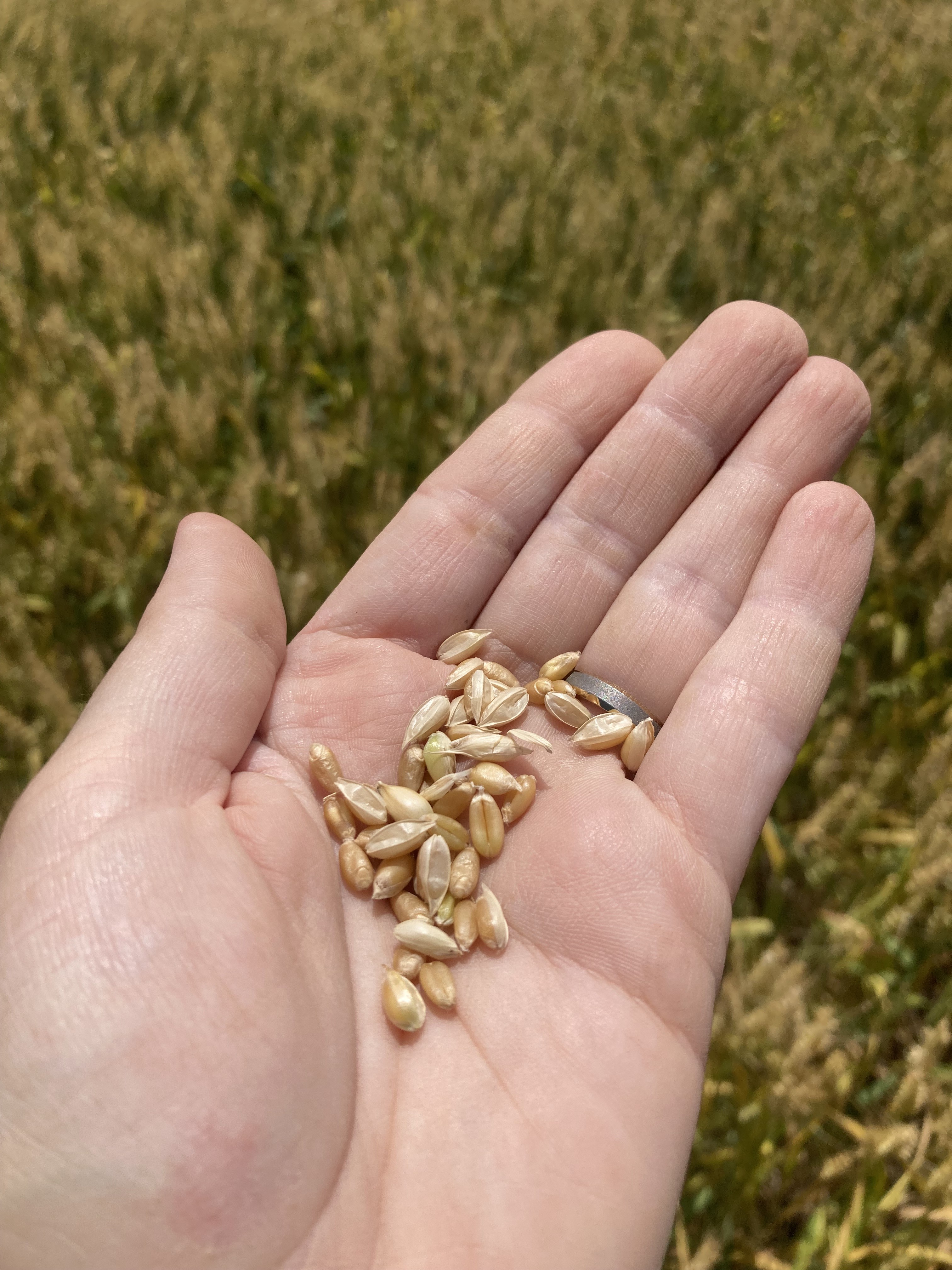
Winter wheat is at Feekes 11.2 (soft dough), with some fields moving toward Feekes 11.3 (hard dough). Many canopies are already senescing, although some are still holding on to their green color. Early canopy senescence can reduce yield and test weights. With warm weather coming soon, wheat is expected to have a faster-than-normal drydown.
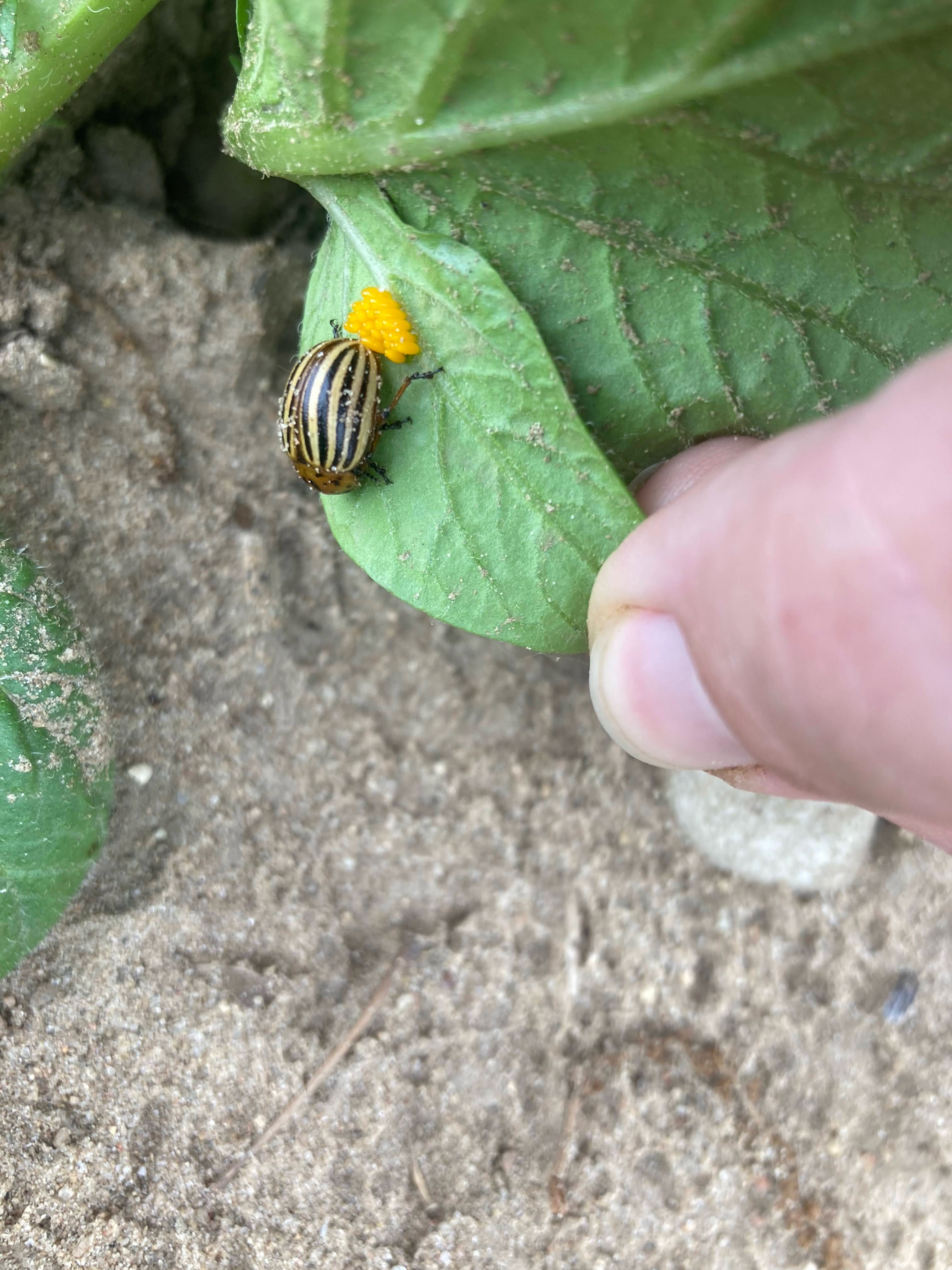
Potatoes are in various stages of bloom and row closure. Overly wet soil conditions can cause lenticels to swell and burst, opening up wounds in the tuber where pathogens can enter. The cool, moist conditions have also been ideal for foliar disease development. Colorado potato beetle (CPB) pressure is increasing as adults emerge from overwintering state or move into fields off of volunteer potatoes. The new insecticide Zivalgo is an additional chemical option for managing CPB. Check out New insecticide options for Colorado potato beetle management to learn more about when and how to use it.
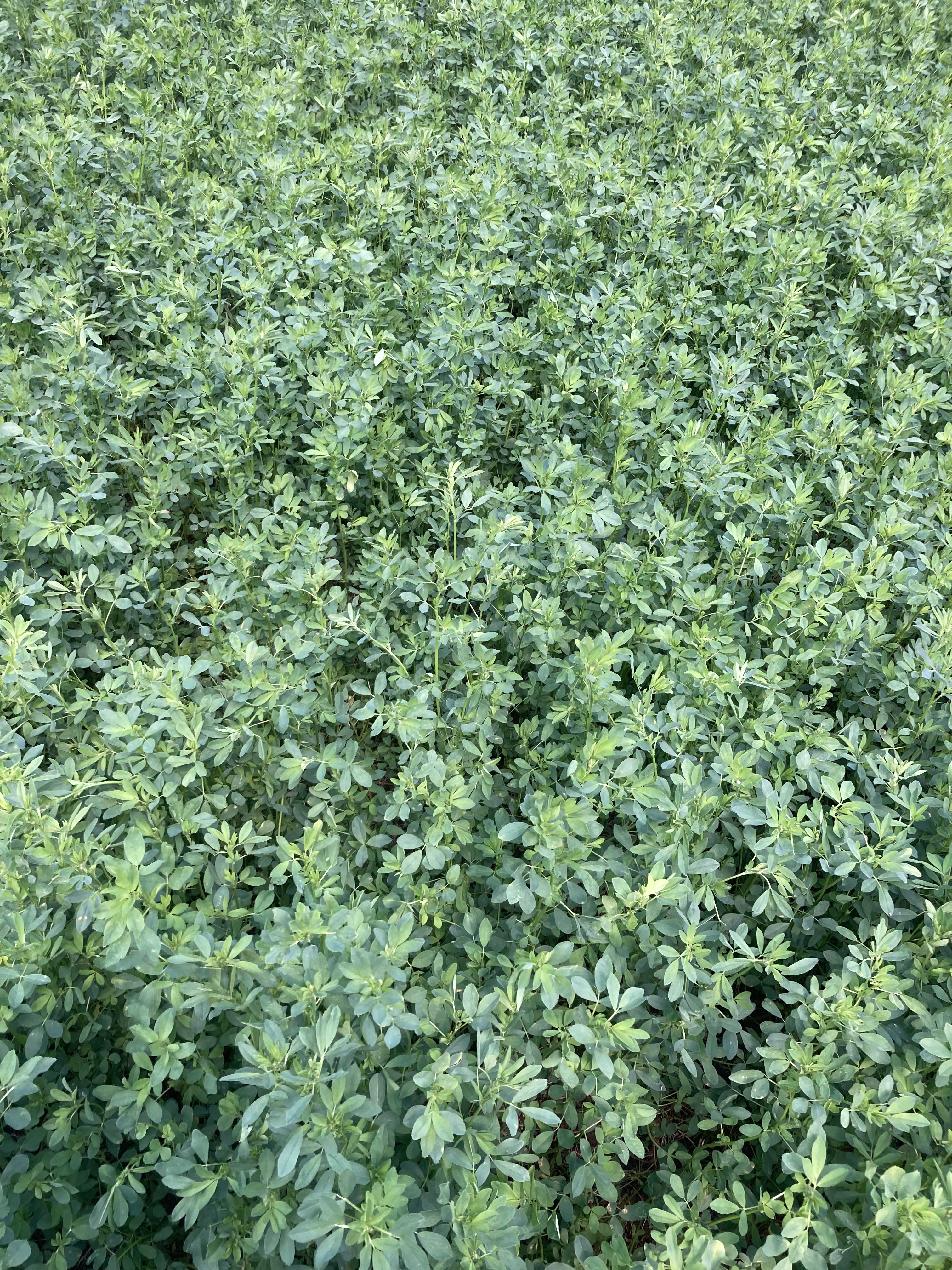
Many alfalfa and forage acres are ready for second cutting and some have started to bloom. Unfortunately, the weather has been less than cooperative for cutting, drying and baling, but next week should have a good dry stretch.
Irrigation and water use
- Crop water use increased slightly this week, with corn at V6–V8 using approximately 0.40 to 0.65 inches per week and soybeans at V3–V4 using approximately 0.75 inches per week.
- Potatoes in the tuberization and blossom stages continue to have high water demand, requiring more than 1 inch of water per week (approximately 0.16 inches per day).
- As crops continue to develop, water use will increase further. Continue monitoring crop growth stages, soil moisture conditions, rainfall and weather forecasts to make informed irrigation decisions and avoid crop stress.
- To improve irrigation management, consider using irrigation scheduling tools such as the free and updated MSU Irrigation Scheduling Mobile App, available for Apple and Android. The app provides field-specific irrigation recommendations based on crop growth, weather, and soil type.
This year, weekly crop water use updates will continue to be shared through the southwest Michigan crop updates, and for added convenience, updates will also be sent through direct email and text messages. Sign up here. If you would like to see an additional location included in the report, please contact Angie Gradiz at gradizme@msu.edu or 531-249-4956.
Estimated weekly crop water use for field crops in Michigan (inches/week) for the week of June 22-28, 2026:
|
Crop |
Growth stage |
Constantine |
Berrien Springs |
Entrican |
Hart |
|
Reference ET |
1.13 |
1.08 |
1.26 |
1.24 |
|
|
Corn |
V4 |
0.20 |
0.19 |
0.23 |
0.22 |
|
Corn |
V6 |
0.40 |
0.38 |
0.44 |
0.43 |
|
Corn |
V8 |
0.63 |
0.60 |
0.71 |
0.69 |
|
Soybeans |
V2 |
0.45 |
0.43 |
0.50 |
0.50 |
|
Soybeans |
V3 |
0.68 |
0.65 |
0.76 |
0.74 |
|
Soybeans |
V4-V5 |
0.88 |
0.84 |
0.98 |
0.97 |
|
Potato |
Early vegetation |
0.57 |
0.54 |
0.63 |
0.62 |
|
Potato |
Tuberization |
1.13 |
1.08 |
1.26 |
1.24 |
|
Potato |
Blossom |
1.13 |
1.08 |
1.26 |
1.24 |
Field Crops Virtual Breakfast Series

Corn and soybean disease management, presented by Marty Chilvers, was the topic for the MSU Extension Field Crops Virtual Breakfast this week. Keep an eye out for early diseases of corn and soybeans. A newer soybean disease, red crown rot, has been found across the Midwest. Although it hasn’t been confirmed in Michigan, it is likely somewhere in the state, so save suspected plants and send them to the MSU Plant and Pest Diagnostics Lab.
Recordings of this and all the Virtual Breakfast meetings are closed-captioned and available at the Field Crops Virtual Breakfast webpage and the MSU Extension Field Crops Team social media platforms: Facebook, Spotify, Mediaspace, YouTube, Apple Podcasts and Twitter/X.
This work is supported by the Crop Protection and Pest Management Program (grant no 2024-70006-43569) from the USDA National Institute of Food and Agriculture. Any opinions, findings, conclusions, or recommendations expressed in this publication are those of the author(s) and do not necessarily reflect the view of the U.S. Department of Agriculture.