Southwest Michigan field crops update – September 3, 2026
 Print
Print Email
EmailWatch for red crown rot in soybeans and ear molds in corn. Seed corn harvest started.
Weather
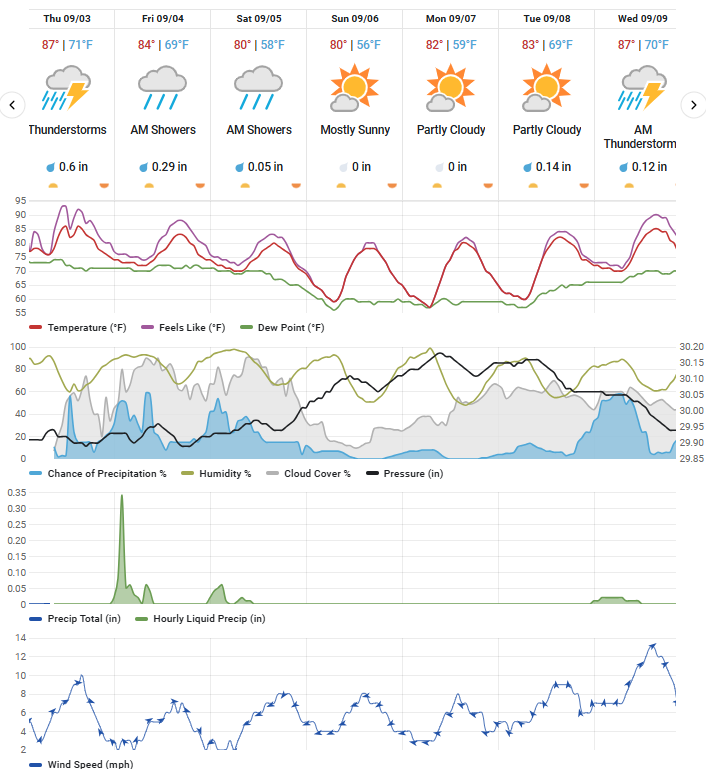
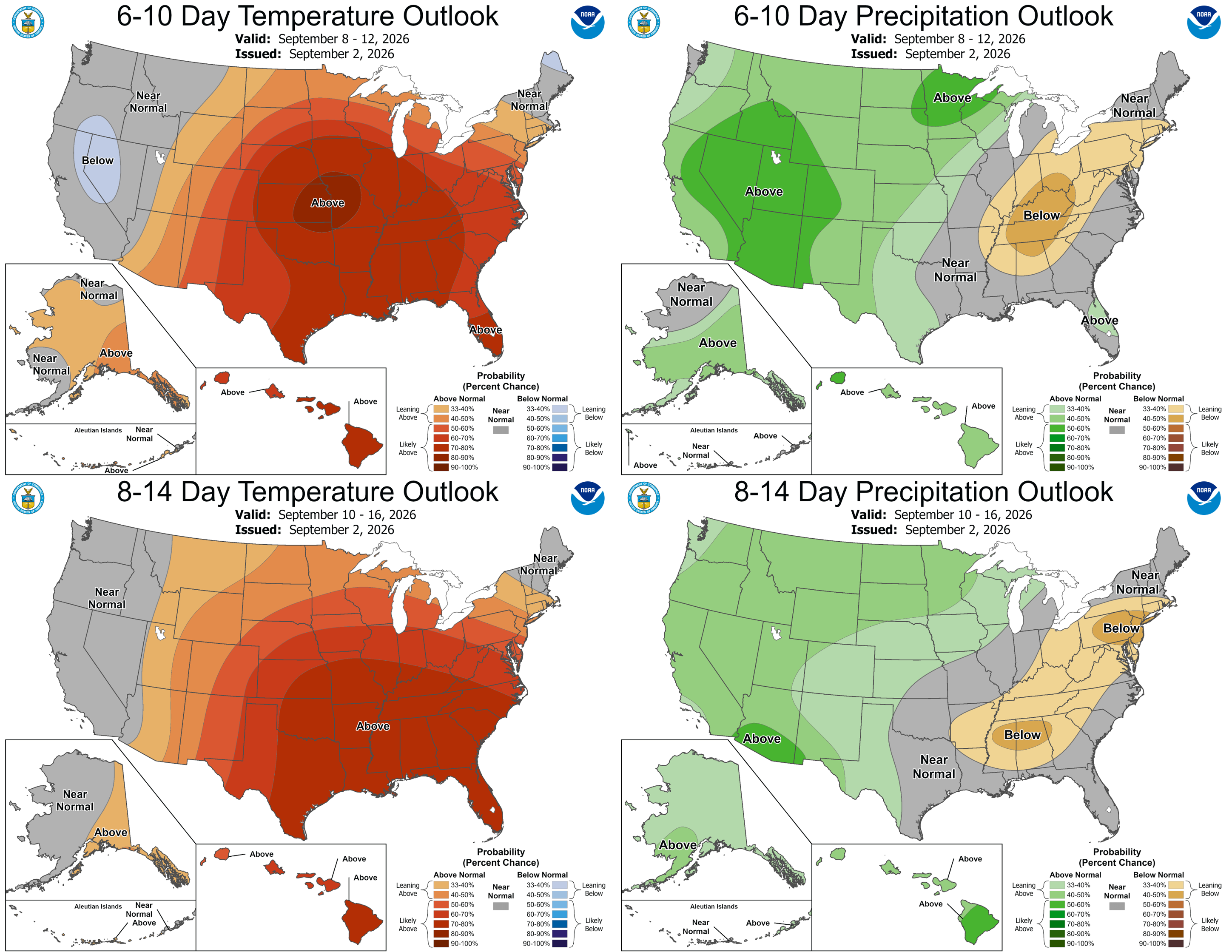
The past week was mostly warm and dry, with some showers over the weekend. High heat and humidity early this week were a big contrast to the fall-like weather from the previous week. Thunderstorms today (Sept. 3) leading into showers tomorrow are expected to bring about a third of an inch of precipitation. The weekend is forecast to be dry and warm, with the next rainfall expected early next week.
Crops and pests
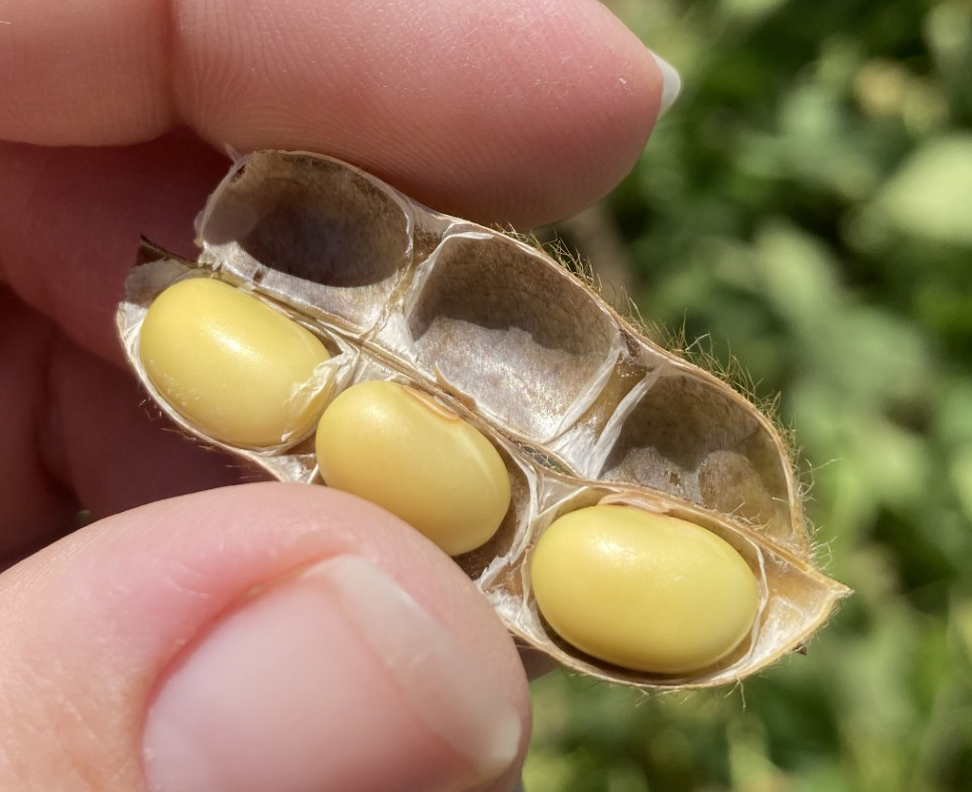
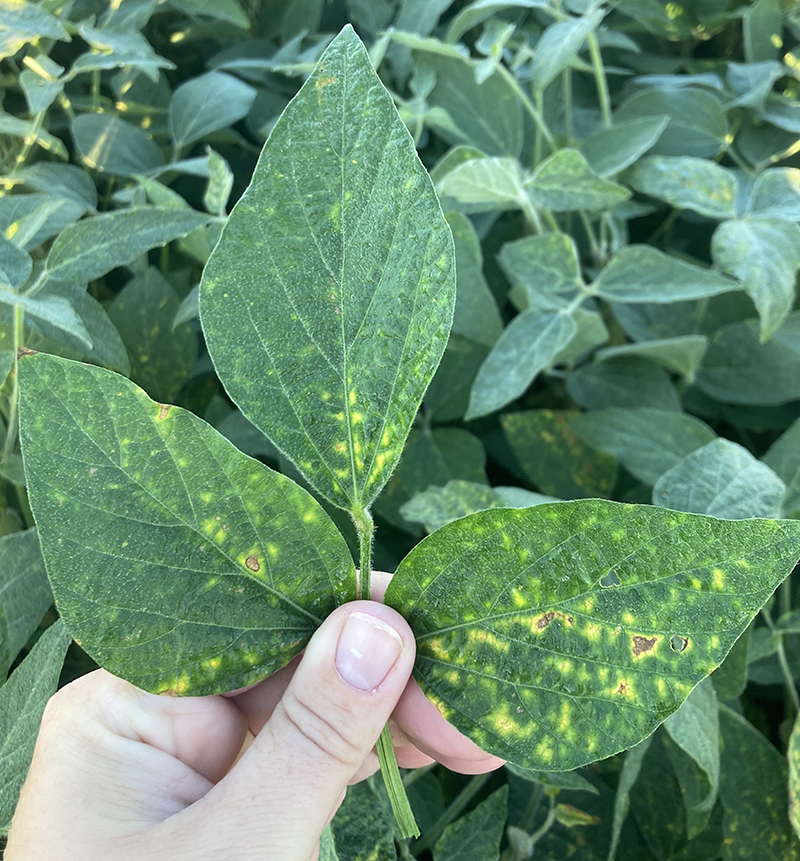
Full season soybeans are finishing R5 (seed fill) and entering R6 (full seed). Several fields have started to senesce. Once one pod on the stem reaches its mature color, the soybean is at R7. Continue to watch out for red crown rot, which is a potential disease not yet confirmed in Michigan. Symptoms look similar to sudden death syndrome and brown stem rot. If you suspect red crown rot, submit a sample to the Michigan State University Plant and Pest Diagnostics Lab. The Michigan Soybean Committee and the United Soybean Board will cover the diagnostic fees. You can also request a soybean sampling kit.
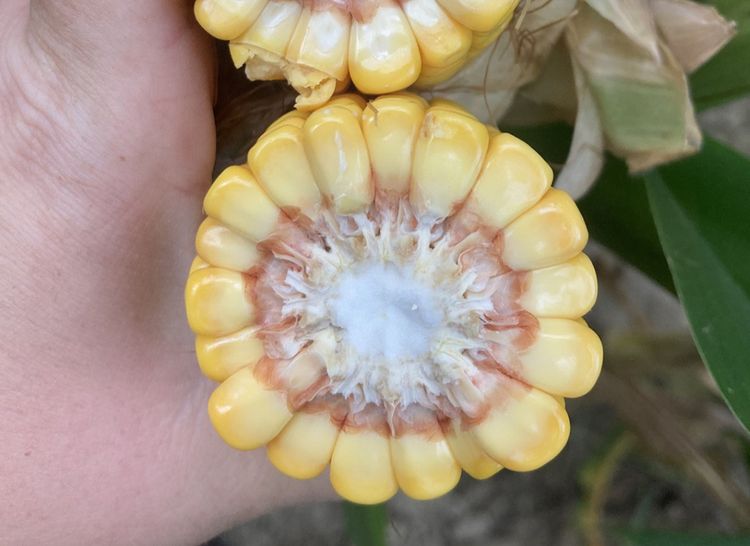
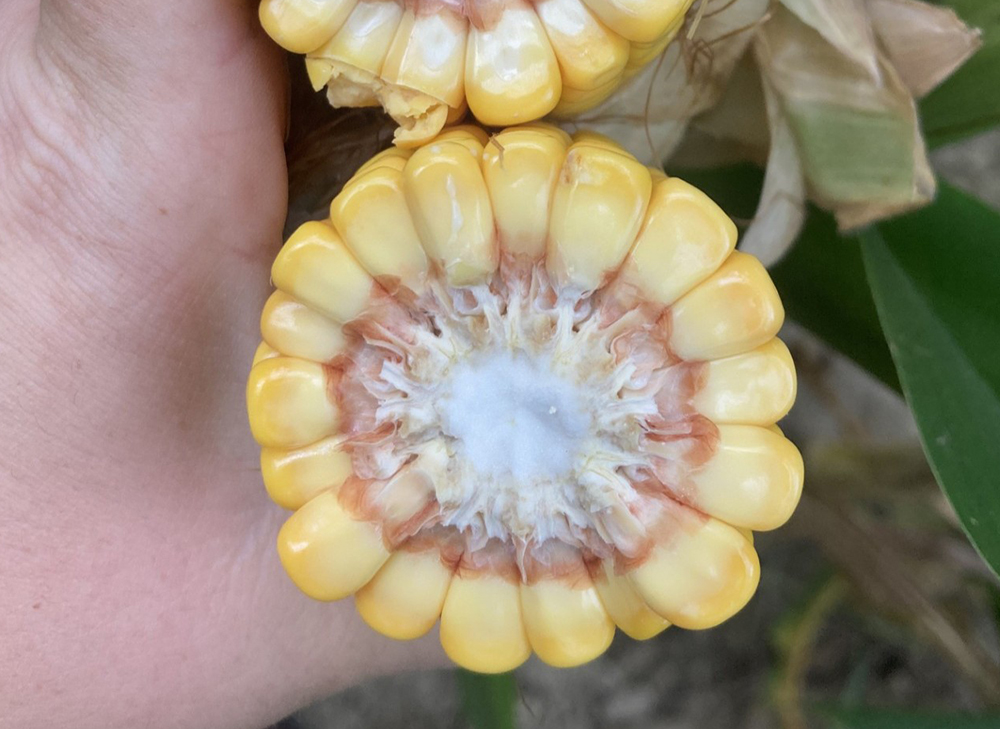
st corn fields have entered R5 (dent), and some are at R6 (black layer). At R5, the milk line is visible. This is a change in color in the middle of the kernel that shows where solid starch accumulation (darker color) has occurred, starting from the outer edge and moving inward. At this point in the season, scout for ear molds and stalk rots, which can affect harvestability and seed quality. Seed corn harvest began this past week.
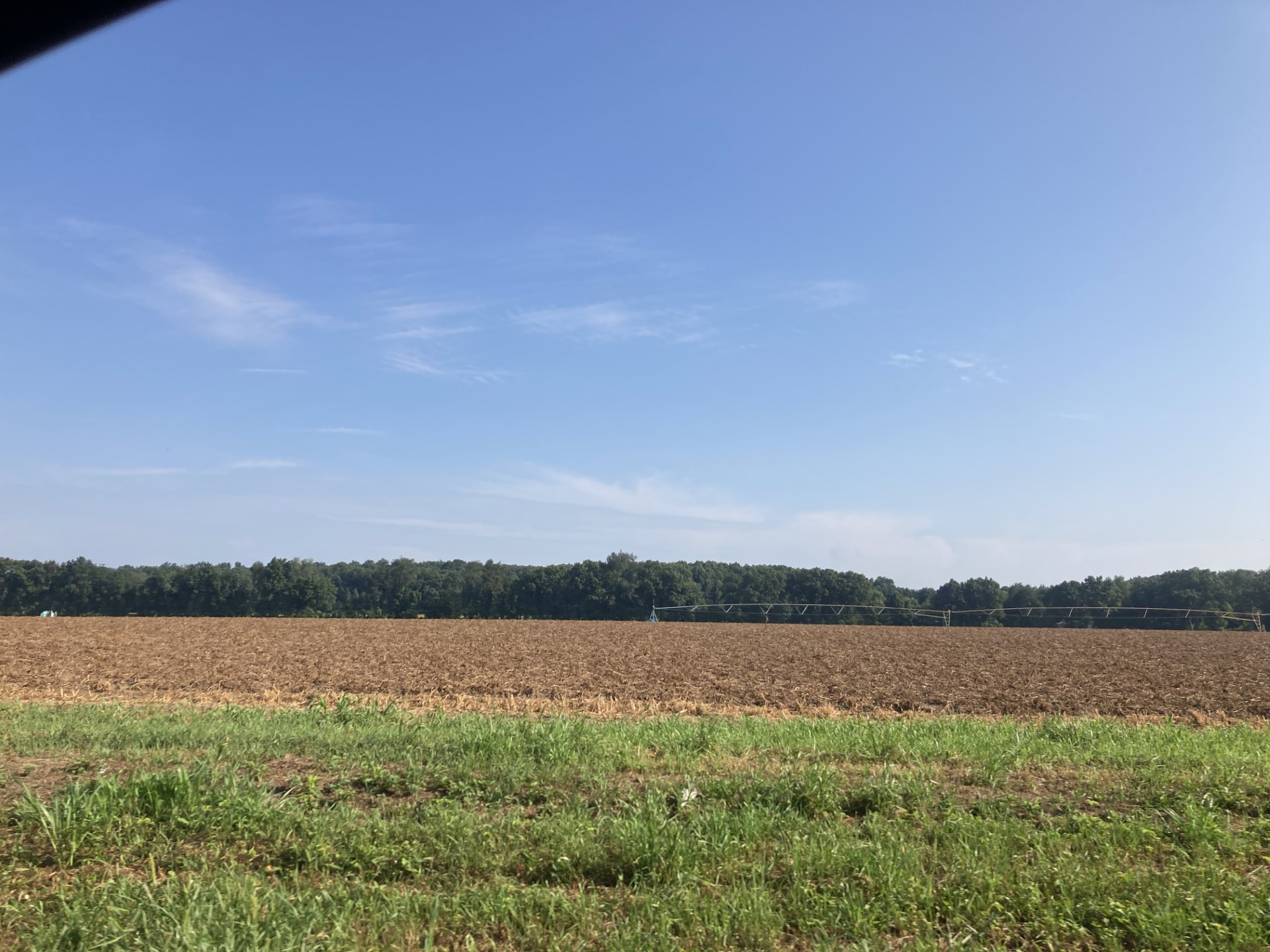
Potato harvest is picking up and will begin in earnest in a couple weeks. Many fields have already been terminated to prepare for harvest, and the rest will follow within a week or so. There have not been any further late blight detections since early August when it was found in St. Joseph County. Potato field after desiccation. Photo by Nicolle Ritchie, MSU Extension.
Irrigation and water use
At R5 stage, corn still uses approximately 0.7–1 inch of water per week. Once corn reaches the black layer (maturity), water use decreases to about 0.6 inches per week, and additional irrigation may no longer be beneficial. Start thinking about your last irrigation event. Once corn reaches black layer, there is no benefit to adding more water.
Soybeans at R5–R6 remain at peak water use, at approximately 1.16 inches per week in southwest Michigan. Before making your last irrigation decision, check soil moisture to ensure there is enough water available to carry the crop through full maturity. When approximately 50% or more of the leaves have turned yellow, this can be a good endpoint for irrigation. When irrigating soybeans, using higher application rates can reduce the frequency of leaf-wetting events, which may help reduce conditions favorable for white mold development.
Rainfall this week is expected to be variable, with lower temperatures and decreasing evapotranspiration and crop water demand, particularly in west-central Michigan.
To improve irrigation management, consider using irrigation scheduling tools such as the free and updated MSU Irrigation Scheduling Mobile App, available for Apple and Android devices. The app provides field-specific irrigation recommendations based on crop growth, weather, and soil type.
This year, weekly crop water use updates will continue to be shared through the Southwest Michigan Crop Updates. For added convenience, updates will also be sent through direct email and text messages. If you would like to see an additional location included in the report, please contact Angie Gradiz at gradizme@msu.edu or 531-249-4956.
The table below summarizes estimated crop water use (inches per week) for major irrigated field crops across Michigan's primary irrigated regions.
Estimated weekly crop water use for field crops in Michigan (in/week) for the week of August 31 - September 6, 2026:
|
Crop |
Growth stage |
Constantine |
Berrien Springs |
Entrican |
Hart |
|---|---|---|---|---|---|
|
|
Reference ET |
1.05 |
1.08 |
0.78 |
0.81 |
|
Corn |
VT, Silk, Blister, Dough, Begin Dent |
1.16 |
1.19 |
0.86 |
0.89 |
|
Corn |
Full Dent |
1.05 |
1.08 |
0.78 |
0.81 |
|
Corn |
Black Layer |
0.69 |
0.71 |
0.51 |
0.53 |
|
Soybeans |
R3 (Begin pod) - R4 (Full pod) |
1.16 |
1.19 |
0.86 |
0.89 |
|
Soybeans |
R5 (Begin seed) - R6 (Full seed) |
1.16 |
1.19 |
0.86 |
0.89 |
|
Soybeans |
Begin Mature |
1.05 |
1.08 |
0.78 |
0.81 |
|
Potatoes |
Bulk |
0.63 |
0.65 |
0.47 |
0.49 |
|
Potatoes |
Pre-Senescence |
0.32 |
0.32 |
0.23 |
0.24 |
|
Potatoes |
Maturity |
0.11 |
0.11 |
0.08 |
0.08 |
Field Crops Virtual Breakfast Series

Land valuations: Data centers, solar and more, presented by Tor Tolhurst, was the topic for the MSU Extension Field Crops Virtual Breakfast this week. Since 2000, farmland prices have increased across the Midwest. Data centers and other non-agricultural land uses can affect land prices by taking land out of production. Research shows that a general 2% decrease in acreage increases prices by about 1%.
Recordings of this and all the Virtual Breakfast meetings are closed-captioned and available at the Field Crops Virtual Breakfast webpage and the MSU Extension Field Crops Team social media platforms: Facebook, Spotify, Mediaspace, YouTube, Apple Podcasts and Twitter/X.
This work is supported by the Crop Protection and Pest Management Program (grant no 2024-70006-43569) from the USDA National Institute of Food and Agriculture. Any opinions, findings, conclusions, or recommendations expressed in this publication are those of the author(s) and do not necessarily reflect the view of the U.S. Department of Agriculture.