Southwest Michigan fruit update – April 15, 2026
 Print
Print Email
EmailSouthwest Michigan is experiencing April showers and warm weather.
MSU fruit updates
Happy spring! The plants are waking up, and we are back with our regular weekly scouting updates and integrated pest management (IPM) meetings. If you haven’t signed up to come to the Tuesday night meetings, sign up now.
Cold damage assessment
Recent freeze conditions in southwest Michigan resulted in a wide range of bud mortality across crops, reflecting how sharply cold tolerance declines with advancing phenology. Over the past week, bud dissections were conducted at the Southwest Michigan Research and Extension Center and by Cheyenne Sloan in VanBuren County to better quantify viability following the event. However, fruit bud survival is highly sensitive to local conditions, and these values may not reflect conditions in individual orchards. Small differences in elevation, proximity to water and cold air drainage can result in substantial variation in minimum temperatures and exposure duration, leading to very different levels of injury even within short distances.
Sloan did at-home mortality assessments of blueberries across Van Buren County and into lower Allegan County and found no damage in early, mid- or late season varieties.
In the dissections from the Southwest Michigan Research and Extension Center, apples showed only about 1% bud mortality (99% viable). Peaches and tart cherries each had about 10% bud loss, with only 4-5% attributable to this recent cold event; the remaining loss occurred during the deep freeze at the end of January.
In contrast, apricot (86% mortality) and Japanese plum (94% mortality) were heavily impacted. These crops were at full bloom during the event, where brief exposure below about 28 degrees Fahrenheit leads to rapid and near-complete kill of exposed floral tissues. The magnitude of loss suggests temperatures crossed these thresholds and remained low long enough to eliminate most viable flowers.
Growers in Van Buren, Cass, Kalamazoo, St. Joseph, Allegan and Ottawa counties should expect greater losses in peach, cherry and European plum, as temperatures were lower and duration below critical thresholds was longer in these areas than in central Berrien County. There is not much damage expected in apple across the southwest region.
Table 1. Estimated fruit bud viability following April freeze (Southwest Michigan Research and Extension Center assessment).
| Fruit Crop | % Viable Fruit Buds |
|---|---|
| Apple | 99 |
| Peach | 90 |
| Tart cherry | 90 |
| European plum | 90 |
| Apricot | 14 |
| Japanese plum | 6 |
Upcoming cold
Another cold event is forecast for Sunday night, April 19, with temperatures expected to drop into the low 30s and potentially upper 20s in colder sites. With many crops now at bloom or early fruit set, even small drops below critical thresholds could result in additional injury. Forecasted overnight winds near 10-15 mph indicate an advective freeze setup, where cold air is being mixed through the canopy rather than settling and stratifying.
Frost fans are most effective under calm conditions (generally less than 5 mph) when a temperature inversion is present, so their benefit in this scenario will be limited. Temperatures are likely to be more uniform across sites, including in areas that typically benefit from cold air drainage, increasing the risk of widespread injury.
Under advective conditions, protection options are constrained. Overhead irrigation can provide protection if sufficient water is applied continuously but must be managed carefully under windy conditions to avoid evaporative cooling and uneven coverage. Growers should prioritize blocks at the most sensitive stages (full bloom and shuck split) and recognize that earlier-stage crops may still retain some tolerance.
Following this event, damage assessment will again require bud or fruitlet dissection, as visual symptoms may take several days to develop.
Tree fruit
Apricot trees are in the shuck in central Berrien and Van Buren counties, although much of the crop was lost in last week’s cold snap. Surviving fruitlets are beginning early development, but overall crop potential remains limited and variable by site. As the season progresses, thinning will likely be unnecessary in most blocks, and management can shift toward preserving fruit quality on the remaining set.
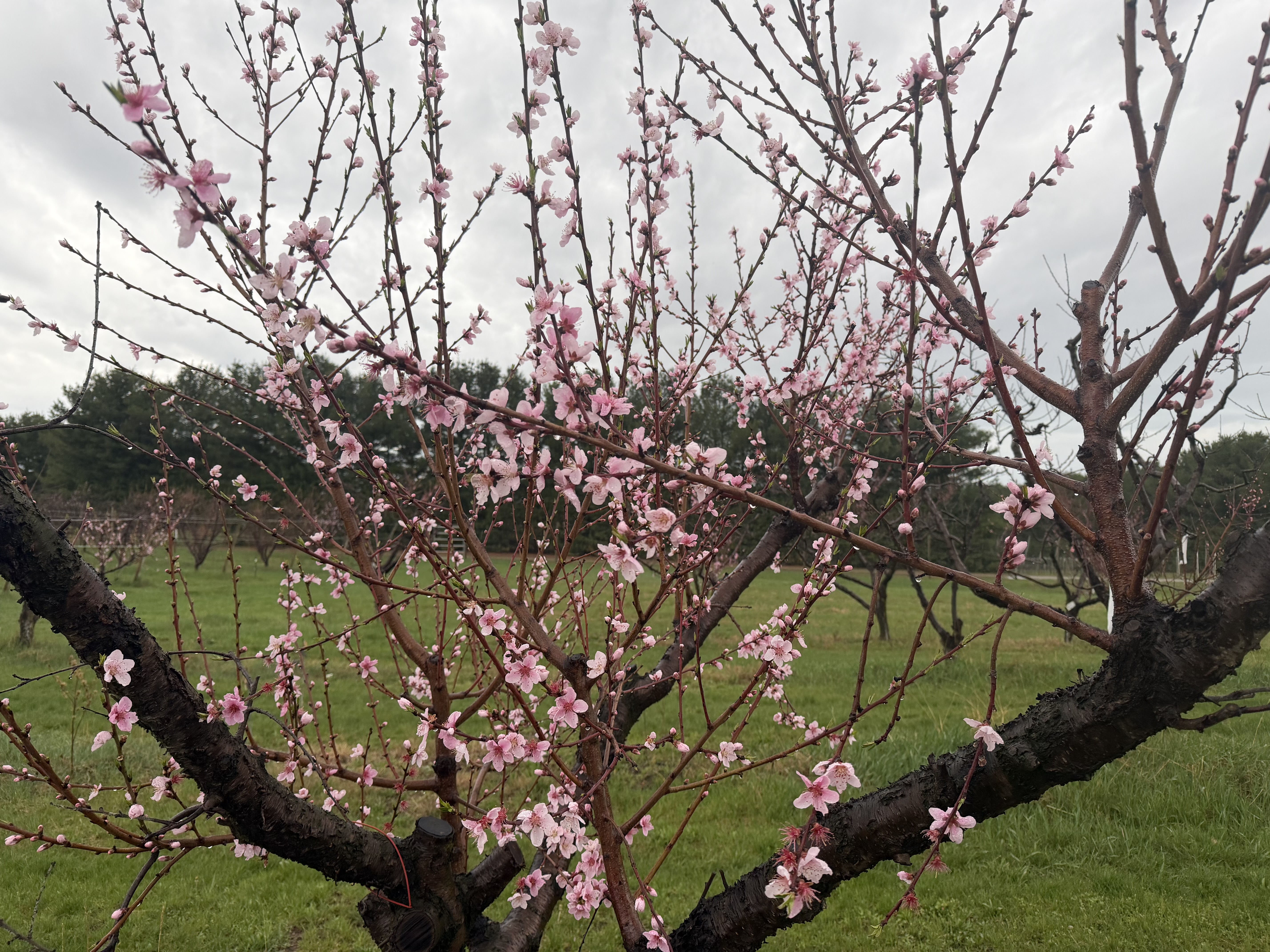
Peach buds have advanced through first pink to bloom, with many varieties in full bloom across Berrien and Van Buren counties. Bloom is progressing quickly with the recent stretch of warm weather, and petal fall is likely to begin at the end of this week in the most advanced sites. Conditions over the next several days will play a key role in pollination and fruit set. Avoid insecticides that may harm bees during bloom.
As bloom progresses, attention should also shift toward disease management and early-season crop load considerations. Brown rot protection is critical during bloom, especially under warm, wet conditions, as infections initiated now can carry through to fruit. In blocks where bud loss has occurred, natural thinning may already be underway, reducing the need for aggressive follow-up thinning later. However, variability within trees and across blocks is likely, and early assessments of set will be important for guiding subsequent management decisions.
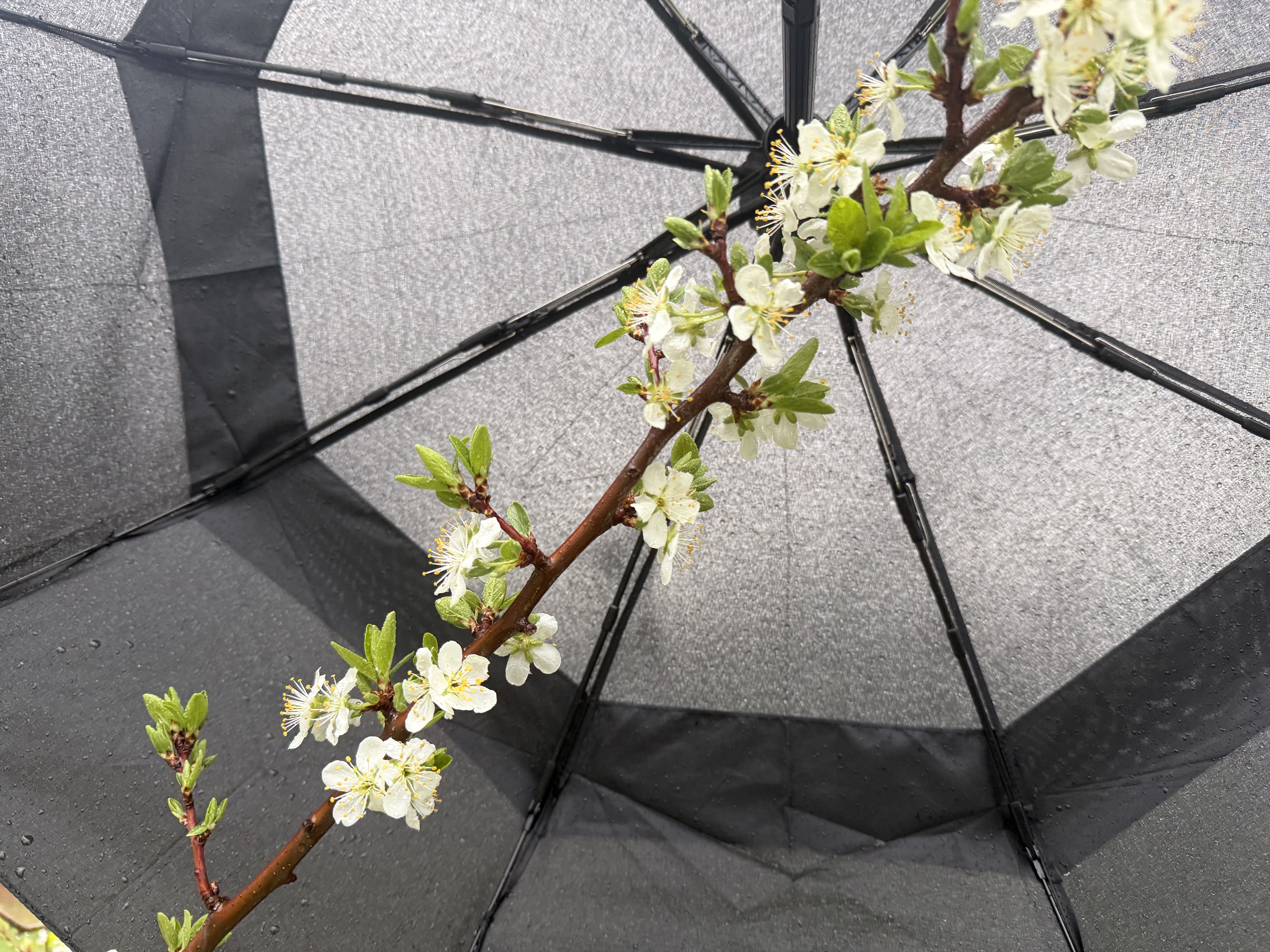
Plum is at full bloom. Japanese plum, which was in bloom during last week’s cold event, sustained significant damage in many locations. European types now at bloom fared better, but variability across sites is expected depending on temperature lows and bloom timing.
Now is the time to begin brown rot protection. Brown rot infects open blossoms and developing fruit, with the highest risk occurring during the first three weeks after bloom. Recommended materials at this timing include Bravo, Indar, Pristine and Topsin M plus Captan, all of which provide good to excellent control when applied with thorough coverage. More information can be found in this article on American brown rot by Michigan State University Extension.
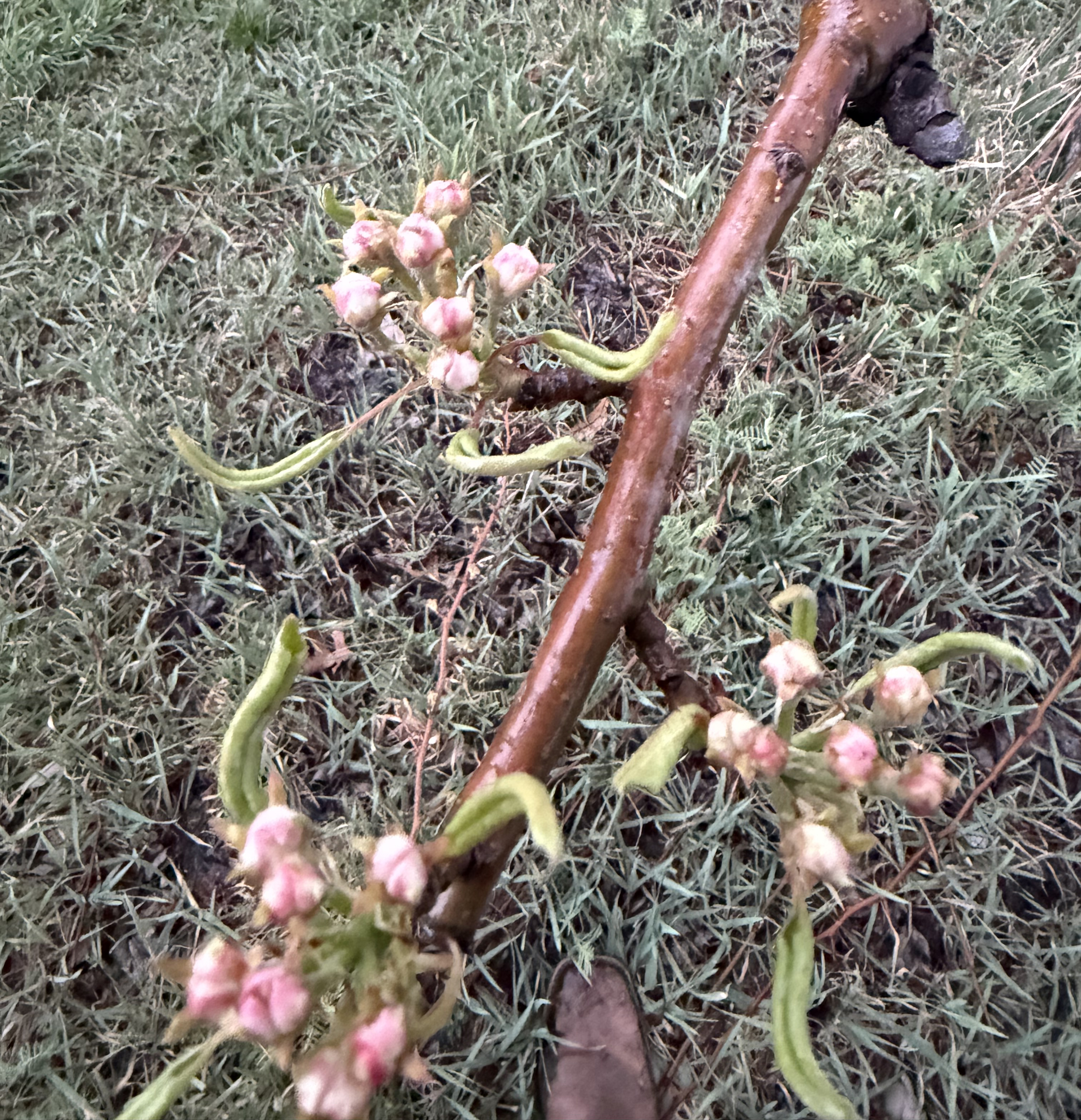
In cherries, tart cherries and sweet cherries are at tight cluster in Berrien and Van Buren counties. Development has been slower than other fruit crops in the region.
Copper sprays can be applied safely up to bloom, with rates adjusted to 25–35% of a dormant application. As always, pay attention to the specific formulation and metallic copper content. Copper applications may help suppress bacterial canker, particularly under cool, wet conditions.
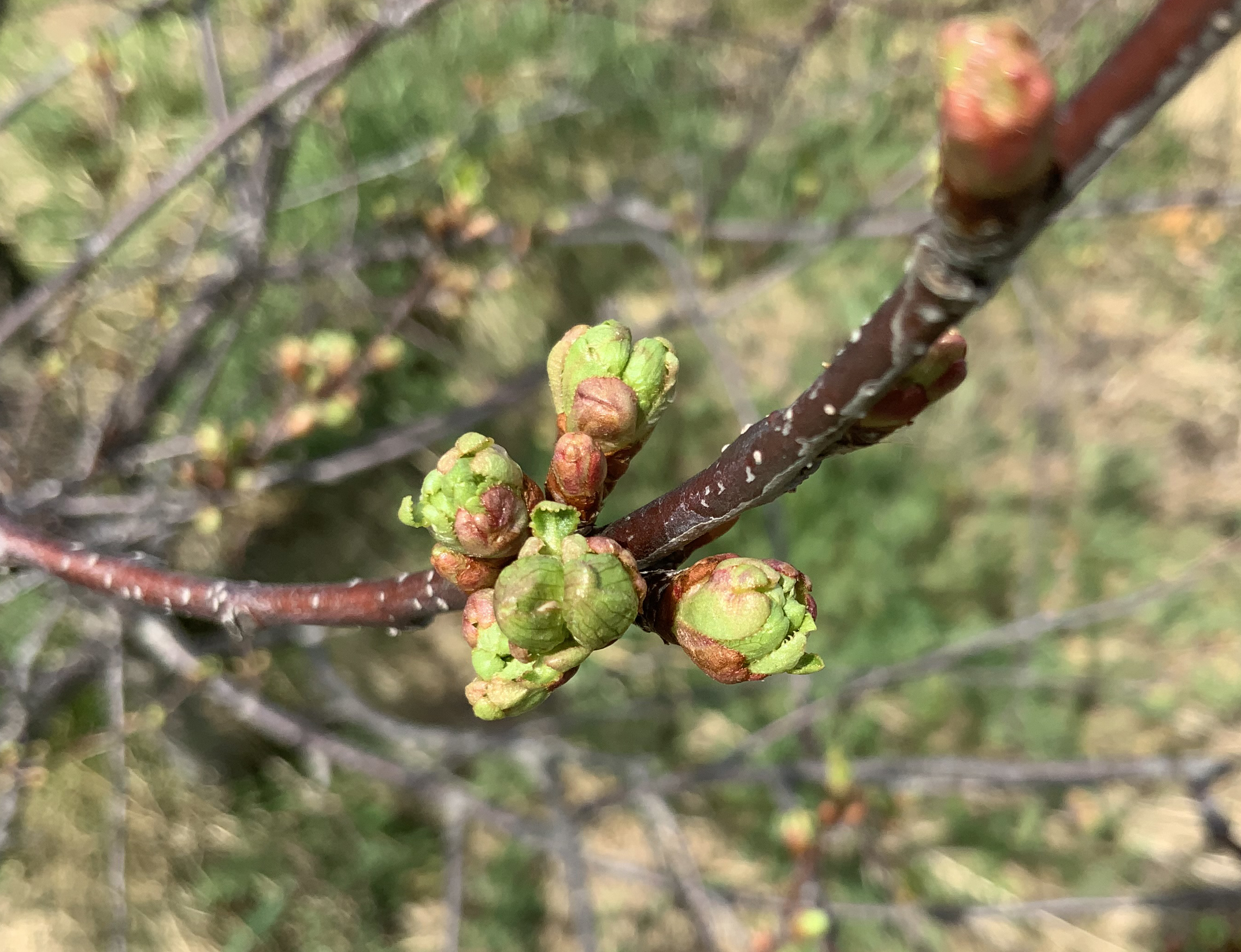
In apple, most varieties are ending tight cluster and heading into pink, with bloom expected within the next two weeks.
Apple scab risk is extremely high over the next several days. Forecasted rain events combined with advancing green tissue are creating ideal conditions for primary infection, with a large release of ascospores expected during each wetting period. Any unprotected tissue will be highly susceptible, and infection efficiency will be high given the prolonged leaf wetness and high temperatures.
Maintaining tight fungicide coverage ahead of rain is critical, with particular attention to reapplication following significant wash-off events. Copper should be avoided beyond half-inch green to reduce the risk of fruit russeting. SDHI fungicides are excellent choices to control primary scab. The MSU Enviroweather apple scab model can be used to track infection periods and better time applications.
As we approach bloom, managing fire blight becomes a central concern. The transition into bloom represents a structural shift in risk, as open flowers provide a direct pathway for infection and the pathogen can rapidly colonize stigmatic surfaces under warm, wet conditions. Once established, infection can move systemically into shoots, making early intervention critical to limiting both blossom and shoot blight phases.
To effectively manage fire blight, using antibiotic applications is necessary during bloom when infection risk is high. Proper timing and coverage are critical, as these materials work by suppressing bacterial populations on open blossoms before infection occurs. Detailed guidance on the use of streptomycin, Kasumin and oxytetracycline including rates, timing and resistance management can be found in this MSU Extension article.
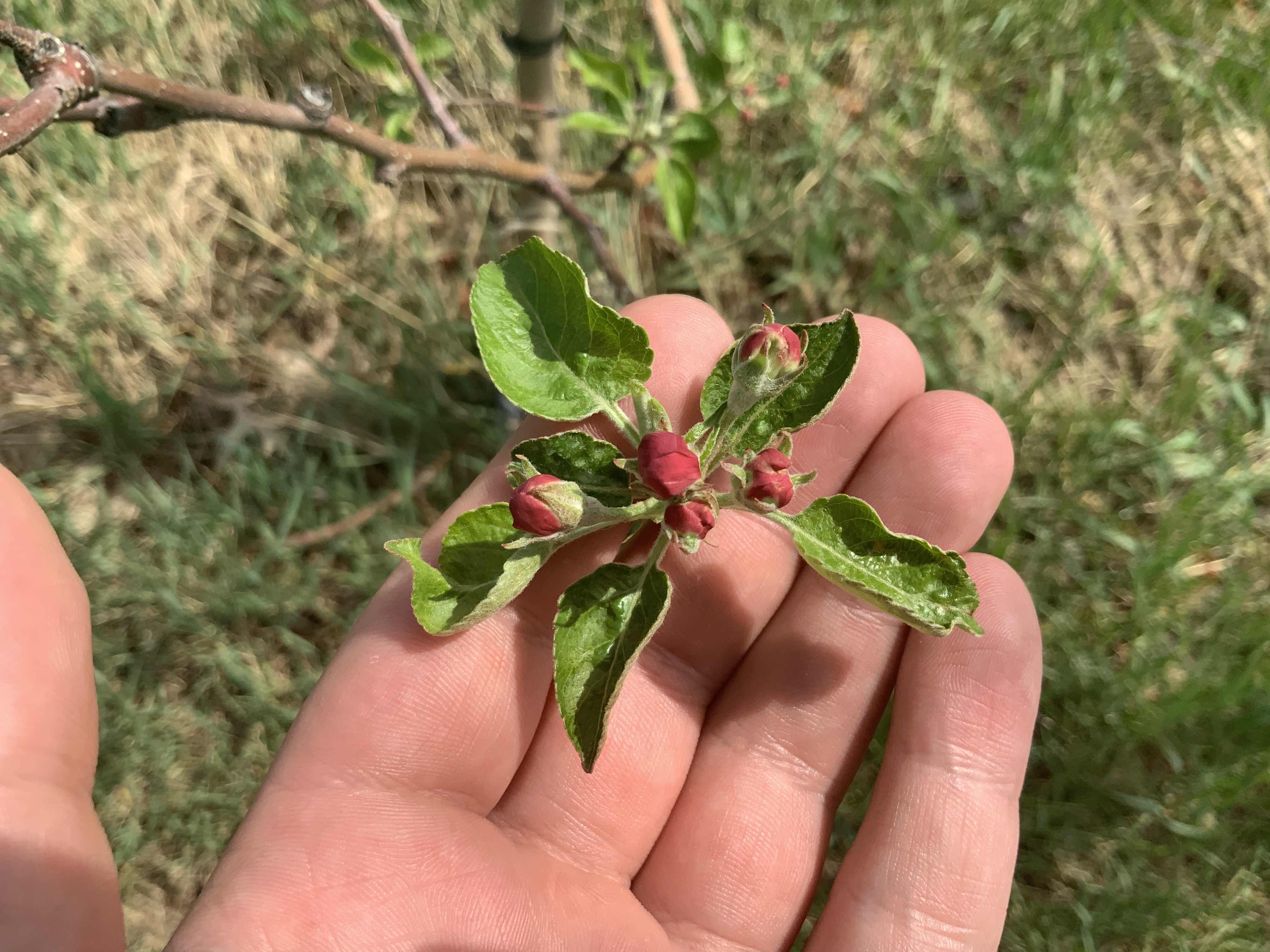
Pear buds are at first white across Berrien County, with rapid progression expected under continued warm conditions. This stage marks the transition into bloom, where trees become increasingly susceptible to fire blight infection when conditions turn favorable. Wetting events forecasted for the next few days in combination with high temperatures make pear fire blight a concern.
Protecting open blossoms with antibiotics is critical under these conditions. Streptomycin remains the most effective option and should be applied ahead of or during infection events, with good coverage of all open flowers. In orchards with a history of streptomycin resistance, Kasumin can be used as an alternative. Applications should be timed using a disease forecasting model such as the MSU Enviroweather fire blight tool to target high-risk periods.
Seasonal outlook
Taken together, the recent freeze and upcoming weather patterns are creating a highly compressed and uneven season across southwest Michigan. Crops with high bud survival (apple, peach, cherry) are entering bloom under elevated disease pressure, requiring tight management of scab, fire blight and brown rot. In contrast, apricot and Japanese plum are shifting into a low-crop scenario, where the focus moves away from crop load concerns and toward preserving fruit quality on the limited remaining set.
The combination of variable bud survival, rapid phenological advancement and continued weather-driven risk means that management decisions over the next 10-14 days will disproportionately influence final crop outcomes. Close monitoring of both weather models and crop development at the block level will be essential, as regional averages may not reflect conditions within individual orchards.
Small fruit
Juice and wine grapes have woken up throughout northern Van Buren County. The window for dormant sprays has essentially closed.
Blueberry are at bud burst through southern Allegan County with more leaves emerging the further south you go. Mummy berry is the next pathogen to manage. Bloom is imminent, and once flowers are out we will be thinking about flower thrips and starting to monitor other insects. Monitoring for cherry fruitworm and cranberry fruitworm will begin soon. Traps should be placed in blueberry bushes near woodlots and previous hot spots, in the upper fruiting zone, and placed just before bloom. Blueberry gall midge, a minor pest that damages growing tips, should be emerging in the next week or so.
Fertilization typically begins around bloom, which is fast approaching. Make sure your irrigation systems are up and running. The frost-free date for most of Michigan is the middle of May, so it's good to be prepared for potential frost protection between now and then. With all of the rain we have gotten, there might be some flooding in fields. Check out this report from Washington State University about flooding impacts they experienced a few years ago.
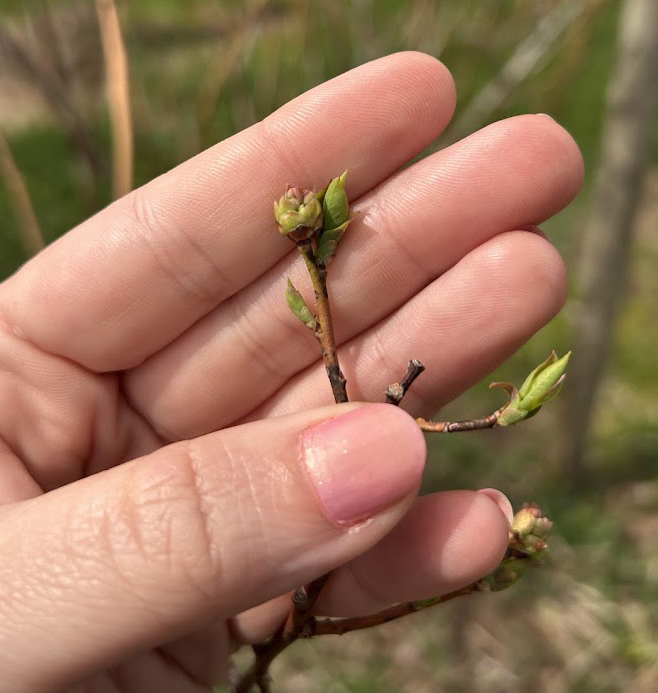
Strawberry overwintering mulches should be removed and raked between the rows. Some growers are putting out floating row covers. Growers are looking at early season herbicides to control overwintering weeds. When selecting an herbicide, make sure and check the pre-harvest interval (PHI). New leaves are beginning to appear in the crown.
Bramble leaves have begun emerging.
Upcoming meetings
This year, we are hosting Tuesday Night Fruit IPM meetings. They take place in person at the Southwest Michigan Research and Extension Center in Benton Harbor and online via Zoom. The meetings cover phenology, insect and disease progression and selected topics from experts in Extension. These meetings cover small fruit for southwest Michigan and tree fruit for southwest and southeast Michigan. The meetings start at 5:30 p.m. and occur weekly until June 24. Sign up for the online option. Past meeting recordings are available online via MSU Mediaspace.
This work is supported by the Crop Protection and Pest Management Program [grant no 2024-70006-43569] from the USDA National Institute of Food and Agriculture. Any opinions, findings, conclusions, or recommendations expressed in this publication are those of the author(s) and do not necessarily reflect the view of the U.S. Department of Agriculture.