Southwest Michigan fruit update – April 22, 2026
 Print
Print Email
EmailIt was a frosty start to the week, but at least the rain has paused for now.
MSU fruit updates
Happy spring! The plants are waking up, and Michigan State University (MSU) Extension is back with our regular weekly scouting updates and integrated pest management (IPM) meetings. If you haven’t signed up to come to the Tuesday night meetings, sign up now.
Spring frost of April 20
Another spring frost moved through southwest Michigan Sunday night, April 19, with temperatures ranging from 21.7 degrees Fahrenheit in Lawrence, Michigan, to around 29 F at the Southwest Michigan Research and Extension Center in Benton Harbor, Michigan. Many fruit crops, including peach, tart cherry, sweet cherry and European plum, were in bloom and susceptible to injury, with damage likely occurring in areas that dropped below 28 F. This frost also impacted some early varieties of blueberries and grapes in low, cold areas.
Table 1. Low temperatures across southwest Michigan on April 20, 2026.
| Location | Low Temp (deg F) |
|---|---|
| SWMREC | 29 |
| Lawton | 28.2 |
| Fennville | 27.2 |
| Hartford | 28.7 |
| Lawrence | 21.7 |
| Dowagiac | 26.2 |
| Berrien Springs | 27.5 |
| Cassopolis | 28.6 |
| Coldwater | 27.9 |
| Grand Junction | 25.7 |
| Keeler | 27.8 |
Injury across the region is expected to be highly variable, with the greatest losses in low-lying or colder sites. At this stage, symptoms may not be immediately obvious, particularly in crops like peach, pear and apple, where damaged fruitlets can persist for a period before dropping. Over the next seven to 14 days, growers should begin cutting buds and monitoring fruitlet development to assess viability and refine crop load expectations. These early evaluations will be critical for guiding thinning decisions and adjusting management inputs to match the reduced or in some cases uneven yield potential across blocks.
After a frost event, one of the most reliable ways to determine the extent of injury is by dissecting buds and blossoms. Begin sampling representative trees across the block, including both high and low elevation areas, and collect multiple buds or flowers from each location. Using a sharp razor blade or knife, carefully cut through the center of the bud or ovary (for blossoms) to expose the internal tissue.
In a viable (alive) bud, the internal tissue will appear green to light yellow and hydrated, indicating that the reproductive structures are still functional. In contrast, a damaged (dead) bud will show brown to black discoloration in the ovary or floral tissues, often with a water-soaked or collapsed appearance. This browning is a direct result of freeze injury to the developing cells.
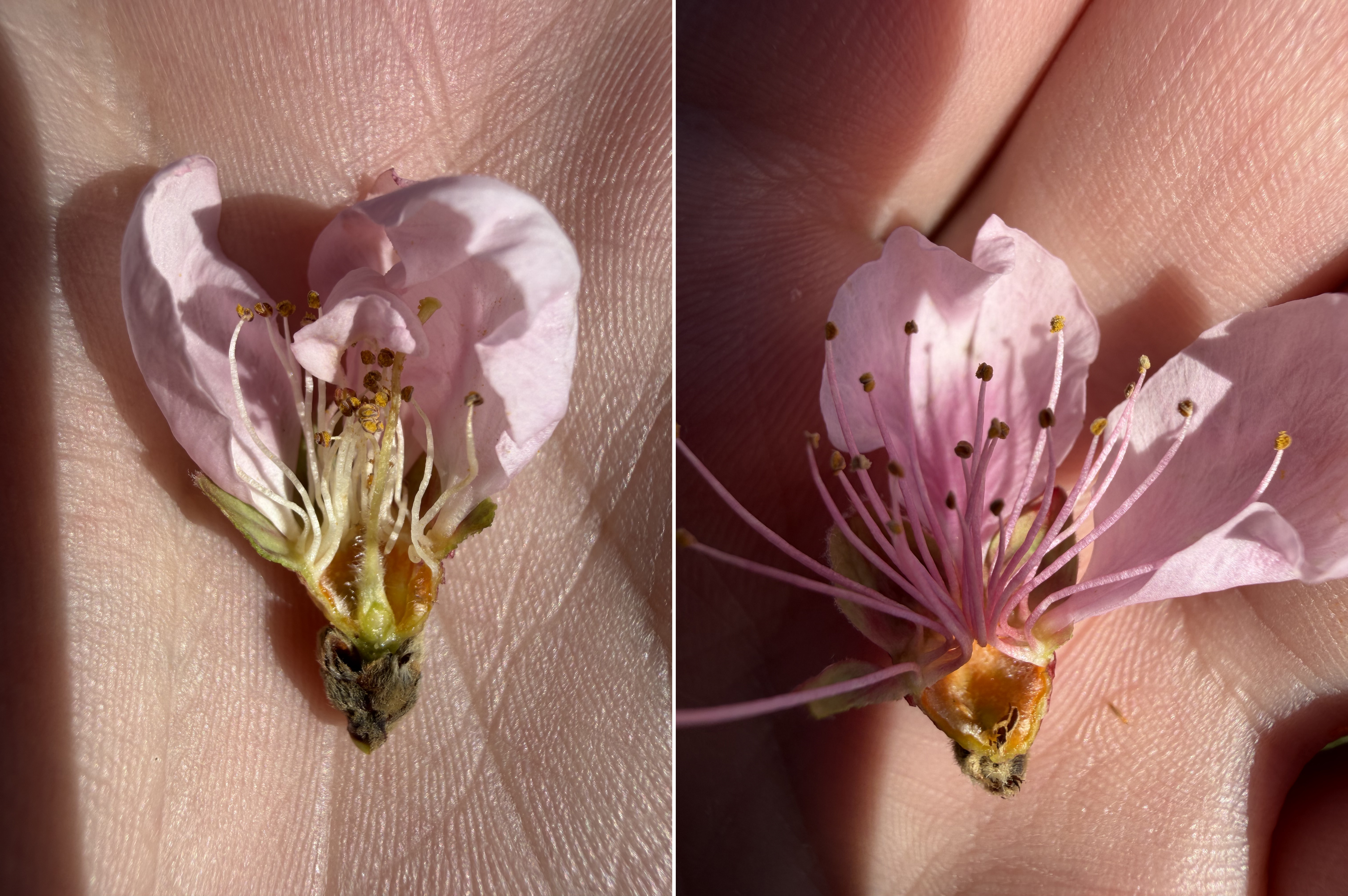
Because injury can vary significantly within a block, it is important to assess multiple locations and calculate a rough percentage of viable buds. This early estimate provides a more accurate picture of potential crop load than visual bloom density alone and should guide thinning decisions and overall management intensity moving forward.
Tree fruit
Apricot trees have small fruit forming in central Berrien and Van Buren counties, although much of the crop was lost through spring frost. Surviving fruitlets are beginning to size, but overall crop potential remains limited and variable by site.
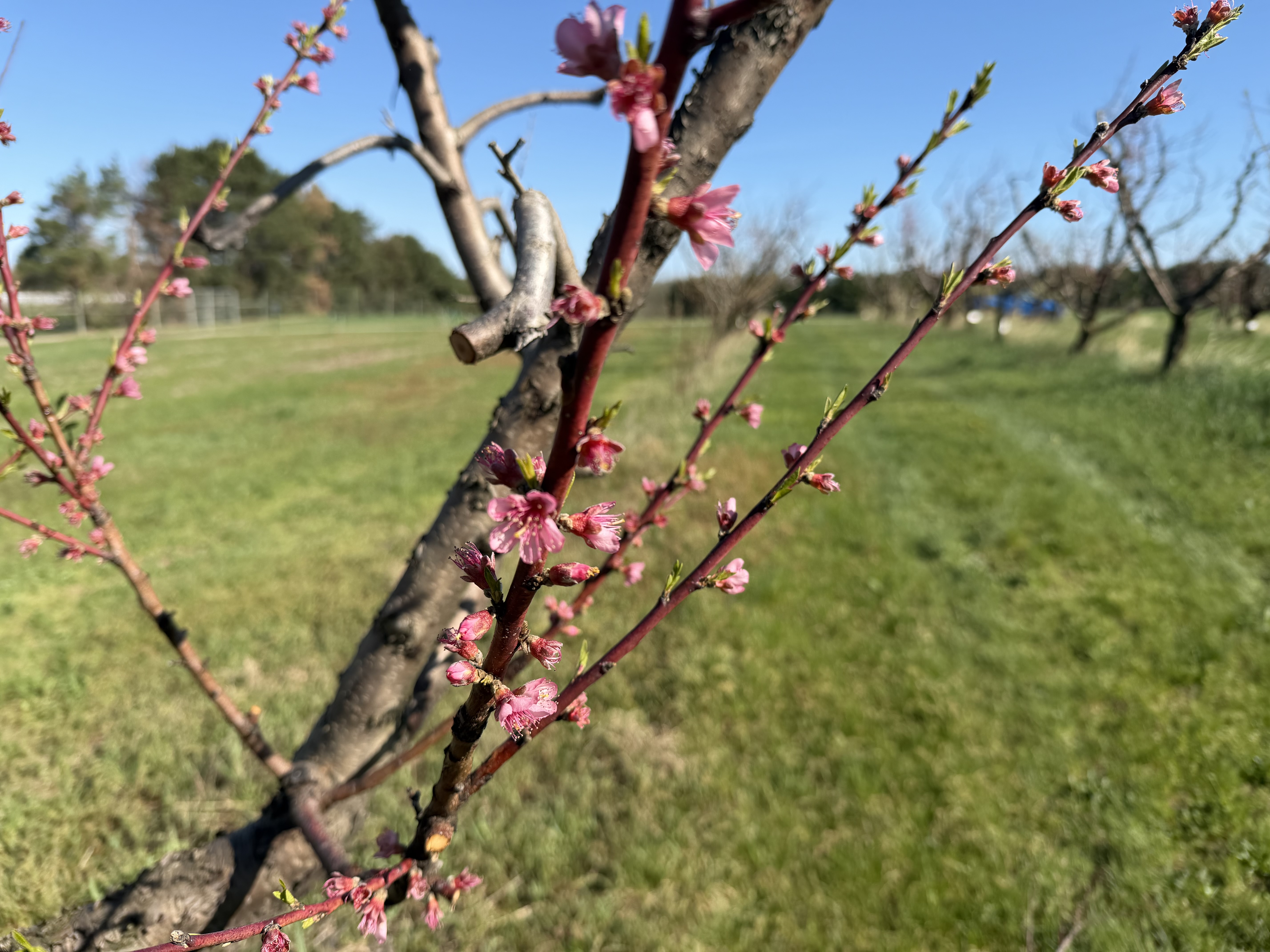
Peaches have bloomed over the past week, with the earliest varieties ending full bloom over the weekend, and the later blooming varieties are ending full bloom in a few days.
Brown rot protection is critical during bloom, particularly under warm, wet conditions, so maintain tight spray intervals (around three to five days) when weather favors infection, prioritize high-efficacy materials with rotation among FRAC groups, and ensure applications are made ahead of rainfall events with strong coverage throughout the canopy. At the same time, begin evaluating fruit set within seven to 10 days after bloom by checking for viable fruitlets and their distribution along shoots.
In blocks that experienced bud loss, some natural thinning is already occurring, which may reduce the need for aggressive thinning later, but variability within trees and across blocks is likely to be significant. Focus on early, block-specific assessments rather than assuming uniform set, and avoid making aggressive thinning decisions until actual fruit retention is clear. This season in particular will require adjusting strategy based on observed conditions rather than bloom intensity alone.
Plum bloom has ended and small fruits are forming. Japanese plum, which was in bloom during last week’s cold event and had small fruit, sustained significant damage in many locations. European types at bloom fared better, but variability across sites is expected depending on temperature lows and bloom timing.
Now is the time to begin brown rot protection. Brown rot infects open blossoms and developing fruit, with the highest risk occurring during the first one to three weeks after bloom. Recommended materials at this timing include Bravo, Indar, Pristine and Topsin M plus Captan, all of which provide good to excellent control when applied with thorough coverage. More information on American brown rot can be found in this MSU Extension article.
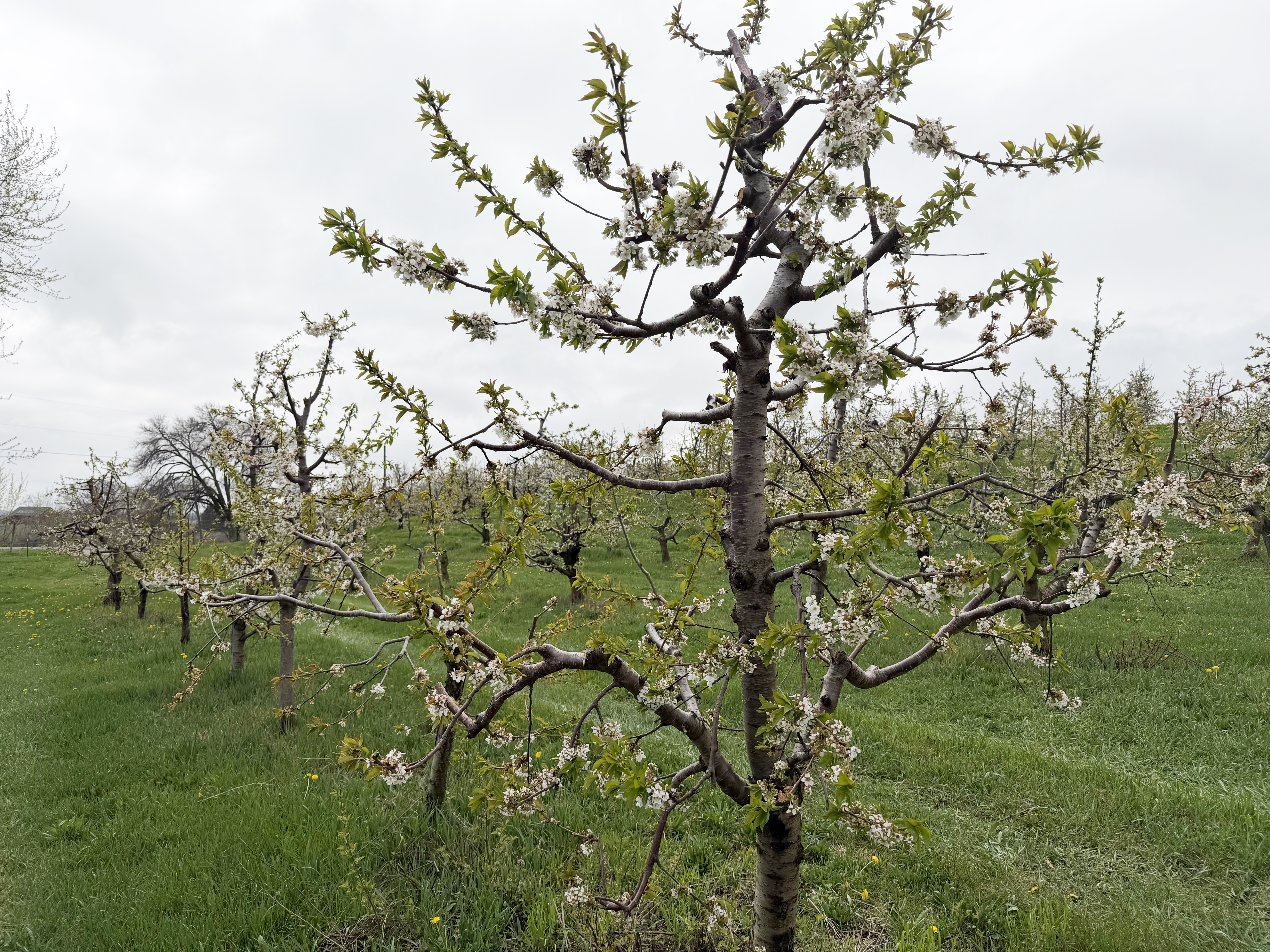
In cherries, tart cherries and sweet cherries are blooming in Berrien and Van Buren counties.
This is a critical window for brown rot control, particularly under warm, wet conditions, so applications should be timed ahead of rain events with effective materials and good canopy coverage.
At the same time, bloom stage places cherries in a highly susceptible position for freeze injury, especially in areas that dropped below 28 F during the recent frost. Growers should begin assessing damage over the next several days by checking blossoms for browning in the ovary and monitoring early fruit set. Given the variability in temperatures across sites, expect uneven injury both within and between blocks, which will be important to account for in subsequent management decisions.
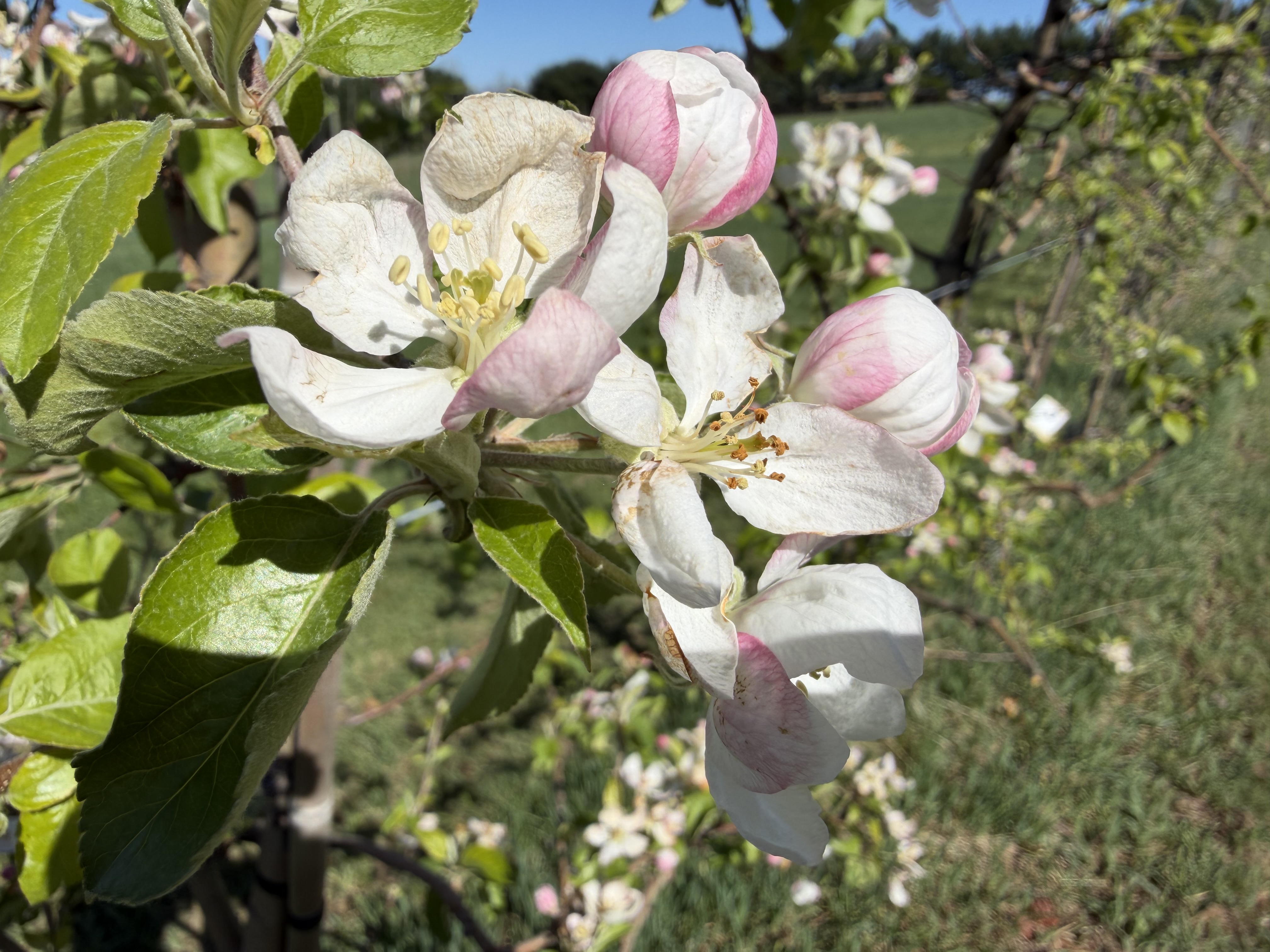
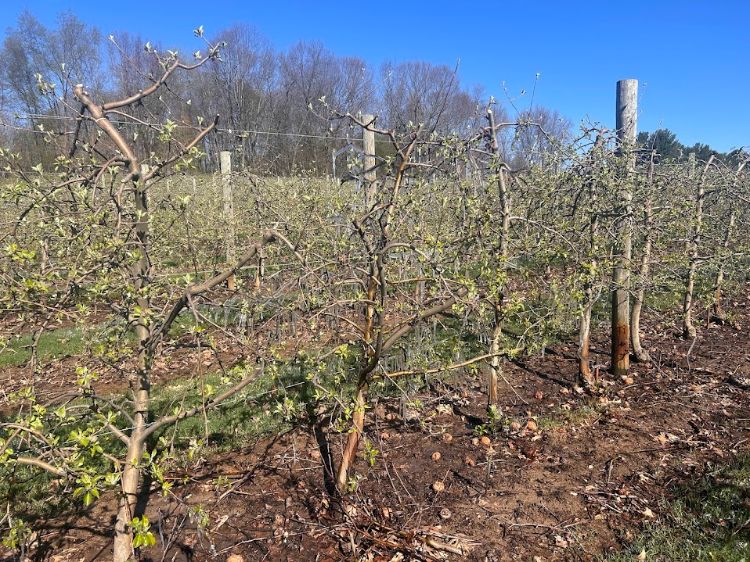
In apples, most varieties are entering first bloom. Cultivars in king bloom at the research station are Smitten, Zestar! and Pink Lady, while Red Cameo, Honeycrisp, Gala, Fuji and Braeburn are in tight cluster to pink. Full bloom for the cultivars in king bloom is expected within three days.
Apple scab risk is low over the next several days. While risk is low, maintaining adequate fungicide protection is important to stop the spread of disease during wetting events. Copper should be avoided beyond half-inch green to reduce the risk of fruit russeting. SDHI fungicides are excellent choices to control primary scab. The MSU Enviroweather apple scab model can be used to track infection periods and better time applications.
As we further approach bloom, managing fire blight becomes a central concern. The transition into bloom represents a structural shift in risk, as open flowers provide a direct pathway for infection and the pathogen can rapidly colonize stigmatic surfaces under warm, wet conditions. Once established, infection can move systemically into shoots, making early intervention critical to limiting both blossom and shoot blight phases.
To effectively manage fire blight, using antibiotic applications is necessary during bloom when infection risk is high. Proper timing and coverage are critical, as these materials work by suppressing bacterial populations on open blossoms before infection occurs. Detailed guidance on the use of streptomycin, Kasumin and oxytetracycline including rates, timing and resistance management can be found in this MSU Extension article. Wetting events forecasted for the next few days in combination with high temperatures make apple fire blight a concern.
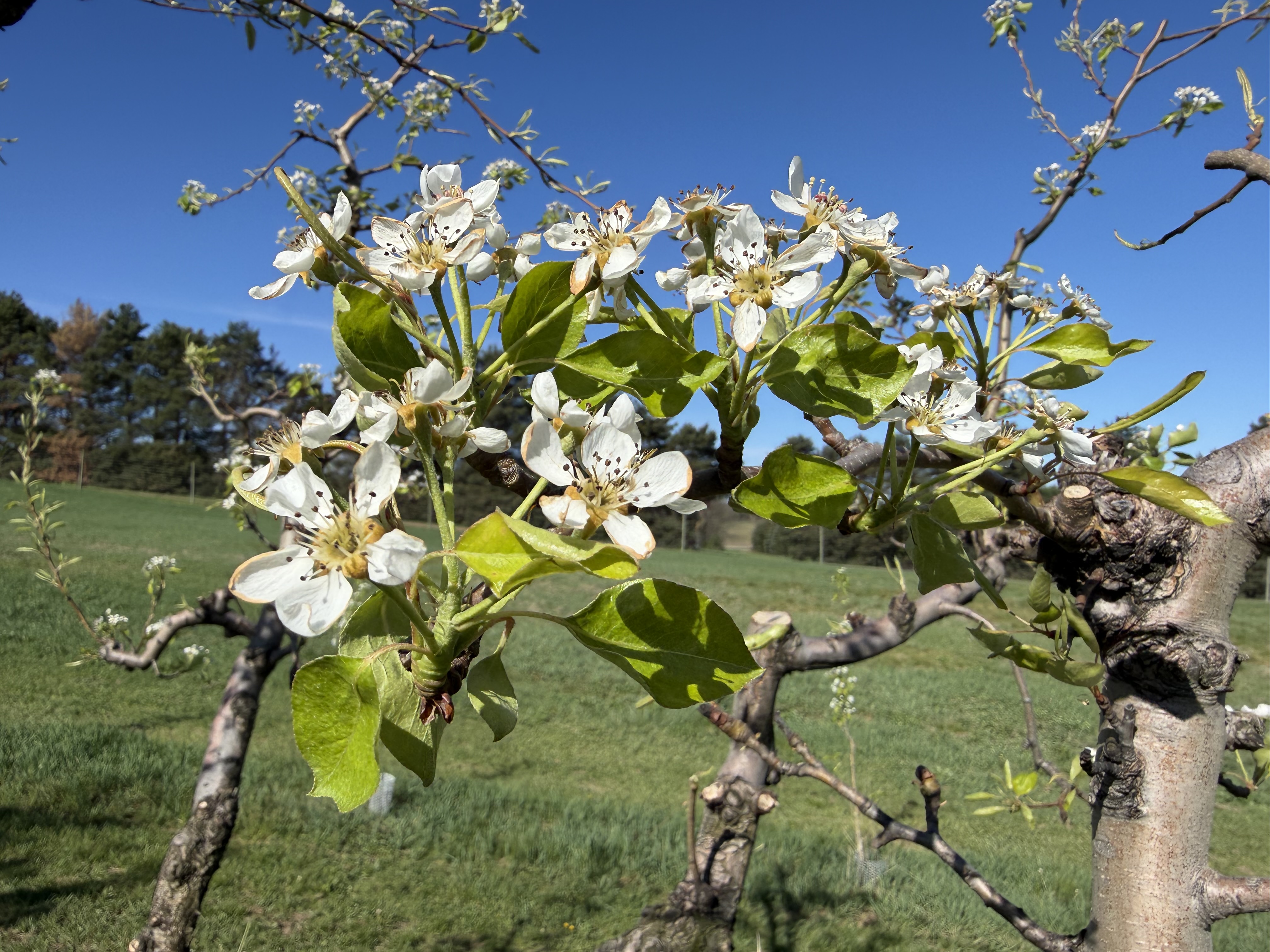
Pears are in bloom across Berrien County. This means the blossoms are susceptible to fire blight infection. Wetting events forecasted for the next few days in combination with high temperatures make pear fire blight a concern.
Protecting open blossoms with antibiotics is critical under these conditions. Streptomycin remains the most effective option and should be applied ahead of or during infection events, with good coverage of all open flowers. In orchards with a history of streptomycin resistance, Kasumin can be used as an alternative. Applications should be timed using a disease forecasting model such as the MSU Enviroweather fire blight tool to target high-risk periods.
Small fruit
In grapes, with the cold weather earlier this week there was damage reported in cold pockets across Van Buren County. The damage is varied and affected mostly early varieties. Juice grapes and early hybrids are at full bud break with first leaves starting to fold out. Other hybrids and early vinifera varieties have opened.
The current disease focus is on phomopsis, black rot, anthracnose and powdery mildew. Once leaf tissue is visible, contact fungicides that include broad-spectrum/contact fungicides like the EBDCs (FRAC M3) and captan are effective and function similar to dormant applications by sanitizing the vineyard before bloom. If you are an organic grower, early season oils may also be used, which try to suffocate overwintering fungal spores and infected tissues. Be careful of utilizing oil applications within 14 days of any sulfur application due to phytotoxicity issues.
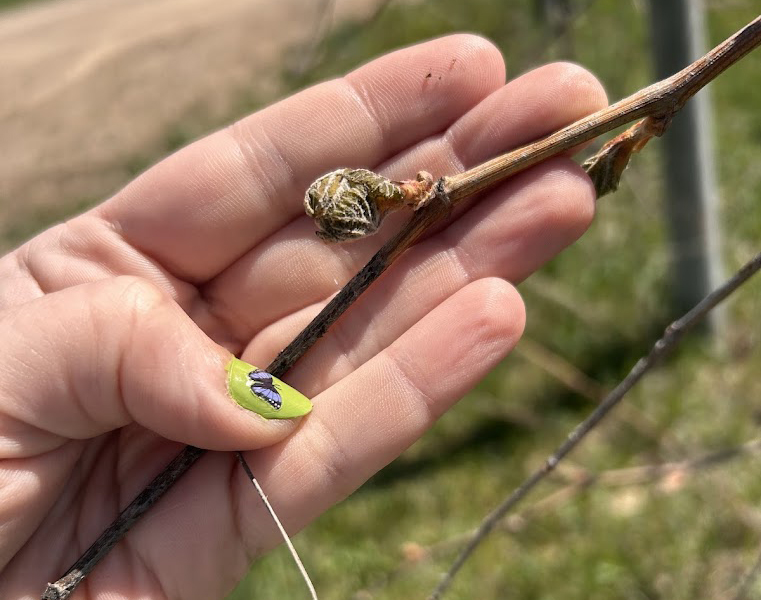
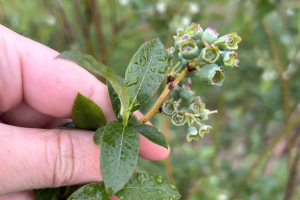
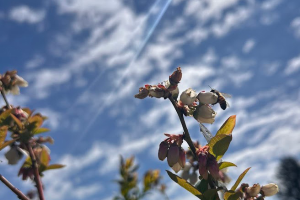
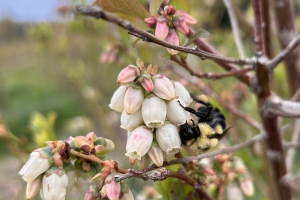
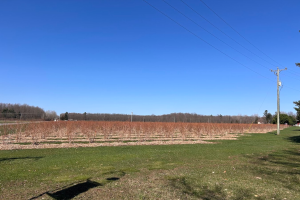
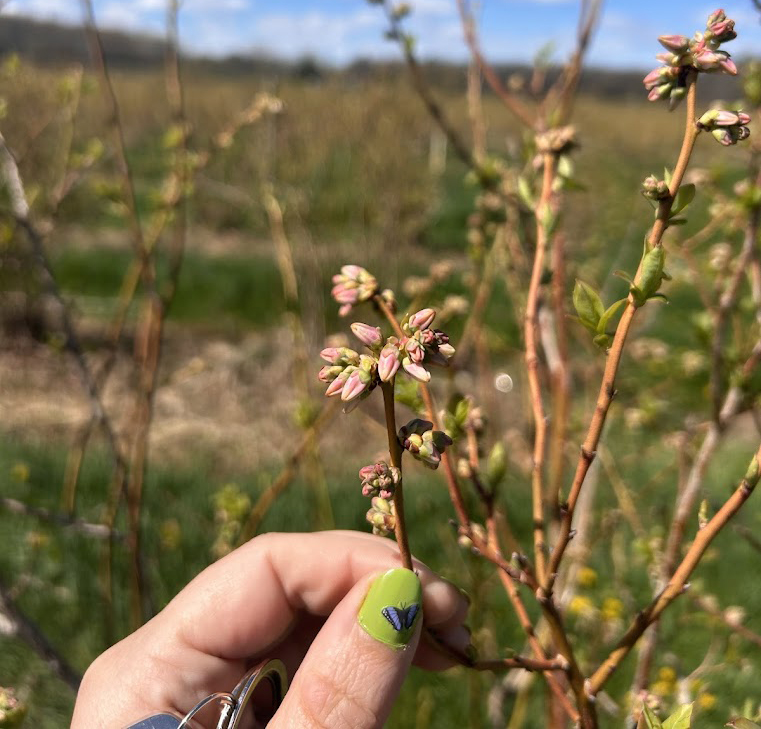
Blueberry are at bud burst through southern Allegan County with more leaves emerging the further south you go. Mummy berry is the next pathogen to manage. Bloom is imminent. Once flowers are out, we will be thinking about flower thrips and beginning to monitor other insects. Monitoring for cherry fruitworm and cranberry fruitworm will begin soon. Traps should be placed in blueberry bushes near woodlots and previous hot spots, in the upper fruiting zone, and placed just before bloom. Blueberry gall midge, a minor pest that damages growing tips, should be emerging in the next week or so.
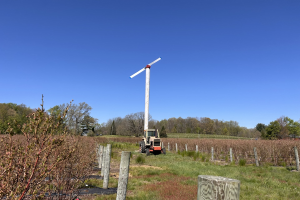
Fertilization typically begins around bloom, which is fast approaching. Make sure your irrigation systems are up and running. The frost-free date for most of Michigan is the middle of May, so it's good to be prepared for potential frost protection between now and then.
Strawberry flower trusses are emerging. Remember, critical temperatures for strawberries are 10 F when in the ground and 20 F when out of the ground. Keep an eye on the phenology of your strawberries; the official frost-free date for southern Michigan is in the middle of May.
Growers are looking at early season herbicides to control overwintering weeds. When selecting an herbicide, check the pre-harvest interval (PHI). We are getting to the part of spring where some herbicide PHIs are cutting it close to predicted harvest dates.
Bramble leaves have begun emerging.
Upcoming meetings
This year, we are hosting Tuesday Night Fruit IPM meetings. They take place in person at the Southwest Michigan Research and Extension Center in Benton Harbor and online via Zoom. The meetings cover phenology, insect and disease progression and selected topics from experts in Extension. These meetings cover small fruit for southwest Michigan and tree fruit for southwest and southeast Michigan. The meetings start at 5:30 p.m. and occur weekly until June 24. Sign up for the online option. Past meeting recordings are available online via MSU Mediaspace.
This work is supported by the Crop Protection and Pest Management Program [grant no 2024-70006-43569] from the USDA National Institute of Food and Agriculture. Any opinions, findings, conclusions, or recommendations expressed in this publication are those of the author(s) and do not necessarily reflect the view of the U.S. Department of Agriculture.