Southwest Michigan fruit update – July 15, 2026
 Print
Print Email
EmailHarvest, heat and humidity define this week in southwest Michigan.
Tree fruit updates
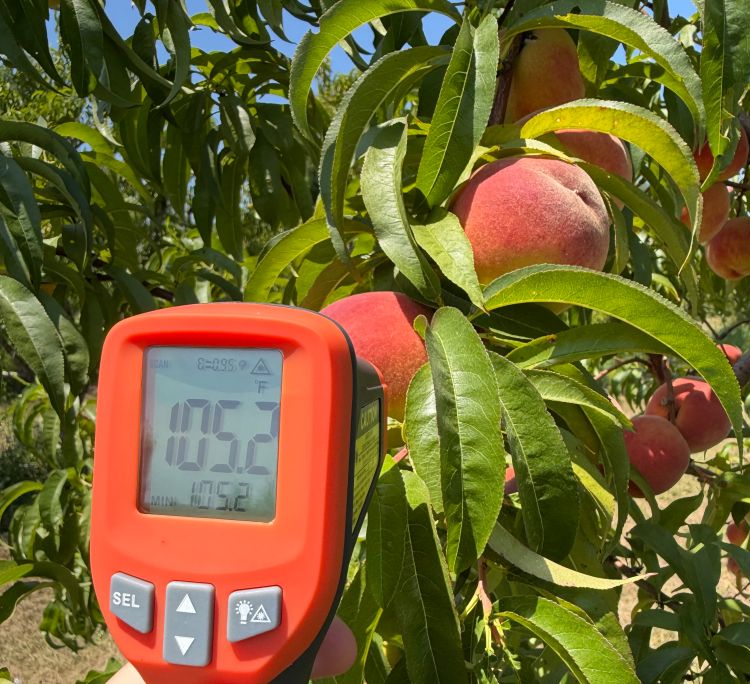
Peach and nectarine cultivars in the region are being harvested, including Desiree, PF-1 through PF-7, Veeblush and Earlystar. Progression of harvest is coming along quickly, with many varieties ripening approximately one week sooner than last year. Approximate harvest dates based on growing degree days is available through the peach ripening model on Enviroweather.
Second-generation oriental fruit moth damage continues to appear in southwest Michigan orchards despite a recent decline in trap catches, likely due to the recent period of high temperatures reducing adult flight activity. Continue scouting fruit for entry holes, gum, flagging shoots and edge-related injury, as larvae from earlier egg laying remain active. Where treatment is needed, target newly hatched larvae with products effective on eggs or early larval stages, while rotating IRAC groups and considering the preharvest interval of the cultivar being treated.
Brown rot management should remain a priority for cultivars approaching harvest over the next several weeks. As fruit mature, accumulate sugars and soften, susceptibility to infection increases rapidly. Scattered showers are forecast for Friday and Saturday (July 17-18), making it important to maintain protection on cultivars nearing harvest before these wetting events. Organize fungicide programs by cultivar maturity rather than treating entire blocks uniformly, focusing on those closest to harvest.
Continue scouting for early brown rot symptoms, particularly around insect injury, split pits, bird damage and fruit-to-fruit contact. Maintain thorough fruit coverage, rotate FRAC groups and carefully observe preharvest intervals as harvest begins on early cultivars. Timely harvest and removal of overripe or rotting fruit will also help reduce disease pressure.
Plums are in the cover-spray period, with the first harvest still a few weeks out. Bacterial spot is showing up on leaves and fruit.
Apple blocks are now in the summer cover-spray period. Clean blocks can move into a lower-risk maintenance program, while blocks with visible scab lesions should remain protected against secondary scab during periods of rainfall and extended leaf wetness. Captan remains a common cover material but provides no activity against powdery mildew, so susceptible cultivars or blocks with active mildew may require an additional mildew-active fungicide.
Codling moth trap catches continue to decline at the Southwest Michigan Research and Extension Center, and most blocks are beyond first-generation larvicidal timing. Continue using local trap catch, biofix and treatment history to guide management decisions. Maintain good spray coverage as fruit size increases, rotate IRAC groups between generations and avoid unnecessary broad-spectrum insecticides where predator populations are providing adequate mite suppression.
Recent periods of extreme heat may also suppress moth flight activity, resulting in artificially low trap catches. Reduced catches during hot weather should not be interpreted as an indication that codling moth pressure has ended or that treatments can be omitted. Base management decisions on the local biofix, degree-day accumulations, orchard history and fruit inspections rather than trap catches alone, particularly where pressure has been moderate to high earlier in the season.
Pear orchards can remain on a maintenance fungicide program through the summer. Continue monitoring blocks with a history of scab or visible lesions, but disease management can now shift toward maintaining healthy foliage and protecting fruit quality rather than preventing primary infections.
Pear psylla should remain the primary insect focus. Continue scouting new shoot growth for adults, eggs, young nymphs and early honeydew. Summer psylla populations are much easier to manage before colonies become established, so timely intervention is important. Preserve natural enemies whenever possible by avoiding unnecessary broad-spectrum insecticides, as predators can provide meaningful suppression through the remainder of the season.
Small fruit updates
Juice grape and early hybrid clusters are near berry touch and tight-clustered varieties are near bunch closure. Many of the wine grape cultivars are near pea-sizer. Downy mildew is spreading quickly, and we are getting past susceptibility for black rot.
Blueberries are being harvested. Damage from flower thrips has been observed in various fields across the region. Cranberry fruitworm continue to be caught at the Trevor Nichols Research Center, and the catch remains steady from last week. Blueberry maggot is down from last week, as are spotted wing drosophila. Both cherry fruitworm and thrips catches are up from last week. Japanese beetle catches are increasing.
Strawberry season is closing and growers are thinking about renovation. Check out this article about renovation.
Upcoming meetings
Save the date for the Blueberry Field Day on Sept. 9 at the Trevor Nichols Research Center in Fennville, Michigan.
Thank you to everyone who participated in this year’s Tuesday Night Fruit IPM meetings. We appreciate the growers, scouts, industry partners and Extension colleagues who joined us in person at the Southwest Michigan Research and Extension Center in Benton Harbor or online through Zoom.
This year’s meetings covered crop phenology, insect and disease progression, pest management updates and selected topics from Extension experts. The meetings included small fruit updates for southwest Michigan and tree fruit updates for southwest and southeast Michigan. Past meeting recordings are available online through MSU Mediaspace for those who would like to review previous sessions.
This work is supported by the Crop Protection and Pest Management Program (grant no 2024-70006-43569) from the USDA National Institute of Food and Agriculture. Any opinions, findings, conclusions, or recommendations expressed in this publication are those of the author(s) and do not necessarily reflect the view of the U.S. Department of Agriculture.