Southwest Michigan fruit update – July 29, 2026
 Print
Print Email
EmailCooler weather and a steady breeze bring improved field conditions. Blueberry, raspberry and peach harvest continues while the first apple harvests remain a few weeks away.
Tree fruit updates
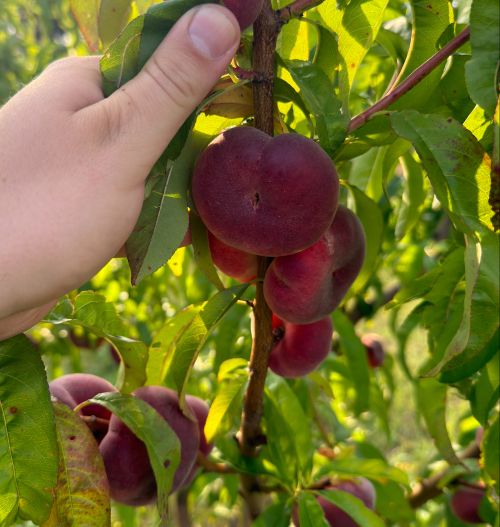
Peach and nectarine cultivars in the region are being harvested. The first Red Haven peaches are being harvested this week, as reported by growers in Van Buren and Berrien counties. Remember that Red Haven peaches tend to ripen more unevenly than other cultivars, so picking underripe fruit can be especially troublesome. See the article “Monitoring peach and nectarine ripening” from Michigan State University Extension to learn more about how to monitor peach ripening to harvest fruit at the right maturity. Approximate harvest dates for this season based on growing degree days are available through the peach ripening model on Enviroweather.
Brown rot management should remain a priority for cultivars approaching harvest over the next several weeks. As fruit mature, accumulate sugars and soften, susceptibility to infection increases rapidly. Scattered showers are forecast for Saturday, Aug. 1, making it important to maintain protection on cultivars nearing harvest before these wetting events. Organize fungicide programs by cultivar maturity rather than treating entire blocks uniformly, focusing on those that are closer to harvest.
Remember, most brown rot products are protective, meaning rain events can reset the protective effect. See this MSU Extension article on the physical properties of fungicides, including the difference between protectants and systemics.
Continue scouting for brown rot, especially around insect injury, split pits, bird damage and areas where fruit are touching. Maintain thorough fruit coverage, rotate among FRAC groups and carefully observe preharvest intervals as harvest begins on early cultivars. Timely harvest, along with removing overripe or rotting fruit, will also help reduce disease pressure.
Japanese plums are being harvested in Berrien County. European plums are still in the cover spray period.
Apples remain in the summer cover period. Continue scouting for codling moth and other fruit-feeding insects, including leafrollers, and adjust management according to block history, trap catches and visible injury. Blocks with established apple scab lesions require continued protection because secondary infections can develop during wetting periods. Maintain adequate spray coverage as canopies become denser and fruit continue to size.
Continue watching susceptible cultivars for powdery mildew. Warm conditions and high relative humidity favor the disease, although infection does not require free water. Captan does not provide effective powdery mildew control, so select a material specifically labeled for mildew where continued protection is needed.
Begin planning preharvest plant growth regulator applications for early apple cultivars. Products such as Harvista can help manage maturity progression and preharvest fruit drop, but application timing should be based on cultivar, anticipated harvest date and measured fruit maturity. Review the product label and establish the intended harvest window before applying. Additional information is available in Penn State Extension’s article “Apple PGRs: Prevention of Preharvest Drop in Apple Orchards.”
Predicted apple harvest dates are now available online. Most varieties are currently predicted to mature earlier than their historical averages. However, the Enviroweather bloom dates used by the models were earlier than some locally observed bloom dates, and the prolonged bloom period may create considerable variation among blocks and even within individual blocks. Estimates may also shift as temperatures leading up to harvest influence the final rate of maturation. Growers should treat the predicted dates as a starting point, begin maturity testing earlier than usual and evaluate each block independently.
Pear orchards can remain on a maintenance fungicide program through summer. Continue monitoring blocks with a history of scab or visible lesions, but disease management can now shift toward maintaining healthy foliage and protecting fruit quality rather than preventing primary infections.
Small fruit updates
Juice grapes and early hybrid cultivars continue to be near berry touch, while some tight-clustered varieties are beginning bunch closure. Many Vitis vinifera cultivars are near pea-size berry stage. Downy mildew is starting to spread quickly starting last week. Many varieties are getting past susceptibility to black rot. Leaf pulling on east sides of vines has been progressing for a couple weeks. Some growers are beginning to hedge in vigorous locations, but many are holding off as long as possible to reduce side shoot growth.
Blueberries are being harvested. Damage from flower thrips has been observed in various fields across the region. Cranberry fruitworm and blueberry maggot catches are at zero at the Trevor Nichols Research Center. Spotted wing drosophila are also down this week. Cherry fruit worm and thrips catches are steady from last week. Japanese beetle catches are decreasing.
Strawberry season is over and growers are thinking about renovation. Check out this article about renovation.
Upcoming meetings
Save the date for the Blueberry Field Day on Sept. 9 at the Trevor Nichols Research Center in Fennville, Michigan.
Thank you to everyone who participated in this year’s Tuesday Night Fruit IPM meetings. We appreciate the growers, scouts, industry partners and Extension colleagues who joined us in person at the Southwest Michigan Research and Extension Center in Benton Harbor or online through Zoom.
This year’s meetings covered crop phenology, insect and disease progression, pest management updates and selected topics from Extension experts. The meetings included small fruit updates for southwest Michigan and tree fruit updates for southwest and southeast Michigan. Past meeting recordings are available online through MSU Mediaspace for those who would like to review previous sessions.
This work is supported by the Crop Protection and Pest Management Program (grant no 2024-70006-43569) from the USDA National Institute of Food and Agriculture. Any opinions, findings, conclusions, or recommendations expressed in this publication are those of the author(s) and do not necessarily reflect the view of the U.S. Department of Agriculture.