Southwest Michigan fruit update – May 5, 2026
 Print
Print Email
EmailWeather stays cool this week.
MSU fruit updates
Happy spring! If you haven’t signed up to come to the Tuesday night South Michigan Fruit IPM meetings, sign up now.
Tree fruit
Apricot trees have small fruit in central Berrien and Van Buren counties, with an average of 7 millimeters (mm). Controlling plum curculio now prevents unmarketable fruit later in the season. The first catches of plum curculio occurred two weeks ago in Berrien County. This week is a control window for plum curculio with neonicotinoids and other insecticides. More information on controlling plum curculio can be found in the Michigan State University Extension article, “Effectively controlling plum curculio in stone and pome fruits,” which includes a table of insecticide options.
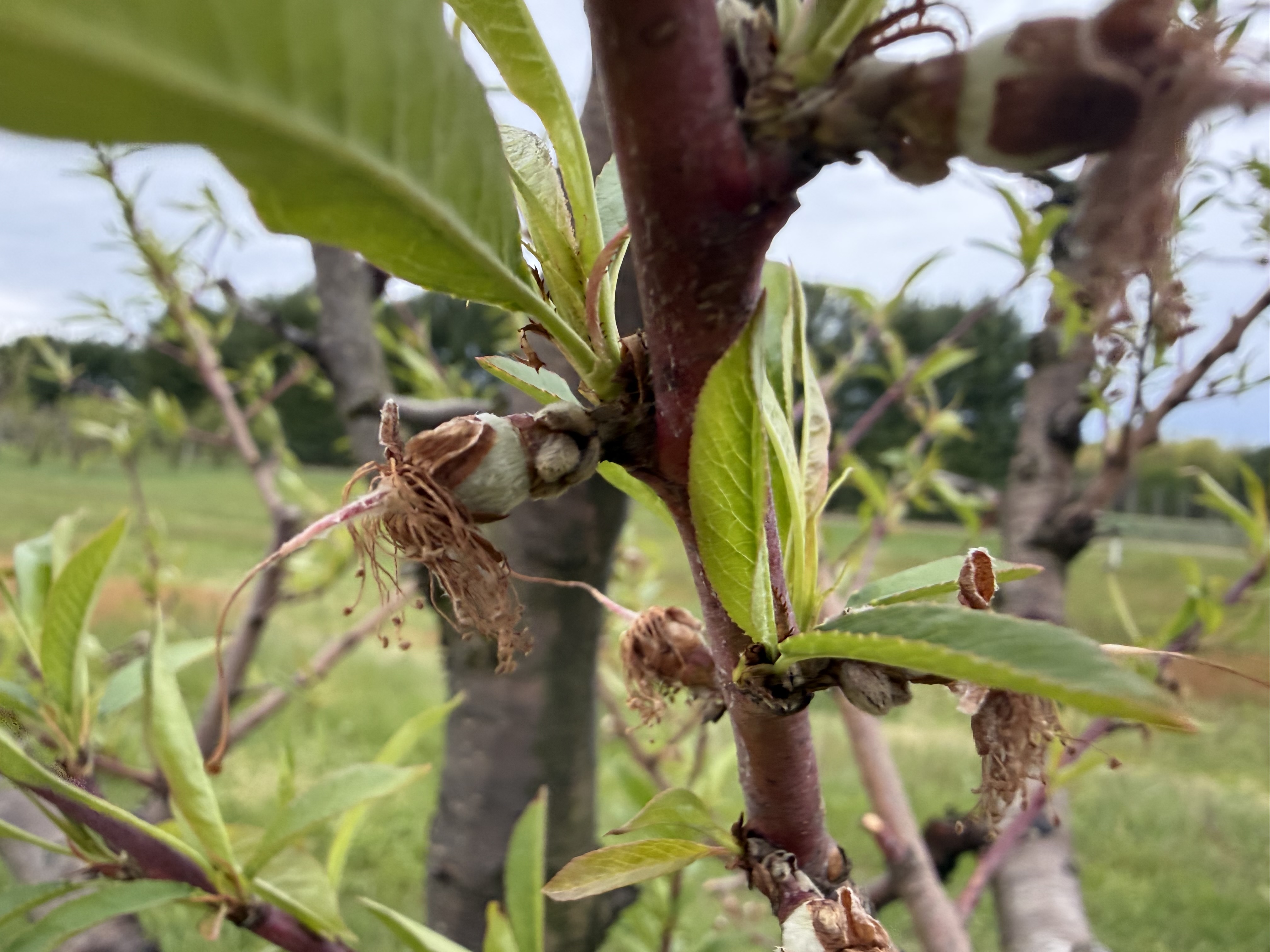
Peaches and nectarines are sizing, with early cultivars approaching 8 mm and splitting from the shuck. Now is the time when fruit buds that were damaged by cold or not successfully pollinated will fall off. A good way to quickly check crop load is to first count the number of fruit on a limb. Then, brush your hand against the fruit and count how many fall off. The proportion that remains is the proportion of fruit that is likely set.
Brown rot pressure is expected to be low for the upcoming week, as temperatures will remain lower than necessary for disease progression. When weather favors infection, prioritize high-efficacy materials with rotation among FRAC groups, and ensure applications are made ahead of rainfall events with strong coverage throughout the canopy.
Plum curculio continues to be caught in Berrien and Van Buren counties. There were no new catches at the Trevor Nichols Research Center in Allegan County this week. Cool temperatures have slowed down its movement. Check traps close to your orchard to get a better understanding of the insect pressure.
Selecting insecticides for plum curculio should prioritize rapid knockdown of immigrating adults combined with enough residual activity to protect newly exposed fruit during the oviposition window. Broad-spectrum materials with strong efficacy on plum curculio, such as Imidan 70 WP, Avaunt 30 WG, Voliam Flexi or Besiege, provide the most consistent control and are well suited for blocks with confirmed activity. Pyrethroids including Warrior II, Mustang Maxx and Baythroid XL can be highly effective during warm periods of active movement due to their fast knockdown, though their shorter residual and impact on beneficials should be considered. Neonicotinoids like Assail 30 SG or Actara 25 WG offer additional activity but generally require higher rates or tank-mix support for reliable plum curculio control.
In all cases, choose products paired with tight application timing at petal fall, followed by additional coverage based on temperature-driven activity. Protection must be in place before egg laying begins to prevent irreversible fruit injury.
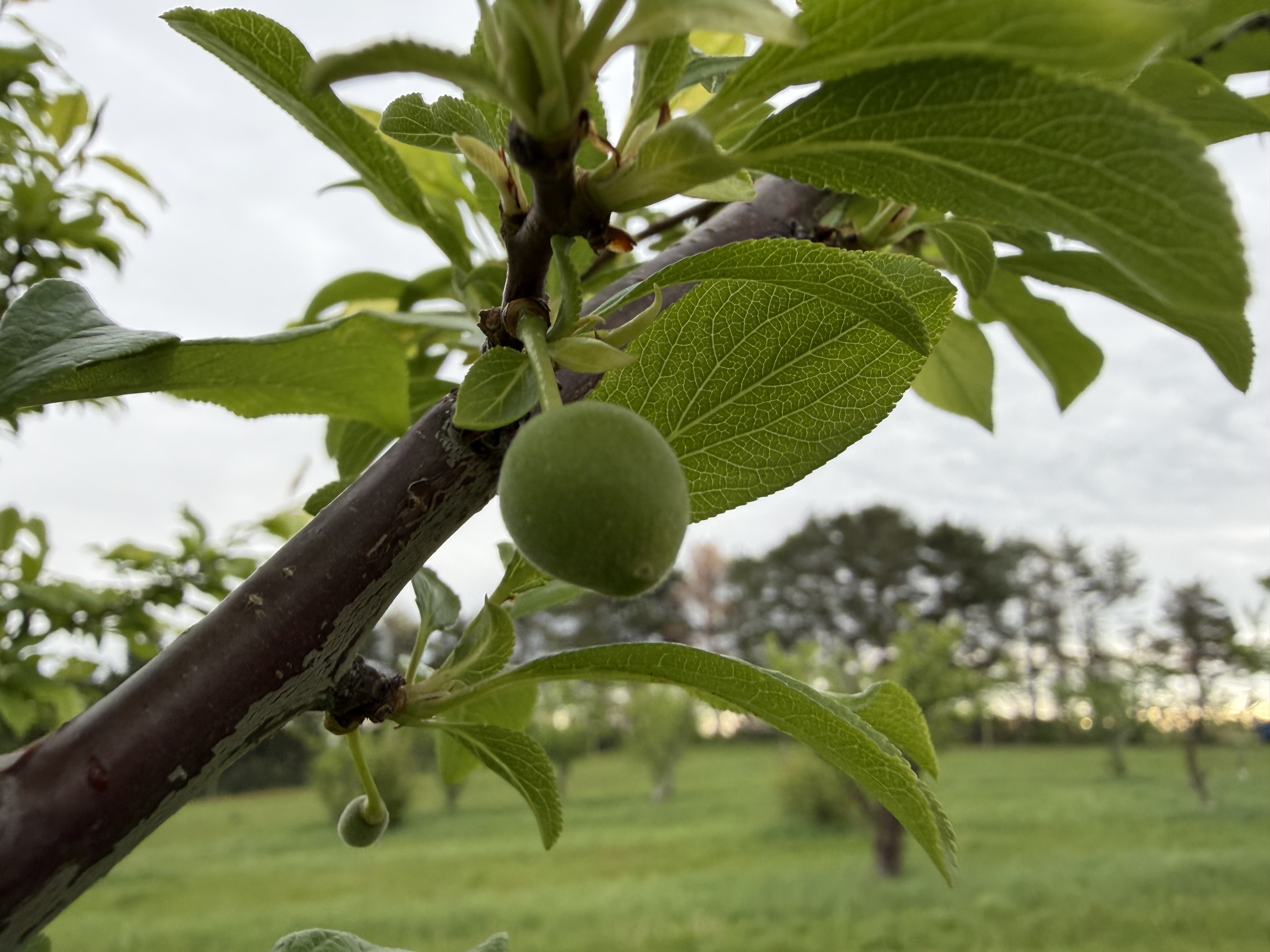
Plums are around 8 mm and sizing. Management should focus on maintaining a consistent protective program, timing insecticides with periods of pest activity and keeping fungicide coverage ahead of rain events to limit infection during early fruit development. More information on American brown rot, the most important disease of plum, can be found in this MSU Extension article.
In cherries, tart cherries and sweet cherries are in shuck split in Berrien and Van Buren counties.
This stage marks a transition as the developing fruit emerge from the shuck and become increasingly susceptible to disease and insect injury. Warm, wet conditions during shuck split strongly favor brown rot infections, particularly as exposed fruit tissue and senescing floral parts create ideal infection sites. Fungicide applications should therefore be timed ahead of rain events using effective materials with strong residual activity and excellent canopy penetration.
At the same time, shuck split signals the beginning of meaningful insect pressure as fruit become exposed and vulnerable to feeding and oviposition. Plum curculio, obliquebanded leafroller, green fruitworm and tarnished plant bug can all contribute to early fruit injury during this period.
Management should focus on a well-timed insecticide application targeting this transition, with products that provide both knockdown of active insects and residual protection as new fruit tissue develops. Broad-spectrum materials such as Imidan 70 WP, Avaunt 30 WG, Voliam Flexi or Besiege offer strong control across multiple pests, while pyrethroids such as Warrior II or Mustang Maxx provide rapid knockdown during periods of active movement. Softer materials such as Surround WP or Entrust can be used in constrained systems but require tighter spray intervals and excellent coverage.
As with disease management, timing remains critical. Applications should closely align with pest activity and environmental conditions to prevent early-season injury that cannot be corrected later.
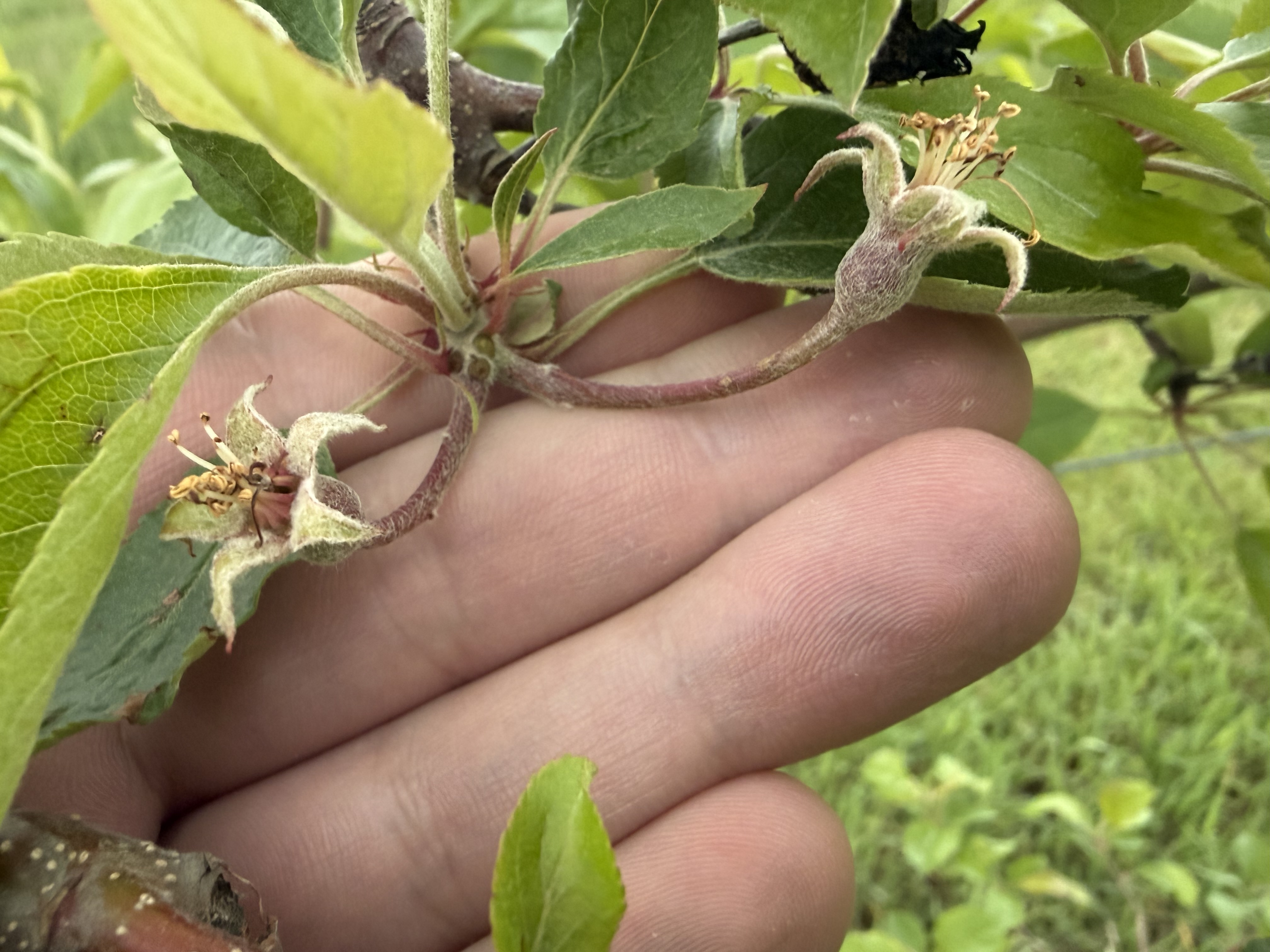
Most apple varieties are in petal fall and fruit set. Prolonged cool conditions during bloom have reduced pollinator activity and may have limited pollination efficiency in some orchards, particularly during periods of low bee flight and extended wetting. Additional strategies for increasing pollinator activity in apple orchards is available in this Penn State article.
Apple scab risk is still low over the next several days. While risk is low, maintaining adequate fungicide protection is important to stop the spread of disease during wetting events. Avoid copper beyond half-inch green to reduce the risk of fruit russeting. SDHI fungicides are excellent choices to control primary scab. The MSU Enviroweather apple scab model can be used to track infection periods and better time applications.
As fruitlets become exposed, plum curculio movement into orchards increases and oviposition injury can begin rapidly following warm evening temperatures. European apple sawfly, tarnished plant bug, green fruitworm and early obliquebanded leafroller activity may also contribute to feeding injury during this period. Protection is especially important in blocks with a history of plum curculio pressure or adjacent wooded habitat.
Applications should be timed around periods of adult movement and orchard activity, particularly during warmer nights following rainfall events. Broad-spectrum materials such as Imidan 70 WP, Avaunt eVo, Voliam Flexi or Besiege provide strong activity against multiple early-season pests, while pyrethroids including Warrior II or Mustang Maxx can provide rapid knockdown during periods of intense movement. In reduced-input or organic systems, Surround WP can help suppress plum curculio activity when applied with thorough coverage and maintained through repeated applications.
As with disease management, timing and coverage remain critical because injury occurring shortly after fruit set cannot be reversed later in the season.
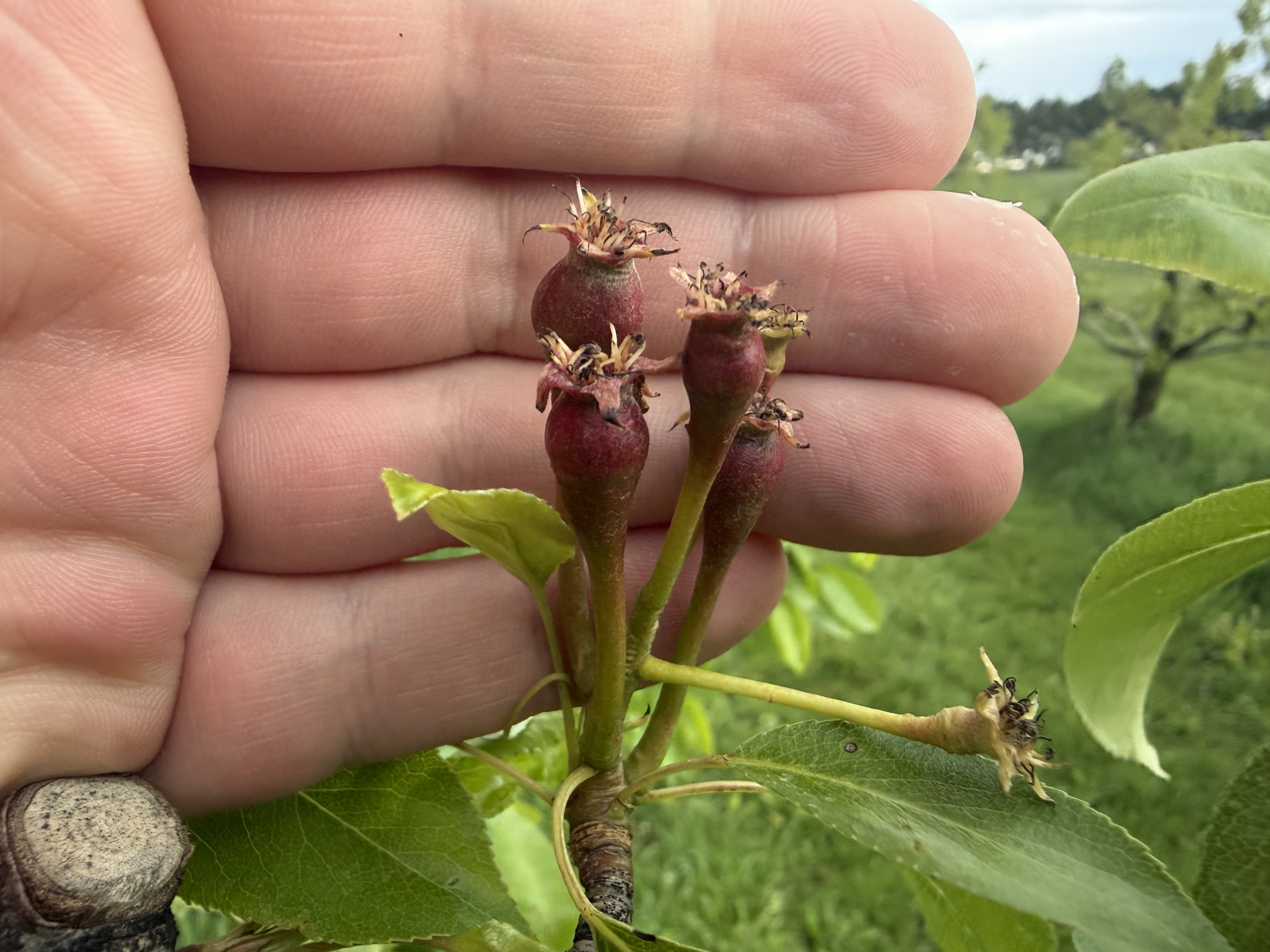
Pear fruit are sizing rapidly across Berrien, Van Buren and Allegan counties, with most blocks averaging 6-8 mm fruit in diameter. The transition into early fruit development marks an important shift in management priorities as newly exposed fruit and expanding foliage become increasingly vulnerable to infection and feeding injury. Pear scab risk remains closely tied to rainfall and extended wetting periods, making continued fungicide protection essential even during seemingly lower-pressure intervals. Fungicide applications should remain proactive and closely aligned with forecasted precipitation events to prevent establishment of secondary inoculum that can persist through the remainder of the season.
At the same time, insect pressure begins intensifying as fruit become more attractive and accessible to early-season pests. Plum curculio activity typically increases during warm evenings following rainfall, with oviposition scars and feeding injury capable of causing fruit deformity or premature drop shortly after fruit set. Tarnished plant bug, green fruitworm, and pear psylla may also contribute to injury during this period, especially in blocks with a history of pressure or nearby unmanaged habitat. Pear psylla populations deserve particular attention as early buildups can quickly lead to honeydew accumulation, reduced tree vigor, and increased management difficulty later in the season.
Where insect pressure is present, timely applications should target periods of peak movement and egg laying while maintaining awareness of beneficial insect preservation. Materials such as Imidan 70 WP, Avaunt eVo or pyrethroid products can provide strong activity against key chewing pests, while psylla programs may require more selective approaches integrated with horticultural oil or insect growth regulators, depending on orchard conditions and population levels.
Small fruit
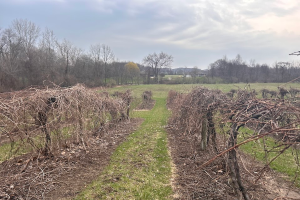
Juice grapes and early hybrids have first leaves starting to fold out. Other hybrids and early vinifera varieties have opened. Frost over the weekend caused varied damage across the region with certain areas being hit harder than others.
The current disease focus is on phomopsis, black rot, anthracnose and powdery mildew. Once leaf tissue is visible, contact fungicides that include broad-spectrum/contact fungicides like the EBDCs (FRAC M3) and captan are effective and function similar to dormant applications by sanitizing the vineyard before bloom.
The first grape berry moths have been caught but remember, the first catch is the suicidal males. We are still watching out for wild grape bloom.
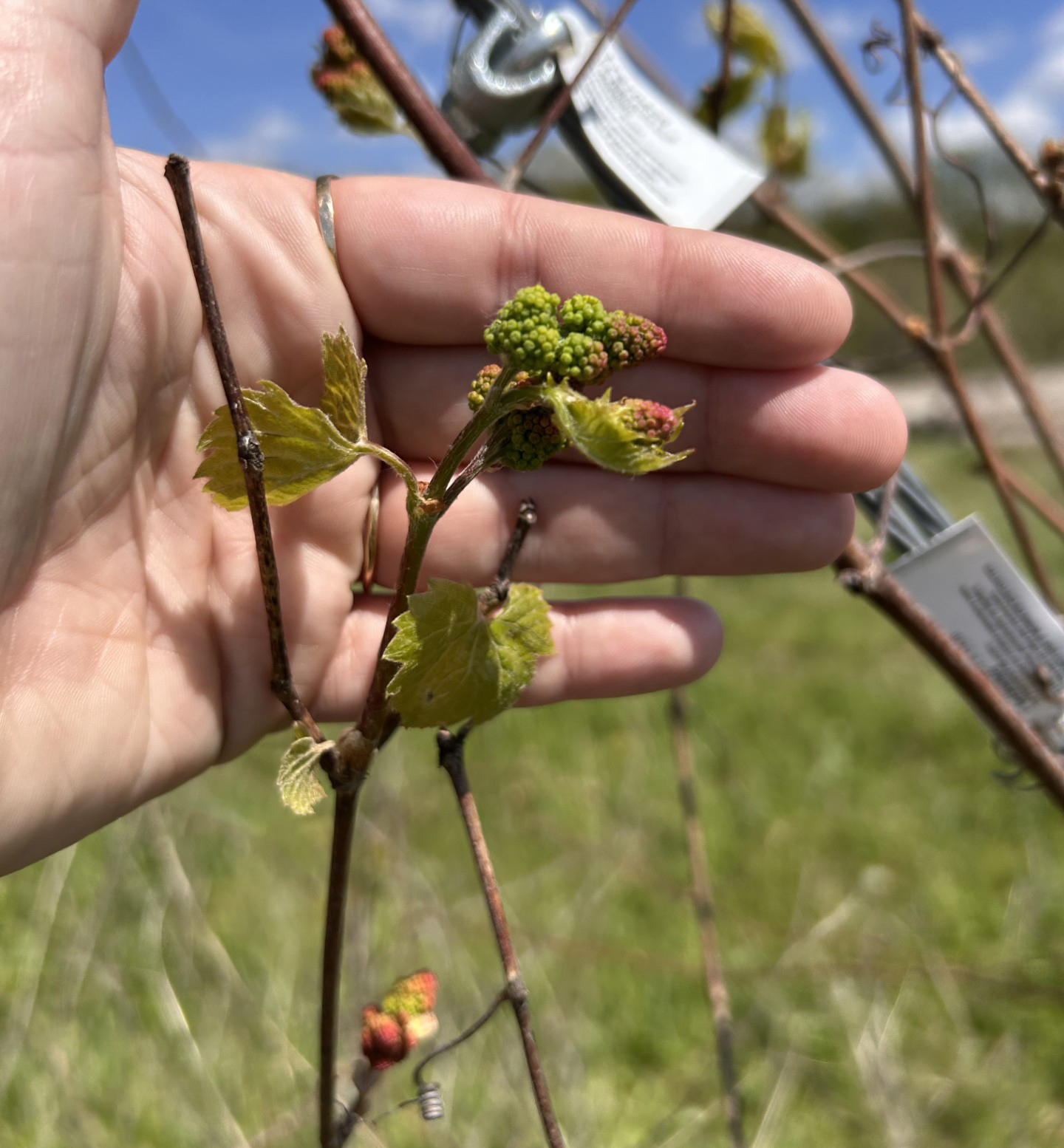
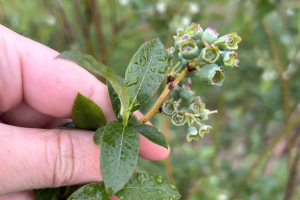
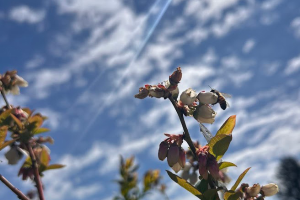
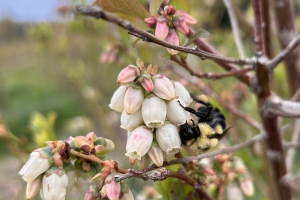
Blueberry are blooming through Van Buren County and at late pink bud in southern Allegan County. Frost over the weekend caused damage. If you are scouting for frost damage in your fields, the following pictures show what frost damage looks like when it’s old versus fresh, what a healthy blueberry should look like and what thrips damage looks like.
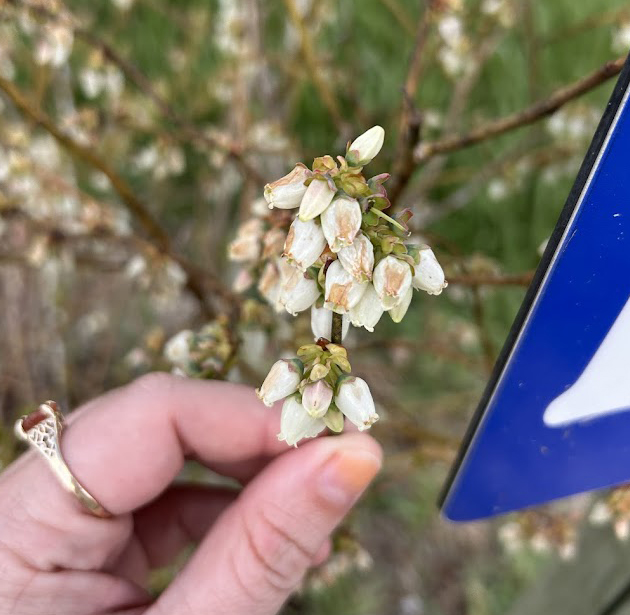
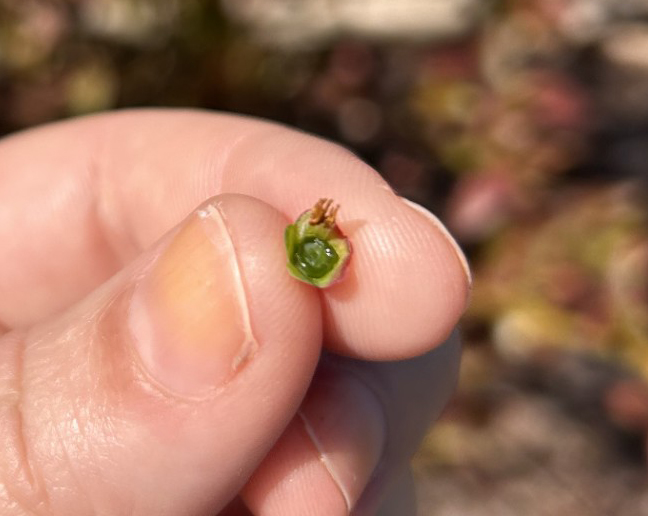
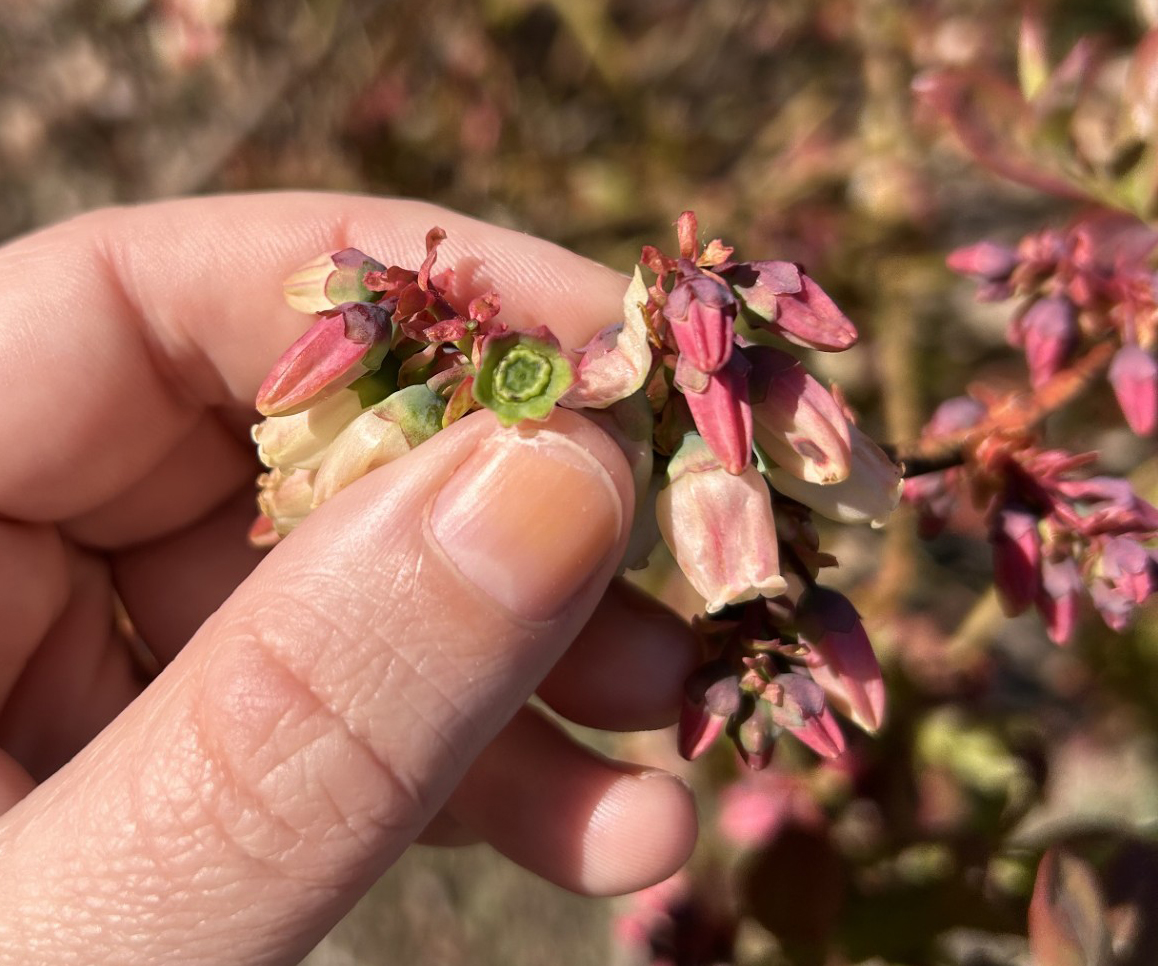
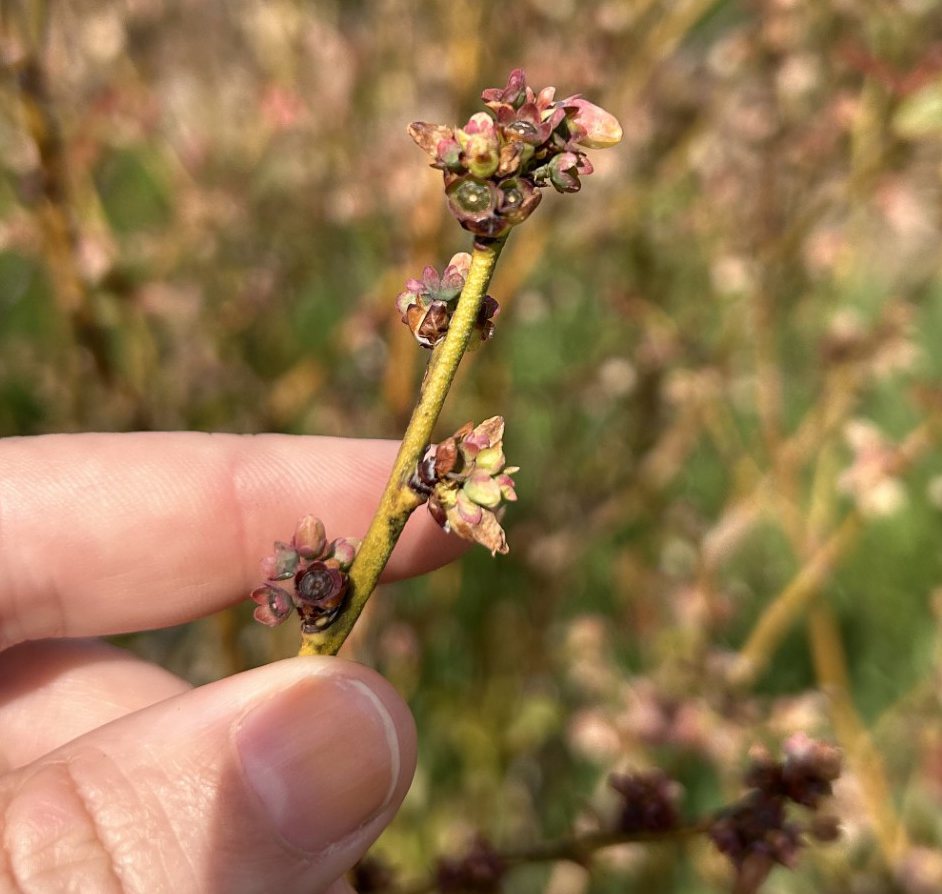
With bees out and about, it’s important to keep pollinators in mind while spraying. Mummy berry is the next pathogen to manage. Bloom is imminent, and once flowers are out, we will be thinking about flower thrips and beginning to monitor other insects. Monitoring for cherry fruitworm and cranberry fruitworm has begun. Blueberry gall midge, a minor pest that damages growing tips, should be emerging in the next week or so.
Fertilization typically begins around bloom which is fast approaching. Make sure your irrigation systems are up and running. The weather isn’t supposed to dip too much in the next week, but the frost-free date for most of Michigan is the middle of May. It's good to be prepared for potential frost protection between now and then.
Strawberry flowers are out. Critical temperatures for strawberries are 10 F when they’re in the ground and 20 F when they’re out of the ground. Keep an eye on the phenology of your strawberries. The official frost-free date for southern Michigan is in the middle of May.
Growers are looking at early season herbicides to control overwintering weeds. When selecting an herbicide, check the pre-harvest interval (PHI). We are getting to the part of spring where some herbicide PHIs are cutting it close to predicted harvest dates.
Brambles leaves are emerging.
Upcoming meetings
This year, we are hosting Tuesday Night Fruit IPM meetings. They take place in person at the Southwest Michigan Research and Extension Center in Benton Harbor and online via Zoom. The meetings cover phenology, insect and disease progression and selected topics from experts in Extension. These meetings cover small fruit for southwest Michigan and tree fruit for southwest and southeast Michigan. The meetings start at 5:30 p.m. and occur weekly until June 24. Sign up for the online option. Past meeting recordings are available online via MSU Mediaspace.
This work is supported by the Crop Protection and Pest Management Program [grant no 2024-70006-43569] from the USDA National Institute of Food and Agriculture. Any opinions, findings, conclusions, or recommendations expressed in this publication are those of the author(s) and do not necessarily reflect the view of the U.S. Department of Agriculture.